Decoding the X400 AWD Drivetrain: Center Diff vs. Rear Differential
The Jaguar X-Type (X400 chassis) remains a unique engineering marvel in the compact luxury segment. Unlike traditional longitudinal AWD layouts, the X-Type utilizes a transverse Getrag M66 transaxle mated to a Hang-On Power Transfer Unit (PTU). This PTU houses the crucial center differential and AWD system components that split torque to the rear wheels. When drivetrain noises or binding issues arise, owners and technicians often misdiagnose the root cause, mistakenly blaming the Jaguar X Type rear differential when the fault actually lies within the center differential or PTU assembly.
As these vehicles age into 2026, the degradation of viscous couplings, planetary gearsets, and hypoid gear fluids has made accurate symptom diagnosis more critical than ever. Misdiagnosis can lead to unnecessary replacement of the rear GKN differential carrier, costing thousands in wasted labor and parts. This guide provides a definitive, expert-level troubleshooting framework to isolate noises, binding, and driveline shocks between the AWD center differential and the rear axle.
AWD Architecture: How the Center Diff Impacts the Rear Axle
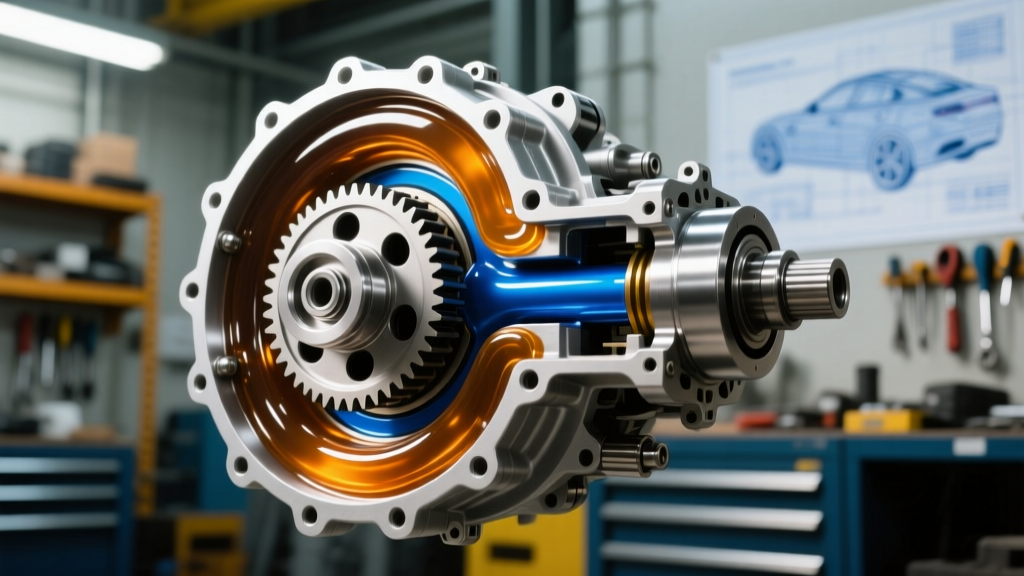
To diagnose a failure, you must understand the torque path. The X-Type AWD system uses a transfer case bolted directly to the side of the front transaxle. Inside this PTU is a planetary gearset acting as the center differential, often paired with a viscous coupling to manage front-to-rear slip.
- Normal Operation: The center diff allows for slight speed differences between the front and rear axles during cornering, sending a baseline torque split rearward via a two-piece propshaft to the Jaguar X Type rear differential.
- Failure Mode (Viscous Coupling Seizure): If the center diff's viscous fluid degrades or overheats, the coupling can lock solid. This eliminates the speed differentiation between axles.
- The Collateral Damage: A locked center diff forces the rear wheels to scrub during tight turns. The resulting torsional shock loads bypass the propshaft and slam directly into the ring and pinion gears of the rear differential, leading to premature tooth spalling and pinion bearing failure.
The Fluid Connection: API GL-5 and Viscous Degradation
Because the X-Type's AWD system relies heavily on fluid dynamics for torque biasing and gear lubrication, fluid maintenance is the first line of diagnosis and defense. The center differential (PTU) and the Jaguar X Type rear differential require specific lubricants, and cross-contamination or neglect is a primary cause of whining and binding.
Factory Fluid Specifications
Both the PTU/Center Diff and the rear differential typically require a high-quality 75W-90 API GL-5 synthetic gear oil. Jaguar originally specified Castrol SAF-XO or equivalent synthetic hypoid gear oil. Using standard GL-4 manual transmission fluid in the rear diff will destroy the hypoid gear coating within 5,000 miles, resulting in a distinct howl under load.
According to the Castrol Differential Fluids Guide, GL-5 fluids contain high levels of sulfur-phosphorus extreme pressure (EP) additives necessary for the sliding friction of hypoid ring and pinion gears. If you are diagnosing a whine, pulling the drain plug and inspecting the fluid for metallic 'glitter' (suspended friction material) versus 'chunks' (spalled gear teeth) is your first diagnostic step.
Symptom Isolation Matrix: Center Diff vs. Rear Diff
Drivetrain acoustics can be highly deceptive. A failing center differential bearing inside the PTU can easily echo down the propshaft tunnel, making it sound exactly like a failing rear pinion bearing. Use the following matrix to isolate the fault.
| Symptom / Noise Profile | Likely Culprit | Verification Test |
|---|---|---|
| Whine that changes pitch between acceleration and deceleration (load vs. overrun). | Jaguar X Type Rear Differential (Ring & Pinion wear or pinion bearing preload loss). | Coast down in neutral at 50 MPH. If the noise disappears or changes drastically, the rear diff is the source. |
| Constant drone or whine that remains unchanged regardless of throttle load or coasting. | AWD Center Differential (PTU output shaft bearing) or Propshaft center support bearing. | Use chassis ears (wireless acoustic sensors) on the PTU housing vs. the rear diff carrier while on a lift. |
| Binding, hopping, or 'chirping' tires during tight, low-speed parking lot turns. | Seized Center Differential Viscous Coupling. | Perform a slow-speed Figure-8 test on dry pavement. Severe binding confirms a locked center diff. |
| Heavy clunk upon shifting from Reverse to Drive, or letting off the throttle. | Propshaft CV joints or excessive rear differential backlash. | Inspect propshaft CV boots for tears. Check rear diff flange for rotational free-play (should be < 2mm). |
Step-by-Step Diagnostic Troubleshooting
Step 1: The Figure-8 Driveline Binding Test
Before putting the car on a lift, test the center differential's ability to differentiate. Find an empty, dry paved area. Turn the steering wheel to full lock and drive in a tight circle at 3-5 MPH. Then, reverse the direction and repeat.
Diagnosis: If the vehicle hops, skips, or feels as though the brakes are dragging, the center differential inside the PTU has failed (viscous coupling locked or planetary gears bound). Stop driving immediately. Continuing to drive with a locked center diff will apply immense lateral torque to the Jaguar X Type rear differential, potentially snapping the axle shafts or stripping the ring gear.
Step 2: Acoustic Isolation via Chassis Ears
If the complaint is a high-speed whine, place the vehicle on a chassis dynamometer or a four-post lift with free-rolling wheels. Attach wireless acoustic sensors (Chassis Ears) to two points:
- The PTU/Transfer case housing (near the center diff output flange).
- The rear differential carrier cover.
Run the vehicle up to 50 MPH. A worn rear pinion bearing will emit a growling frequency that peaks at the rear sensor, while a failing center diff bearing will trigger the front PTU sensor. For more technical discussions on X400 drivetrain acoustics, the Jaguar Forums X-Type Section contains extensive community data on PTU versus rear diff noise frequencies.
Step 3: Fluid Drain and Forensic Analysis
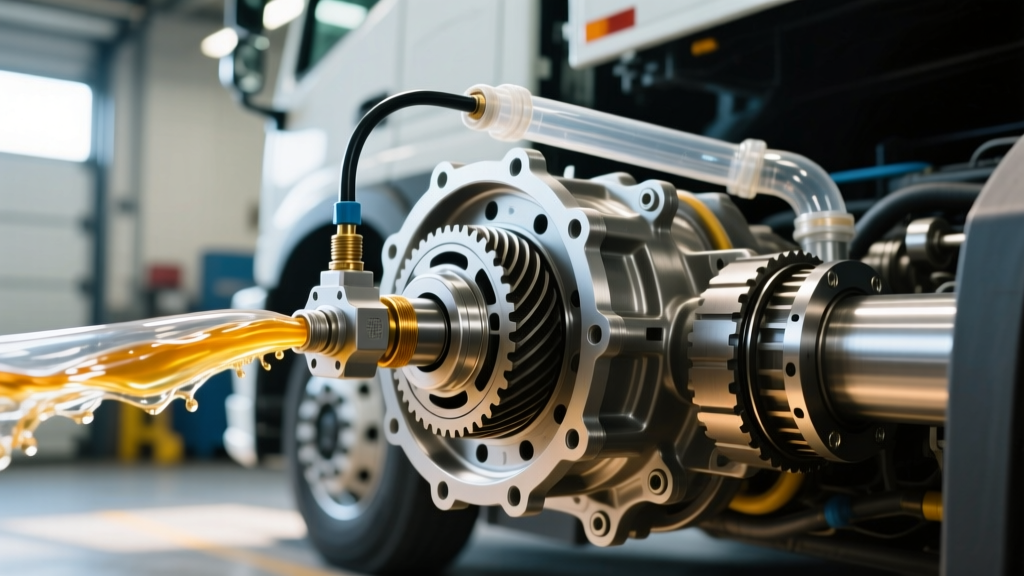
Drain the rear differential fluid into a clean, white-lined pan. The rear differential capacity is approximately 1.2 Liters. Inspect the magnetic drain plug.
- Fine, dark paste: Normal wear for a high-mileage X-Type.
- Sparkly, metallic flakes (Glitter): Active bearing failure or ring/pinion gear wear. The rear differential requires a teardown.
- Large metal chunks (>2mm): Catastrophic gear tooth failure, likely caused by the shock-loading from a previously seized center differential.
Torque Specifications and 2026 Market Repair Costs
When performing fluid services or component replacements, adhering to exact torque specifications is vital to prevent housing distortion and fluid leaks. Below are the critical specs and current market realities for X-Type AWD repairs.
| Component / Fastener | Torque Specification | 2026 Estimated Cost / Note |
|---|---|---|
| Rear Diff Drain / Fill Plug | 35 Nm (26 lb-ft) | $15 (Replace crush washers) |
| PTU / Center Diff Drain Plug | 30 Nm (22 lb-ft) | $15 (Requires 75W-90 GL-5) |
| Propshaft to Rear Diff Flange Bolts | 48 Nm (35 lb-ft) | $25 (Always use new stretch bolts) |
| Rear Differential Carrier (Used/Rebuilt) | N/A | $450 - $900 (OEM GKN units are discontinued) |
| PTU / Center Diff Assembly (Rebuilt) | N/A | $1,500 - $2,200 (Specialist rebuild required) |
Note: Sourcing brand-new OEM GKN differentials for the X400 is nearly impossible in 2026. Most owners rely on specialized drivetrain rebuilders or low-mileage salvage units from RockAuto's aftermarket catalog and dedicated Jaguar dismantlers.
Final Diagnosis: Don't Ignore the Center Diff
The Jaguar X Type rear differential is a robust, well-engineered GKN unit that rarely fails on its own. In 90% of AWD X-Types experiencing rear axle noise or binding, the root cause traces back to the neglected center differential inside the PTU or a failing propshaft CV joint. By utilizing fluid forensics, acoustic isolation, and driveline binding tests, you can accurately pinpoint the failure, save thousands in misdiagnosed repairs, and keep your X-Type's AWD system functioning exactly as Jaguar intended.