The Compact SUV Duty Cycle: Why Stock Fluid Fails Under Pressure
The modern Toyota RAV4 has fundamentally shifted the paradigm of the compact crossover segment. With the introduction of the Adventure and TRD Off-Road trims, along with sophisticated torque-vectoring all-wheel-drive systems, the RAV4 is routinely tasked with truck-like duties. Owners are towing 1,500-pound trailers, navigating deep snow, and tackling moderate off-road trails. However, while the drivetrain hardware has been fortified for these tasks, the factory lubrication strategy remains optimized for standard commuter duty cycles.
When evaluating toyota rav4 rear differential fluid from a performance and heavy-duty maintenance perspective, the primary enemy is thermal degradation. The rear differential on a standard XA50 RAV4 holds a mere 0.53 liters (0.56 quarts) of gear oil. This incredibly small sump capacity means the fluid is subjected to rapid thermal cycling and high shear forces when the AWD coupling engages frequently. Under severe service conditions—such as low-speed trail crawling or highway towing in summer heat—conventional and semi-synthetic OEM fluids can experience viscosity shearing, leading to accelerated wear on the hypoid ring and pinion gears.
Upgrading to a dedicated, high-performance synthetic GL-5 gear oil is one of the most cost-effective drivetrain modifications an SUV owner can perform. This guide details the exact specifications, performance fluid alternatives, and mechanical procedures required to fortify your RAV4's rear axle for extreme environments.
Fluid Chemistry: OEM vs. Performance Synthetics
Toyota's factory fill is a highly capable mineral-based or semi-synthetic 75W-85 GL-5 oil. It provides excellent cold-weather flow and adequate protection for 90% of drivers. However, performance synthetics utilize ester-based or polyalphaolefin (PAO) base stocks that resist thermal breakdown far beyond the limits of conventional oils.
| Fluid Brand & Type | Viscosity Grade | Base Stock Chemistry | Flash Point (Approx.) | Best Application Scenario |
|---|---|---|---|---|
| Toyota Genuine SX (OEM) | 75W-85 GL-5 | Semi-Synthetic / Mineral | ~390°F (199°C) | Daily commuting, light AWD engagement |
| Red Line 75W85 GL-5 | 75W-85 GL-5 | Ester-Based Full Synthetic | ~450°F (232°C) | Aggressive trail use, frequent AWD binding |
| AMSOIL Severe Gear | 75W-90 GL-5 | PAO/Ester Synthetic Blend | ~440°F (227°C) | Highway towing, extreme ambient heat |
| Motul Gear 300 | 75W-90 GL-5 | 100% Ester Technosynthese | ~435°F (224°C) | High-shock load off-roading, racing |
According to Red Line Oil's technical data, their ester-based 75W85 formula maintains a stable lubricating film even when the differential housing exceeds 220°F. For RAV4 owners who tow or drive in mountainous terrain, stepping up to a 75W-90 like AMSOIL Severe Gear is generally safe and provides a thicker protective boundary layer at peak operating temperatures, though it may marginally increase parasitic drag during sub-zero cold starts.
Application Matrix: XA40 and XA50 Generations
Before draining the factory fluid, it is critical to verify your specific generation's capacity and hardware requirements. Toyota has maintained remarkable consistency in the rear differential architecture across the last two generations, but the introduction of Torque-Vectoring AWD requires special attention.
| Generation & Trim | AWD System Type | Fluid Capacity | Plug Size | Torque Spec (Fill/Drain) |
|---|---|---|---|---|
| XA40 (2013-2018) | Dynamic Torque Control | 0.53 L (0.56 qt) | 10mm Hex / 24mm Socket | 39 N·m (29 ft·lbf) |
| XA50 (2019-2026) Standard | Dynamic Torque Control | 0.53 L (0.56 qt) | 10mm Hex (Allen) | 39 N·m (29 ft·lbf) |
| XA50 Adventure / TRD | Torque-Vectoring AWD | 0.53 L (Main Hypoid) | 10mm Hex (Allen) | 39 N·m (29 ft·lbf) |
Step-by-Step Performance Fluid Swap Procedure
Performing a differential service on the RAV4 is straightforward, but the tight clearance of the rear subframe demands precision and the correct tools. Unlike heavy-duty trucks with massive 3-quart differentials, the RAV4's 0.53L sump leaves zero margin for error regarding contamination.
Required Tools and Materials
- Socket/Bits: 10mm Hex (Allen) bit socket (3/8" drive recommended for clearance).
- Wrench: 3/8" or 1/2" torque wrench (capable of measuring 29 ft·lbf / 39 N·m).
- Fluid Transfer: Manual hand pump or pneumatic fluid dispenser with a tapered nozzle.
- Hardware: 2x OEM Aluminum Crush Washers (Part# 90430-18008 or equivalent 18mm ID washer).
- Chemicals: Brake cleaner, shop towels, and thread cleaner.
The Execution Protocol
- Vehicle Preparation: Lift the rear of the RAV4 using a floor jack and secure it on jack stands. Ensure the vehicle is perfectly level. An unlevel vehicle will result in an under-filled or over-filled differential, both of which cause aeration and overheating.
- Break the Fill Plug First: Critical Rule: Always remove the UPPER fill plug before the LOWER drain plug. If the fill plug is seized or stripped, you do not want to be left with an empty differential and no way to refill it.
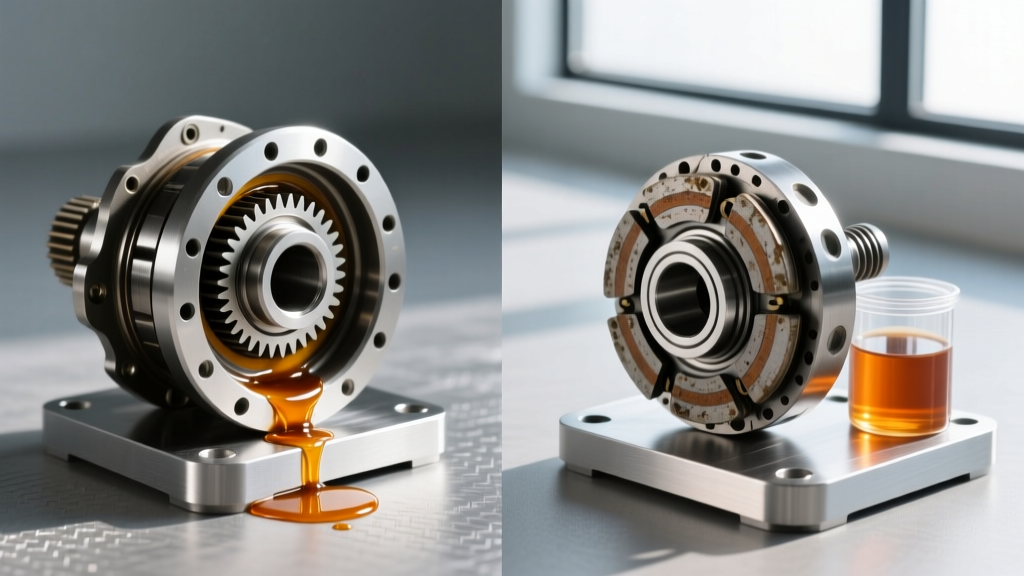
- Drain the OEM Fluid: Place a catch pan beneath the rear diff. Remove the lower 10mm hex drain plug. Allow the fluid to drain completely for at least 15 minutes. Inspect the magnetic tip on the drain plug; a fine metallic paste is normal for the first service, but chunky shavings indicate gear damage.
- Prep the Hardware: Clean the drain and fill plugs with brake cleaner. Remove the old crush washers and install new aluminum washers. Reusing crush washers is a primary cause of differential weeping and moisture ingestion.
- Reinstall Drain Plug: Thread the drain plug by hand to avoid cross-threading the aluminum housing. Torque to exactly 39 N·m (29 ft·lbf).
- Fill with Performance Fluid: Insert your transfer pump nozzle into the fill hole. Pump in your chosen synthetic GL-5 fluid until it reaches the absolute bottom of the fill hole threads. The capacity is approximately 0.53 Liters. Wait 60 seconds for the fluid to settle, and top off if necessary until it barely weeps out of the hole.
- Reinstall Fill Plug: Install the fill plug with a new crush washer and torque to 39 N·m (29 ft·lbf).
The Torque-Vectoring AWD (Adventure/TRD) Edge Case
Owners of the XA50 Adventure and TRD Off-Road trims equipped with Torque-Vectoring AWD (TV-AWD) must understand their unique driveline layout. The TV-AWD system utilizes a rear driveline disconnect and a twin-clutch pack on the rear axle shafts to vector torque side-to-side. While the main hypoid gear set inside the central rear differential pumpkin still requires the standard 0.53L of 75W-85 or 75W-90 GL-5 gear oil, the external clutch actuators and coupling assemblies have separate, highly specific lubrication requirements that often involve specialized Toyota AWD coupling fluids. When performing a standard "rear diff fluid" service on a TRD model, you are only servicing the central hypoid gear sump. Always consult the Toyota Technical Information System (TIS) for the exact TV-AWD clutch pack service intervals, as overfilling or using the wrong GL-5 additive package in the wrong chamber can destroy the vectoring clutches.
The Friction Modifier Myth
Expert Note: Do not add limited-slip friction modifiers to the RAV4 rear differential unless you have physically installed an aftermarket mechanical LSD (e.g., a Cusco or OS Giken unit).
A common mistake in the off-road community is the blanket addition of Limited Slip (LS) friction modifiers to all GL-5 fluid changes. The factory RAV4 rear differential is an open differential. Traction is managed electronically via the vehicle's ABS system (A-LSD), which applies brake pressure to the spinning wheel. Because there are no internal clutch packs to chatter or bind, adding a friction modifier is not only unnecessary, but it also alters the friction coefficient of the fluid, potentially reducing the protective boundary layer on the hypoid gear teeth under extreme shock loads. Stick to a pure, unadulterated GL-5 synthetic.
Severe Service Maintenance Intervals
Toyota's official maintenance schedule often lists the rear differential fluid as "inspect" or recommends replacement only every 60,000 to 100,000 miles under "normal" driving conditions. However, the definition of normal driving does not include the realities of modern SUV ownership.
If your RAV4 falls into any of the following "severe service" categories, the differential fluid should be swapped every 30,000 miles or 24 months:
- Frequent towing of any trailer (even light 1,000 lb utility trailers).
- Driving on unpaved, muddy, or dusty trails (increases the risk of water ingestion past the axle seals if submerged).
- Operating in extreme ambient temperatures (consistently above 95°F / 35°C) while utilizing the AWD system.
- Heavy stop-and-go traffic in mountainous regions, which causes continuous AWD coupling engagement and rear diff heat soak.
By treating your compact SUV with the same rigorous fluid maintenance schedule as a heavy-duty truck, you ensure the longevity of the ring and pinion gears. Upgrading to a high-quality synthetic toyota rav4 rear differential fluid is a minor investment that yields massive dividends in drivetrain reliability, thermal stability, and overall mechanical peace of mind when the pavement ends.