The Evolution of Heavy-Duty Axle Thermal Management
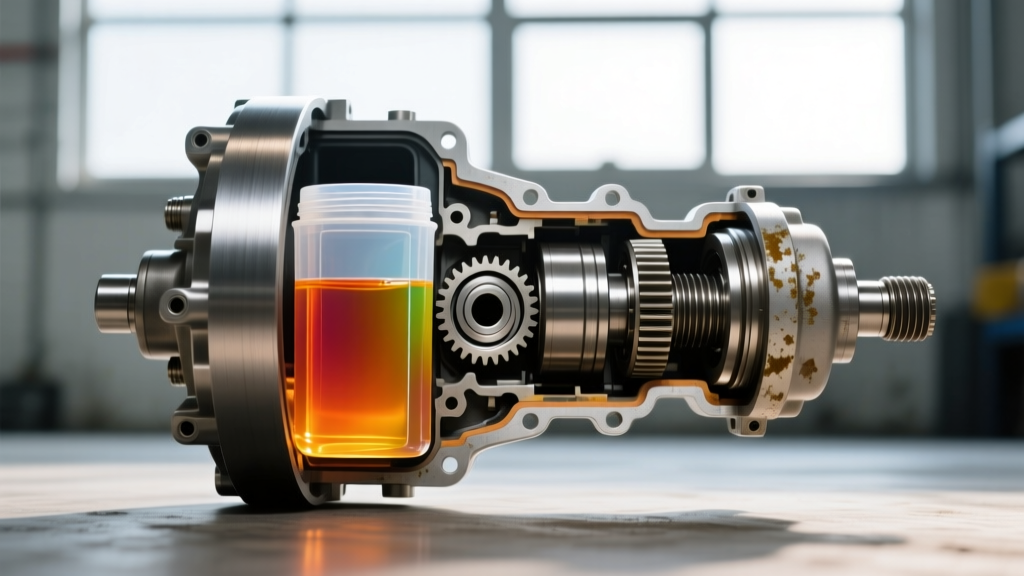
As modern trucks and SUVs continue to push the boundaries of towing capacity and off-road performance, the thermal loads placed on drivetrain components have reached unprecedented levels. Vehicles equipped with AAM 11.5-inch, Ford 10.5-inch Sterling, and Dana 80 axles are routinely subjected to extreme stress when hauling 20,000-pound fifth-wheel trailers or crawling through deep mud in low-range transfer case modes. Under these conditions, standard passive differential cooling fins are entirely inadequate. Gear oil temperatures can easily exceed 250°F (121°C), leading to rapid fluid oxidation, ring and pinion gear deflection, and catastrophic bearing failure.
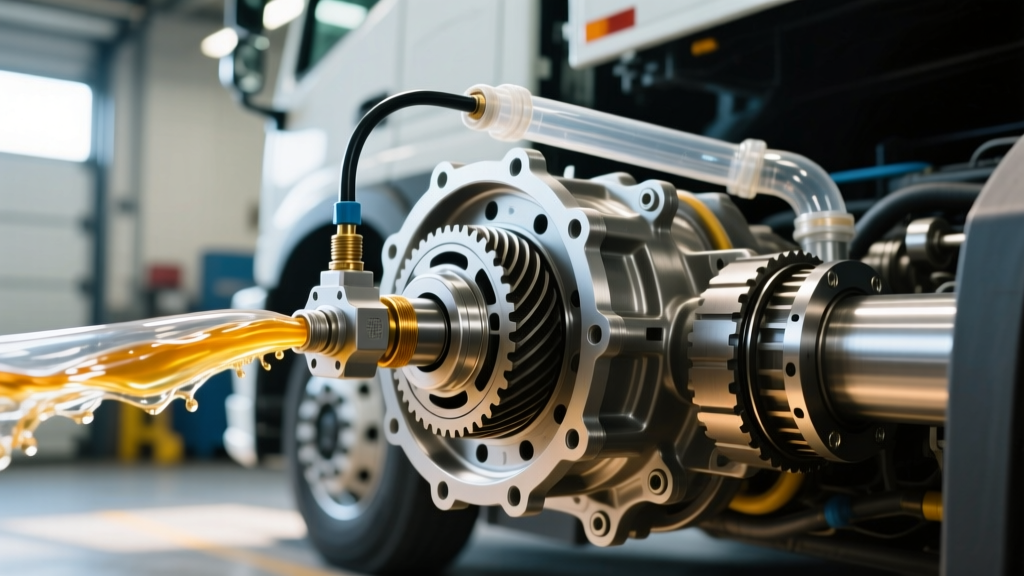
To combat this, OEMs and the aftermarket performance industry have adopted active liquid-cooled axle systems. These systems utilize an electric or mechanical pump to circulate gear oil through an external heat exchanger and an inline filtration unit. The critical component that monitors the health and flow rate of this system is the differential pressure flow sensor. In this comprehensive performance and upgrade guide, we will explore how this sensor functions, how to upgrade your truck's axle cooling circuit, and the exact maintenance protocols required to keep your drivetrain bulletproof in 2026 and beyond.
Understanding the Differential Pressure Flow Sensor
It is vital to clarify the terminology here: in the context of axle cooling systems, the term 'differential pressure' does not refer to the axle assembly itself. Instead, it refers to the pressure difference (Delta-P) measured across the inline fluid filter. The differential pressure flow sensor is a piezoresistive transducer installed with two pressure taps—one upstream and one downstream of the axle cooler's filter housing.
How Delta-P Monitoring Protects Ring and Pinion Gears
As the gear oil circulates, it picks up microscopic metallic particulates from the ring and pinion mesh, as well as clutch material from limited-slip differentials (LSD). The inline filter traps these contaminants. Over time, as the filter loads with debris, the restriction increases. The differential pressure flow sensor continuously monitors this restriction.
- Normal Operation: Clean filter, Delta-P reads between 2 to 5 PSI.
- Moderate Restriction: Filter loading, Delta-P reads 6 to 10 PSI.
- Critical Restriction: Clogged filter or collapsed media, Delta-P exceeds 12 to 15 PSI. The sensor signals the ECU to trigger a dashboard warning or engage a drivetrain limp mode to prevent the pump from cavitating or the axle from starving of lubrication.
Without this sensor, a clogged filter would force the pump to push unfiltered oil through the bypass valve, or worse, result in zero flow to the ring gear and pinion bearings, leading to immediate thermal seizure.
Performance Upgrades for Truck and SUV Axle Systems
For high-horsepower turbo diesel builds, Baja racing applications, or extreme heavy-duty towing, the OEM axle cooler and sensor setup may not provide sufficient thermal transfer or flow volume. Upgrading the system requires a holistic approach to fluid dynamics.
High-Capacity Coolers and Upgraded Filtration
Aftermarket leaders like PPE (Pacific Performance Engineering) and Derale offer heavy-duty axle cooler kits that increase fluid capacity by up to 1.5 quarts and utilize larger, multi-pass heat exchangers. When upgrading to a high-flow system, you must also upgrade the filtration and the monitoring hardware.
Performance kits often utilize a spin-on hydraulic filter (such as a Wix 51396 or equivalent 10-micron synthetic media filter) rather than a restrictive paper cartridge. Because the flow rate of the upgraded pump is higher, the OEM differential pressure flow sensor may read inaccurately or trigger false positives due to the higher baseline dynamic pressure of the thick 75W-140 synthetic gear oil. Upgrading to a programmable 0-30 PSI Delta-P transducer allows you to recalibrate the ECU thresholds via tuning software like HP Tuners or EFI Live, ensuring accurate monitoring of your high-flow axle circuit.
Maintenance Protocol: Fluids, Filters, and Torque Specs
Maintaining an active-cooled differential requires strict adherence to fluid specifications and torque sequences. Using the wrong fluid viscosity will directly affect the differential pressure flow sensor's readings, as thicker fluids generate a higher baseline Delta-P across the filter.
| Parameter | OEM Setup (e.g., Ram 3500 AAM 11.5) | Performance Upgrade (e.g., PPE/Derale Kit) |
|---|---|---|
| Fluid Capacity (with lines) | 3.8 - 4.2 Quarts | 5.0 - 6.5 Quarts |
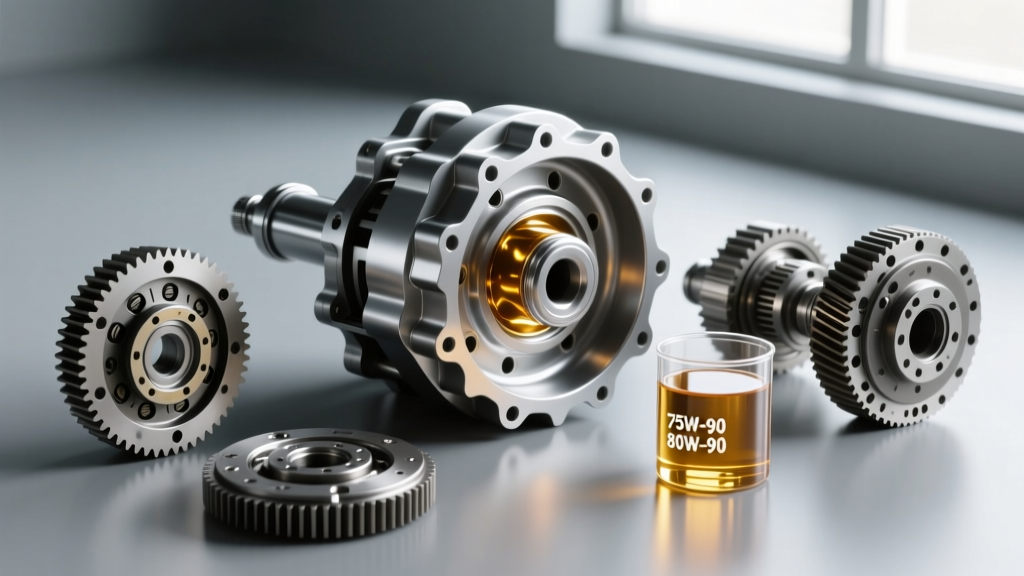
| Recommended Fluid | 75W-90 Synthetic GL-5 | 75W-140 Synthetic GL-5 (e.g., AMSOIL Severe Gear) |
| Filtration Type | Internal Mesh / Inline Cartridge | External Spin-On 10-Micron Hydraulic |
| Normal Delta-P Reading | 2 - 5 PSI | 4 - 8 PSI (due to higher pump GPM) |
| Filter Change Interval | 60,000 Miles (or with fluid) | 15,000 - 30,000 Miles (Heavy Towing) |
Fluid Selection and Friction Modifiers
For severe-duty applications, we recommend AMSOIL Severe Gear 75W-140. Its high shear stability ensures that the fluid maintains its protective film strength even when the ring gear is under extreme load. If your truck is equipped with a clutch-type limited-slip differential (like the Eaton Detroit Truetrac or Auburn Gear LSD), you must add the exact OEM-specified friction modifier (typically 4 oz of Motorcraft XL-3 or equivalent) to prevent chatter, which can introduce excessive clutch debris into the cooler circuit and prematurely clog the filter.
Critical Torque Specifications
When servicing the axle and cooler lines, precision is mandatory. Over-torquing the aluminum differential cover or the cooler line banjo bolts will strip threads and cause catastrophic fluid leaks.
- AAM 11.5 Differential Cover Bolts (M8): 30 lb-ft (41 Nm)
- Ford 10.5 Sterling Cover Bolts (3/8"-16): 33 lb-ft (45 Nm)
- Cooler Line Banjo Bolts (M12x1.5): 18 - 22 lb-ft (24 - 30 Nm) - Always use new copper crush washers.
- Filter Housing Mounting Bolts: 15 lb-ft (20 Nm)
Diagnosing Differential Pressure Flow Sensor Failures
If your truck's EVIC or DIC displays an 'Axle Cooler Flow Restricted' or 'Service Drivetrain' message, the differential pressure flow sensor is the primary suspect. However, do not immediately replace the sensor without verifying the mechanical and electrical conditions of the circuit.
Multimeter Testing and Signal Verification
The sensor typically operates on a standard 3-wire automotive circuit: a 5-Volt reference from the PCM, a chassis ground, and a linear signal return wire. To diagnose the sensor, you will need a digital multimeter (DMM) and a bidirectional scan tool.
- Verify Reference Voltage: With the key in the 'ON' position (engine off), back-probe the reference wire. You should read exactly 4.9V to 5.1V. If it reads 0V, check for a broken wire or a blown PCM fuse.
- Check Ground Integrity: Measure resistance between the sensor ground pin and the battery negative terminal. It should read less than 0.5 ohms.
- Monitor Signal Voltage: Connect the DMM to the signal wire. With the axle cooler pump commanded 'ON' via the scan tool, observe the voltage. A normal reading with a clean filter is typically 0.8V to 1.5V. If the voltage immediately spikes to 4.2V or higher upon pump activation, the filter is severely restricted, or the sensor's internal diaphragm has ruptured.
- Mechanical Bypass Test: To confirm if the sensor is faulty or if the filter is genuinely clogged, temporarily install a bypass loop (removing the filter). If the Delta-P voltage drops back to the 0.5V - 1.0V range, the sensor is functioning perfectly, and your filter requires immediate replacement.
Final Thoughts on Drivetrain Longevity
The integration of active cooling and advanced monitoring hardware like the differential pressure flow sensor represents a massive leap forward in heavy-duty truck and SUV reliability. However, these systems are not 'set and forget.' Upgrading to high-capacity coolers, utilizing top-tier synthetic 75W-140 fluids, and strictly adhering to filter change intervals will ensure that your ring and pinion gears survive the most punishing environments. For further engineering specifications on heavy-duty axle platforms, consult the technical resources available at Dana Incorporated. By treating your axle cooling system with the same maintenance rigor as your engine oil circuit, you guarantee maximum performance and drivetrain longevity.