The Science of the Automatic Downshift: How Sensors Dictate Timing
Modern automatic transmissions are no longer governed by simple mechanical valves and centrifugal weights. Today, determining exactly when to downshift automatic transmission gearsets relies entirely on a complex network of electronic inputs managed by the Transmission Control Module (TCM). If you are experiencing harsh downshifts, delayed kickdowns, or erratic gear hunting, the culprit is rarely the clutch packs themselves. Instead, you must ask: what sensors affect transmission shifting, and are they providing accurate data?
From a buyer's perspective, replacing a failing sensor is a fraction of the cost of a full transmission rebuild. However, the market is flooded with OEM, premium aftermarket, and budget-tier sensors. Choosing the wrong component can lead to immediate shift degradation or even catastrophic clutch burnout due to miscalculated line pressure. In this 2026 comparison and buyer's guide, we break down the critical sensors that control your downshift points, compare top replacement brands, and provide the exact torque specs you need for a flawless installation.
Critical Sensors That Control Downshift Points
Before purchasing replacement parts, it is vital to understand the specific roles these sensors play in the TCM's shift logic algorithm.
1. Throttle Position (TPS) & Accelerator Pedal Position (APP) Sensors
The TPS or APP sensor is the primary indicator of driver load demand. When you depress the accelerator, the TCM cross-references the APP voltage (typically 0.5V at idle to 4.5V at wide-open throttle) against the current Vehicle Speed Sensor (VSS) reading. If the APP signal spikes rapidly, the TCM commands a 'kickdown' solenoid valve to force an immediate downshift. A failing TPS with a dead spot will cause the transmission to 'hang' in a higher gear, resulting in severe engine lugging and excessive heat generation.
2. Input and Output Speed Sensors (ISS / OSS)
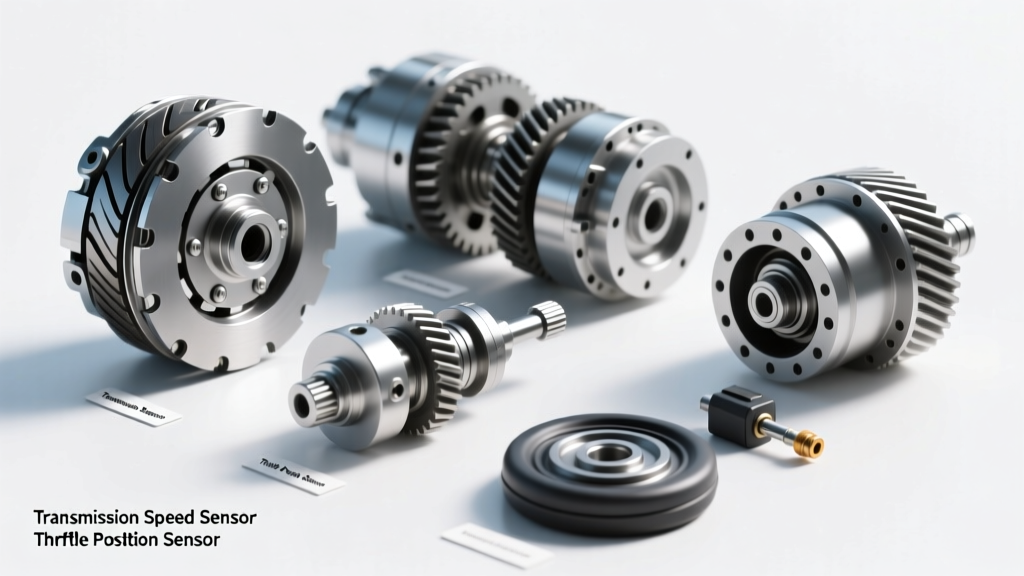
The ISS (Turbine Shaft Speed) and OSS (Vehicle Speed) are the most critical sensors for shift quality. The TCM calculates the gear ratio and clutch slip by dividing the ISS signal by the OSS signal. During a downshift, the TCM commands a specific pressure control solenoid (PCS) curve to synchronize the oncoming clutch. If the OSS drops out or provides erratic data, the TCM defaults to a fail-safe mode, commanding maximum line pressure to prevent clutch slip, which results in a violent, neck-snapping downshift. According to Transmission Digest, erratic OSS signals are the leading cause of unwarranted transmission replacements in GM 6L80 and Ford 6R80 units.
3. Transmission Fluid Temperature (TFT) Sensor
Fluid viscosity changes drastically with temperature. The TFT sensor dictates shift timing and line pressure based on thermal conditions. When the fluid is cold (below 40°F), the TCM delays downshifts and raises line pressure to compensate for thicker fluid, preventing shift flare. If the TFT sensor fails and reads -40°F continuously, your transmission will shift harshly and refuse to engage overdrive or execute smooth downshifts, even after reaching operating temperature.
2026 Buyer’s Guide: OEM vs. Aftermarket Sensor Comparison
When sourcing replacement sensors, the price delta between OEM, premium aftermarket, and budget import brands can be staggering. Below is a comparison chart based on the three most common rear-wheel-drive automatic transmissions on the road today: the GM 6L80/8L90, the Ford 6R80/10R80, and the ZF 8HP series.
| Sensor Type & Application | OEM Brand & Part Number | Premium Aftermarket | Budget / Import | OEM Price Range | Downshift Impact if Failing |
|---|---|---|---|---|---|
| Output Speed Sensor (OSS) GM 6L80 / 8L90 |
ACDelco #24207498 |
Standard Motor Products #S10054 |
Duralast / SU10412 | $45 - $65 | Harsh 3-2 and 2-1 downshifts; TCM defaults to high line pressure. |
| Molded Leadframe (ISS/OSS/TFT) Ford 6R80 / 10R80 |
Motorcraft #BL3Z-7G101-A |
N/A (OEM Recommended) | Various Import Clones | $180 - $240 | Loss of gear ratio calculation; transmission enters limp mode (3rd gear only). |
| Mechatronic Conductor Plate ZF 8HP70 / 8HP90 |
ZF Original #1068.298.062 |
Sonnax Repair Kits | eBay Unbranded | $350 - $450 | Delayed downshifts, gear hunting, and 'Transmission Fault' dash warnings. |
| Accelerator Pedal Position (APP) Universal / Drive-by-Wire |
OEM Varies by Chassis | Bosch / VDO | Generic Imports | $90 - $160 | Failure to command kickdown; sluggish throttle response and late downshifts. |
Expert Warning: For Ford 6R80 and 10R80 transmissions, the ISS, OSS, and TFT sensors are integrated directly into a single molded lead frame. Do not attempt to save money by splicing in generic pigtail sensors. Furthermore, for ZF 8HP units, Sonnax Technical Resources highly recommends replacing the mechatronic sealing sleeve alongside the conductor plate, as hardened O-rings are a primary cause of internal cross-leaks that mimic sensor failures.
Real-World Scenarios: Tuning Your Downshifts for Towing and Mountains
Understanding what sensors affect transmission shifting is only half the battle; knowing how they adapt to extreme environments is crucial for enthusiasts and commercial towers.
Towing and Grade Braking
When towing a heavy load down a steep grade, the TCM relies heavily on the MAP (Manifold Absolute Pressure) sensor and the VSS. If the VSS detects acceleration without a corresponding increase in APP voltage (meaning the driver is coasting downhill), the TCM initiates 'Grade Braking.' It will aggressively downshift to a lower gear to utilize engine compression. If your MAP sensor is fouled with carbon, the TCM cannot accurately calculate engine load, resulting in inadequate downshifting and overheated brakes.
Mountain Passes and Altitude Changes
At high altitudes, naturally aspirated engines produce less torque. The TCM uses the MAP and Barometric (BARO) sensors to alter the shift schedule. Downshifts will occur at higher RPMs to keep the engine in its peak powerband. If you are driving a turbocharged vehicle (like those equipped with the ZF 8HP or Ford 10R80), the Boost Pressure Sensor becomes a vital input. A failing boost sensor will cause the TCM to assume the engine is making less torque than it actually is, leading to premature upshifts and dangerously late downshifts when climbing inclines.
Diagnostic Trouble Codes (DTCs) Linked to Downshift Failures
Before throwing parts at a shifting issue, pull the TCM codes. Here are the most common DTCs associated with sensor-driven downshift failures:
- P0717 (Input Speed Sensor Circuit No Signal): The TCM cannot see the torque converter turbine speed. Downshifts will be aborted or extremely harsh to protect the clutches from slip.
- P0720 (Output Speed Sensor Circuit Malfunction): Often caused by metal shavings on the magnetic tip of the OSS. Cleaning the sensor tip with a rare-earth magnet can sometimes resolve this without replacement.
- P0711 (TFT Sensor Circuit Range/Performance): The sensor is reading a temperature that defies logic (e.g., -20°F after driving for an hour). This locks the transmission into a high-pressure, cold-shift schedule.
- P0222 / P0223 (TPS/APP Circuit Low/High): The TCM detects a voltage mismatch between the dual redundant tracks inside the pedal assembly, disabling kickdown downshifts entirely.
Installation Torque Specs and Best Practices
Proper installation is just as critical as buying the right part. Over-torquing sensor bolts can crack the sensor housing or strip the aluminum transmission case threads, leading to catastrophic fluid leaks.
GM 6L80 / 8L90 Output Speed Sensor
The OSS is located on the passenger side of the case, near the extension housing.
Fluid Capacity Note: You do not need to drain the entire transmission (11.2 quarts dry fill) to replace this. Simply lower the fluid level by removing the pan drain plug or lowering the pan slightly (approx. 6 quarts).
Torque Spec: The M6 x 1.0 mounting bolt must be torqued to exactly 11 Nm (97 lb-in). Do not exceed this, as the case threads are prone to stripping.
Ford 6R80 / 10R80 Molded Leadframe
Replacing the lead frame requires dropping the valve body.
Best Practice: Always use the official Motorcraft alignment pins when seating the new leadframe to the valve body separator plate. Misalignment will pinch the internal wiring traces.
Torque Spec: The valve body-to-case bolts (and leadframe retaining bolts) must be torqued to 10 Nm (89 lb-in) in the specific star-pattern sequence outlined in the Ford Workshop Manual to prevent valve body warping.
Final Verdict: What Should You Buy?
When diagnosing what sensors affect transmission shifting in your specific vehicle, always prioritize OEM or Tier-1 supplier parts (like Bosch, VDO, or ZF Original). While budget sensors from online marketplaces might save you $30 upfront, their inconsistent voltage curves and poor magnetic reluctor tolerances will inevitably lead to shift flare, accelerated clutch wear, and repeated trips to the service bay. For critical components like the Ford molded leadframe or ZF mechatronic plate, OEM is the only logical choice to ensure your automatic transmission downshifts smoothly and reliably for the next 100,000 miles.
For further reading on internal hydraulic failures that mimic electrical sensor issues, consult the technical archives at Bosch Mobility Solutions or your vehicle manufacturer's specific service bulletins.