The Baseline: Evaluating Axle Health Through Fluid Analysis
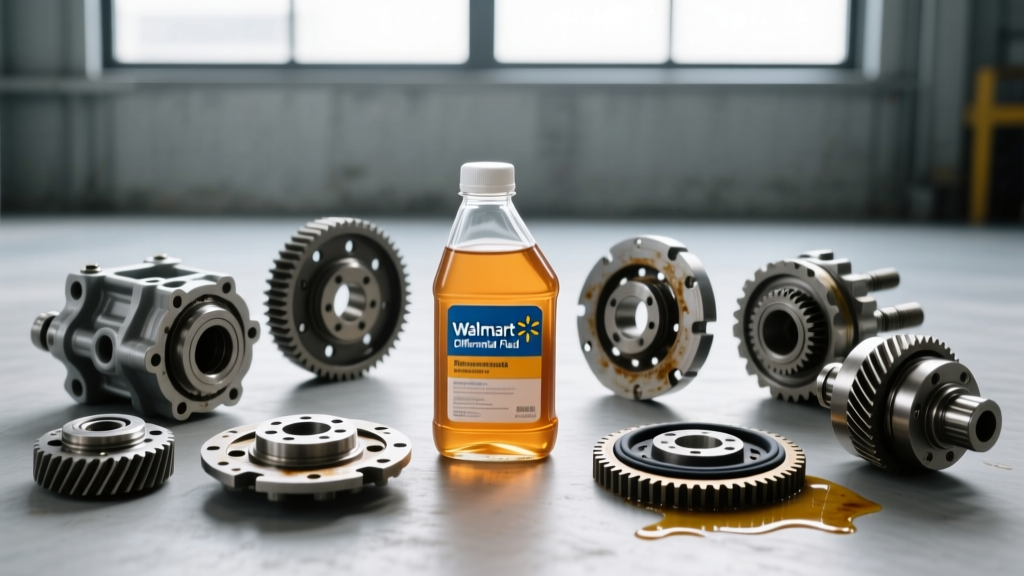
As we navigate the 2026 automotive landscape, a growing number of truck and SUV manufacturers continue to push the narrative of "lifetime" differential fluids. However, veteran drivetrain mechanics know that hypoid gear sets, limited-slip clutch packs, and heavy towing loads will inevitably degrade even the most advanced synthetic lubricants. When it comes time for preventive maintenance, many DIYers and independent shops turn to the local supercenter for convenience and pricing. Searching for the right Walmart differential fluid yields a wide spectrum of options, from budget-friendly house brands to premium synthetics like Mobil 1 and Valvoline.
But buying the fluid is only half the battle. The true value of a differential service lies in the forensic analysis of the fluid you drain out. By closely examining the color, viscosity, and particulate matter of your old gear oil, you can diagnose internal axle health, predict impending failures, and determine if your current maintenance interval is adequate. This guide will teach you how to read the story your differential fluid is telling you.
Decoding Differential Fluid Color Changes
Fresh API GL-5 gear oil typically presents as a clear, translucent amber or honey color. Some premium synthetics utilize proprietary dyes—such as Royal Purple’s namesake hue or Red Line’s distinct red tint—to help identify leaks and differentiate them from engine oil or ATF. Once installed in a differential, the fluid’s color will immediately begin to change due to thermal cycling, shear forces, and the unique sliding friction of hypoid ring and pinion gears.
Dark Brown to Opaque Black
A transition from amber to dark brown is a normal part of the oxidation process and the suspension of microscopic carbon soot. However, if the fluid drains out opaque black and thick like tar, it indicates severe thermal breakdown. This is especially common in differentials subjected to heavy towing or off-road crawling where fluid temperatures exceed 300°F. In Limited Slip Differentials (LSDs), the friction modifier additives and the organic clutch materials themselves shed carbon as they wear, accelerating this darkening process.
Milky, Frothy, or "Chocolate Milk"
If your differential fluid resembles a cup of coffee with heavy cream, you have a water intrusion problem. Gear oil and water emulsify when agitated by the rotating ring gear. This milky condition destroys the fluid’s hydrodynamic film strength, leading to rapid metal-on-metal wear. Water typically enters through a submerged axle seal during water crossings, or more commonly, through a clogged or missing differential breather tube. When the axle cools down after a hot run, it creates a vacuum that sucks in ambient moisture if the breather is blocked.
Greenish or Copper Tint
A distinct green or copper sheen in the fluid indicates the wear of bronze or brass components. While most standard open differentials rely on steel and iron, some aftermarket lockers, thrust washers, or specific limited-slip clutch plates utilize copper-alloy metallurgy. If you see this tint, check your differential specifications to ensure you are using a GL-5 fluid with the correct sulfur-phosphorus additive balance, as excessive sulfur can corrode yellow metals over time.
Particulate Matter: Glitter vs. Chunks
When you pull the drain plug (or the bottom bolt on a Dana 44 cover), pay close attention to the magnet. The type of metal trapped on the magnet is a direct window into your gear set's mechanical condition.
- Fine Metallic Glitter: A paste-like coating of fine metallic dust is entirely normal for the first 10,000 to 15,000 miles as the ring and pinion gears undergo their initial break-in and wear-mating process.
- Needle-like Shavings: If you find distinct, needle-shaped shavings, your pinion bearings or carrier bearings are beginning to spall and cage failure may be imminent.
- Large Chunks or Teeth Fragments: This is a catastrophic indicator. Chipped gear teeth or large shards of metal mean the ring and pinion must be replaced immediately. Continuing to drive will result in a seized axle.
Smell and Viscosity: The Overlooked Diagnostics
Gear oil naturally possesses a pungent, sulfurous odor reminiscent of rotten eggs. This is due to the Extreme Pressure (EP) additives—specifically sulfur and phosphorus compounds—required to protect the high-sliding forces of hypoid gears. However, a burnt, acrid smell that stings the nostrils indicates the base oil has exceeded its thermal limits and oxidized.
Furthermore, test the viscosity by rubbing the fluid between your gloved fingers. If a 75W-90 fluid feels as thin as water or a light 10W-30 engine oil, it has suffered from severe mechanical shearing. The long-chain polymers that give multi-grade gear oils their viscosity index have been permanently chopped up by the gear teeth, meaning the fluid can no longer maintain a protective wedge under heavy loads. Forums dedicated to tribology, such as Bob Is The Oil Guy, frequently feature used oil analysis (UOA) reports highlighting how budget gear oils shear out of grade much faster than premium ester-based synthetics.
Fluid Condition Diagnostic Matrix
| Visual / Olfactory Symptom | Probable Cause | Preventive Action Required |
|---|---|---|
| Translucent Amber / Honey | New or healthy fluid | Continue normal service interval |
| Opaque Black, Tar-like | Severe thermal oxidation, LSD clutch wear | Flush, refill, and reduce service interval by 30% |
| Milky / Emulsified | Water intrusion via seal or breather | Replace axle seals, clear/upgrade breather tube immediately |
| Burnt, Acrid Odor | Overheating (>300°F), additive depletion | Install differential cover with cooling fins, upgrade to synthetic |
| Needle-like Metal Shavings | Bearing cage spalling / roller wear | Tear down, inspect carrier and pinion bearings |
Walmart Shelf Breakdown: Budget vs. Premium Synthetics
When standing in the automotive aisle evaluating Walmart differential fluid options, you are generally looking at three tiers of API GL-5 lubricants. Understanding their additive packages is crucial for preventive maintenance.
1. Conventional / Budget Synthetics (e.g., Super Tech): Often manufactured by large private-label blenders like Warren Distribution, these fluids meet the baseline API GL-5 and MT-1 specifications. They are perfectly adequate for standard commuter vehicles with open differentials. However, their shear stability and resistance to foaming under heavy towing loads are inferior to top-tier synthetics.
2. Mainstream Synthetics (e.g., Valvoline, Castrol): These offer a robust balance of price and performance. They typically feature higher-quality base stocks that resist thermal breakdown better than conventional oils, making them a solid choice for half-ton trucks that see occasional towing.
3. Premium Synthetics (e.g., Mobil 1 Synthetic 75W-90): Widely available at Walmart, Mobil 1 utilizes advanced polyalphaolefin (PAO) base stocks. According to manufacturer data from Valvoline Global and competing technical sheets, premium synthetics maintain their kinematic viscosity far longer under extreme shearing forces. If you are running a modified Jeep Wrangler with 35-inch tires or a heavy-duty tow rig, the premium shelf is where your preventive maintenance dollars are best spent.
Expert Note on Friction Modifiers: If your vehicle is equipped with a clutch-type Limited Slip Differential (like the Ford 8.8 Traction-Lok or Chrysler 8.25), standard GL-5 fluid is not enough. You must add a specific friction modifier (e.g., Ford XL-3 or equivalent) to prevent clutch chatter. Some premium fluids labeled "LS" have this pre-mixed, but many mechanics prefer adding it manually to fine-tune the clutch engagement.
Preventive Maintenance: Drain, Inspect, and Refill Specs
Proper preventive maintenance requires more than just swapping the fluid; it demands precision during reassembly to prevent leaks and ensure longevity. Always consult your specific OEM manual, but here are standard benchmarks for popular axles found on the road today, referencing data from Dana Spicer and OEM service guidelines:
Ford 8.8-Inch (Solid Axle / IRS)
- Capacity: ~2.5 to 3.0 pints (varies by cover design).
- Fill Plug Torque: 25 - 33 lb-ft (Typically a 3/8" square drive or 13mm/15mm bolt).
- Preventive Tip: The 8.8 is notorious for leaking around the pinion seal and axle shaft seals. When draining, inspect the fluid for water intrusion, as the low-hanging pumpkin is highly susceptible to deep puddle submersion.
Jeep Dana 44 (JK / JL Wrangler)
- Capacity: ~2.0 to 2.5 quarts.
- Fill Plug Torque: 25 - 35 lb-ft (Usually a 1/2" bolt head).
- Preventive Tip: The Dana 44 often lacks a dedicated drain plug, requiring the removal of the entire differential cover. Use a high-quality RTV silicone (like Permatex Ultra Black) or a reusable gasket (like Lube Locker) and allow proper cure time before refilling to prevent slow seeps.
GM 9.5-Inch (14-Bolt Semi-Floating)
- Capacity: ~2.75 quarts.
- Fill Plug Torque: ~25 lb-ft.
- Preventive Tip: Commonly found in 3/4-ton and 1-ton GM trucks, these axles generate immense heat when towing near max GCWR. Consider upgrading to an aftermarket PTO or finned aluminum differential cover to increase fluid capacity and dissipate heat, extending the life of your 75W-90 synthetic.
Final Thoughts on Axle Longevity
Whether you opt for a budget-friendly conventional oil or a top-tier synthetic from the Walmart automotive aisle, the physical act of inspecting the fluid is what separates reactive repairs from true preventive maintenance. By taking five extra minutes to analyze the color, smell, and particulate matter of your differential fluid, you can catch a failing pinion bearing or a compromised axle seal long before it leaves you stranded on the side of the road. Treat your drivetrain fluids as a diagnostic tool, and your ring and pinion gears will easily outlast the chassis they are bolted to.