The Mechanics of Volvo Truck Clutch Problems: Drag vs. Release
When diagnosing Volvo truck clutch problems in heavy-duty VNL and VHD models, technicians must first differentiate between clutch drag and clutch release failure. While both result in difficult gear engagement, the root causes and mechanical behaviors are entirely distinct. In 2026, with the widespread integration of automated manual transmissions (AMTs) like the Volvo I-Shift ATO2612F alongside traditional Eaton Fuller manuals, understanding these nuances is critical for accurate drivetrain diagnostics.
Clutch drag occurs when the friction disc fails to fully disengage from the flywheel, causing the input shaft to continue spinning even when the pedal is depressed. Release failure, conversely, often stems from hydraulic blockages, warped pressure plates, or misadjusted clutch brakes that prevent the release bearing from applying adequate force to the diaphragm springs.
| Symptom | Clutch Drag Indicators | Release Failure Indicators |
|---|---|---|
| Shifting Behavior | Grinding on forward gears; truck creeps with pedal floored | Pedal feels stiff or spongy; inability to engage gear at all |
| Reverse Gear | Severe grinding (reverse lacks synchronizers) | Complete refusal to engage without engine off |
| Pedal Feel | Normal pressure, but mechanical travel is insufficient | Erratic pressure, air in lines, or master cylinder bypass |
| Component Wear | Glazed friction material, warped flywheel | Pitted throwout bearing, worn clutch brake, scored fork |
Step-by-Step Troubleshooting and Adjustment Guide
Addressing these issues requires a systematic approach, moving from the cab interior to the bell housing. The following steps apply primarily to manual and semi-manual setups utilizing 15.5-inch single or twin-plate clutches (such as the Eaton Solo or Meritor Easy Pedal series) paired with Volvo D11 or D13 engines.
Step 1: Verify Pedal Free Play and Mechanical Linkage
The most common cause of minor clutch drag is insufficient pedal free play. If the throwout bearing rides constantly against the clutch fingers, it causes premature wear and prevents full clamping force, which paradoxically leads to slipping and subsequent heat warping (causing drag).
- Target Specification: Measure the free play at the top of the clutch pedal pad. For most Volvo VNL models with mechanical linkage, the spec is 1.5 to 2.0 inches.
- Adjustment Procedure: Locate the clutch linkage rod under the cab or at the firewall. Loosen the jam nut and turn the adjusting sleeve to increase or decrease rod length. Re-torque the jam nut to 35-45 lb-ft.
- Inspection Point: Check the cross-shaft bushings and Z-bar pivots. Worn bushings absorb pedal travel, meaning the release bearing never reaches its full stroke, resulting in incomplete disengagement.
Step 2: Evaluate the Hydraulic Assist System
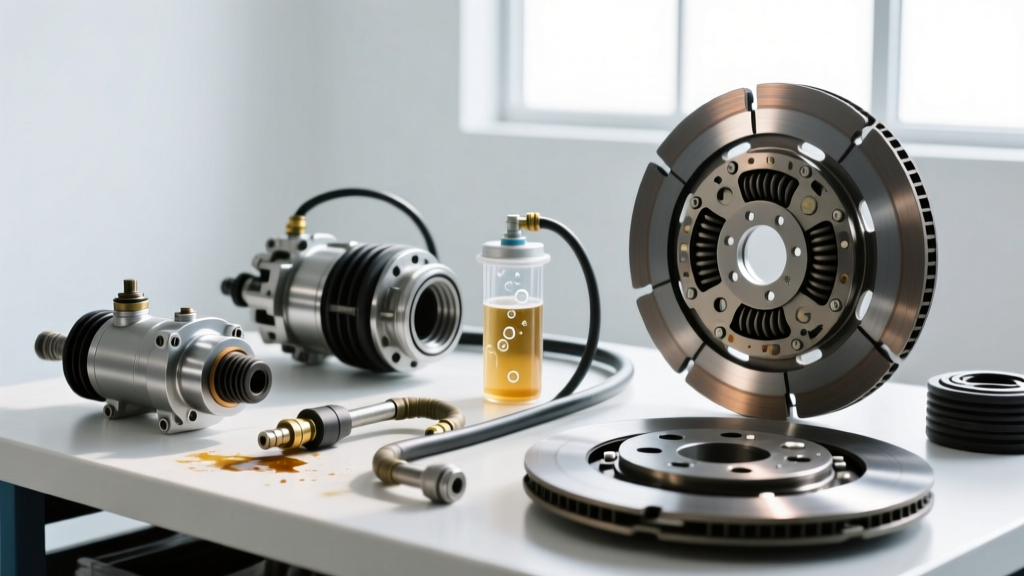
Modern Volvo trucks utilize a hydraulically assisted clutch system. Air entrapment or a failing concentric slave cylinder (CSC) will result in a spongy pedal and incomplete release.
- Check Fluid Level: Inspect the master cylinder reservoir (often shared with the brake system or a standalone DOT 4 reservoir). Low fluid indicates a leak at the CSC inside the bell housing.
- Bleed the System: Attach a clear hose to the slave cylinder bleed valve. Pump the pedal 10 times, hold pressure, open the valve, and close it before releasing the pedal. Repeat until no air bubbles are visible.
- Master Cylinder Pushrod: Verify the master cylinder pushrod has 0.050 to 0.100 inches of clearance before engaging the piston. Lack of clearance will block the compensation port, trapping fluid and causing the clutch to drag slightly even when released.
Step 3: Inspect the Clutch Brake and Release Fingers
The clutch brake is a friction disc located on the transmission input shaft that stops the shaft from spinning, allowing for smooth stationary gear engagement. Its adjustment is critical for proper release bearing travel.
- Clutch Brake Squeeze: Measure the distance from the fully depressed clutch pedal to the floor mat. This 'squeeze' distance should be exactly 0.50 to 0.75 inches.
- Too Much Squeeze (>0.75"): The clutch brake is worn, or the linkage is over-adjusted. The release bearing cannot push the fingers far enough, causing clutch drag and gear grinding.
- Too Little Squeeze (<0.50"): The throwout bearing will continuously ride on the clutch brake, destroying the bearing and the brake within a few thousand miles. Replace the clutch brake (Part # Eaton K-3651 or equivalent) if it measures less than 0.150 inches thick.
Step 4: Bell Housing and Internal Component Verification
If external adjustments fail to resolve the Volvo truck clutch problems, the transmission must be dropped to inspect the bell housing internals. According to Volvo Trucks Service guidelines, flywheel runout and release fork wear are primary culprits for persistent drag.
- Flywheel Runout: Mount a dial indicator on the block and measure the flywheel face. Maximum allowable runout for a D13 engine flywheel is 0.008 inches. Excessive runout causes the friction disc to wobble, preventing it from clearing the flywheel even when the pressure plate is fully retracted.
- Release Fork and Pivot Ball: Inspect the fork pads where they contact the throwout bearing sleeve. If wear exceeds 0.030 inches, the fork geometry changes, reducing the mechanical advantage and limiting release travel.
- Friction Disc Hub Spline: Check for rust or debris on the transmission input shaft splines. If the disc cannot slide freely back and forth on the splines, it will hang up and drag. Clean with emery cloth and apply a very light coat of high-temp spline grease (avoid over-greasing, which will contaminate the friction material).
Volvo I-Shift (ATO2612F) Automated Clutch Release Issues
For Volvo trucks equipped with the I-Shift AMT, clutch drag and release issues manifest differently, as there is no physical pedal linkage. Instead, the Transmission ECU (TECU) commands an electronic clutch actuator (ECA).
Common diagnostic trouble codes (DTCs) related to release problems include MID 144 PSID 231 (Clutch Actuator Stroke Length Error) or MID 144 SID 232 (Clutch Engagement Fault). When the ECA fails to push the release fork far enough, the TECU detects a mismatch between the commanded position and the actual input shaft RPM drop.
Calibration Fix: Using the Volvo Premium Tech Tool (PTT), perform a 'Clutch Actuator Calibration'. This forces the ECA to relearn the bite point and the fully released position. If the calibration fails to complete, the internal clutch stroke is physically out of bounds, indicating a worn pressure plate, a broken diaphragm spring, or a failed ECA motor. Refer to Eaton's Heavy-Duty Transmission Resources for AMT actuator bench-testing procedures.
2026 Cost Estimates and Replacement Intervals
When adjustments and bleeding fail to cure the drag or release issue, a complete clutch replacement is necessary. Below are the current market estimates for heavy-duty Volvo truck clutch overhauls.
| Component / Service | Part Number Example | Estimated Cost (USD) | Notes |
|---|---|---|---|
| 15.5" Twin-Plate Clutch Kit | Sachs 3400 117 001 | $1,800 - $2,600 | Includes pressure plate, discs, and mid-plate |
| Throwout Bearing & Fork Kit | Eaton K-3655 | $350 - $550 | Always replace during a clutch swap |
| Clutch Brake | Eaton K-3651 | $85 - $120 | Verify thickness before reuse |
| Hydraulic Slave Cylinder (CSC) | Volvo 20506214 | $250 - $400 | Requires transmission removal to access |
| Shop Labor (Drop & Install) | N/A | $1,650 - $2,400 | Based on 11-16 hours @ $150/hr shop rate |
Final Diagnostic Takeaways
Resolving Volvo truck clutch problems requires a methodical elimination of variables. Never assume a dragging clutch requires immediate replacement; over 60% of release complaints can be traced back to improper clutch brake squeeze, air in the hydraulic assist lines, or worn external linkage bushings. By adhering strictly to the 1.5-inch free play and 0.50-inch squeeze specifications, fleet technicians can maximize clutch lifecycle and eliminate drivetrain binding. For further technical bulletins and heavy-duty drivetrain standards, consult the Technology & Maintenance Council (TMC) recommended practices on clutch system maintenance.