The Wet Clutch Reality: Why Your KTM Smells Like Burnt Toast
When you are navigating a technical enduro section or railing berms on a motocross track, the last thing you want to experience is the acrid, unmistakable stench of a burning clutch. For riders of modern KTM, Husqvarna, and GasGas motorcycles, the KTM hydraulic clutch system is a marvel of modulation and consistency. However, when a burning smell penetrates your helmet, it is a critical diagnostic indicator that demands immediate attention. Ignoring this symptom will rapidly escalate from a simple slip to a catastrophic failure of the clutch basket, transmission input shaft, and engine oil degradation.
To properly diagnose this issue, we must first establish a fundamental mechanical truth: KTM motorcycle clutches are wet clutches. They operate submerged in the engine's main oil sump. Therefore, the "burning" smell is rarely just friction material; it is a complex cocktail of superheated friction plates, sheared engine oil polymers, and occasionally, boiling hydraulic fluid leaking onto hot engine cases. This article provides a master-level diagnostic framework to isolate the root cause of the burn, complete with exact measurement tolerances, torque specifications, and OEM replacement economics for the 2026 riding season.
Decoding the Odor: Friction Burn vs. Hydraulic Fluid Boil
Before tearing into the crankcase, use your senses to narrow down the failure point. The specific profile of the smell will dictate your diagnostic path.
- Sulfur / Asbestos / Burnt Hair Smell: This indicates the friction plates are glazing and burning. This is caused by excessive slip, weak clutch springs, or a failing hydraulic slave cylinder that is not allowing the clutch pack to fully engage.
- Sweet / Chemical Acridity: If your KTM uses a Brembo master cylinder running DOT 4 or DOT 5.1 fluid, a leaking hydraulic line or master cylinder seal will drip fluid onto the hot exhaust header or engine cases, creating a sharp, chemical burn smell.
- Rancid / Burnt Toast (Oil Degradation): Wet clutches rely on the shear stability of the engine oil. If the oil has lost its JASO MA2 friction-modifier integrity due to extreme heat or extended intervals, the clutch will slip continuously, literally boiling the oil inside the sump.
Brembo vs. Magura: The Hydraulic Actuation Variable
A massive variable in KTM hydraulic clutch diagnostics is the master cylinder manufacturer. KTM has historically alternated between Brembo and Magura systems depending on the model year and platform (e.g., SX-F vs. EXC). Misdiagnosing the fluid type is a fatal error.
The Fluid Mismatch Hazard
Brembo systems require glycol-based DOT 4 or DOT 5.1 brake fluid. Magura systems require Mineral Oil (often branded as Magura Blood). If a previous owner or an inexperienced mechanic topped off a Magura system with DOT fluid, the mineral oil seals will swell, bind, and fail to retract. This keeps the clutch pushrod slightly depressed, preventing full clutch engagement and causing a continuous, low-level slip that generates immense heat and a persistent burning smell.
Expert Warning: Never flush a Magura mineral oil system with DOT fluid, and never put mineral oil in a Brembo DOT system. According to Brembo's official motorcycle hydraulic guidelines, glycol-based fluids are highly hygroscopic and require specific EPDM seal compounds. Mixing fluids will destroy the master and slave cylinders within miles.
Diagnostic Matrix: Isolating the Burn Source
Use the following troubleshooting matrix to systematically isolate the cause of your KTM clutch burning smell.
| Symptom Profile | Lever Feel & Behavior | Probable Root Cause | Verification Method |
|---|---|---|---|
| Burnt smell + lever feels "spongy" or pulls to the bar | Lever engages very close to the grip; fluid level is low. | Hydraulic leak at slave cylinder O-rings or banjo bolt; air in the system. | Inspect slave cylinder pushrod seal for weeping fluid; pressure bleed the system. |
| Burnt smell + lever has zero free-play, feels rigid | Clutch never fully engages; bike creeps in gear with lever pulled. | Master cylinder piston failing to retract; incorrect pushrod length; wrong fluid type. | Check for 1-2mm free-play at the lever blade before hydraulic pressure builds. |
| Burnt smell + normal lever feel, but bike bogs under load | Lever feels normal, but RPMs climb without proportional acceleration. | Worn friction plates, warped steel plates, or degraded JASO MA2 engine oil. | Drain oil (check for metallic/glitter debris); measure clutch pack stack height. |
| Burnt smell + rattling noise at idle | Lever feel is normal, but there is a distinct metallic clatter from the right casing. | KTM DDS (Damped Diaphragm Steel) rubber dampers have disintegrated. | Remove clutch cover; inspect steel plates for missing rubber dampers and basket notching. |
Teardown Tolerances: DDS Baskets and Friction Plates
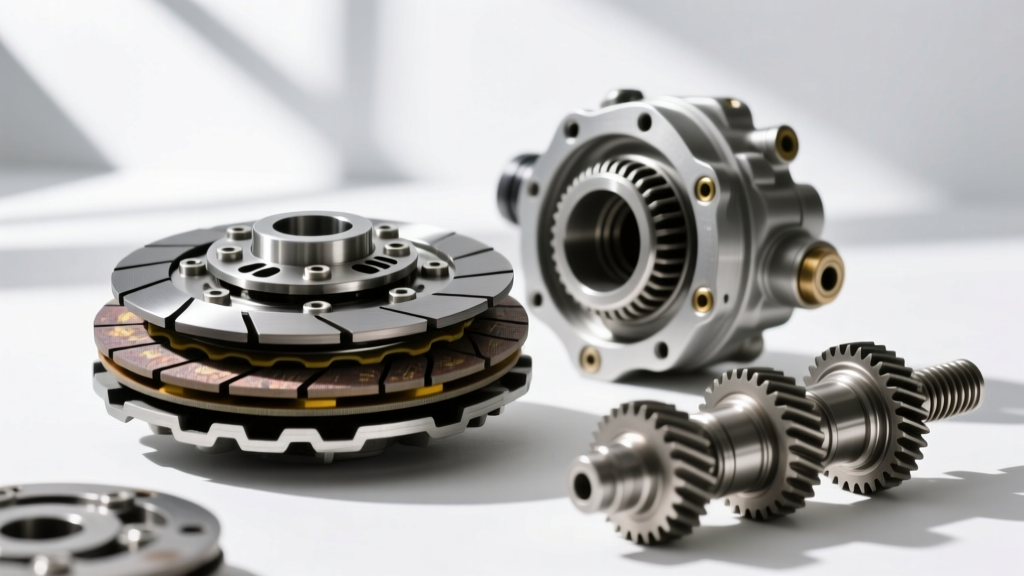
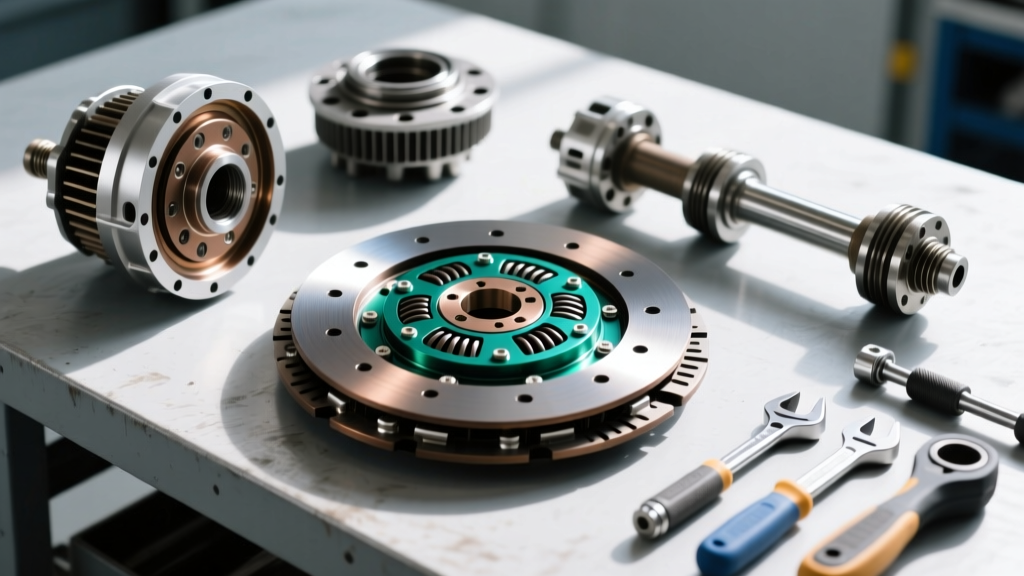
If the hydraulic system checks out and the master/slave cylinders are actuating properly, the burning smell is originating inside the clutch cover. Modern KTM 4-strokes utilize the DDS (Damped Diaphragm Steel) clutch system, which incorporates a diaphragm spring and rubber-damped steel plates to absorb driveline shock. When diagnosing a burnt clutch pack, precision measurement is mandatory.
Measurement Specifications
Refer to this data table when inspecting your disassembled clutch pack. Always measure friction plates at four equidistant points using a digital micrometer.
| Component | Nominal (New) Spec | Absolute Service Limit | Failure Mode Indicator |
|---|---|---|---|
| Friction Plate Thickness | 3.00 mm | 2.50 mm (Replace if below) | Glazing, cork crumbling, or sintered bronze smoothing. |
| Steel Plate Warp | 0.00 mm (Flat) | 0.10 mm max deviation | Blueing (heat spots) indicating localized slip and burn. |
| Clutch Spring Free Length | Model specific (e.g., 48.5 mm) | -2.0 mm from nominal | Sagging springs reduce clamping force, causing slip. |
| DDS Rubber Damper | Flush with steel plate | Cracked, missing, or extruded | Causes uneven clamping pressure and basket notching. |
Reassembly Torque Specifications
Improper reassembly after a burn diagnosis will guarantee a repeat failure. When reinstalling the clutch center nut on a KTM 450 SX-F or 350 XCF-W, the factory specification is 80 Nm (59 lb-ft). You must apply a medium-strength threadlocker (such as Loctite 243) to the input shaft threads. For 2-stroke models like the 300 EXC, the clutch center nut torque is typically lower, at 60 Nm (44 lb-ft). Always use a dedicated clutch holding tool; using an impact gun without supporting the basket will shatter the DDS dampers and notch the aluminum inner hub.
The Engine Oil Factor: JASO MA2 Compliance
Because the KTM hydraulic clutch actuates a wet pack, the engine oil is the literal medium of friction. If you are running automotive-spec oils containing friction modifiers (like molybdenum), the clutch will slip endlessly under load, generating massive heat and a terrible burning smell. You must exclusively use oils certified to the JASO MA2 standard. According to Motorex's powersports lubrication data, MA2-certified oils (such as Motorex Cross Power 10W-50) are engineered with high shear stability and zero friction modifiers, ensuring the friction plates can bite aggressively without slipping. If your oil smells burnt and looks dark grey, the clutch material has contaminated the sump; a full engine flush is required before installing new plates.
2026 OEM Replacement Economics
When the burning smell has caused irreversible damage, budgeting for OEM KTM PowerParts is essential. Aftermarket kits are available, but OEM DDS components remain the gold standard for driveline longevity. Here is a realistic pricing breakdown for a complete clutch and hydraulic refresh in the current market:
- OEM Friction Plate Kit (Set of 6-8): $130 - $170
- OEM DDS Steel Plate Kit: $160 - $210 (Do not reuse warped, heat-blued steel plates)
- Diaphragm Spring: $35 - $45
- Slave Cylinder Rebuild Kit (OEM seals & pushrod): $40 - $65
- Magura Mineral Oil / Brembo DOT 5.1 Fluid: $15 - $25
Total estimated parts cost for a complete hydraulic and wet-clutch overhaul: $380 - $515.
Final Diagnostic Verdict
A burning smell from your KTM hydraulic clutch is never a "ride it out" symptom. It is a cascading failure that begins with either a hydraulic actuation fault (slave cylinder bypass, wrong fluid, air in the lines) or a mechanical wear limit (degraded MA2 oil, worn DDS plates, fatigued springs). By systematically checking the lever free-play, verifying the master cylinder fluid type, and measuring the clutch pack against the strict 2.5mm friction and 0.1mm warp tolerances, you can pinpoint the exact source of the heat. Address the root cause immediately to protect your transmission input shaft and keep your KTM performing at the elite level it was engineered for.