Parasitic Drag and the Modern Volvo D13 Powertrain
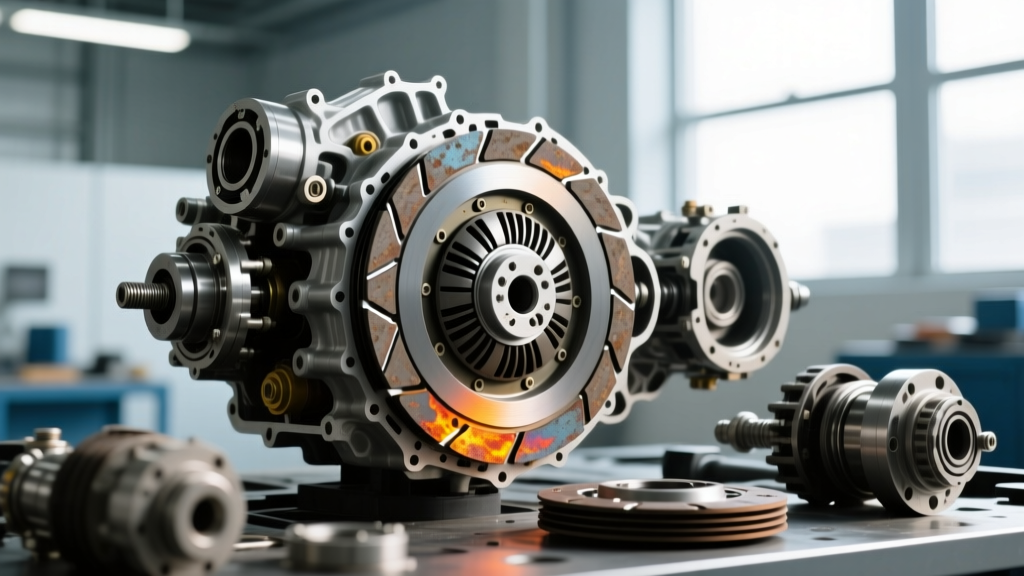
The Volvo D13 engine, particularly the GHG17 and newer Turbo Compound (D13TC) variants, represents the pinnacle of heavy-duty commercial powertrain engineering. However, managing the thermal output of a 12.8-liter inline-six producing up to 500 horsepower and 1,850 lb-ft of torque requires a robust cooling system. At the heart of this system is the engine fan clutch. While often overlooked in favor of drivetrain components like the Volvo I-Shift automated manual transmission (AMT), the fan clutch is a critical parasitic load. At peak engagement, a heavy-duty diesel cooling fan can consume between 50 and 70 horsepower directly from the crankshaft. When clutch problems arise in heavy-duty and commercial vehicles, the resulting thermal mismanagement doesn't just affect engine temperatures—it cascades into severe transmission and drivetrain degradation.
For fleet managers and heavy-duty diesel technicians, understanding the diagnostic nuances of the Volvo D13 fan clutch is essential. A failing fan clutch alters the under-hood ambient temperature, directly impacting the transmission oil cooler and the I-Shift clutch actuator pneumatics. In this comprehensive performance and upgrade guide, we dissect the failure modes of the D13 fan clutch, outline precise diagnostic procedures, and explore high-performance electronic upgrades that reduce parasitic drag and extend the life of your commercial drivetrain.
Diagnostic Framework: D13 Fan Clutch Failure Modes
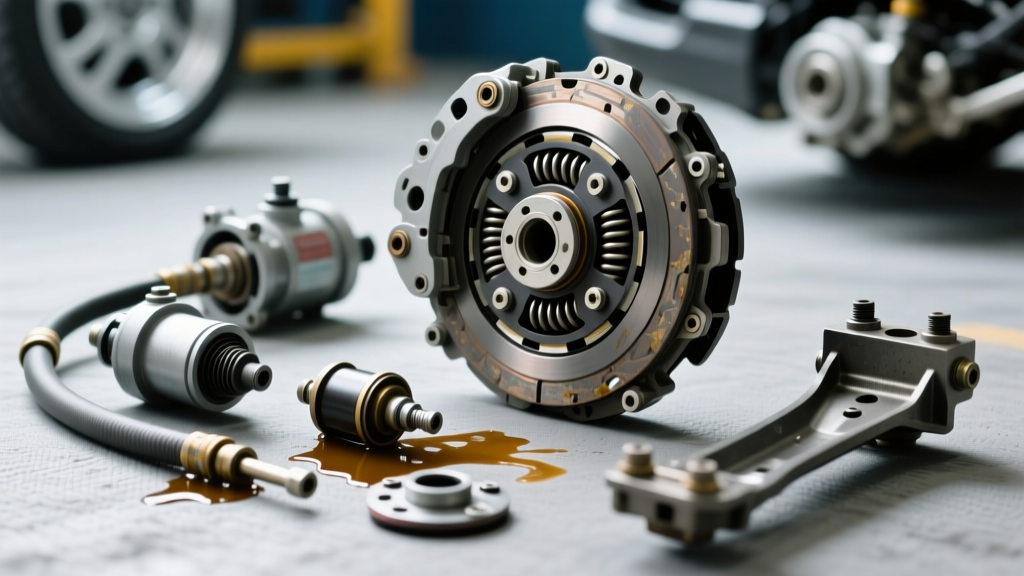
The Volvo D13 utilizes a sophisticated Engine Management System (EMS) that monitors coolant temperature, intake manifold air temperature, and AC head pressure to dictate fan clutch engagement. When a viscous fan clutch begins to slip due to silicone fluid degradation or internal shear plate wear, the EMS attempts to compensate by increasing fuel delivery or triggering a thermal derate. Below is a diagnostic matrix for identifying common D13 fan clutch anomalies.
| Failure Mode | Acoustic/Thermal Symptom | Typical ECM Fault Codes | Resolution Strategy |
|---|---|---|---|
| Viscous Fluid Shear | Overheating under heavy GCW load; fan slips at high RPM | MID 128 PID 174 (Intake Manifold Temp) | Replace clutch assembly; flush hub bearings |
| Internal Return Spring Failure | Constant howling/jet engine noise at highway speeds | MID 128 SID 230 (Engine Fan Clutch Circuit) | Replace clutch; verify VECU PWM mapping |
| Hub Bearing Degradation | Metallic whine or growl from front cover; belt squeal | None (Mechanical Failure) | Replace fan hub (OEM 21806630); check alignment |
| Electromagnetic Coil Open | Fan fails to engage; rapid coolant temp spike at idle | MID 128 SID 230 FMI 03/05 | Test harness continuity; replace EC clutch |
Bench Testing and PWM Signal Verification
Before condemning the Volvo VECU (Vehicle Electronic Control Unit) or the engine wiring harness, technicians must verify the Pulse Width Modulation (PWM) signal reaching the fan clutch solenoid. Using a digital multimeter with a duty cycle function or an oscilloscope, probe the control wire at the clutch harness connector. With the engine cold and idling, the VECU should command a low duty cycle (typically 10% to 20%), resulting in minimal fan engagement and a clutch slip speed of roughly 200-400 RPM relative to the hub.
As coolant temperatures approach 210°F (99°C) or AC head pressures spike, the duty cycle should ramp up to 80% or higher, locking the clutch and pulling the fan to near-engine RPM. If the VECU commands an 85% duty cycle but the fan remains disengaged (slipping), the internal electromagnetic coil or the fluid control valve inside the clutch is definitively failed. Conversely, if the fan remains locked at high RPM with a 10% command signal, the internal return spring has failed or the silicone fluid has cross-contaminated the shear cavity, requiring immediate replacement.
Cascading Thermal Failures: I-Shift AMT and Transmission Impact
How does a fan clutch issue translate to transmission clutch diagnostics? The Volvo I-Shift AMT relies on precise thermal management. The transmission fluid cooler is typically stacked or integrated into the radiator assembly, relying on the same airflow generated by the engine fan. If the D13 fan clutch slips under heavy Gross Combination Weight (GCW) loads, such as climbing a 6% grade, under-hood heat soak occurs. Transmission fluid temperatures can rapidly exceed 250°F (121°C). At these thresholds, the I-Shift transmission fluid degrades, leading to sluggish clutch pack engagement, harsh shifts, and accelerated wear on the AMT clutch brake.
Furthermore, the pneumatic valves controlling the I-Shift clutch actuator are highly sensitive to ambient heat. Prolonged exposure to under-hood heat soak caused by a failed fan clutch can cause the rubber diaphragms in the clutch actuator to harden and fail, resulting in the dreaded 'Transmission Engagement Fault' on the dash. According to fleet maintenance data from Volvo Trucks North America, addressing cooling system parasitic loads is a primary preventative measure against premature AMT clutch pack burnout.
Performance Upgrades: Viscous vs. Electronically Controlled (EC)
Standard silicone viscous clutches operate on a bimetallic strip or basic thermal expansion principle, which is inherently reactive and slow. For modern commercial fleets, upgrading to an Electronically Controlled (EC) viscous clutch or a fully electromagnetic clutch provides a massive performance advantage. EC clutches, such as those detailed in the Horton heavy-duty fan clutch lineup, utilize a PWM signal from the VECU to precisely meter silicone fluid into the shear cavity. This allows for infinite slip ratios, meaning the fan only spins as fast as necessary to maintain target temperatures.
- Parasitic Drag Reduction: EC clutches reduce unnecessary fan engagement during highway cruising and cold-weather operation, recovering up to 40 HP.
- Fuel Economy Gains: Fleets typically report a 1.5% to 2.5% improvement in MPG due to reduced crankshaft load.
- Thermal Precision: Faster response times prevent the thermal spikes that trigger engine and transmission derates.
When spec'ing an upgrade, ensure the replacement hub is compatible with the D13's front gear train timing and that the ECM software is flashed to support the specific PWM duty cycle mapping required by the aftermarket EC clutch.
Heavy-Duty Installation Protocol and Torque Specs
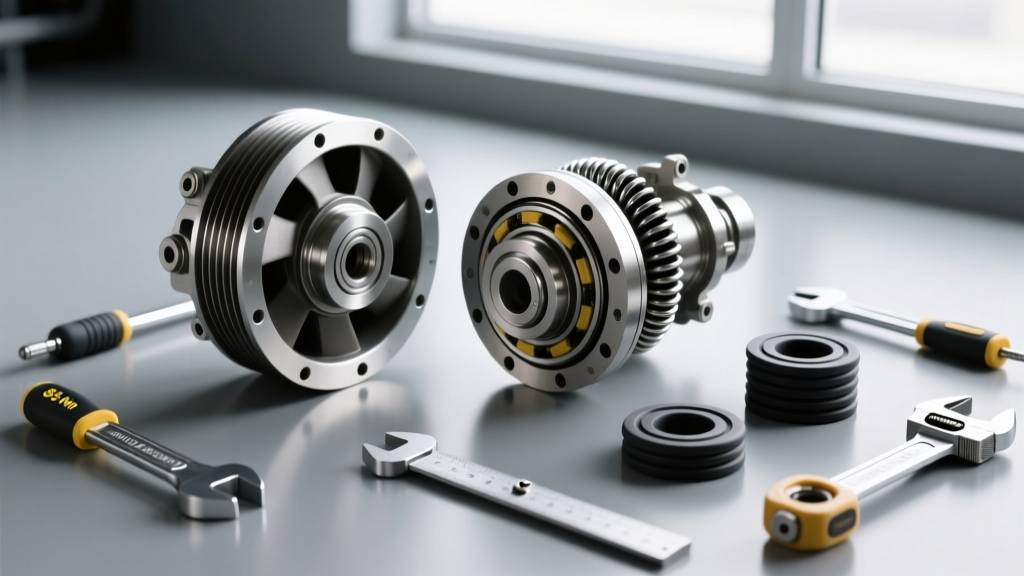
Precision installation is non-negotiable when servicing the D13 fan clutch and hub assembly. The front cover and gear train are subjected to immense torsional vibration. Follow these critical installation parameters:
- Hub Mounting: The fan hub mounting bolts (typically M14 high-tensile steel) must be torqued to exactly 150 Nm (110 lb-ft) using a calibrated torque wrench, followed by a secondary angle-tightening procedure if specified by the OEM service manual.
- Blade Inspection: The fan blade assembly must be inspected for micro-fractures at the root of the blade. Replace any composite or steel blade showing stress cracking.
- Shroud Clearance: The clearance between the blade tip and the fan shroud must be maintained at a minimum of 1.5 inches (38mm) on all sides to prevent aerodynamic cavitation and shroud contact during heavy engine braking (VEB+ operation).
- Belt Alignment: Verify that the serpentine belt tracks perfectly across the fan hub pulley; a misaligned pulley will destroy the hub bearings within 20,000 miles.
Fleet Economics: ROI on Heavy-Duty Fan Clutch Upgrades
The economics of upgrading the D13 fan clutch are compelling for commercial operators. A premium OEM replacement viscous clutch and hub assembly will cost between $750 and $1,100, with an additional $350 to $500 in labor. An EC upgrade kit may command a 20% premium upfront. However, considering a heavy-duty Class 8 truck idles and operates in stop-start traffic for thousands of hours annually, the reduction in parasitic drag yields a return on investment within 8 to 14 months purely through diesel fuel savings.
More importantly, preventing a single I-Shift AMT overhaul—often costing upwards of $12,000—by maintaining optimal under-hood thermals makes the fan clutch upgrade one of the most cost-effective preventative maintenance procedures in a commercial fleet's arsenal. By treating the engine cooling clutch as a vital component of the overall drivetrain ecosystem, fleets can maximize uptime, protect expensive transmission hardware, and optimize heavy-duty performance.