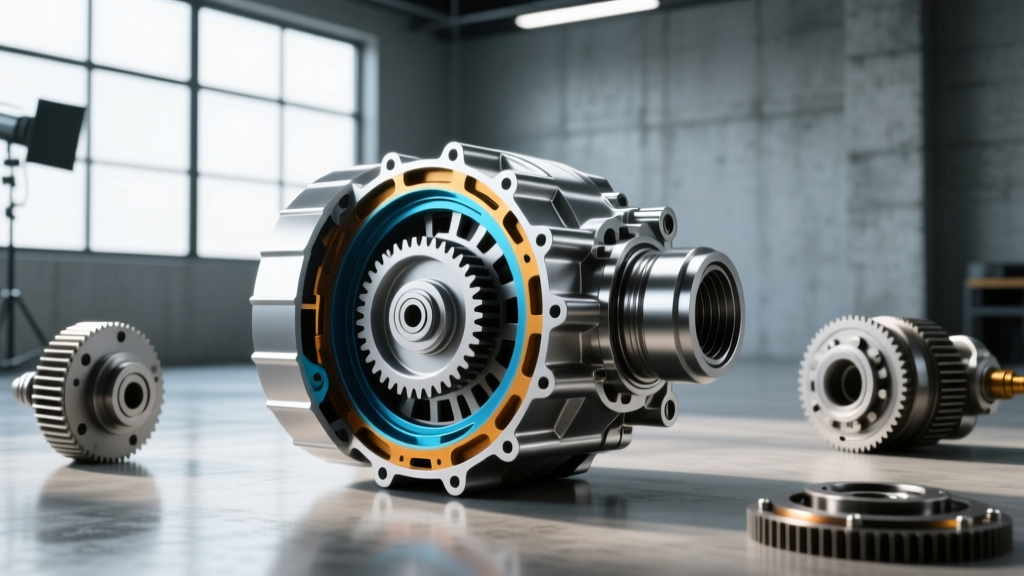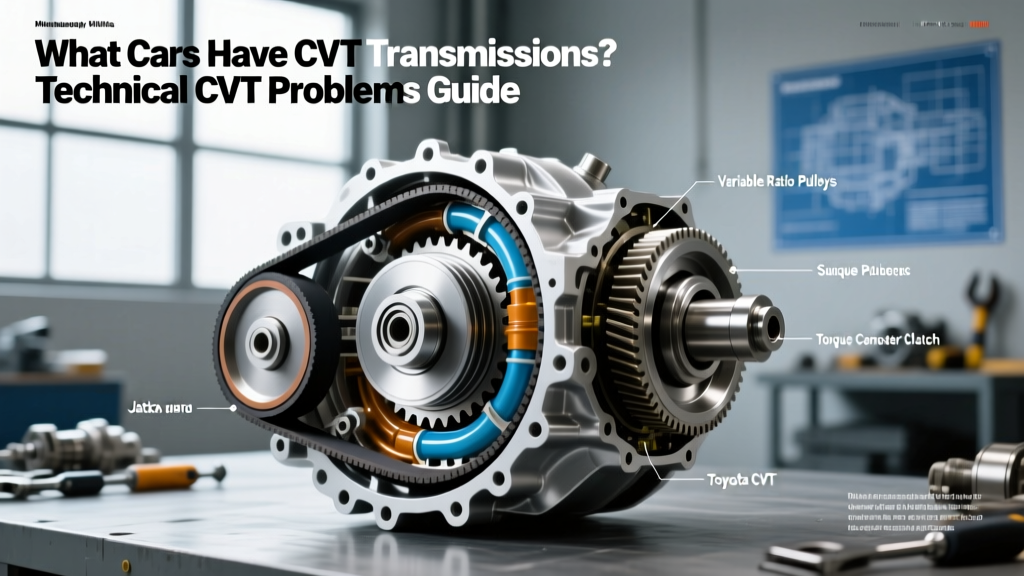
When enthusiasts ask what cars have CVT transmission setups, the standard answer usually revolves around fuel-sipping commuter vehicles like the Honda Civic or Nissan Sentra. In the traditional automotive performance space, the Continuously Variable Transmission (CVT) has long been dismissed as a fragile, rubber-banded liability incapable of handling modified torque curves. However, as we move through 2026, the engineering landscape of the CVT has bifurcated. While the majority of the market still relies on standard push-belt designs for economy, a select tier of automakers has developed high-torque, chain-driven, and gear-assisted CVTs specifically engineered to handle aggressive powertrains.
If you are building a project car or looking to flash the ECU/TCU on your daily driver, you need to know which platforms can survive the tuning process. This performance and upgrade guide breaks down the mechanical realities of modern CVTs, identifying the specific vehicles and transmission models that offer genuine aftermarket potential.
The Mechanical Divide: Push-Belt vs. Pull-Chain
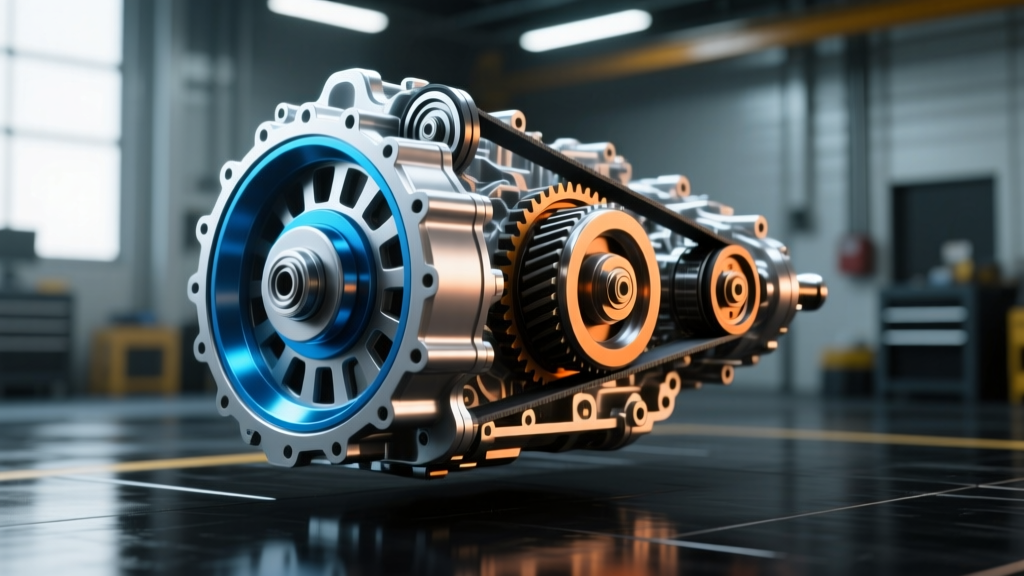
Before identifying the cars, it is critical to understand the hardware limitations of the CVT. Standard economy CVTs (like the ubiquitous Jatco JF011E found in older Nissan and Chrysler products) utilize a push-belt system. This belt is made of hundreds of steel elements held together by steel bands. Power is transferred by the primary sheave pushing the belt, which in turn pushes the secondary sheave. Under high torque or aggressive tuning, the clamping pressure required to prevent belt slip generates massive amounts of heat and friction, inevitably leading to sheave scoring and catastrophic belt failure.
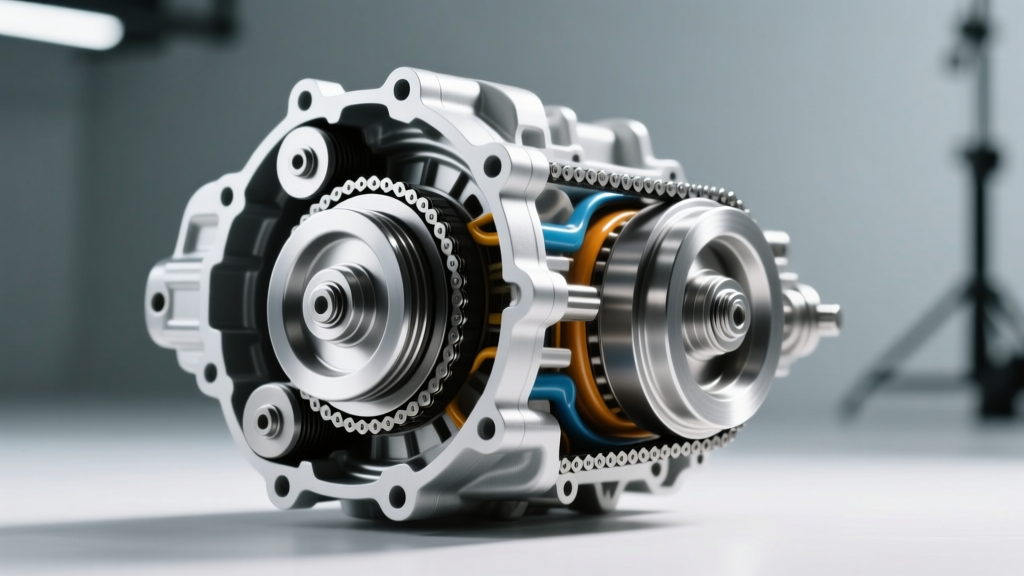
Performance-oriented CVTs abandon the push-belt in favor of a pull-chain (often manufactured by Schaeffler/Luk). A chain drive uses linked steel pins and rocker pins that transfer torque via tension (pulling) rather than compression. This design allows for significantly higher torque capacity, tighter bending radii, and faster ratio changes without the slippage inherent to push-belts. If you are looking for performance upgrade paths, you must start with a chain-driven or gear-assisted platform.
What Cars Have CVT Transmission Models Built for Torque?
Not all CVTs are created equal. Below is a breakdown of the specific vehicles and transmission models that form the foundation of the modern CVT performance aftermarket.
| Vehicle Platform | Engine | CVT Model | Drivetrain Type | Est. Stock Torque Limit |
|---|---|---|---|---|
| Subaru WRX (2022+) | FA24DIT 2.4L Turbo | TR-690 (Lineartronic HT) | Pull-Chain | ~380 lb-ft (Wheel) |
| Toyota GR Corolla / RAV4 | G16E-GTS / A25A-FXS | K120 (Direct Shift-CVT) | Push-Belt + Launch Gear | ~300 lb-ft (Wheel) |
| Nissan Maxima / Pathfinder | VQ35DE 3.5L V6 | JF017E (CVT8 HT) | Pull-Chain | ~320 lb-ft (Wheel) |
| Subaru Ascent / Outback XT | FA24DIT 2.4L Turbo | TR-690 (Lineartronic HT) | Pull-Chain | ~380 lb-ft (Wheel) |
1. Subaru WRX & Outback XT: The TR-690 Lineartronic High-Torque
Subaru’s TR-690 is currently the undisputed king of the CVT performance aftermarket. Designed to handle the low-end torque spike of the FA24DIT boxer engine, the TR-690 uses a heavy-duty Luk chain drive and an enlarged torque converter. For tuners, the TR-690 represents a goldmine because its limitations are largely dictated by software and thermal management, not necessarily the chain itself.
Upgrade Pathways:
- TCU Tuning: Using platforms like Cobb Tuning or open-source EcuFlash definitions, tuners can manipulate the TCU’s clamping pressure maps. By increasing the line pressure commanded to the primary and secondary sheaves during wide-open throttle (WOT), you can prevent chain slip on Stage 2 or Stage 3 turbo setups.
- Thermal Management: The TR-690’s Achilles heel is heat. Fluid temperatures exceeding 230°F (110°C) will trigger the ECU’s limp mode and aggressively retard ignition timing. Upgrading to a Derale 12-row stacked-plate cooler and bypassing the factory radiator heat exchanger is mandatory for track use or aggressive tuning.
- Fluid Specs: Subaru mandates CVTF-II for this unit. When performing a drain and fill (which takes roughly 4.5 liters, while the dry fill capacity is 12.2 liters), ensure you use a fluid with the exact friction modifiers required for the lockup clutch and chain shear dynamics. Do not mix with standard ATF.
2. Toyota GR Corolla & RAV4: The K120 Direct Shift-CVT
Toyota completely reimagined the CVT architecture with the K120 Direct Shift-CVT. To answer the common complaint of CVT "rubber-banding" and poor launch durability, Toyota integrated a physical, mechanical first gear (the "Launch Gear") with a 7.5:1 equivalent ratio. When the car launches from a stop, a multi-plate clutch engages the physical gear, completely bypassing the CVT belt and sheaves. Once the vehicle reaches roughly 25-30 mph, the clutch disengages, and the belt takes over for seamless ratio adjustments.
Upgrade Pathways:
- Belt Preservation: Because the physical gear handles the massive torque multiplication of a hard launch, the push-belt is only subjected to cruising and mid-range torque. This allows mild turbo kits on the G16E-GTS (GR Corolla) or NA builds on the 2.5L Dynamic Force engine to survive without immediately snapping the belt.
- Shift Logic Flashes: Aftermarket tuning houses are beginning to crack the Toyota TCU logic, allowing tuners to delay the shift point from the mechanical Launch Gear to the belt drive, keeping the car in its most mechanically secure state during aggressive 1st-to-2nd gear pulls.
3. Nissan VQ35 Platforms: The Jatco JF017E (CVT8 HT)
While Nissan’s reputation with CVTs is historically fraught with reliability issues (largely due to the JF011E and JF016E push-belt models), the JF017E—also known as the CVT8 High Torque—is a different beast. Found in the 3.5L V6 Altima, Maxima, and Pathfinder, the JF017E utilizes a pull-chain system designed to handle the 260+ lb-ft of torque generated by the VQ35DE engine.
Upgrade Pathways:
- Valve Body & Stepper Motor Upgrades: The most common failure point under tuned conditions is the stepper motor (OEM Part # 31935-1XF00) which controls the ratio. When line pressure spikes due to tuning, the stock motor can bind. Upgrading to heavy-duty valve body springs and aftermarket pressure relief valves allows the transmission to safely hold 5.5 MPa of line pressure without blowing out the seals.
- Chain Maintenance: According to Jatco's engineering guidelines, the chain in the JF017E requires precise fluid sheer stability. Upgrading to high-viscosity synthetic CVTF fluids from brands like Amsoil or Red Line can extend the life of the chain under high-heat, high-torque conditions.
The Reality of CVT Torque Converters and Lockup
A major bottleneck in tuning any CVT is the torque converter. In traditional automatics, the torque converter multiplies engine torque during launch. In a CVT, excessive torque multiplication at low speeds can overwhelm the primary sheave's clamping force, causing the chain or belt to slip before the vehicle even moves.
Tuner's Note: When flashing the TCU on a TR-690 or JF017E, prioritize early torque converter lockup. By commanding the lockup clutch to engage at lower RPMs and higher slip thresholds, you transfer torque directly through the mechanical link rather than relying on fluid coupling. This drastically reduces transmission fluid temperatures and prevents sheave glazing during 60-foot sprints.
Hardware Limits: When to Abandon the CVT
It is vital to recognize the ceiling of these platforms. If your build goals exceed 450 wheel horsepower and 400 lb-ft of torque, you have crossed the threshold of what even the best chain-driven CVTs can handle in a street-driven, reliable package. At this level, the physical dimensions of the sheaves and the tensile strength of the Luk chain become the hard limit. No amount of software tuning or valve body modification will prevent the chain from stretching or the pins from shearing under instantaneous shock loads (such as AWD drag launches with sticky tires).
For those chasing 500+ horsepower in a Subaru WRX or Nissan Z platform, the ultimate "upgrade" remains the physical conversion to a traditional geared manual transmission or a robust planetary automatic (like a built 4-speed or 6-speed swap), utilizing standalone transmission controllers to manage the shift logic.
Final Verdict for 2026 Builders
The question of what cars have CVT transmission capabilities for performance is no longer a dead end. If you are building a Subaru WRX with a TR-690, a Toyota with a Direct Shift-CVT, or a V6 Nissan with a JF017E, you have a viable, tunable platform. Focus your budget on aggressive TCU clamping pressure maps, massive auxiliary cooling systems, and high-shear synthetic fluids. Respect the mechanical limits of the chain and the launch gear, and your CVT will hold its own against traditional geared transmissions in the modern tuning landscape.