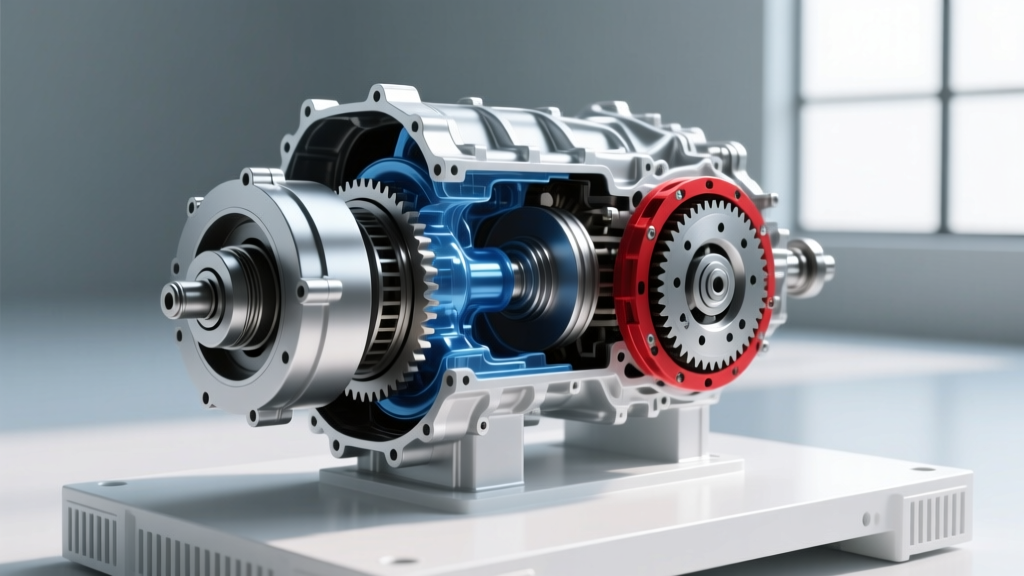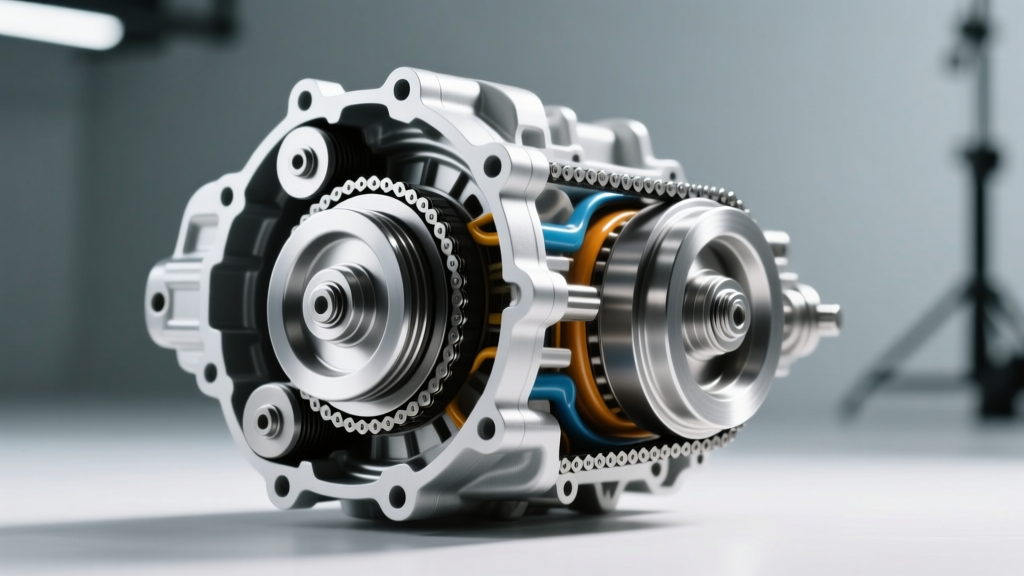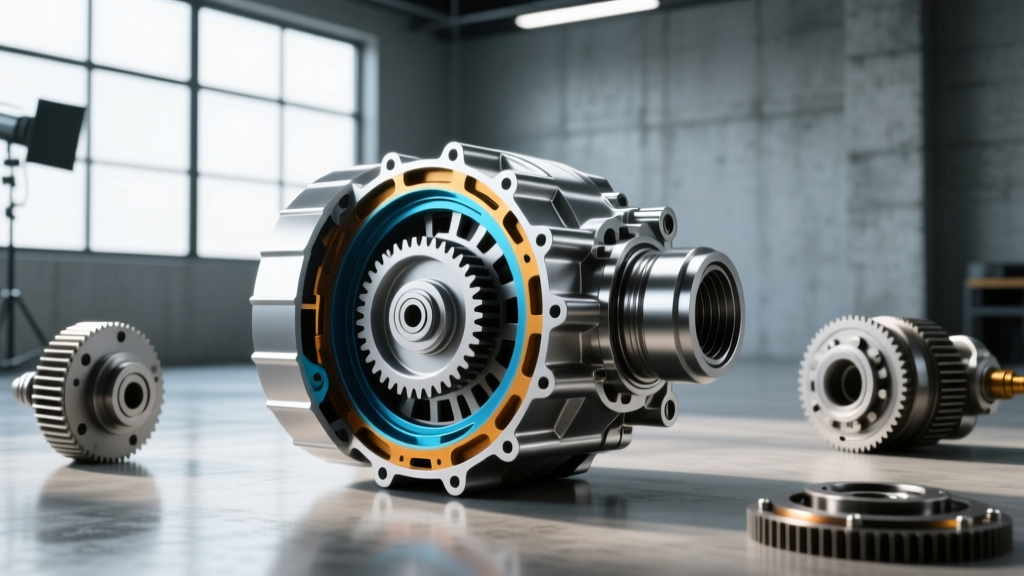
The Core Question: What Car Has CVT Transmission vs Planetary Automatics?
When a driver, service advisor, or DIY mechanic asks, 'what car has CVT transmission' compared to a standard automatic, the answer dictates the entire diagnostic pathway. Misidentifying a Continuously Variable Transmission (CVT) as a traditional planetary gear automatic is one of the most common—and costly—mistakes in modern drivetrain troubleshooting. While both serve the fundamental purpose of transferring engine torque to the drive wheels, their internal architectures, hydraulic pressure requirements, and failure modes are radically different.
As of 2026, the market is heavily saturated with CVTs from manufacturers like Nissan (Jatco), Subaru (Lineartronic), Honda, and Toyota (Direct Shift-CVT). Conversely, traditional torque-converter automatics like the ZF 8HP series, GM 6L80/8L90, and Ford 10R80 still dominate trucks and performance vehicles. Diagnosing a shudder, slip, or whine requires knowing exactly which architecture you are working with. Applying planetary automatic diagnostic logic to a belt-driven CVT will lead to misdiagnosed torque converters, unnecessary flushes, and ultimately, catastrophic pulley failure.
Identifying Your Drivetrain: Visual and Auditory Cues
Before plugging in a scan tool, a road test and visual inspection will confirm the transmission type. If you are unsure what car has CVT transmission hardware under the hood, check the dipstick (if equipped) or the fluid fill plug. CVTs require highly specialized friction-modified fluids—such as Nissan NS-3, Subaru CVTF-II, or Honda HCF-2. Using standard ATF like Dexron VI or Mercon LV in a CVT will cause immediate belt slip and irreversible scoring on the pulley sheaves.
| Symptom / NVH Signature | CVT (e.g., Jatco JF016E, Subaru TR690) | Planetary Auto (e.g., ZF 8HP45, GM 6L80) |
|---|---|---|
| Highway Drone / Whine | Chain or belt whine; secondary bearing howl | Torque Converter Clutch (TCC) shudder; gear whine |
| Acceleration Profile | 'Rubber-band' effect; steady RPM climb | Distinct shift points; rhythmic RPM drops |
| Stoplight Creep | Start clutch engagement lag or shudder | Immediate torque converter fluid coupling |
| Deceleration Downshifts | Simulated 'stepped' ratio changes (software) | Physical clutch pack apply and release |
Diagnostic Deep Dive: OBD2 PID Monitoring
The most definitive way to separate a CVT fault from a traditional automatic fault is through live OBD2 Parameter Identification (PID) data. Traditional automatics monitor discrete gear ratios. If a ZF 8HP transmission slips in 4th gear, the TCM sets a P0734 (Gear 4 Incorrect Ratio) code because the input shaft speed (ISS) and output shaft speed (OSS) no longer match the fixed 4th gear mathematical ratio.
CVTs do not have fixed gears. Instead, you must monitor the Target Pulley Ratio and Actual Pulley Ratio PIDs. If the actual ratio deviates from the target ratio by more than 0.15 under load, the steel push-belt or chain is slipping across the pulley sheaves. Furthermore, CVTs rely heavily on stepper motors and linear solenoids to control pulley clamping force. A failing stepper motor in a Jatco JF011E or JF016E will often trigger a P17F0 or P17F1 manufacturer-specific code, indicating the primary pulley cannot achieve the requested clamping pressure. In contrast, a traditional automatic will throw solenoid circuit codes (e.g., P0751 for Shift Solenoid A Performance).
Line Pressure Testing: The 400 PSI Threshold
If you are hooking up a mechanical transmission pressure gauge, the baseline expectations are entirely different. A traditional planetary automatic like the GM 6L80 typically operates with a line pressure between 120 PSI and 250 PSI, spiking briefly during heavy throttle downshifts. CVTs, however, require immense clamping force to prevent the metal belt from slipping and destroying the pulleys. It is entirely normal to see CVT primary and secondary line pressures exceed 400 to 600 PSI under hard acceleration. If your mechanical gauge reads 200 PSI on a Subaru TR580 CVT under load, the transmission is in a fail-safe mode or the primary pressure regulator valve is severely worn.
Expert Diagnostic Tip: Never perform a 'stall test' on a belt-driven CVT the way you would on a traditional torque converter automatic. Holding the brakes while flashing the throttle to 2,500 RPM generates massive heat and shearing force that can instantly snap a CVT chain or score the pulley sheaves beyond repair.
Fluid Diagnostics: The Telltale Signs in the Pan
Dropping the transmission pan reveals the internal health of the unit, but the debris profile varies wildly between the two architectures.
- CVT Debris Profile: You will find a fine, glittering metallic paste on the magnets. This is normal wear from the steel belt wafers riding on the hardened steel pulleys. However, if you find distinct, curved metal shards or 'C-shaped' clips, the belt has fractured, or the chain link pins have sheared. The fluid itself will often smell burnt and turn dark brown if the start clutch has overheated.
- Planetary Automatic Debris Profile: Debris typically consists of dark, fibrous friction material from the clutch packs, along with brass or bronze flakes from worn bushings and thrust washers. Large chunks of metal usually indicate a catastrophic planetary gearset failure or a shattered torque converter stator.
The 'Flash Update' Trap
A common misdiagnosis in the 2026 service landscape is blaming CVT hardware shudder on software. On traditional automatics, a harsh 2-3 shift or a TCC shudder can often be cured by flashing the TCM with updated shift mapping or performing an adaptive reset. While Honda and Nissan do release TCM updates to recalibrate start-clutch engagement, a high-mileage CVT shudder at 30-45 MPH is almost always a mechanical failure of the valve body bore or a worn start clutch drum, not a software bug. Replacing the valve body (Part # 31700-1XF0C for Nissan applications) is frequently required to restore proper hydraulic routing.
Real-World Repair Costs & Torque Specs (2026 Market)
Understanding the financial and mechanical reality of these repairs is crucial for accurate customer estimates and proper reassembly.
Component Replacement Costs
- Remanufactured CVT (e.g., Jatco CVT8 / JF016E): $3,800 - $4,900 (installed). Core charges are steep, often $1,200, due to the scarcity of rebuildable belt and pulley sets.
- Remanufactured Planetary Auto (e.g., GM 6L80): $2,200 - $3,100 (installed). Parts are abundant, and the torque converter is easily rebuilt.
- Valve Body / Mechatronic Unit: A ZF 8HP mechatronic unit (which integrates the TCM and valve body) costs between $1,400 and $2,200. A standalone CVT valve body is generally cheaper ($600 - $950) but requires meticulous manual calibration of the stepper motor linkage.
Critical Torque Specifications
Improper torque on transmission pans and sensors leads to fluid ingestion, aeration, and pressure loss. Always use a calibrated inch-pound torque wrench.
- Nissan CVT Oil Pan Bolts (M6): 7.9 Nm (69 in-lbs). Overtightening will strip the thin aluminum casing and warp the stamped steel pan, causing chronic leaks.
- ZF 8HP Plastic Oil Pan (Integrated Filter): 10 Nm (88 in-lbs) in a specific star pattern. The plastic pan relies on a crush-style O-ring; over-torquing will crack the plastic mounting tabs.
- Subaru CVT Fluid Fill Plug: 34 Nm (25 ft-lbs). Must be sealed with a new crush washer to prevent secondary pressure loss.
Authoritative Resources for Drivetrain Diagnostics
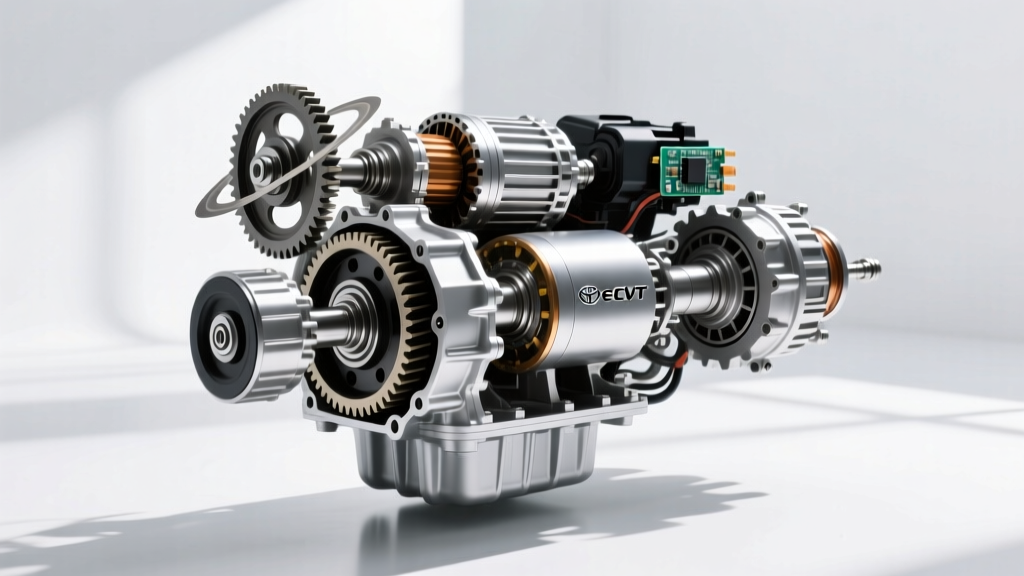
To stay current on the rapidly evolving landscape of hybrid eCVTs (which are entirely different planetary gearsets, not belt-driven) and traditional automatics, technicians should rely on verified engineering data. For a deeper understanding of the mechanical differences between belt-driven systems and planetary gearsets, refer to the comprehensive breakdown by Car and Driver's CVT Engineering Guide. Additionally, the Automatic Transmission Rebuilders Association (ATRA) provides critical technical bulletins, updated clamping pressure charts, and fluid cross-reference guides essential for any shop diagnosing modern drivetrains in 2026.