The Evolution of Truck Differentials: From Mechanical to Active Hydraulics
For decades, truck and SUV differential maintenance meant draining thick 80W-90 gear oil, inspecting the ring and pinion for wear, and occasionally replacing a mechanical locking mechanism like the GM G80 or an Eaton Detroit Locker. However, the modern performance truck landscape has shifted dramatically. Today's heavy-duty and off-road platforms—such as the Chevy Colorado ZR2, Ford F-150 Tremor, and Ram TRX—rely on sophisticated electronic Limited-Slip Differentials (eLSD) and active torque-vectoring axles. At the heart of these systems are hydraulic pumps and differential pressure control valves that modulate clutch pack engagement in real-time.
When performing differential maintenance for trucks and SUVs, ignoring the hydraulic circuit and the delicate pressure control solenoids is a critical error. Degraded fluid, shear breakdown, and microscopic clutch debris can clog the micro-screens on these valves, resulting in axle shudder, delayed locking, and catastrophic clutch pack failure. This performance and upgrade guide will walk you through the exact service procedures, diagnostic routines, and hardware upgrades required to keep modern active truck differentials operating at peak capacity.
How Differential Pressure Control Valves Operate in Active Axles
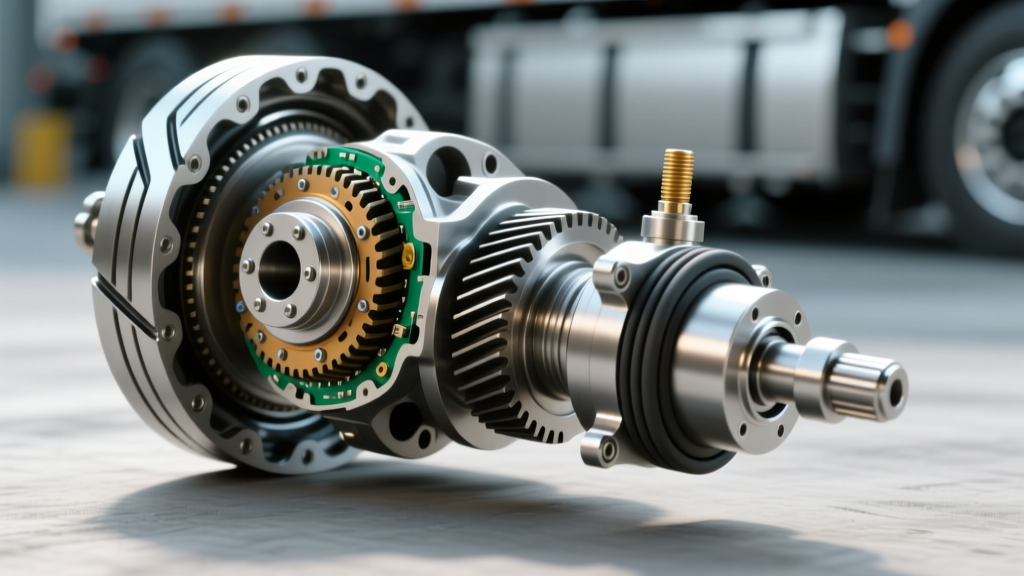
Unlike traditional mechanical lockers that rely on centrifugal weights or torque-sensing helical gears (like the Torsen), an active eLSD uses a multi-disc wet clutch pack. To engage this pack, the axle utilizes a dedicated hydraulic system. This system typically consists of a gerotor pump driven by the axle shaft or an independent electric motor, a fluid reservoir, and a hydraulic manifold housing the differential pressure control valves.
The vehicle's Powertrain Control Module (PCM) or dedicated Transfer Case/Axle Control Module sends a Pulse Width Modulated (PWM) signal to these valves. By rapidly cycling the valve open and closed (usually at frequencies between 300Hz and 500Hz), the system precisely controls the hydraulic line pressure from 0 PSI (fully open diff) up to 400 PSI (fully locked). If the differential fluid loses its viscosity or becomes contaminated with friction material, the spool valves inside the pressure control assembly will stick, causing the clutch pack to slip under load or drag during low-speed cornering.
Fluid Specifications and Service Intervals for eLSD Axles
Standard 75W-90 GL-5 gear oil is entirely inappropriate for modern active differentials. The friction modifiers and anti-wear additives in standard gear oils will cause the specialized eLSD clutch linings to glaze or chatter. Furthermore, the hydraulic pumps and differential pressure control valves require fluids with specific anti-foaming and shear-stability properties. Below is a reference chart for popular modern truck platforms:
| Vehicle Platform | Axle Type | Fluid Specification | Capacity | Severe Service Interval |
|---|---|---|---|---|
| GM Mid-Size (ZR2/AT4) | 9.5" eLSD | ACDelco Dexron LS 75W-85 (P/N 88862624) | 2.1 Quarts | 30,000 Miles |
| Ford F-150 Tremor/Raptor | 9.75" Torsen/eLSD | Motorcraft Synthetic 75W-140 (P/N XL-3) | 2.5 Quarts | 30,000 Miles |
| Ram TRX / HD Platforms | Dana 60 AdvanTEK | Mopar 75W-140 Synthetic Plus 4 | 3.2 Quarts | 15,000 Miles |
| Toyota Tacoma TRD Pro | 8" Electronic Locker | Toyota Genuine Hypoid 75W-85 | 2.6 Quarts | 30,000 Miles |
Pro-Tip: When servicing an eLSD axle, never use aftermarket 'universal' friction modifier additives. Modern synthetic eLSD fluids are engineered with the exact friction coefficient required by the clutch pack's paper or carbon linings. Adding extra modifiers will alter the apply pressure required by the differential pressure control valves, leading to slip.
Diagnosing Faulty Differential Pressure Control Valves
If a customer complains of rear-end shudder during tight turns, or if the dashboard displays a 'Service 4WD / Axle' message, the pressure control circuit is the primary suspect. Before tearing into the differential cover, perform these non-invasive diagnostic steps:
1. Bi-Directional Solenoid Testing
Connect a professional bi-directional scan tool (such as a Snap-on Zeus or Autel MaxiSys MS906BT). Navigate to the Chassis/Axle Control Module data stream. Locate the 'eLSD Clutch Pressure' and 'eLSD Valve Duty Cycle' PIDs. With the vehicle safely lifted and the rear wheels spinning at 15 MPH, command the differential pressure control valves from 10% to 90% duty cycle.
- Normal Operation: Pressure should smoothly ramp from 0 PSI to 350+ PSI as duty cycle increases. The wheels should lock together, causing the speed delta between left and right wheels to drop to zero.
- Stuck Open Valve: If duty cycle reaches 90% but pressure remains below 50 PSI, the spool valve is stuck open, likely due to debris bypassing the inlet screen, or the internal pump O-rings have failed.
- Stuck Closed Valve: If pressure spikes erratically or fails to drop when commanded to 0%, the valve is mechanically bound. This causes the clutch pack to drag, overheating the fluid and burning the friction discs.
2. Electrical Resistance Verification
Disconnect the main axle harness connector at the differential cover. Using a digital multimeter, measure the resistance across the pressure control valve pins. Most modern PWM solenoids in these axles should read between 2.5 and 5.0 ohms at room temperature. A reading of 'OL' (Open Loop) indicates a broken internal coil winding, requiring a complete pump/valve body replacement.
Performance Upgrades: Filtration, Cooling, and Valve Bodies
For trucks subjected to heavy towing, desert running, or rock crawling, the factory differential hydraulic circuit is often a weak point. The heat generated by the gerotor pump and the slipping clutch packs during low-speed technical terrain use can push fluid temperatures past 250°F (121°C), rapidly degrading the fluid's ability to protect the differential pressure control valves.
Inline Magnetic Filtration
Most factory eLSD axles rely on a simple pickup screen. Upgrading to an inline magnetic filter is a highly recommended performance modification. Installing a Magnefine 3/8" Inline Filter (Part # 351S) on the pump's return line captures microscopic ferrous particles and clutch dust before they can circulate back into the pressure control valves. This single $35 upgrade can double the lifespan of the hydraulic manifold.
Upgrading Clutch Friction Materials
If the factory clutch pack has already been compromised by a failing pressure control valve, do not simply replace it with OEM paper-based friction discs. Performance rebuilds should utilize carbon-impregnated or Kevlar-lined friction plates, such as those offered by Raybestos Powertrain. These advanced materials resist glazing at higher temperatures and provide a more linear friction coefficient, making the PWM tuning of the pressure control valves far more predictable under extreme loads.
Aftermarket Differential Coolers
For extreme-duty applications, companies like PPE (Pacific Performance Engineering) and BDS Suspension offer differential cover upgrades that integrate external cooling ports. By routing the eLSD pump's fluid circuit to a remote finned cooler, you maintain fluid viscosity, ensuring the hydraulic pressure remains stable and the valves respond instantly to PCM commands.
Reassembly and Critical Torque Specifications
When performing a full differential service that involves removing the pump assembly, clutch pack, or ring gear, adhering to exact torque specifications is non-negotiable. Improper bearing preload or ring gear runout will cause harmonic vibrations that the PCM may misinterpret as clutch slip, causing the differential pressure control valves to erratically cycle and overheat the fluid.
GM 9.5" eLSD Axle Torque Specs (Reference)
- Ring Gear Bolts (M12x1.5): 89 lb-ft (120 Nm) - Always apply red Loctite 271.
- Bearing Cap Bolts: 74 lb-ft (100 Nm) - Ensure caps are marked for original orientation.
- Pinion Nut (Prevailing Torque): 250 lb-ft (339 Nm) - Never reuse the crush sleeve or pinion nut.
- eLSD Pump Housing Bolts: 18 lb-ft (25 Nm) - Use a calibrated inch-pound beam torque wrench to avoid stripping the aluminum housing.
- Differential Cover Bolts: 25 lb-ft (34 Nm) - Apply a 3mm bead of RTV Silicone (Permatex Ultra Black) if no gasket is present.
Conclusion: Proactive Maintenance is the Ultimate Upgrade
The shift toward active, hydraulically controlled axles has vastly improved the off-road capability and on-road safety of modern trucks and SUVs. However, it has also transformed differential maintenance from a simple drain-and-fill chore into a precise hydraulic service. By understanding the critical role of the differential pressure control valves, utilizing the correct synthetic eLSD fluids, and implementing strategic filtration upgrades, you can ensure your truck's drivetrain survives the most punishing environments. For further technical data on hydraulic solenoid diagnostics and drivetrain component testing, refer to the Sonnax Technical Resources library.