The Thermal Management Dilemma in Modern Transmissions
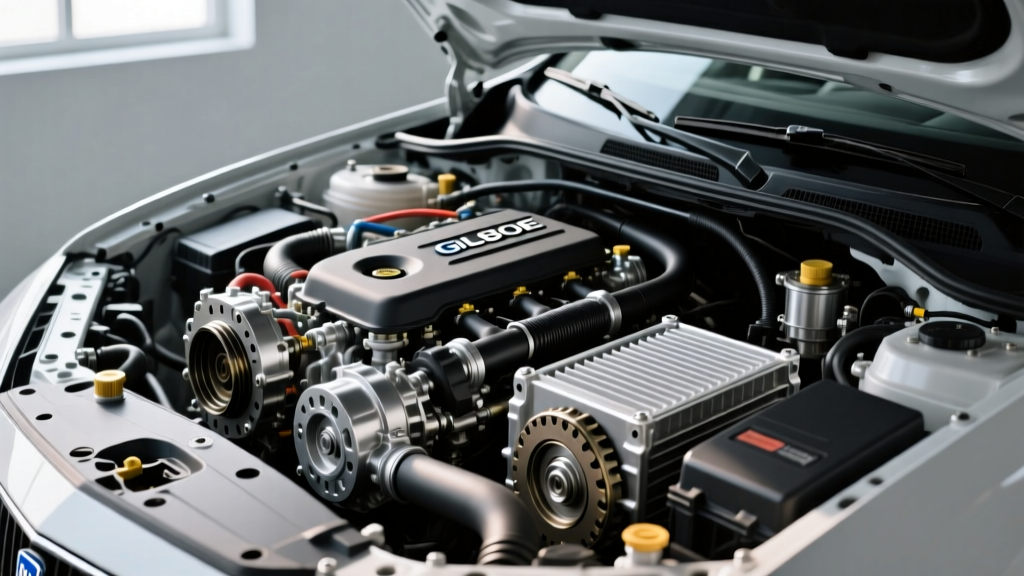
Modern automatic transmissions are engineering marvels, but their thermal management strategies often leave enthusiasts and heavy-duty towers frustrated. Transmissions like the GM 6L80, 8L90, Ford 10R80, and the ubiquitous ZF 8HP are designed to run hot—often intentionally operating between 190°F and 210°F to reduce fluid parasitic drag and improve fuel economy. However, when you subject these units to heavy towing, track use, or steep grade climbing, those factory temperatures quickly lead to fluid degradation and clutch glazing. Upgrading to a high-efficiency auxiliary cooler is the standard fix, but simply bolting on a new cooler ignores a critical bottleneck: the OEM transmission cooler bypass valve.
In this comprehensive 2026 buyer's guide, we explore the intricate relationship between your factory thermal bypass system and the aftermarket's premier low-pressure-drop solution. If you are planning an upgrade, understanding how to configure your transmission cooler bypass valve alongside a Tru Cool Max transmission cooler is the difference between a bulletproof drivetrain and a starved, failing gearset.
Decoding the OEM Transmission Cooler Bypass Valve
To make an informed modification, you must first understand why automakers install thermal bypass valves in the cooler lines or directly on the transmission case. The OEM transmission cooler bypass valve is typically a wax-cylinder or bi-metallic spring mechanism calibrated to block or severely restrict fluid flow to the external cooler until the automatic transmission fluid (ATF) reaches a specific threshold—usually around 180°F to 195°F.
Why Restrict Cold Flow?
Cold ATF, particularly low-viscosity synthetic fluids like GM Dexron ULV or ZF LifeguardFluid 8, is highly viscous at ambient temperatures. If full flow is routed to a massive front-mounted cooler on a 30°F morning, the transmission struggles to build adequate line pressure, resulting in delayed shifts, torque converter shudder, and potential clutch pack glazing. The bypass valve forces the fluid to circulate internally, acting as a rapid warm-up circuit to bring the transmission to its optimal friction coefficient window as quickly as possible.
The Heavy-Duty Failure Point
The problem arises when the transmission is under heavy load. Once the fluid surpasses the bypass threshold, the valve opens. However, many OEM bypass valves suffer from internal restriction even when fully open, or they begin to cycle erratically as fluid temperatures fluctuate. Furthermore, on units like the GM 6L80, the cooler return line feeds the critical rear planetary lube circuit. Any restriction at the bypass valve directly starves the rear bushing and planetary gears of lubrication, leading to catastrophic mechanical failure.
Why the Tru Cool Max Transmission Cooler Changes the Equation
The Tru Cool Max transmission cooler (specifically the LPD or Low Pressure Drop series, such as the LPD4539 and LPD4739) utilizes a unique turbulator stacked-plate design. Unlike traditional tube-and-fin coolers that rely on turbulent flow through restrictive tubing, the Tru Cool Max design allows fluid to flow through wide, flat channels.
Standard tube-and-fin coolers can introduce a 15 to 25 PSI pressure drop into the cooler circuit. The Tru Cool Max transmission cooler typically drops less than 5 PSI. This massive reduction in flow restriction is vital for maintaining lube line pressure. However, pairing a high-flow, low-restriction cooler with a restrictive, cycling OEM bypass valve completely negates the engineering benefits of the LPD design. The cooler is capable of shedding 30,000+ BTUs, but the bypass valve acts as a choke point, artificially limiting flow and trapping heat in the torque converter.
Comparison Chart: Bypass Configurations with Tru-Cool Max
When installing your Tru Cool Max transmission cooler, you have three primary routing strategies. The table below compares the outcomes of each configuration based on real-world dyno and street testing.
| Configuration Strategy | Cold Start Flow | Max Cooling Capacity | Best Application | Estimated Cost (2026) |
|---|---|---|---|---|
| Retain OEM Bypass Valve | Restricted (Bypassed) | Moderate (Valve Dependent) | Light Duty / Cold Climates | $0 (Included) |
| Complete Bypass Delete | Full Immediate Flow | Maximum (Unrestricted) | Heavy Towing / Track / Drag | $45 - $85 |
| Inline Thermostatic Upgrade | Controlled (Thermostat) | High (Predictable) | Daily Driver / Mixed Towing | $75 - $120 |
Buyer's Guide: Choosing Your Bypass Strategy
Option 1: The Complete Bypass Delete (Track & Heavy Towing)
For dedicated tow rigs, off-road crawlers, or track vehicles, deleting the OEM transmission cooler bypass valve is the gold standard. By removing the thermal valve and replacing it with a straight-through billet aluminum delete tube or simple hardline, you guarantee 100% of the fluid volume passes through the Tru Cool Max transmission cooler at all times. According to Sonnax Tech Resources, eliminating cooler circuit restrictions is one of the most effective ways to increase lube circuit pressure on GM 6L and 8L series transmissions. Warning: If you live in a climate where winter temperatures regularly drop below freezing, a complete delete will result in excessively long warm-up times and harsh cold shifts until the fluid reaches operating temperature.
Option 2: Inline Thermostatic Bypass (The Street/Tow Compromise)
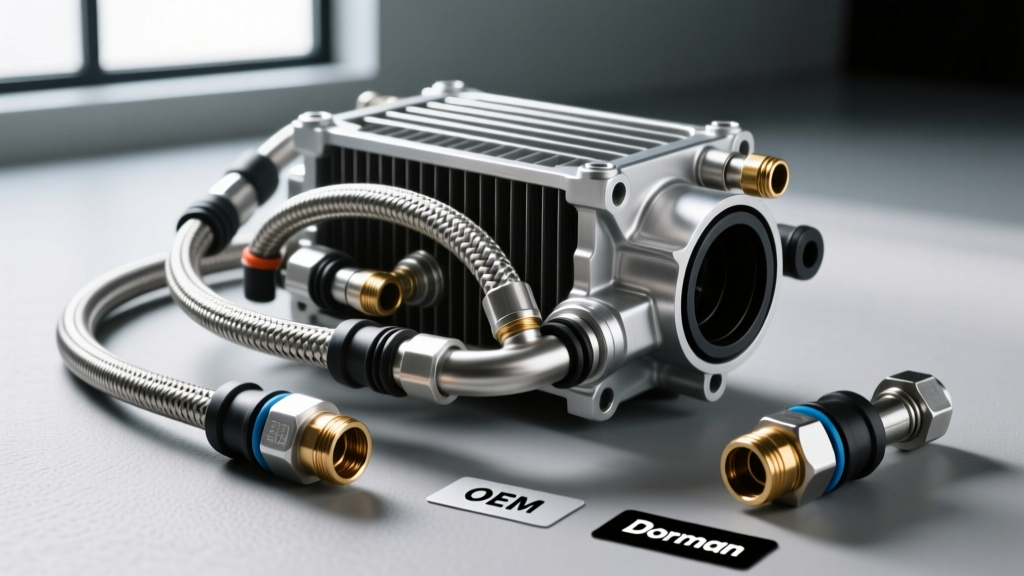
If your vehicle serves as a daily driver and occasional tow rig, retaining thermal management is crucial for transmission longevity. Instead of relying on the flawed OEM case-mounted bypass, install an inline thermostatic bypass valve (such as the Derale 13011 or Hayden 104) in the cooler feed line. These units use a highly responsive wax pellet that remains closed until the fluid hits exactly 180°F, then opens fully with zero internal restriction. This allows you to utilize the full flow capacity of the Tru Cool Max transmission cooler while protecting the transmission from cold-fluid pressure drops.
Option 3: Retaining the OEM Thermal Valve (Cold Climates)
If you operate your vehicle exclusively in sub-zero climates and do not subject the transmission to high-stress towing, retaining the OEM valve is acceptable. However, you must ensure the Tru Cool Max transmission cooler is mounted in a location with moderate airflow to prevent the fluid from overcooling, which can cause the torque converter clutch (TCC) to slip due to improper fluid viscosity.
Installation, Fittings, and Torque Specifications
Proper installation of your cooler lines and bypass delete kit requires precision. The aluminum cases of modern transmissions are notoriously soft, and cross-threading or over-torquing adapter fittings will result in expensive case repairs or total transmission replacement.
- Adapter Fittings: Most GM and Ford applications require M14x1.5 or M16x1.5 to -6 AN O-ring boss (ORB) adapters. Never use tapered pipe thread (NPT) fittings in the transmission case.
- Thread Sealant: Do not use Teflon tape on ORB or AN fittings. Teflon tape can shred and block the transmission's internal lube orifices. Use a liquid thread sealant like Loctite 565 or rely entirely on the Viton O-ring seal.
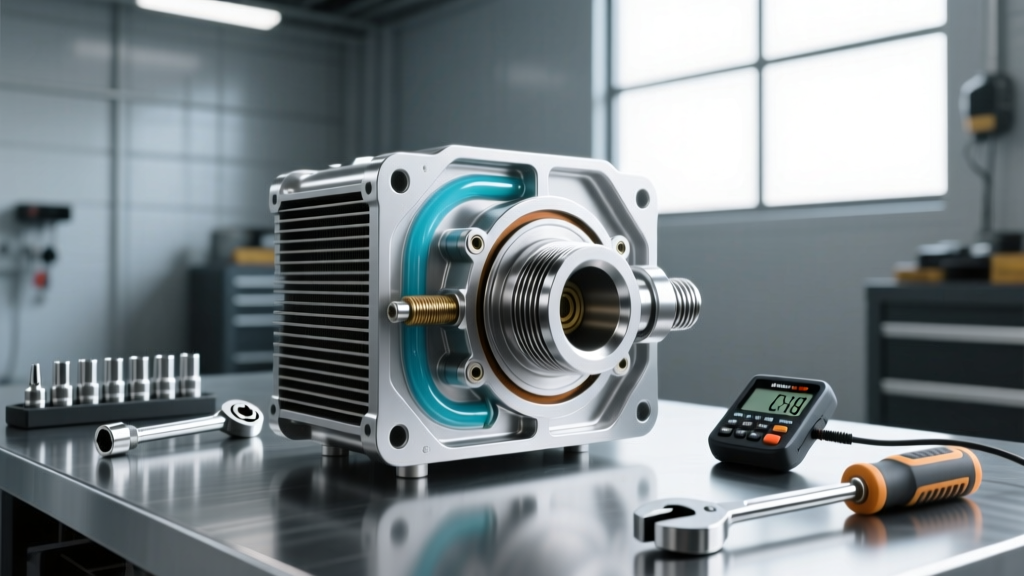
- Torque Specifications: When threading steel or aluminum adapters into the aluminum transmission case, the maximum torque spec is 15 to 18 lb-ft. Always use a calibrated 1/4-inch drive torque wrench. Over-torquing to 25+ lb-ft will stretch and strip the aluminum case threads.
- Line Pressure Testing: After installing the Tru Cool Max transmission cooler and bypass setup, install a mechanical pressure gauge on the cooler return line. At idle in gear, you should see a minimum of 15-20 PSI of lube return pressure. If pressure drops below 10 PSI, check for kinked lines or a failing OEM pump.
Sourcing and 2026 Cost Breakdown
Building a reliable cooling system requires investing in quality components. Here is what you can expect to spend in the current market:
- Tru-Cool LPD4739 (30,000 GVW Rating): $180 - $230. This is the go-to model for 3/4-ton trucks and heavy towing applications.
- Billet Bypass Delete Tube (OEM Replacement): $45 - $85. Ensure you purchase a kit that includes new Viton O-rings and retention clips.
- Inline Thermostat (Hayden 104): $75 - $95. A reliable alternative for daily-driven trucks.
- -6 AN PTFE Stainless Braided Hose & Fittings: $120 - $160. Do not use cheap rubber push-lock hoses for the pressure side of the cooler circuit; they degrade rapidly under modern synthetic ATF formulations.
Final Verdict: Maximizing Your Investment
The Tru Cool Max transmission cooler is arguably the most efficient auxiliary cooler on the market, but it is only as effective as the plumbing that feeds it. Ignoring the transmission cooler bypass valve during your installation is a critical error that limits cooling performance and endangers your transmission's internal lubrication. For dedicated heavy-duty use, bypassing the OEM valve and utilizing the LPD cooler's full flow capacity is mandatory. For mixed-use daily drivers, upgrading to a high-flow inline thermostat provides the best of both worlds. Always consult the Hayden Auto Tech Center or Tru-Cool's official documentation for specific routing diagrams tailored to your vehicle's unique hydraulic circuit. By matching the right bypass strategy to your specific driving demands, you ensure your transmission survives the harshest conditions for hundreds of thousands of miles.