Decoding the 6L80 Transmission Cooler Lines Diagram for Budgeting
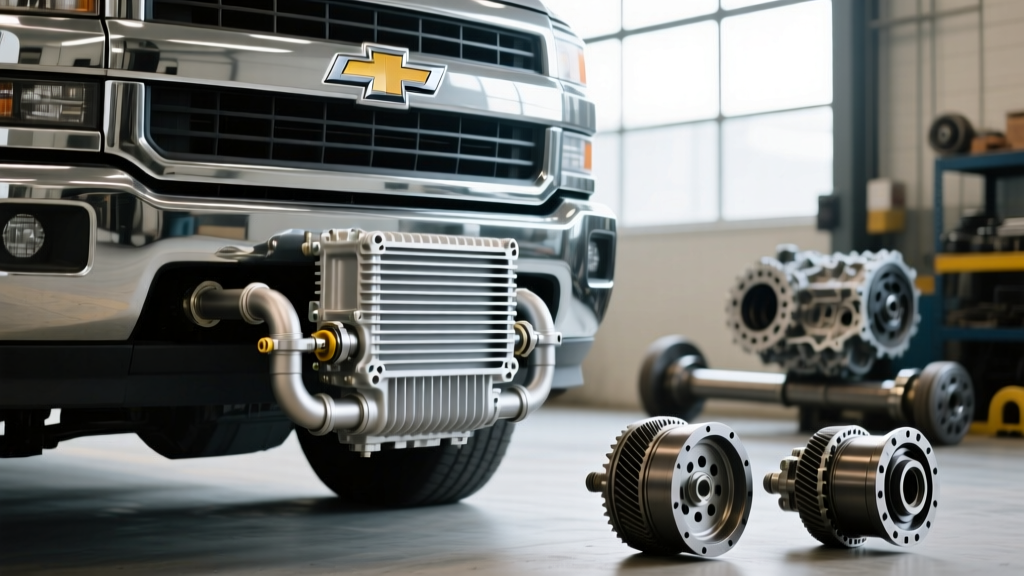
The GM 6L80 (RPO MYC) transmission is a robust six-speed automatic found in millions of Silverados, Tahoes, and Camaros. However, its thermal management system—specifically the cooler line routing and fittings—is a known vulnerability when subjected to heavy towing or track use. When planning a cooling system overhaul or an auxiliary cooler installation, referencing an accurate 6l80 transmission cooler lines diagram is the critical first step. Understanding this diagram does more than just show you where the lines go; it dictates exactly which fittings, adapters, and line diameters you need to purchase, directly impacting your total project cost.
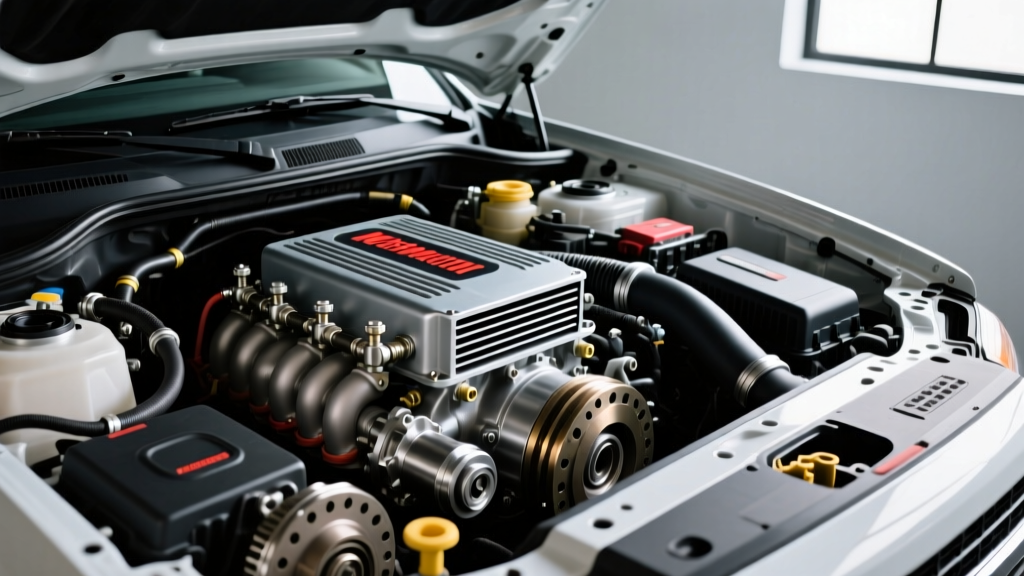
The standard 6L80 cooling flow routes hot fluid from the transmission pressure port (typically the upper or side fitting on the transmission case) to the internal radiator cooler, then out to an auxiliary cooler (if equipped), and finally back to the transmission return port. Because GM utilizes a mix of hard steel lines, aluminum tubes, and plastic quick-connect fittings, the failure points are almost always at the junctions. In this comprehensive cost analysis, we break down the exact pricing, part numbers, and hidden expenses associated with 6L80 cooler line fittings and adapters, helping you decide whether to stick with OEM replacements or invest in a permanent AN-fitting upgrade.
The Real Cost of 6L80 Cooler Line Fittings and Adapters
Before wrenching on your vehicle, it is vital to understand the financial landscape of 6L80 cooling components. Pricing varies wildly depending on whether you are buying a complete pre-bent line assembly from a big-box auto parts store, sourcing OEM quick-connects from a dealer, or building a custom braided stainless setup using aerospace-grade AN fittings. Below is a comparative cost breakdown for a complete fitting and line overhaul.
| Component Type | Brand / Source | Estimated Cost (Per Unit/Kit) | Longevity & Failure Risk |
|---|---|---|---|
| OEM Quick-Connect Fittings | ACDelco / GM Genuine | $18.00 - $28.00 | Medium (Plastic becomes brittle) |
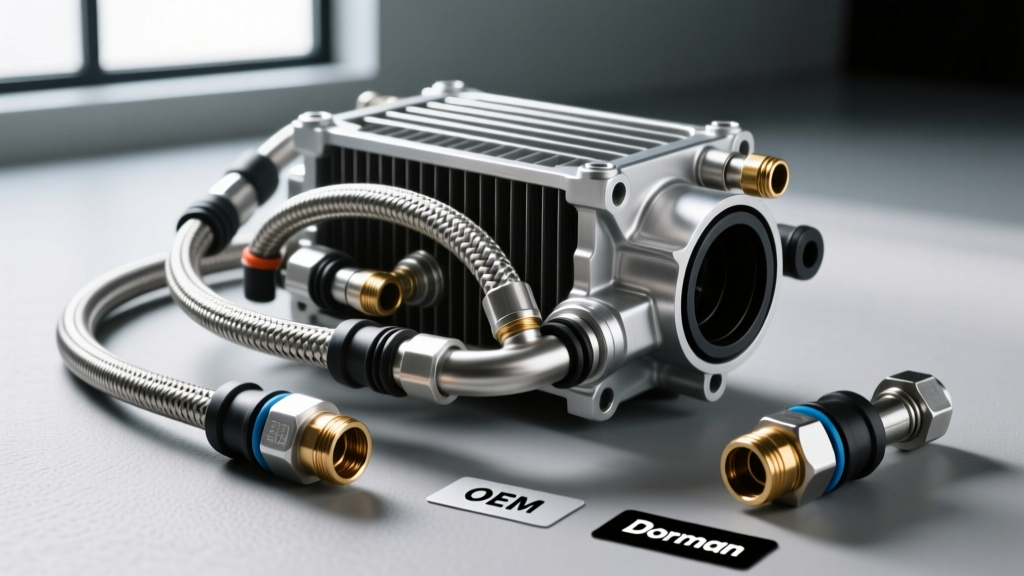
| Complete Hard Line Assembly | Dorman / Replacement | $75.00 - $145.00 | High (Crimp points often leak) |
| GM Case to -6 AN Adapters | Earl's / Russell | $14.99 - $18.50 (Each) | Very Low (Billet Aluminum) |
| Stainless Braided Hose (20ft) | Fragola / Summit | $85.00 - $110.00 | Extremely Low (Abrasion resistant) |
| Viton O-Ring Upgrade Kit | Assorted Hardware | $8.00 - $12.00 | High-Temp Resistant (240°F+) |
OEM Quick-Connect Fittings: The Dealer Price Tag
The factory 6L80 setup relies heavily on plastic quick-connect fittings secured by metal horseshoe clips or internal retaining rings. The most common replacement part for the transmission side quick-connect is the ACDelco 15226261 (or GM 15226261). At a local dealership, expect to pay between $22 and $28 per fitting. If you source them through online wholesalers like RockAuto, you can often find them for closer to $14 to $18.
While the OEM fittings are inexpensive upfront, they carry a hidden long-term cost. The plastic housings degrade under repeated thermal cycling. When a 6L80 is towing a 7,000 lb trailer, transmission fluid temperatures can easily spike past 230°F. At these temperatures, the plastic quick-connects become brittle, and the internal Buna-N O-rings flatten and lose their sealing tension. A $20 fitting failure on the highway will drain your $100+ transmission fluid in minutes, leading to a burned-up clutch pack and a $3,500 rebuild bill. For daily drivers, OEM is fine; for towing or performance, they are a liability.
Upgrading to AN Fittings: The Enthusiast's Budget
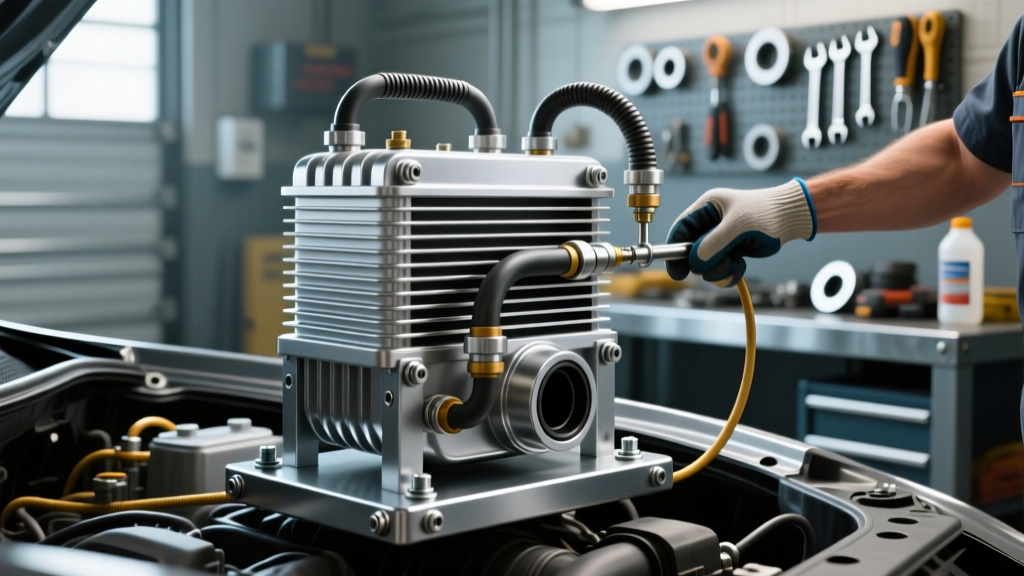
To eliminate the plastic quick-connects entirely, serious enthusiasts and heavy-duty towers opt to adapt the 6L80 transmission case to accept -6 AN (AN6) braided stainless steel lines. The 6L80 truck applications typically feature a threaded adapter that accepts the quick-connect. You can remove this factory adapter and thread in a billet aluminum GM-to-AN adapter, such as the Earl's AT991906ERL or equivalent Russell Performance fittings. These adapters typically feature a 1/2"-20 UNF or specific metric thread (depending on the exact year and RPO code of your 6L80) that transitions to a 3/8" tube or -6 AN male flare.
According to current pricing at retailers like Summit Racing, these billet adapters cost roughly $15 to $18 each. You will need two for the transmission case, and potentially two more if you are adapting the radiator side. While the initial hardware cost is higher (roughly $60-$80 for all adapters, plus $90 for high-quality stainless braided hose and $40 for hose ends), the total cost of a custom AN line build hovers around $250. This is significantly more than a $90 Dorman replacement line, but it offers a zero-failure-rate guarantee that cheap crimped hard lines simply cannot match.
Hidden Costs: Fluid, Labor, and Collateral Damage
When calculating the cost of replacing your 6L80 cooler line fittings, the hardware is only half the battle. You must also budget for the inevitable fluid loss and potential labor rates if you are not turning the wrenches yourself.
- Transmission Fluid: The 6L80 requires Dexron VI (or Dexron ULV for later 8-speed/10-speed variants, but stick to Dexron VI for the 6L80). ACDelco Dexron VI (Part # 10-9395) costs about $38 to $45 per gallon. When you disconnect the cooler lines, you will lose between 1.5 and 3 quarts of fluid depending on how quickly you cap the lines. Budget at least $25 for makeup fluid.
- Shop Labor Rates: If you take your Silverado to a transmission shop, the book time for replacing both cooler lines and fittings is typically 1.4 to 1.8 hours. At an average independent shop rate of $140/hour, expect to pay $196 to $252 in labor alone, bringing a simple $90 Dorman line replacement to over $350 out the door.
- Broken Clip Extraction: A common nightmare detailed in threads on GM Truck Club is the factory horseshoe retaining clip snapping or the plastic fitting breaking off inside the transmission case adapter. If the plastic shards fall into the cooler line, it requires a shop to flush the system or, worst-case scenario, drop the pan and replace the internal filter (ACDelco TF922, ~$45) to prevent debris from entering the valve body.
Critical Installation Specs: Torque and O-Ring Selection
The most expensive mistake you can make when installing 6L80 cooler line adapters is ignoring torque specifications. The 6L80 transmission case is cast aluminum. The threaded ports that accept the cooler line adapters are relatively shallow and surrounded by thin casting material.
Expert Warning: Never use an impact wrench or a standard 1/2" drive breaker bar to tighten transmission case adapters. The torque specification for the 6L80 aluminum case cooler line fittings is strictly 15 to 18 lb-ft (20 to 24 Nm). Over-torquing to even 25 lb-ft can induce a micro-fracture in the case. A cracked case means replacing the entire transmission assembly.
Furthermore, if you are rebuilding your own AN hose ends or replacing the O-rings inside the factory quick-connects, do not use standard Buna-N (Nitrile) O-rings. Buna-N begins to degrade and take a compression set at sustained temperatures above 220°F. Spend the extra $6 on a kit of Viton (FKM) O-rings. Viton maintains its structural integrity and sealing pressure at temperatures exceeding 300°F, providing a massive insurance policy against highway towing leaks.
Final Verdict: Where Should You Put Your Money?
If your 6L80 is strictly a daily driver and a factory fitting has cracked, buying the ACDelco OEM quick-connects and a gallon of Dexron VI is the most cost-effective route, keeping you under $70 total. However, if you are using your truck for heavy towing, off-roading, or have added an auxiliary Mishimoto or Derale cooler in front of the AC condenser, the OEM plastic fittings are a ticking time bomb. Investing $250 into billet aluminum adapters, Viton O-rings, and braided stainless lines eliminates the weak links in your 6L80 transmission cooler lines diagram, ensuring your fluid stays pressurized and your transmission stays cool under the most extreme loads.