The Evolution of Clutch Slave Actuation: 2026 Diagnostic Realities
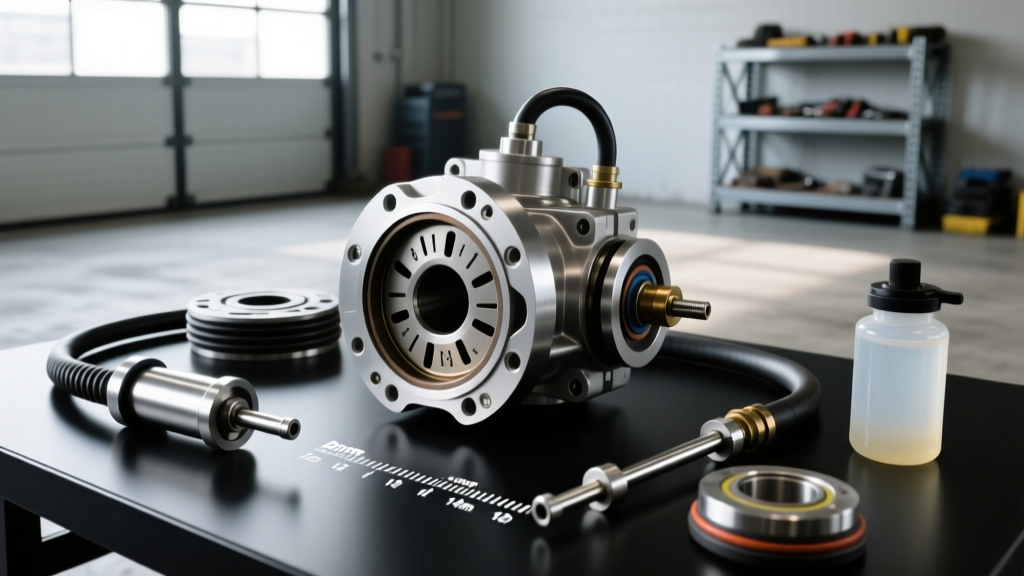
The hydraulic clutch actuation system is a critical bridge between driver intent and mechanical engagement. At the terminus of this hydraulic circuit sits the clutch slave cylinder, the component responsible for translating hydraulic pressure into mechanical force to disengage the clutch. As of 2026, the automotive landscape has largely bifurcated into two distinct slave cylinder architectures: the legacy External Pushrod Slave Cylinder and the modern Concentric Slave Cylinder (CSC), also known as a hydraulic release bearing.
While external slaves are still prevalent in heavy-duty trucks, off-road platforms, and classic restomods, over 85% of modern manual and automated-manual transmissions (including the latest Tremec TR-4050 and Porsche manual conversions) utilize CSCs. This architectural shift has drastically altered the diagnostic and repair landscape. A leaking external slave is a $50 part and an hour of labor; a failing CSC often mandates transmission removal, pushing repair costs past $1,500. Accurate symptom diagnosis is no longer just about fixing a leak—it is about avoiding catastrophic misdiagnosis and unnecessary transmission R&R (Removal and Replacement).
Diagnostic Framework: Isolating the Clutch Slave Cylinder
Before unbolting a single component, a systematic troubleshooting approach is required. The most common complaint brought into the shop is a 'spongy pedal' or 'inability to engage gears.' While these are hallmark signs of hydraulic failure, they are not exclusive to the slave cylinder. Use the following diagnostic matrix to isolate the fault.
| Symptom | Probable Root Cause | Verification Test |
|---|---|---|
| Pedal sinks to floor under steady pressure | Internal master cylinder bypass or external slave leak | Inspect slave pushrod for fluid weeping; check master reservoir level. |
| Pedal feels spongy but returns to top | Air in hydraulic line or degraded DOT fluid | Perform manual bleed; check fluid color (dark/burnt indicates moisture/heat). |
| Clutch fails to disengage (grinding into gear) | Worn clutch fork pivot ball, CSC failure, or air lock | Measure slave pushrod travel. Spec is typically 0.450' - 0.550' (11-14mm). |
| Fluid loss with no visible external leaks | Internal CSC leak inside bellhousing | Remove inspection cover or use a borescope through the bellhousing access plug. |
| Pedal vibration or 'pulsing' during release | CSC bearing wear or scored transmission input shaft sleeve | Road test in 4th gear at 2000 RPM; listen for bearing growl during half-pedal depression. |
The 'False Slave' Failures: Edge Cases in Troubleshooting
One of the most expensive mistakes a technician or DIYer can make is replacing a clutch slave cylinder when the actual failure lies elsewhere in the mechanical linkage. When diagnosing clutch slave issues, you must rule out the following edge cases:
- The Worn Pivot Ball: On platforms like the GM LS (T56 transmissions), the clutch fork rides on a steel pivot ball. Over 80,000 miles, this ball can wear a groove or the aluminum fork can egg-out. This creates 'lost motion' that perfectly mimics a failing slave cylinder with excessive pushrod clearance. Fix: Inspect the pivot ball and fork pad during slave replacement.
- Collapsed Flex Hose: The rubber flex hose connecting the hard line to the slave cylinder can degrade internally. The inner lining can collapse, acting as a one-way check valve. The pedal goes down, but fluid cannot return, keeping the clutch partially disengaged. Fix: Crack the bleeder screw. If fluid shoots out under pressure but the pedal doesn't return, replace the flex hose.
- Shared Reservoir Starvation: Many modern vehicles (e.g., Subaru WRX, Honda Civic Si) share the brake master cylinder reservoir with the clutch hydraulic system. The clutch feed hose often draws from the top half of the reservoir. If brake fluid drops below the midpoint due to pad wear, the clutch system will suck air while the brakes remain perfectly functional.
Repair Protocol: External Slave Replacement & Setup
For platforms utilizing an external slave (e.g., Jeep Wrangler NV3550/NSG370, classic Mustangs, heavy-duty diesel trucks), replacement is straightforward but requires precise setup to prevent premature release bearing wear.
1. Component Selection and Pricing
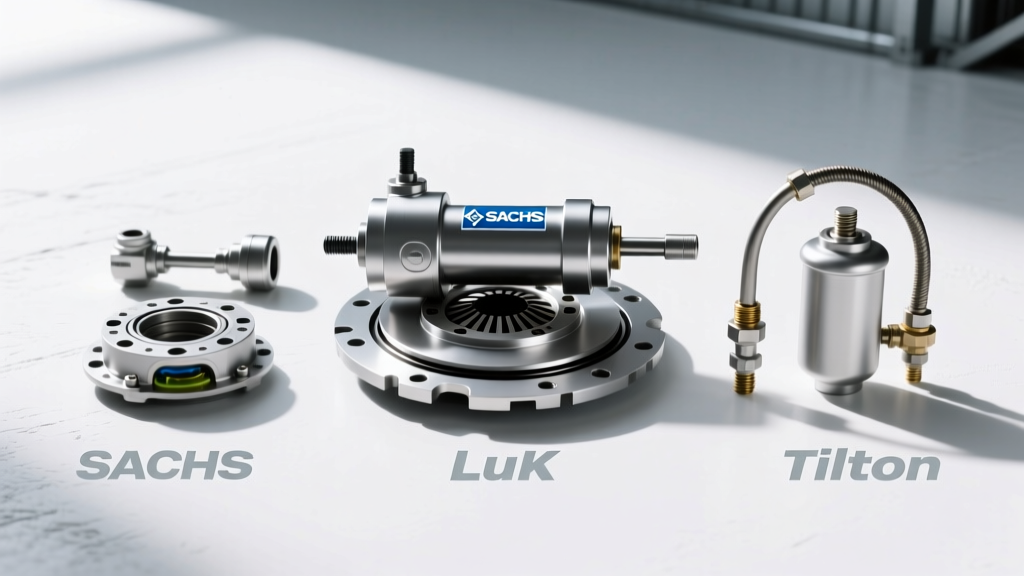
Always opt for OEM or premium aftermarket suppliers like Sachs, LuK, or FTE. Avoid unbranded e-commerce parts, as their internal EPDM rubber seals frequently fail under the 250°F+ heat radiating from the transmission bellhousing. Expect to pay between $45 and $120 for a premium external slave cylinder.
2. Torque Specifications and Clearances
Proper fastening and pushrod adjustment are critical. Reference the specific service manual, but standard industry baselines apply:
- Mounting Bolts: M8x1.25 bolts securing the slave to the bellhousing should be torqued to 18 lb-ft (24 Nm). Use a medium-strength threadlocker (e.g., Loctite 243) as vibration can back these out over time.
- Pushrod Clearance: There must be a slight air gap between the slave pushrod and the clutch fork dimple when the pedal is at rest. The specification is typically 0.050' to 0.100' (1.2 - 2.5mm). If the pushrod is pre-loaded against the fork, the hydraulic release bearing will ride constantly on the clutch diaphragm fingers, leading to catastrophic bearing and clutch failure within 5,000 miles.
Repair Protocol: Concentric Slave Cylinder (CSC) Realities
If your diagnosis points to a leaking or seized CSC (common on the Nissan 370Z, GM Camaro SS with Tremec TR-6060, and Ford Mustang Ecoboost), the transmission must be removed.
When replacing a CSC, it is an absolute mandate to replace the clutch assembly, flywheel, and pivot components simultaneously. The labor cost for transmission R&R ranges from $800 to $1,600 depending on the vehicle (subframe drop vs. tunnel access). A high-quality CSC from Schaeffler (LuK) or Sachs will cost between $180 and $350. Never reuse a CSC, even if it appears functional, as the internal PTFE seal lips degrade and the bearing races develop micro-pitting.
Expert Warning: When installing a new CSC, do NOT manually compress the bearing sleeve with your hands or a bench vise to 'test' it. The internal hydraulic seals are designed to be actuated only by fluid pressure under the alignment of the transmission input shaft. Dry-compressing a CSC can roll the internal O-rings, causing an immediate leak upon first pedal depression.
Hydraulic Bleeding & Fluid Specs for 2026
Replacing the slave cylinder is only half the battle; bleeding the system is where most repairs fail. The clutch hydraulic circuit is notorious for trapping air in the master cylinder 'rollover' valve and the inverted loop of the hard line.
Fluid Selection
Never use standard DOT 3 fluid in high-performance or heavy-duty applications. We mandate the use of high-performance DOT 4 or DOT 5.1 fluids that meet FMVSS 116 and SAE J1703 standards. A top-tier choice is Motul RBF 600, which boasts a dry boiling point of 617°F (325°C), preventing vapor lock during aggressive track use or heavy towing in mountainous terrain.
The Reverse-Bleed Method
Traditional 'pump-the-pedal' bleeding is highly inefficient for clutch systems and often leaves micro-bubbles in the master cylinder. The industry standard for 2026 is Reverse Bleeding or Pressure Bleeding.
- Attach a pressure bleeder (e.g., Motive Products) to the master cylinder reservoir and pressurize to 12-15 PSI. Do not exceed 20 PSI, or you risk blowing out the master cylinder end-seals.
- Open the slave cylinder bleeder screw and allow fluid to flow until completely free of bubbles.
- Vacuum/Reverse Syringe Method: Alternatively, attach a large 100cc syringe filled with fresh fluid to the slave bleeder screw. Slowly inject fluid UP into the system while watching the master cylinder reservoir. This forces air upward, following its natural buoyancy, rather than trying to push it down through restrictive hydraulic lines.
Post-Repair Verification
After completing the clutch slave cylinder replacement and bleeding procedure, perform a static and dynamic verification. With the engine off, pump the pedal 20 times to seat the seals and verify the pedal returns crisply without sticking. Start the engine, depress the clutch, and wait 10 seconds before engaging Reverse gear. There should be zero gear clash. Finally, perform a 20-mile road test, focusing on 2nd-to-3rd gear shifts under load to ensure the slave cylinder is providing full stroke and the clutch is fully disengaging under high RPM conditions.