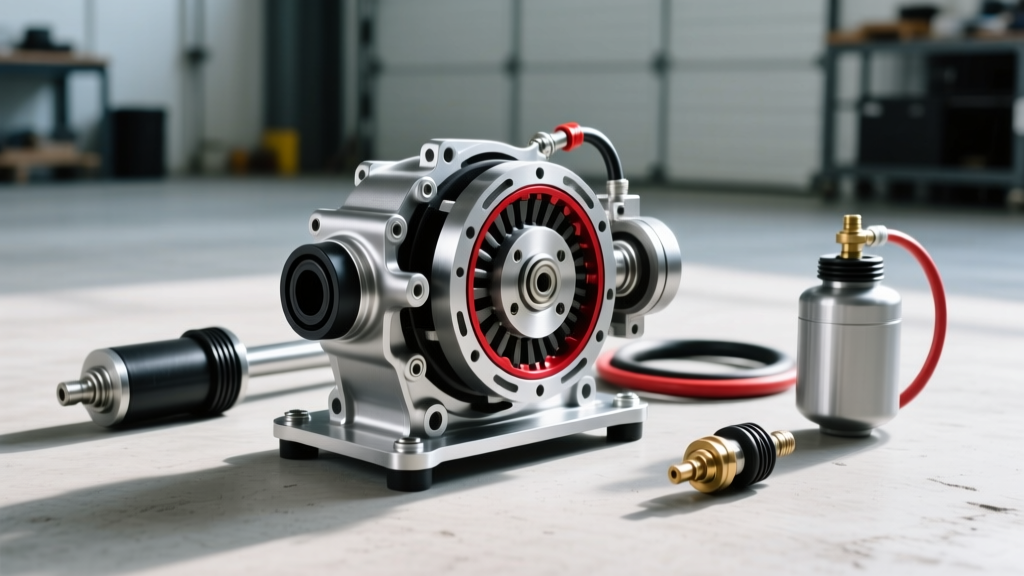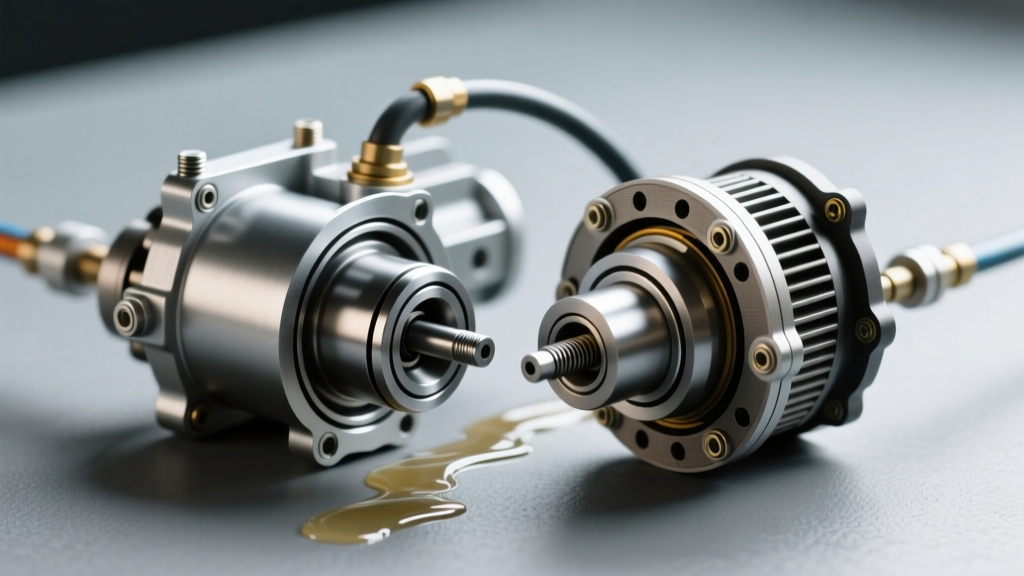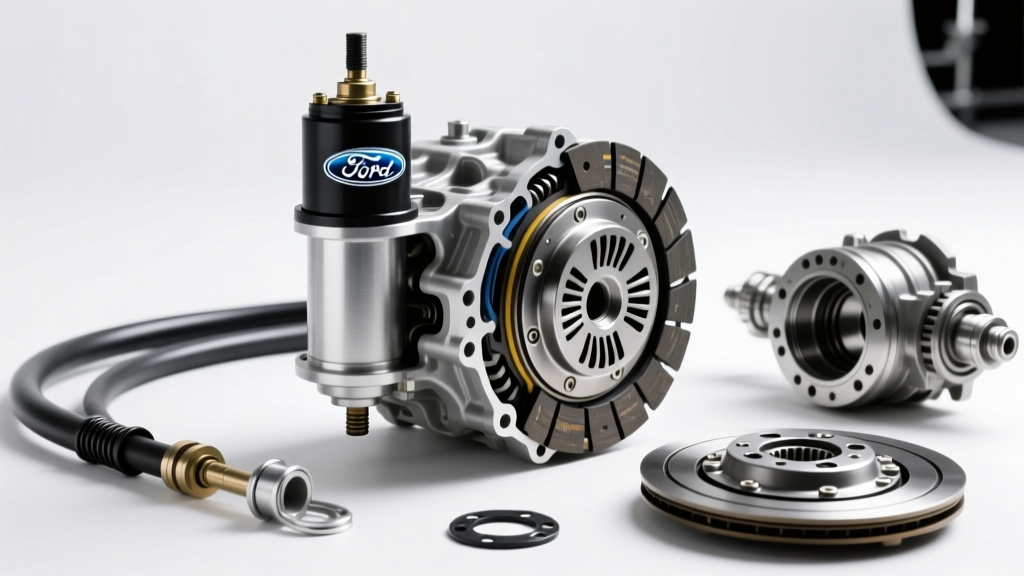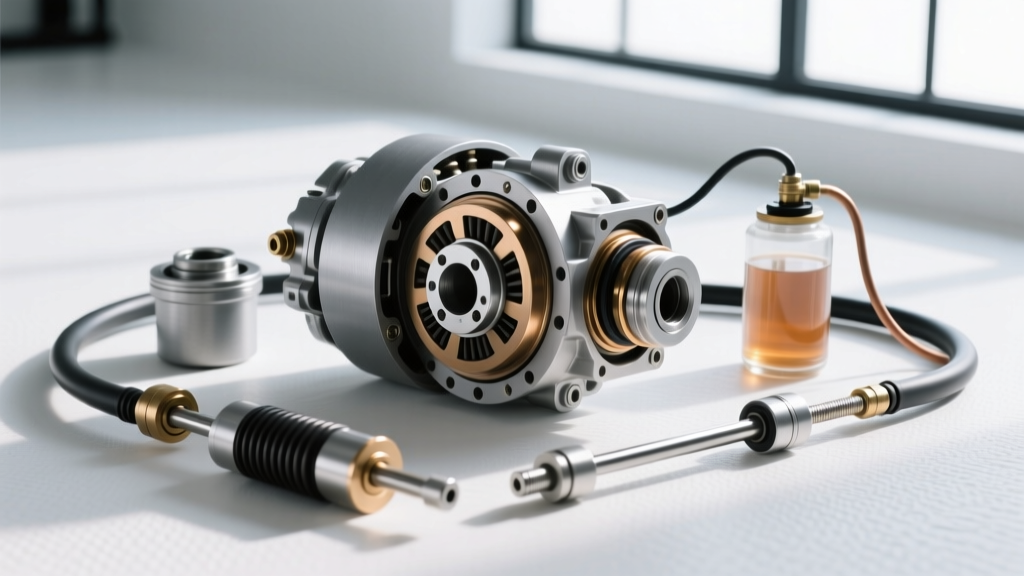
Isolating the Failure: Master, Slave, or Delay Valve?
Manual transmissions, whether you are rowing gears in a classic Borg-Warner T10, a modern Tremec T56 Magnum, or a precision-engineered Porsche G50, rely on a sealed, non-compressible hydraulic circuit to actuate the release bearing. When shifts become notchy, the pedal feels lifeless, or you experience gear crunch—particularly entering first gear or reverse—accurate diagnosis is critical. Before you order parts or tear into the bellhousing, understanding the underlying mechanics and the associated clutch slave cylinder replacement cost will save you from throwing money at a misdiagnosed problem.
The first step in clutch hydraulic system diagnosis is isolating the point of failure. A spongy pedal usually indicates air in the system or a failing master cylinder, while a pedal that drops to the floor and stays there often points to a catastrophic seal failure in either the master or the slave. However, performance enthusiasts must also account for the Clutch Delay Valve (CDV). Found in many modern performance vehicles, including the BMW E46/E90 chassis and GM LS-platform vehicles like the Camaro SS, the CDV is a restrictive orifice designed to smooth out engagement for novice drivers. In a high-performance or track context, a CDV restricts hydraulic flow, mimicking a failing slave cylinder by causing sluggish disengagement and synchro-crunching under rapid shifts. Diagnosing this requires physically removing the CDV from the hardline and testing the pedal response before condemning the slave cylinder.
The 'Zip-Tie' Pedal Test for Internal Bypass
To definitively diagnose an internal master cylinder bypass versus a leaking slave cylinder, perform the overnight zip-tie test. Pull the clutch pedal to the floor and secure it to the steering column or pedal assembly using a heavy-duty zip-tie. Leave it overnight. If the master cylinder's internal piston seals are bypassing, hydraulic pressure will slowly bleed back into the reservoir, and the pedal will lose tension or rise slightly. If the pedal remains rock-solid but you have zero hydraulic pressure at the fork upon release, the internal seals are blown. Conversely, if you find DOT fluid pooling inside the bellhousing inspection cover, your slave cylinder has suffered a catastrophic external seal failure.
Decoding the Clutch Slave Cylinder Replacement Cost
When diagnosis confirms the slave cylinder is the culprit, the financial impact varies wildly based on your transmission's architecture. The clutch slave cylinder replacement cost is primarily dictated by whether your vehicle utilizes an external slave cylinder or an internal Concentric Slave Cylinder (CSC). Internal CSCs, which wrap directly around the transmission input shaft, require complete drivetrain removal for replacement, drastically inflating labor costs.
| System Architecture | Example Applications | Estimated Parts Cost | Estimated Labor Cost | Total Replacement Cost |
|---|---|---|---|---|
| External Slave Cylinder | Jeep Wrangler JK, Foxbody Mustang, Honda K-Swap | $45 - $120 | $120 - $250 | $165 - $370 |
| Internal CSC (OEM) | C6 Corvette, Nissan 370Z, Ford Mustang GT500 | $120 - $380 | $600 - $1,200 | $720 - $1,580 |
| Performance External Conversion | Tremec T56 Swaps, LS-Swapped Miatas | $250 - $650 | $800 - $1,600 | $1,050 - $2,250 |
For vehicles with internal CSCs, such as the C6 Corvette (GM part # 24264560), it is highly recommended to replace the clutch fork, pivot ball, and release bearing simultaneously, as the labor to access them is already paid for. Attempting to reuse a worn OEM pivot ball with a new high-performance clutch will lead to premature wear and uneven disengagement.
Performance Upgrades: Engineering a Bulletproof Hydraulic System
If you are already facing a steep clutch slave cylinder replacement cost due to a failed internal CSC, or if you are building a track car, this is the ideal moment to upgrade the hydraulic architecture. High-clamp-load pressure plates, such as a McLeod Street Twin or RAM 300-Series, generate immense line pressure that exposes the weak links in OEM hydraulic systems.
- Braided Stainless Lines: OEM rubber flex lines expand under the 1,500+ PSI generated during heavy pedal actuation. This expansion robs you of pedal feel and precise modulation. Upgrading to PTFE-lined stainless steel braided lines from manufacturers like Goodridge Fluid Control Systems eliminates line swell, delivering a rock-solid, linear pedal feel.
- High-Temperature Fluid: Standard DOT 3 or DOT 4 fluids boil under the extreme thermal loads transferred from the clutch friction disc to the hydraulic fluid. For dedicated track use, upgrade to Motul RBF 660, which boasts a dry boiling point of 617°F (325°C), preventing vapor lock during endurance racing or heavy canyon carving.
- External Conversion Kits: For swapped vehicles utilizing a Tremec Driveline Solutions transmission, converting from an internal CSC to an external slave cylinder using a Wilwood or McLeod external hydraulic throwout bearing or pivot arm setup drastically reduces future maintenance costs and simplifies trackside bleeding procedures.
Pro-Tip: When upgrading to high-temp racing fluids like Motul RBF 660 or Castrol SRF, remember that these fluids are highly hygroscopic. You must flush the clutch hydraulic system every 12 months on a track-driven vehicle to prevent moisture absorption from lowering the fluid's boiling point and causing internal corrosion.
Pro-Level Bleeding: The Reverse-Flow Method
Once the replacement or upgrade is complete, proper bleeding is non-negotiable. Standard gravity bleeding or the 'pump-and-hold' pedal method frequently traps micro-bubbles in the high-points of the hardlines, resulting in a spongy pedal that ruins heel-toe downshifting precision. For performance applications, reverse bleeding is the industry standard.
Using a reverse bleeder kit, you inject fresh fluid directly into the slave cylinder's bleeder valve, pushing it upward through the hardlines and into the master cylinder reservoir. This follows the natural path of rising air, ensuring zero pockets are left behind. When working with aluminum CSC housings or aftermarket external slave cylinders, precision is critical. Bleeder valves must be torqued to exactly 8-10 Nm (71-88 lb-in). Over-torquing these valves will strip the soft aluminum threads, instantly turning a simple maintenance procedure into a costly drivetrain removal job. Furthermore, ensure the master cylinder reservoir is kept at the 'MAX' line during reverse bleeding to prevent overflow, as clutch systems typically hold only 200ml to 400ml of total fluid volume.
By combining rigorous diagnostic testing with targeted performance upgrades, you can eliminate the recurring costs and frustrations of weak OEM hydraulics, ensuring your manual transmission shifts with the precision and authority required for high-performance driving.