The Economics of Trident 660 Clutch Maintenance in 2026
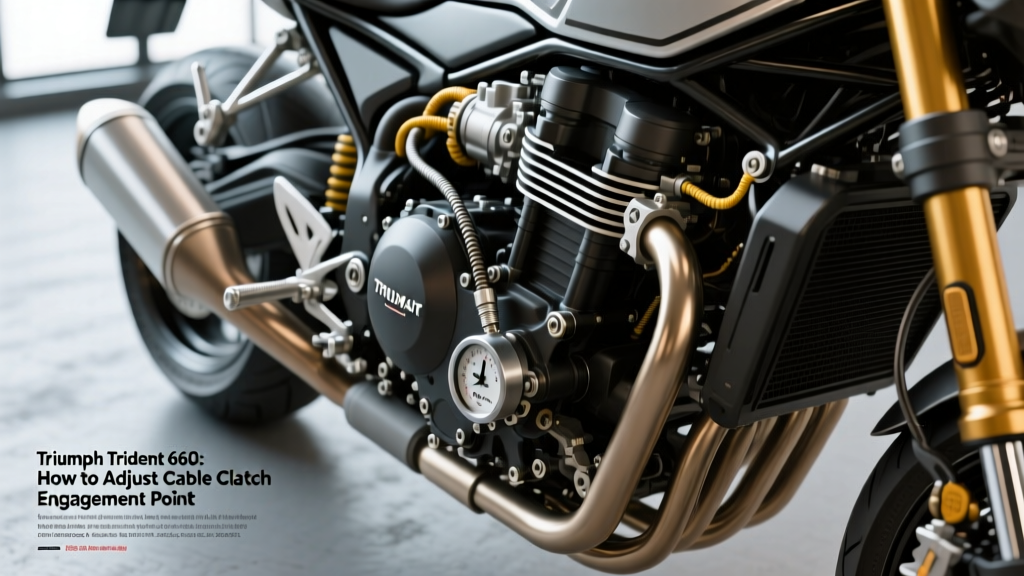
The Triumph Trident 660 features a brilliant 660cc liquid-cooled inline-three engine mated to a 6-speed sequential transmission. At the heart of this drivetrain is a wet, multi-plate assist and slipper clutch actuated by a traditional steel-braided or polymer-lined cable. Over time, thermal cycling, mechanical stretching, and friction material wear alter the clutch engagement point. When owners begin researching the Triumph Trident 660 how to adjust cable clutch engagement point procedure, they are usually experiencing either a creeping bike at stoplights, a lever that feels dangerously close to the grip, or premature friction plate glazing.
From a cost-analysis perspective, ignoring a poorly adjusted clutch cable is one of the most expensive maintenance oversights a rider can make. A cable replacement costs under $100, but a burned clutch pack resulting from a perpetually slipping, over-tightened cable can push your drivetrain repair bill past $600. Below, we break down the exact costs, diagnostic procedures, and mechanical specifications required to maintain the Trident 660's clutch system in 2026.
2026 Cost Breakdown: Cable Adjustment vs. Component Replacement
Before turning a single wrench, it is vital to understand the financial landscape of Trident 660 clutch diagnostics. Dealership labor rates have climbed, averaging $160 to $195 per hour in North America for 2026. Fortunately, cable adjustment is a zero-cost DIY procedure, while cable replacement remains highly affordable.
| Service / Component | DIY Cost (2026) | Dealership Cost (2026) | Time Required |
|---|---|---|---|
| Cable Freeplay Adjustment | $0 | $85 - $120 (Min. Labor) | 5 - 10 Minutes |
| OEM Clutch Cable Replacement | $75 - $90 (Parts) | $235 - $285 (Parts + Labor) | 45 - 60 Minutes |
| Aftermarket Cable (Motion Pro/Barnett) | $55 - $80 (Parts) | $215 - $260 (Parts + Labor) | 45 - 60 Minutes |
| Cable Lubrication & Flush | $15 (Tool + PTFE Lube) | $65 - $95 | 15 - 20 Minutes |
| Full Clutch Pack Replacement (Friction/Steel) | $280 - $450 (Parts + Fluid) | $650 - $850 (Parts + Labor) | 2.5 - 4 Hours |
Diagnosing Cable Stretch vs. Clutch Pack Wear
How do you know if you simply need to adjust the cable, or if the internal friction plates have worn past their service limits? The Trident 660's wet clutch relies on engine oil for cooling and lubrication. As the friction material wears, the clutch pack becomes physically thinner, which naturally pulls the engagement point closer to the handlebar grip.
The Diagnostic Decision Matrix
- Symptom: Engagement point is too close to the grip, but the lever feels smooth.
Diagnosis: Normal cable stretch or friction plate wear. Action: Adjust cable freeplay. If the lower adjuster is maxed out, measure friction plate thickness. - Symptom: Lever feels notchy, gritty, or binds during pull.
Diagnosis: Internal cable fraying or severe lack of lubrication. Action: Replace the cable immediately. Do not attempt to force it, as a snapped cable in traffic is a major safety hazard. - Symptom: Bike creeps forward with the lever fully pulled to the grip.
Diagnosis: Warped steel plates, notched clutch basket tangs, or incorrect oil viscosity causing drag. Action: Inspect clutch basket and measure steel plate runout. - Symptom: Rear wheel hops or chirps during aggressive downshifts.
Diagnosis: Too much cable freeplay preventing the slipper clutch ramps from actuating. Action: Reduce freeplay to factory specification.
Step-by-Step: Adjusting the Trident 660 Clutch Engagement Point
According to the Triumph Owner's Portal, the target freeplay specification for the Trident 660 clutch cable is 2mm to 3mm measured at the lever pivot, which translates to roughly 10mm to 15mm of free movement at the outer tip of the lever blade before you feel the resistance of the clutch springs.
Phase 1: The Handlebar Barrel Adjuster (Micro-Adjustment)
For minor tweaks caused by seasonal temperature changes or initial cable bedding, use the barrel adjuster located at the left-hand switchgear.
- Pull the clutch lever and locate the slotted locking nut and barrel adjuster where the cable meets the lever perch.
- Loosen the 10mm locking nut by turning it counter-clockwise (away from the lever).
- To increase freeplay (move engagement closer to the grip), turn the barrel adjuster clockwise (inward).
- To decrease freeplay (move engagement further from the grip), turn the barrel adjuster counter-clockwise (outward).
- Once 10-15mm of lever tip freeplay is achieved, hold the barrel in place and tighten the locking nut securely against the perch.
Phase 2: The Lower Engine Case Adjuster (Macro-Adjustment)
If the barrel adjuster is threaded out more than 8mm, or if you are installing a new cable, you must reset the lower adjuster located on the left-side engine casing.
- Thread the handlebar barrel adjuster completely inward to give yourself maximum adjustment range.
- Locate the clutch cable actuator arm on the left side of the engine. Follow the cable down to the rubber boot and locking nut.
- Using a 12mm wrench, loosen the lower locking nut.
- Turn the adjuster barrel until the actuator arm has just a hint of slack. You should be able to wiggle the cable ferrule slightly in its seat.
- Tighten the 12mm locking nut to 8 Nm to secure the setting.
- Return to the handlebar and use the barrel adjuster to dial in the final 2-3mm pivot freeplay.
The Assist & Slipper Clutch: Why Freeplay is Critical
The Trident 660 utilizes an assist and slipper clutch. This mechanism uses angled ramps inside the clutch hub. Under acceleration, the 'assist' ramps pull the clutch pack tighter, allowing for lighter clutch springs and a softer lever pull. During aggressive deceleration and downshifting, the 'slipper' ramps force the pressure plate to lift slightly, allowing the clutch to slip intentionally and preventing rear-wheel lockup.
If your cable is adjusted too tightly (zero freeplay), the clutch release mechanism is constantly applying a microscopic amount of pressure to the pressure plate. This prevents the assist ramps from fully seating, leading to clutch slip under heavy throttle, excessive heat generation, and rapid degradation of the 10W-40 or 10W-50 engine oil. Conversely, excessive freeplay means the cable cannot pull the pressure plate far enough during a panic stop or rapid downshift, neutralizing the slipper function and potentially causing a high-side crash.
Preventative Maintenance: Lubrication and Tooling Costs
To maximize the lifespan of your OEM or aftermarket clutch cable, routine lubrication is mandatory. The Motion Pro Tech Tips archive recommends lubricating motorcycle control cables every 5,000 miles or whenever the bike is washed.
Investing in a Motion Pro Cable Lubricator V2 (approx. $18.99) is one of the highest ROI tools in a home mechanic's arsenal. By clamping the lubricator over the exposed cable end and injecting a PTFE-based aerosol lubricant (avoid WD-40 or heavy greases that attract dust and gum up the internal polymer liner), you reduce friction coefficient by up to 40%. This not only restores a buttery-smooth lever feel but drastically reduces the mechanical stretching of the inner steel wire, keeping your engagement point stable for thousands of miles.
When to Replace the Cable Entirely
Even with perfect maintenance, cables suffer from metal fatigue. Inspect the soldered nipple at the handlebar lever end. If you see 'bird-caging' (where the outer wire strands separate from the core) or if the polymer liner is protruding from the ferrule, the cable is a failure risk. Replacing the cable before it snaps on the highway is a $75 investment that saves you from a catastrophic drivetrain disengagement scenario in urban traffic.