The Hidden Culprits Behind Premature Clutch Failure
When a manual transmission vehicle exhibits chatter, a spongy pedal, or an inconsistent engagement point, the immediate assumption is often a worn friction disc or a leaking hydraulic line. However, if you are preparing for a clutch and slave cylinder replace, ignoring the clutch fork and pivot ball geometry is a guaranteed path to a comeback repair. As of 2026, with the rise of high-torque EV manual swaps and restomods utilizing upgraded drivetrains, the mechanical leverage of the clutch fork is under more stress than ever before.
Replacing the friction components and hydraulic actuators without verifying the structural integrity of the release mechanism is like rebuilding an engine with a cracked block. The clutch fork and its pivot point act as the critical fulcrum translating hydraulic pressure into mechanical clamping force. In this expert guide, we will break down the specific failure modes of clutch forks and pivot balls, provide application-specific diagnostics, and outline the best practices to ensure your next repair is permanent.
Anatomy of Clutch Fork and Pivot Ball Wear
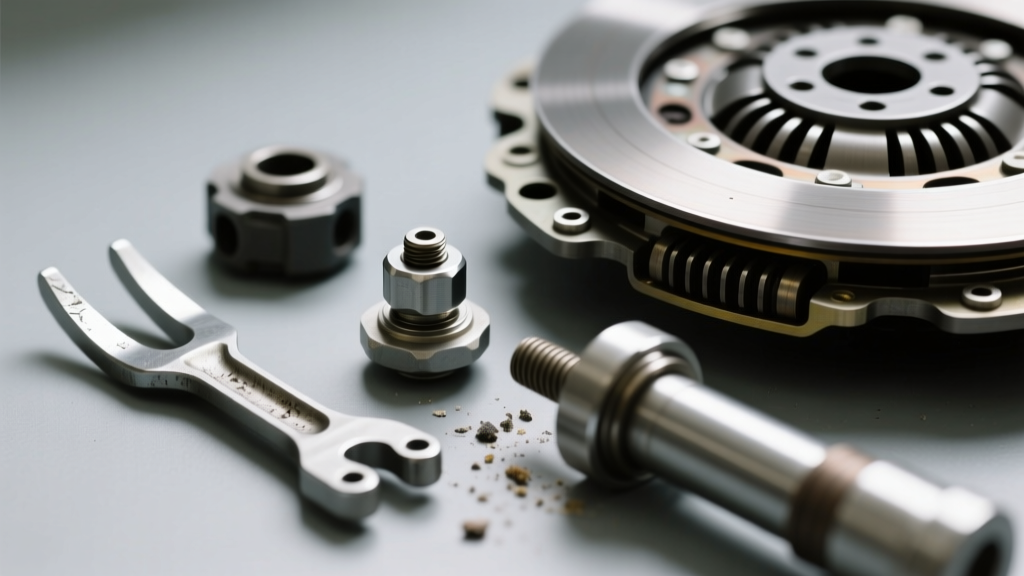
The clutch release system operates on a simple lever principle. The slave cylinder pushes one end of the fork, while the pivot ball (or pivot pin) acts as the fulcrum, and the opposite end of the fork pushes the throwout bearing against the pressure plate fingers. Over tens of thousands of actuation cycles, the contact point between the fork's dimple and the spherical pivot ball experiences immense friction and localized stress.
How Wear Alters Clutch Geometry
When the pivot ball wears a groove into the stamped steel or cast aluminum fork, the effective length of the lever changes. This results in a loss of mechanical advantage. You might find that the slave cylinder is extending to its maximum stroke, yet the throwout bearing is not fully depressing the pressure plate diaphragm springs. This manifests as incomplete disengagement, gear grinding, and eventual synchronizer damage inside the transmission.
- Pivot Ball Grooving: Creates a 'dead spot' in pedal travel where mechanical binding occurs.
- Fork Flex: Stamped steel forks can physically bend under the 2,500+ lb clamp loads of modern performance pressure plates, absorbing slave cylinder travel.
- Pivot Stud Backing Out: Vibration and improper threadlocker application can cause the pivot stud to unscrew from the bellhousing, drastically altering the engagement point.
Symptoms of Fork and Pivot Degradation
Before tearing down the drivetrain for a clutch and slave cylinder replace, look for these specific mechanical symptoms that point directly to the release mechanism rather than the friction assembly:
- Top-of-Travel Clicking: A distinct metallic 'click' or 'pop' felt in the pedal when the clutch is fully depressed. This often indicates the fork has slipped off the pivot ball or the pivot pin retaining clip has failed.
- Inconsistent Engagement Height: If the clutch engages at the floor one day and at the top of the pedal travel the next, and bleeding the hydraulics does not fix it, the fork pivot geometry is shifting under load.
- Lateral Throwout Bearing Wear: If you pull the transmission and find the throwout bearing worn at an angle (tapered wear), the fork is twisting on a worn pivot ball, misaligning the bearing against the pressure plate fingers.
Application-Specific Failure Modes and Upgrades
Different transmission families exhibit unique failure patterns. Understanding these is critical for modern drivetrain specialists.
GM LS / Tremec T56 and T56 Magnum
The factory GM stamped steel fork (Part # 12556369) and cast pivot ball (Part # 12556370) are adequate for stock LS engines producing under 400 lb-ft of torque. However, when paired with high-clamp-load twin-disc setups (like those from Exedy or McLeod), the factory fork flexes significantly. Furthermore, the pivot ball tends to wear an asymmetric groove into the fork dimple. Expert Tip: Always upgrade to a billet aluminum adjustable pivot ball and a reinforced steel fork during any high-performance clutch and slave cylinder replace.
Honda K-Series (K20Z3 / Civic Si)
The Honda K-Series uses a clutch fork pivot pin and a plastic fork pad (Honda Part # 22840-PRB-000) that rides against the pressure plate. The plastic pad is notorious for cracking and wearing through, causing the metal fork to gouge the pressure plate fingers. Additionally, the pivot pin (Part # 91205-PRP-003) can develop play in the bellhousing bore. Ignoring this plastic pad during a clutch job will destroy your brand-new pressure plate within 5,000 miles.
Inspection and Measurement Data Table
Use the following reference table to guide your inspection and parts selection during a clutch and slave cylinder replace. Pricing reflects average 2026 aftermarket and OEM retail estimates.
| Component / Application | OEM / Reference Part # | Recommended Upgrade | Est. 2026 Price | Critical Spec / Torque |
|---|---|---|---|---|
| GM T56 Pivot Ball | 12556370 | McLeod Billet Adjustable (#1650) | $45 - $85 | 15-20 lb-ft (w/ Blue Loctite) |
| GM T56 Clutch Fork | 12556369 | Ford Performance M-7515-A (Heavy Duty) | $110 - $160 | Check for >0.020" dimple wear |
| Honda K-Series Fork Pad | 22840-PRB-000 | ACURA NSX / OEM Replacement | $15 - $25 | Must replace every clutch job |
| Honda K-Series Pivot Bolt | 91205-PRP-003 | OEM (Do not use aftermarket) | $8 - $12 | 33 lb-ft (w/ new crush washer) |
| Mazda M5OD-R1 Fork Pivot | F1TZ-7515-A | OEM Replacement | $35 - $55 | Inspect bellhousing bore for egging |
Best Practices for Reassembly and Lubrication
The most common mistake made during a clutch and slave cylinder replace is improper lubrication of the release mechanism. Using the wrong grease will lead to catastrophic friction surface contamination.
The Lubrication Rules
NEVER use standard lithium-based or multi-purpose wheel bearing grease on the clutch fork pivot ball or the throwout bearing collar. These greases have low melting points; the heat generated by the bellhousing and the friction of the clutch will cause the grease to liquefy, migrate via centrifugal force, and contaminate the clutch disc.
ALWAYS use a high-temperature Molybdenum Disulfide (Moly) paste or a specialized PTFE dry-film lubricant. Apply a thin, even film only to the pivot ball sphere, the fork dimple, and the clutch fork pivot pin. Wipe away any excess immediately. For the throwout bearing collar where it rides on the transmission input shaft retainer, a light coat of high-temp synthetic grease (like Red Line CV-2) is acceptable, but keep it away from the bearing's internal seal.
Setting Pivot Ball Height (Adjustable Setups)
If you are installing an adjustable pivot ball (common in Tremec T56 Magnum applications), setting the correct height is vital for throwout bearing clearance and pedal geometry. According to McLeod Racing's technical documentation, the goal is to achieve a 1/8-inch to 1/4-inch gap between the throwout bearing face and the pressure plate fingers when the clutch is fully engaged (pedal up).
To measure this:
- Install the pressure plate and torque to spec (typically 35 lb-ft for GM LS M10x1.5 bolts in a star pattern).
- Thread the adjustable pivot ball into the bellhousing.
- Place the clutch fork and throwout bearing assembly into position.
- Use a straight edge across the bellhousing mating surface and measure the distance to the bearing face.
- Adjust the pivot ball height until the required clearance is achieved, then tighten the locking jam nut (usually requiring a 10mm or 1/2" wrench) to prevent it from backing out.
Hydraulic Bleeding and Final Slave Cylinder Setup
Once the mechanical geometry of the fork and pivot is verified and the transmission is bolted to the engine (torquing the bellhousing to the block is critical—typically 35 to 55 lb-ft depending on the application to prevent fork bind), the focus shifts back to the slave cylinder.
Modern concentric slave cylinders (CSCs), which are prevalent in European and late-model domestic applications, require specific bleeding procedures. Because the CSC sits inside the bellhousing, gravity bleeding is rarely sufficient. You must use a pressure bleeder set to 15-20 PSI, and in many cases, a specialized alignment tool is required to compress the CSC piston while installing the transmission to prevent damaging the internal seals against the pressure plate fingers.
Expert Diagnostic Note: If you have completed the clutch and slave cylinder replace, verified the fork geometry, bled the system, and the pedal still feels 'spongy' or engages too close to the floor, check the master cylinder pushrod clearance at the firewall. A missing or degraded firewall grommet can allow the master cylinder to flex backward under hydraulic pressure, mimicking the symptoms of air in the lines or a worn pivot ball.
Conclusion: The Holistic Diagnostic Approach
A successful manual transmission repair requires looking beyond the obvious wear items. The friction disc and the slave cylinder are merely the endpoints of a complex mechanical lever system. By incorporating a thorough inspection of the clutch fork, pivot ball, and associated hardware into your standard operating procedure, you eliminate the root causes of chatter, premature wear, and hydraulic failure. For further reading on drivetrain torque specifications and bellhousing alignment, refer to the engineering resources available at Tremec and OEM parts catalogs via RockAuto. Treat the release mechanism with the same precision as the engine internals, and your clutch repairs will stand the test of time and torque.