The Drivetrain Architecture: 1/7 Scale Meets Full-Size Engineering
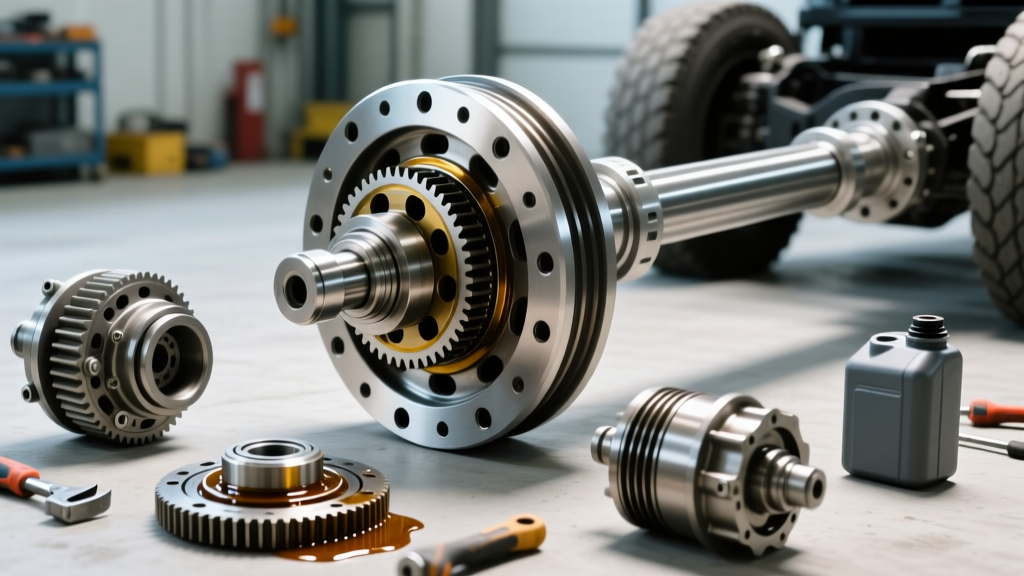
When evaluating high-performance radio-controlled platforms, few models mirror full-scale automotive drivetrain dynamics as closely as the 1/7 scale Traxxas Unlimited Desert Racer (UDR). At the heart of its solid rear axle lies a heavy-duty ring and pinion gearset and a robust gear differential. For drivetrain specialists and RC racing enthusiasts in 2026, understanding the Traxxas UDR rear differential requires bridging the gap between miniature scale mechanics and full-size axle engineering, such as the Dana 44 or Ford 8.8-inch axles found in full-size trophy trucks.
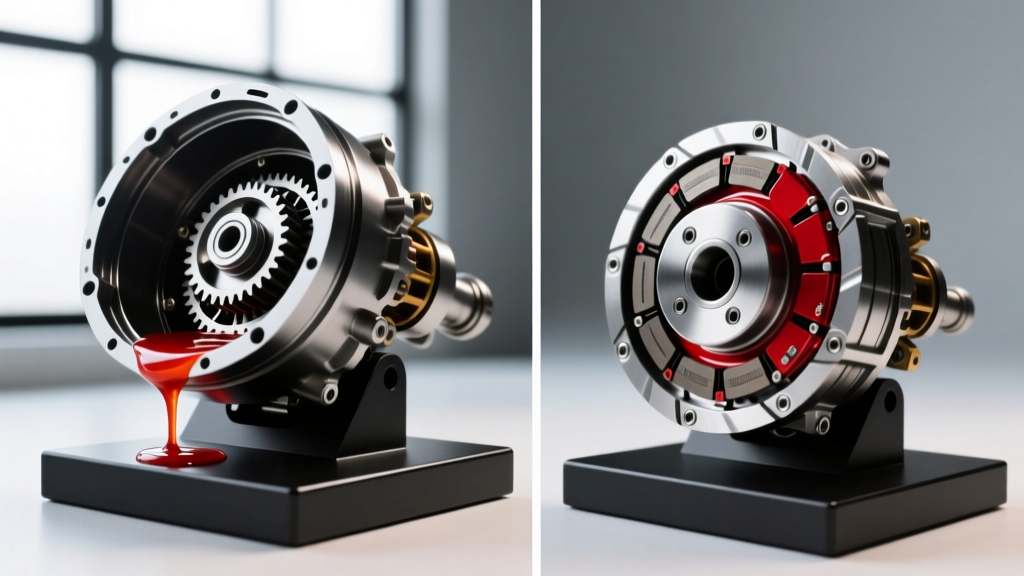
The most critical decision any UDR owner faces is choosing between an open differential and a limited-slip (or locked) equivalent. In full-scale automotive applications, this choice dictates whether you utilize a standard open carrier, a clutch-type limited-slip differential (LSD) like the Eaton Truetrac, or a locking spool. In the UDR, this translates to choosing between a stock open gear diff, a viscous limited-slip tune using high-centistoke silicone fluids, or a solid spool conversion. This buyer's guide and technical comparison will break down the physics, fluid dynamics, and exact part specifications required to optimize your UDR's rear traction.
Open Differentials: The Baseline for Desert Racing
Stock Gear Differential Dynamics
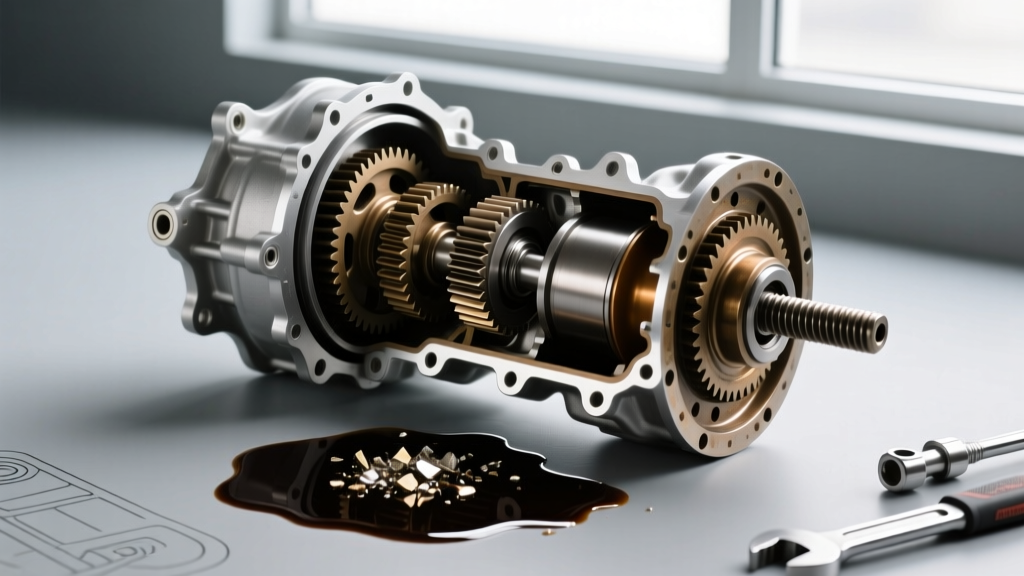
Out of the box, the Traxxas UDR rear differential operates as a true open differential. It utilizes a set of spider gears and side gears housed within a composite or machined aluminum diff case. The fundamental law of an open differential—whether it is in a 1/7 scale RC truck or a 2026 Jeep Wrangler Rubicon's Dana 44—is that torque follows the path of least resistance.
When both rear tires have equal traction, the open diff splits torque evenly, allowing the outside wheel to rotate faster than the inside wheel during cornering. This prevents tire scrubbing, reduces drivetrain binding, and ensures smooth, predictable handling on high-bite surfaces like prepped clay tracks or smooth asphalt. However, the moment one wheel encounters low traction (such as loose desert silt, mud, or an off-camber rut), the open differential sends all available torque to the slipping wheel, resulting in the dreaded "one-wheel peel" and a complete loss of forward momentum.
The Automotive Parallel
In full-scale automotive engineering, an open differential is standard for highway commuting but inadequate for off-road or high-horsepower drag applications. According to Spicer Drivetrain's engineering documentation, open carriers are limited by their inability to bias torque. To solve this in the UDR without sacrificing the mechanical simplicity of the gear diff, enthusiasts turn to fluid dynamics.
Viscous Tuning: Creating a "Limited Slip" Effect
Because the physical footprint of the UDR's rear axle cannot accommodate a mechanical clutch-pack LSD or a Torsen-style helical gear setup, RC engineers rely on fluid shear to mimic limited-slip behavior. By replacing the stock lightweight grease or low-weight silicone oil with ultra-high-viscosity silicone diff fluid, you effectively transform the open gear differential into a Viscous Limited-Slip Differential (VLSD).
How High-cSt Fluids Mimic Automotive LSDs
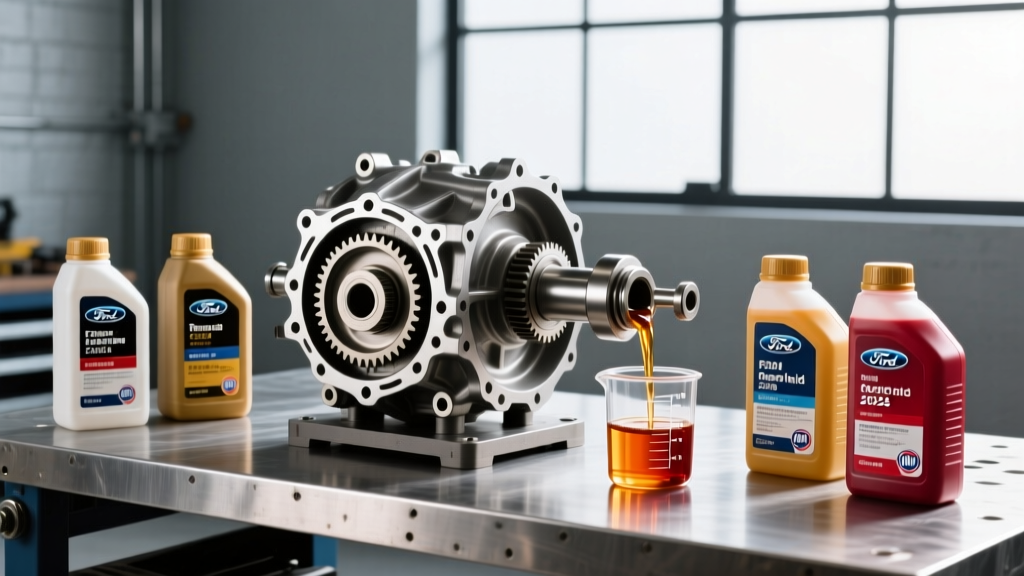
Silicone differential fluids are measured in centistokes (cSt). While stock setups might use 5,000 to 30,000 cSt oil, creating a limited-slip effect in the Traxxas UDR rear differential requires fluids ranging from 500,000 cSt to 1,000,000 cSt (often referred to as 500k or 1M diff oil).
- Low-Speed Cornering: At low shear rates (slow steering inputs), the 1,000,000 cSt fluid allows the spider gears to slowly push through the thick silicone, permitting the outside wheel to rotate slightly faster. This preserves cornering ability and prevents chassis tripping.
- High-Load Acceleration: Under heavy throttle, the shear rate inside the diff case spikes. The thick silicone fluid resists rapid movement, effectively "locking" the spider gears to the side gears. This biases torque to both wheels equally, mimicking the locking behavior of an automotive clutch-type LSD under heavy throttle.
Expert Drivetrain Tip: When packing 1,000,000 cSt fluid into the UDR rear diff, air bubbles are your enemy. Unlike full-scale axles that hold 2.5 quarts of 75W-140 gear oil and naturally purge air through the breather tube, the UDR diff holds only about 15-20ml of fluid. You must meticulously pack the gear pockets to prevent cavitation, which will lead to inconsistent locking behavior and premature gear wear.
Setup Comparison Matrix: Open vs. Viscous LSD vs. Spool
To help you decide which configuration suits your specific terrain and driving style, refer to the technical comparison matrix below. This mirrors the decision frameworks used by full-scale off-road racing teams when selecting rear axle carriers.
| Setup Type | Traction Profile | Cornering Dynamics | Recommended Fluid / Mod | Full-Scale Equivalent |
|---|---|---|---|---|
| Open Diff (Stock) | Low (One-wheel peel in loose dirt) | Excellent (Zero binding) | Stock Grease or 30k cSt Oil | Standard Open Carrier |
| Viscous LSD (Tuned) | High (Biases torque under load) | Good (Slight push at low speed) | 500k - 1,000,000 cSt Silicone | Viscous Coupling / Clutch LSD |
| Diff Putty / Lock | Maximum (100% Lock) | Poor (Chassis tripping, tire scrub) | RC Diff Putty or Epoxy | Welded Differential |
| Spool / Locker | Maximum (100% Lock) | Poor (Requires setup for high-bite) | Aftermarket Spool Insert | Detroit Locker / Solid Spool |
Buyer’s Guide: Part Numbers, Fluids, and Torque Specs
Executing a differential rebuild or fluid upgrade on the Traxxas UDR requires precision. The tolerances in the UDR's heavy-duty rear gear case are tight, and improper shimming or torqueing will result in catastrophic ring and pinion failure under the torque of a 6S or 8S LiPo power system.
Essential Upgrade Components
Whether you are refreshing worn spider gears or upgrading to a machined aluminum case for better heat dissipation with heavy silicone oils, reference these exact Traxxas part numbers:
- Differential Case (Composite): #2578
- Ring Gear (43-Tooth): #2580
- Pinion Gear (13-Tooth): #2581
- Spider & Side Gear Set: #2582
- Differential Bearings (15x21x4mm): #2588
- Differential O-Ring & Seal Kit: #2591
For those seeking the ultimate limited-slip tuning, source high-quality 100% pure silicone differential oils from brands like Team Losi Racing (TLR), Associated, or Traxxas. Avoid hybrid oils that contain petroleum distillates, as these will degrade the composite plastics of the #2578 diff case and the rubber O-rings.
Assembly and Torque Specifications
Treating the UDR rear axle with the same respect as a full-scale automotive drivetrain is paramount. Use a calibrated inch-pound torque wrench and high-quality hex drivers. According to Traxxas official technical resources and community-tested telemetry, adhere to the following assembly protocols:
- Ring Gear Bolts: Apply a small drop of Blue Threadlocker (Loctite 243) to the M3 ring gear bolts. Torque to 1.8 Nm (16 in-lbs) in a star pattern to ensure the ring gear seats perfectly flat against the diff case flange.
- Pinion Nut: The pinion gear nut is a critical failure point. Clean the threads with isopropyl alcohol, apply Blue Threadlocker, and torque to 2.5 Nm (22 in-lbs). Do not use Red Threadlocker here, as future gear ratio changes will require heating the nut, potentially melting the surrounding plastic axle housings.
- Diff Case Screws:** The screws holding the two halves of the composite diff case together should be tightened evenly to 1.2 Nm (10.5 in-lbs). Over-torquing will warp the case, causing the spider gears to bind and overheat the 1,000,000 cSt fluid.
Final Verdict: Which Setup Fits Your Driving Style?
The debate between an open differential and a limited-slip setup in the Traxxas UDR rear differential ultimately comes down to your driving environment. If you are running on a high-bite, prepared dirt track where corner speed is paramount, the stock open differential with a moderate 100,000 cSt fluid provides the best balance of steering and forward drive.
However, if you are bashing in loose desert sand, deep mud, or tackling steep rock-crawling inclines where forward bite is the only metric that matters, tuning your UDR with a 1,000,000 cSt viscous limited-slip fluid is the ultimate upgrade. It provides the traction benefits of a locked axle while retaining just enough slip to save your drivetrain from binding and snapping axle shafts in the corners. By applying full-scale automotive drivetrain principles to your 1/7 scale machine, you ensure that every ounce of brushless motor torque is effectively translated into forward momentum.