Navigating Ford F350 Rear Differential Fluid Specifications
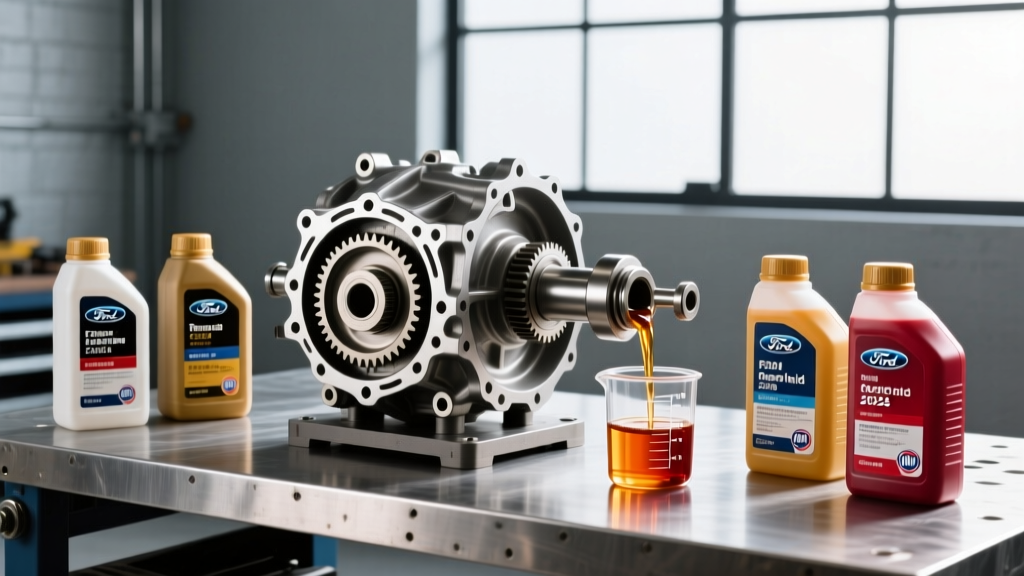
When maintaining a modern Super Duty, selecting the correct ford f350 rear differential fluid is not merely a matter of grabbing any bottle of gear oil off the shelf. As we move through 2026, Ford’s heavy-duty truck lineup features advanced axle assemblies that demand precise lubrication chemistry to handle extreme towing loads, high ambient temperatures, and extended service intervals. Whether you are hauling a 15,000-pound fifth-wheel or navigating daily highway commutes, the shear stability and thermal breakdown resistance of your gear oil directly dictate the lifespan of your ring and pinion set.
In this comprehensive buyer’s guide, we break down the exact OEM specifications, compare top-tier synthetic options, and provide the critical torque and capacity data required for a flawless differential service.
Identifying Your F-350 Rear Axle Assembly
Before purchasing fluid, you must identify which rear axle your F-350 is equipped with, as this dictates both capacity and viscosity requirements. Modern F-350s primarily utilize two rear axle platforms:
- Sterling 10.5-Inch Axle: Standard on most single rear wheel (SRW) F-350 models. Known for its robust ring gear and widespread aftermarket support.
- Dana M210 / M235 High-Capacity Axle: Found on dual rear wheel (DRW) models and SRW trucks equipped with the Max Tow / High-Capacity Trailer Tow packages. The M235 features a significantly larger sump for increased fluid volume and enhanced thermal management.
Decoding Ford’s OEM Gear Oil Specifications
Ford engineering relies on specific internal fluid standards rather than just generic API GL-5 ratings. Understanding these alphanumeric codes is crucial for warranty compliance and optimal performance.
The 75W-140 vs. 75W-85 Viscosity Shift
Historically, 75W-140 was the blanket recommendation for all Super Duty trucks. However, to meet stringent CAFE fuel economy standards, Ford transitioned standard-duty F-350s to 75W-85 Synthetic Gear Oil (Ford spec WSS-M2C942-A). While 75W-85 reduces parasitic drag and improves cold-weather shift quality, it is not recommended for severe towing. If your F-350 is equipped with the heavy-duty tow package, or if you regularly tow in excess of 10,000 lbs, Ford mandates the use of 75W-140 Synthetic (Ford spec WSL-M2C192-A) to prevent film shearing under extreme pinion pressure.
Expert Insight: Never mix 75W-85 and 75W-140 viscosities. If you are upgrading a standard-duty truck to 75W-140 for towing, you must perform a complete drain and flush, as residual 75W-85 will compromise the high-temperature film strength of the 140-weight oil.
2026 Buyer’s Comparison: Top Synthetic Fluids
We tested and analyzed the leading synthetic gear oils against Ford’s stringent WSL-M2C192-A requirements. Below is our comparative breakdown for the 2026 service year.
| Brand & Product | Viscosity | Base Stock Chemistry | Ford Spec Met | Est. Price / Qt | Best Application |
|---|---|---|---|---|---|
| Motorcraft Synthetic Gear Lubricant | 75W-140 | PAO / Ester Blend | WSL-M2C192-A | $18.50 | OEM Warranty Compliance |
| AMSOIL Severe Gear | 75W-140 | High-Purity PAO | Exceeds API GL-5 | $22.99 | Extreme Towing & Heat |
| Red Line Heavy ShockProof | 75W-140 | Polyol Ester | API GL-5+ Rating | $24.50 | Shock Loading / Off-Road |
| Royal Purple Max Gear | 75W-140 | Proprietary Synerlec | API GL-5 / MT-1 | $23.00 | High Mileage / Noise Reduction |
For owners seeking the absolute best thermal protection for mountain-grade towing, AMSOIL Severe Gear 75W-140 remains our top recommendation due to its exceptional shear stability and resistance to foaming. However, for fleet operators and those prioritizing strict OEM compliance, Motorcraft Synthetic Gear Lubricant offers unbeatable value and peace of mind.
The Limited Slip Additive Dilemma
If your F-350 is equipped with a clutch-type Limited Slip Differential (LSD), the base gear oil is only half the equation. Clutch-style LSDs require a specific friction modifier to prevent the clutch packs from binding, which manifests as a low-speed 'chatter' or vibration during tight turns.
Motorcraft XL-3 Friction Modifier
Ford specifies the use of Motorcraft XL-3 (EST-M2C118-A). The standard dosage is 4 fluid ounces added to the differential before filling with the base gear oil.
Critical Exception: If your F-350 is equipped with a Torsen (Torque-Sensing) or Detroit Truetrac differential, these are gear-driven LSDs. They do not contain friction clutches and do not require XL-3 friction modifier. In fact, adding friction modifier to a Torsen differential can reduce its bias ratio and degrade performance.
Exact Service Specifications: Torque, Capacities, and Tools
A proper fluid service requires adherence to precise mechanical tolerances. Guesswork leads to stripped threads, overfilling, and catastrophic axle failure.
Fluid Capacities by Axle Model
- Sterling 10.5-Inch (SRW): 1.7 Liters (approx. 3.6 Pints / 1.8 Quarts)
- Dana M210 (Standard DRW): 2.8 Liters (approx. 3.0 Quarts)
- Dana M235 High-Capacity (Max Tow): 3.4 Liters (approx. 3.6 Quarts)
Note: Always purchase one extra quart beyond the stated capacity to account for fluid left in the pump lines and transfer equipment.
Torque Specifications & Fastener Data
The days of simply tightening the fill plug until it 'feels right' are over. Over-torquing the fill plug on an aluminum differential cover or thin-walled steel sump can warp the housing or crack the casing.
- Fill Plug (3/8-inch Square Drive): 35 lb-ft (47 Nm)
- Drain Plug (If Equipped): 35 lb-ft (47 Nm)
- Steel Cover Bolts (Sterling 10.5 - 12 bolts): 45 lb-ft (61 Nm) in a crisscross star pattern.
- RTV Silicone Bead (If no gasket is used): 3mm to 5mm continuous bead, utilizing high-temp black or gray RTV (e.g., Permatex Ultra Black).
The Dana M235 Offset Fill Hole Caveat
Owners of the Dana M235 High-Capacity axle must be aware of a unique design quirk. The fill plug is located slightly above the true fluid sump line. To achieve the correct fluid level, Ford mandates that the truck must be parked on perfectly level ground, and fluid should be added until it reaches the bottom edge of the fill hole threads. However, because of the internal baffle design, it is highly recommended to let the fluid settle for 10 minutes after initial filling before re-checking the level to prevent under-filling.
Final Verdict: Which Fluid Should You Buy?
Your choice of ford f350 rear differential fluid should be dictated by your truck's configuration and your typical payload. For standard SRW trucks used for light hauling and daily driving, Motorcraft 75W-85 provides excellent cold-weather protection and OEM fuel economy benefits. For DRW owners, Max Tow package holders, and heavy fifth-wheel towers, upgrading to a premium 75W-140 synthetic like AMSOIL Severe Gear or Motorcraft 75W-140 is non-negotiable for long-term ring and pinion survival.
By matching the correct viscosity to your axle, respecting the friction modifier requirements of your specific limited-slip unit, and adhering to exact torque specifications, you ensure your F-350’s drivetrain remains bulletproof for hundreds of thousands of miles.