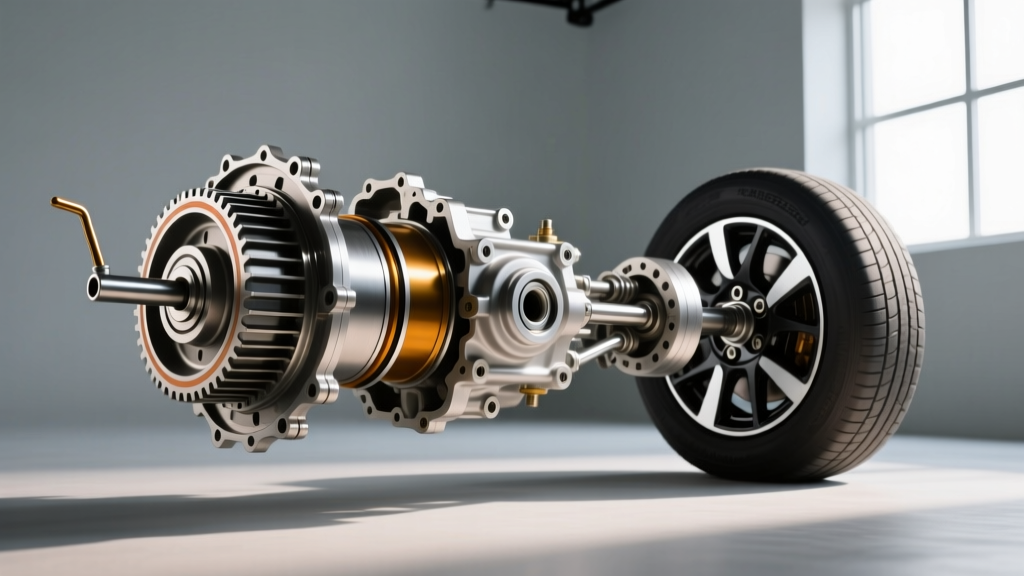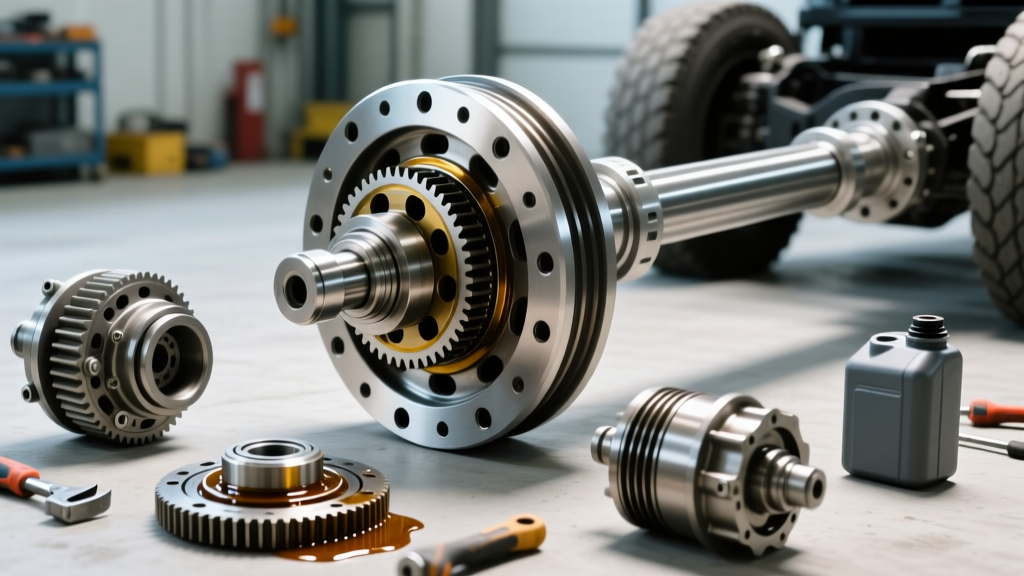
When building a dedicated off-road truck or SUV, maximizing traction is the ultimate goal. Upgrading from a factory open differential to a locking unit transforms a rig's capability, allowing it to crawl over boulders and pull through deep mud with authority. However, this massive performance leap fundamentally alters the mechanical environment inside your axle housings. Understanding how a differential locker work and the specific maintenance protocols required for locked axles is critical for ensuring longevity, whether you are daily driving a Ford F-250 or rock-crawling in a Jeep Wrangler.
The Core Mechanics: How Does a Differential Locker Work?
To understand the maintenance requirements, you first need to understand the mechanical forces at play. A standard open differential uses a set of spider gears to allow the left and right axle shafts to spin at different speeds, which is necessary for smooth cornering on pavement. However, if one wheel loses traction, the open diff sends 100% of the torque to the wheel with the least resistance, leaving you stuck.
A differential locker solves this by physically coupling the two axle shafts together, forcing them to rotate at the exact same speed regardless of traction. This creates a 100% torque transfer to both wheels. The method of coupling dictates the maintenance needs:
- Selectable Pneumatic Lockers (e.g., ARB Air Locker): Uses compressed air to push a locking collar into the side gears. Maintenance involves not just gear oil, but maintaining the onboard air compressor, polyurethane air lines, and the internal O-rings on the carrier.
- Electromagnetic Lockers (e.g., Eaton E-Locker): Uses a 12-volt electromagnetic coil to engage a locking collar. Requires clean gear oil to prevent metal shavings from interfering with the electrical contacts and internal armature.
- Automatic Mechanical Lockers (e.g., Detroit Locker, Spartan): Replaces the spider gears with a ratcheting mechanism that locks under torque and unlocks (ratchets) during cornering. These generate significant internal friction and metal-on-metal wear during the break-in phase.
Fluid Dynamics: Why Lockers Change Your Maintenance Schedule
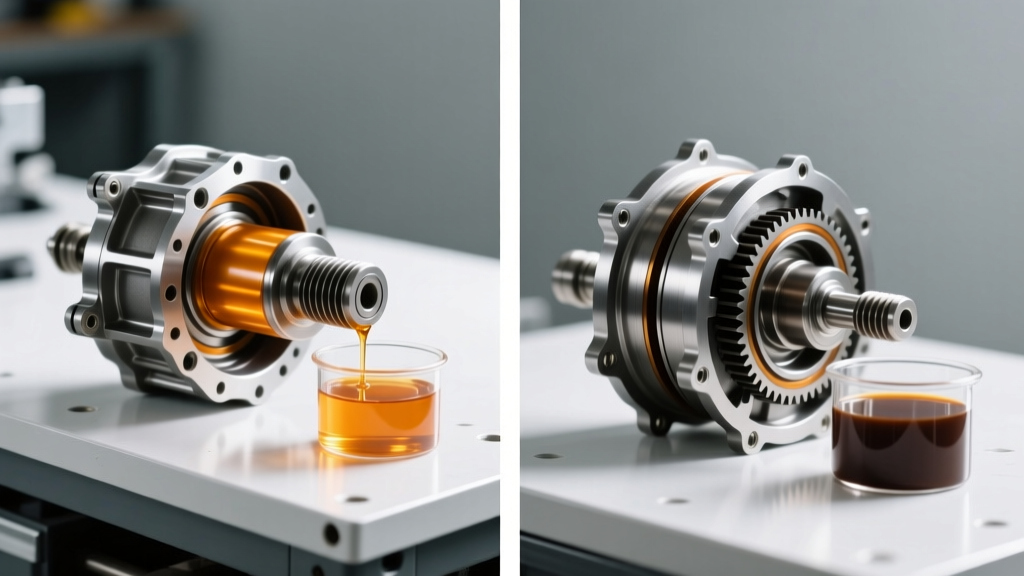
Many enthusiasts install a locker and forget about it, assuming standard differential maintenance intervals apply. This is a critical error. Lockers introduce new wear patterns and heat profiles. Automatic lockers like the Detroit Locker feature heavy steel couplers that slide and ratchet against each other. During the first 500 to 1,000 miles, this mating process sheds microscopic metallic shavings into the gear oil. If left unchanged, this metallic paste acts as a lapping compound, accelerating wear on your ring and pinion gears and the locker mechanism itself.
Furthermore, selectable lockers rely on tight-tolerance seals where the axle shaft passes through the carrier. Contaminated, degraded gear oil will cause these O-rings and Teflon seals to fail, leading to air leaks (in pneumatic systems) or electrical shorts.
Recommended Maintenance Intervals for Locked Axles
| Axle Model | Locker Type | Fluid Capacity | Initial Break-In Change | Standard Interval |
|---|---|---|---|---|
| Dana 44 (30-spline) | ARB Air Locker (RD116) | 3.5 Pints | 1,000 Miles | 30,000 Miles / 2 Years |
| Ford 10.5" (Sterling) | Detroit Locker | 7.4 Pints | 500 Miles | 50,000 Miles |
| GM 9.5" (14-Bolt SF) | Eaton E-Locker | 5.5 Pints | 1,000 Miles | 45,000 Miles |
| Toyota 8" (Clamshell) | Spartan / Lunchbox | 3.2 Pints | 500 Miles | 30,000 Miles |
Gear Oil Selection: Viscosity, GL-Ratings, and Friction Modifiers
Choosing the right fluid is where many DIYers fail. The hypoid cut of your ring and pinion gears requires extreme pressure (EP) additives found in API GL-5 rated gear oils. Never use GL-4 in a heavy-duty truck axle, as it lacks the sulfur-phosphorus additives needed to protect the sliding friction of hypoid gear teeth under high torque loads.
For trucks and SUVs that tow heavy trailers or engage in slow-speed rock crawling, stepping up from a standard 75W-90 to a 75W-140 synthetic (such as Amsoil Severe Gear or Red Line 75W140) is highly recommended. The heavier 140-weight oil maintains a thicker hydrodynamic film at the extreme temperatures generated when crawling in low range.
Critical Warning on Friction Modifiers: If you are running an automatic mechanical locker (Detroit, Spartan, Lockright), you MUST NOT add limited-slip friction modifiers to your gear oil. Friction modifiers are designed to allow clutch packs to slip smoothly. In an automatic locker, this altered friction coefficient can prevent the internal dog teeth from fully engaging or disengaging, leading to dangerous binding on the street and catastrophic internal shattering on the trail.
Installation Torque Specs and Carrier Setup
When upgrading to a locker, the installation process dictates the lifespan of the unit. Reusing stretched hardware or guessing torque specs will lead to catastrophic failure. Below are standard baseline torque specifications for common truck and SUV applications. Always verify with your specific manufacturer's service manual, such as the Dana Spicer Tech Library or ARB Installation Guides.
- Ring Gear Bolts: 55 to 85 ft-lbs (depending on thread size, typically 3/8"-24 or 7/16"-20). Always clean threads with brake cleaner and apply a high-strength threadlocker like Loctite 272 (Red). Allow 24 hours to cure before filling with fluid.
- Carrier Bearing Cap Bolts: 45 to 65 ft-lbs for Dana 44/60 applications; 80 to 110 ft-lbs for heavy-duty axles like the Ford Dana Super 60 or GM 14-bolt full-float. These must be torqued evenly to prevent carrier distortion.
- Pinion Nut (Crush Sleeve Axles): 200 to 250+ ft-lbs. This is not a standard torque spec; it is tightened until the correct bearing rotational preload (usually 15-25 in-lbs of drag) is achieved. Over-crushing the sleeve requires a new sleeve and a complete teardown.
- Locker Internal Fasteners: Eaton E-Locker internal stator bolts and ARB locking collar retaining pins often require specific low-torque settings (e.g., 15-25 ft-lbs) with mild blue Loctite 242.
Real-World Troubleshooting: Noises, Leaks, and Air Lines
Post-installation maintenance also involves diagnosing the unique quirks of locked axles. Here is how to troubleshoot common issues:
The 'Bang' and Cornering Bind
If you have installed a Detroit or Spartan locker, you will hear a loud 'bang' or 'clunk' from the rear axle when turning sharply at low speeds. This is normal; it is the sound of the internal ratcheting mechanism overriding and unlocking to allow the outside wheel to spin faster. However, if the vehicle violently hops or binds on dry pavement, check your tire sizes. Even a 1/4-inch difference in tire circumference side-to-side will force the locker to remain partially engaged, generating massive heat and destroying the couplers.
Pneumatic Air Leaks (Selectable Lockers)
If your ARB locker fails to engage, the issue is rarely the carrier itself; it is almost always an air leak. Before pulling the differential cover, check the bulkhead fitting where the air line enters the axle housing. This fitting uses a tiny O-ring that degrades under high gear oil temperatures. To test, engage the locker, crawl under the truck, and spray the axle tube entry point with soapy water. If bubbles form, drain the fluid, replace the bulkhead O-ring, and refill with fresh 75W-90 synthetic.
Pinion Seal Blowouts and Breather Tubes
Off-road trucks frequently experience pinion seal leaks immediately after a hard trail run. Before replacing the $15 seal, inspect the axle breather tube. When an axle is submerged in cold water, the internal temperature drops rapidly, creating a vacuum. If the breather tube is clogged with mud or routed too low, the axle will suck water past the pinion seal. Conversely, a clogged breather during high-heat operation will pressurize the housing and blow gear oil out of the seal. Always route your axle breather tubes up into the engine bay or frame rails to equalize pressure safely.
Final Upgrade Considerations for 2026 and Beyond
As modern trucks and SUVs continue to gain weight and produce immense low-end torque—especially with the rise of hybrid and EV powertrains—the stress on axle components is higher than ever. Upgrading to a locking differential is one of the most effective traction modifications you can make. By pairing your locker installation with premium synthetic GL-5 gear oil, strict adherence to torque specifications, and aggressive break-in fluid changes, your axle assembly will survive the most punishing trails and heavy towing duties for years to come. For further reading on advanced gear oil chemistry and EP additive thresholds, consult the Amsoil Technical Bulletins on severe gear applications.