The 'Lifetime Fluid' Fallacy in Modern Drivetrains
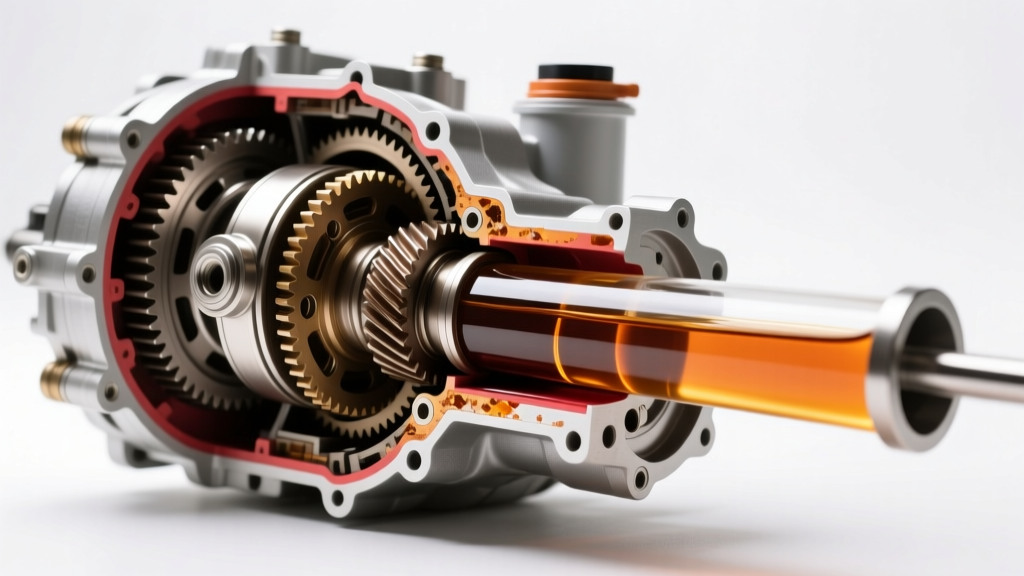
Modern automatic transmissions, such as the ubiquitous ZF 8HP series, the GM 10L90, and the Ford 10R80, operate under immense thermal and mechanical stress. The clutches, torque converters, and mechatronic valve bodies rely entirely on the shear stability and friction-modifying properties of the automatic transmission fluid (ATF). Yet, a pervasive myth in the automotive industry is the concept of 'lifetime' fluid. In reality, 'lifetime' merely refers to the manufacturer's warranty period, typically 60,000 to 100,000 miles. Beyond this threshold, fluid degradation accelerates, leading to valve body wear, clutch slip, and eventual catastrophic failure.
As of 2026, the proliferation of 10-speed automatics and advanced CVTs has made establishing a rigorous transmission fluid maintenance schedule the single most effective way to extend the lifespan of these highly complex drivetrains. The friction modifiers in modern Ultra Low Viscosity (ULV) fluids deplete over time, and the base oil suffers from oxidative shearing. Ignoring a proactive maintenance schedule is a guaranteed path to a $4,000+ transmission replacement.
How to Put Transmission Fluid in a Car: The Temperature-Dependent Protocol
When enthusiasts and DIY mechanics research how to put transmission fluid in a car, they often encounter outdated advice tailored to older 4-speed automatics with easily accessible dipsticks. Today, over 85% of new passenger vehicles feature 'sealed' transmissions without a traditional dipstick tube. Understanding how to put transmission fluid in a car with a sealed unit requires a paradigm shift: fluid level is no longer determined by a simple visual check but by a precise, temperature-dependent overflow procedure.
If the fluid temperature is too low during the fill process, the fluid will be overfilled, leading to aeration, foaming, and erratic hydraulic pressure. If the temperature is too high, the fluid will be underfilled due to thermal expansion, resulting in pump cavitation, delayed engagements, and immediate clutch burnout. You cannot simply pour fluid in and hope for the best; you must use an OBD2 scan tool capable of reading the Transmission Fluid Temperature (TFT) sensor in real-time.
Required Tooling for Sealed Units
- Bi-directional OBD2 Scanner: Must support live TFT data streaming (e.g., Autel MaxiCOM, Foxwell NT510).
- Fluid Transfer Pump: A pneumatic or hand-operated pump with a spill-proof hose to push fluid upward into the fill port.
- Infrared Thermometer: As a secondary backup to verify pan temperature.
- OEM-Specific Fluid: Never mix fluid specifications (e.g., do not use Dexron VI in a Dexron ULV application).
Transmission Fluid Maintenance Schedule: Normal vs. Severe Service
The Automatic Transmission Rebuilders Association (ATRA) consistently cites neglected fluid as the primary cause of internal mechatronic failures. Below is the definitive maintenance schedule for the most common modern transmissions, adjusted for real-world driving conditions. 'Severe' service includes frequent towing, stop-and-go city traffic, extreme heat, and track use.
| Transmission Model | Common Applications | Normal Interval | Severe Interval | Required Fluid Spec |
|---|---|---|---|---|
| ZF 8HP70 / 8HP90 | BMW, Audi, Stellantis, Jaguar | 60,000 mi | 40,000 mi | ZF LifeguardFluid 8 |
| GM 10L90 | GM Trucks, Camaro, Cadillac | 75,000 mi | 45,000 mi | ACDelco Dexron ULV |
| Ford 10R80 | F-150, Mustang, Explorer | 60,000 mi | 30,000 mi | Motorcraft Mercon ULV |
| Aisin AW81-40LE | Toyota, Lexus, Volvo | 60,000 mi | 30,000 mi | Toyota WS / Aisin AF-WS |
Step-by-Step: The Overflow Plug Method (ZF 8HP Example)
To illustrate exactly how to execute a fluid level check and fill on a sealed unit, we will use the ZF 8HP as our benchmark. This transmission uses a plastic fluid pan with an integrated filter, meaning the pan must be replaced during a fluid service.
- Vehicle Preparation: Raise the vehicle on a lift or jack stands. The vehicle must be perfectly level side-to-side and front-to-back.
- Initial Fill: With the vehicle off and cool, remove the upper fill plug (usually an 8mm or 10mm hex). Pump in new ATF until it begins to drip out of the fill hole. Reinstall the fill plug temporarily.
- Circulation: Start the engine. With your foot firmly on the brake, cycle the gear shifter through P-R-N-D, pausing for 3 seconds in each gear to fill the clutch drums and torque converter.
- Temperature Monitoring: Connect your OBD2 scanner and monitor the TFT. The target fill window for ZF units is between 30°C and 50°C (86°F to 122°F).
- Level Setting: Once the TFT hits 35°C, place a drain pan underneath. Remove the lower overflow/level check plug. Allow the excess fluid to drain until it slows to a steady drip.
- Torque Specifications: Reinstall the overflow plug. For the ZF 8HP plastic pan, the overflow plug torque spec is exactly 15 Nm (11 lb-ft). The pan bolts (if replaced) must be torqued to 10 Nm (7.4 lb-ft) in a crisscross pattern to prevent cracking the plastic molding.
Fluid Condition Assessment: When to Intervene Early
Even if you haven't reached your scheduled mileage interval, you must assess fluid condition if drivability symptoms arise. According to technical bulletins from ZF Aftermarket, fluid degradation manifests in specific ways:
- Garlic or Burnt Smell: Indicates severe thermal breakdown. The friction modifiers have failed, and the base oil is oxidized. Immediate fluid exchange is required to prevent clutch glazing.
- Metallic Glitter in Fluid: Normal for high-mileage units in small quantities, but excessive shimmer indicates torque converter or planetary gear wear. A fluid change will not fix mechanical wear, but it can prolong life by removing abrasive particulates.
- Shudder During Lockup: Often mistaken for a mechanical failure, a 20-40 mph torque converter shudder is frequently caused by depleted friction modifiers in the ATF. A drain-and-fill using OEM fluid often resolves this immediately.
Cost Analysis and OEM Part Sourcing
Proper maintenance requires budgeting for OEM or high-quality OEM-equivalent parts. Cutting corners with generic 'universal' fluids or reusing single-use plastic pans will result in leaks and hydraulic failures.
- ZF 8HP Service Kit: Includes the plastic pan, integrated filter, seal, and new torque-to-yield bolts. Part # 2411 7 646 548. Retail price: $180 - $260.
- GM 10L90 Filter & Seal Kit: Part # 24236933. Retail price: $65 - $95.
- Fluid Costs: Modern ULV fluids are expensive. ACDelco Dexron ULV (Part # 19417577) averages $12-$15 per quart. A standard drain-and-fill requires 5 to 7 quarts, putting fluid costs alone between $60 and $105.
'The most common mistake we see in shops is technicians guessing the fluid temperature on sealed units. If you don't have a scan tool reading the internal TFT sensor, you are gambling with the transmission's hydraulic pressure. A 10-degree variance can mean the difference between a perfect fill and a burnt-out clutch pack.' — Master Transmission Diagnostician, ATRA Certified
Final Thoughts on Drivetrain Longevity
Mastering the maintenance schedule and understanding the precise engineering behind sealed automatic transmissions separates true automotive enthusiasts from casual drivers. By adhering to the severe service intervals, utilizing the correct OEM fluid specifications, and strictly following the temperature-dependent fill procedures, you can easily push modern 8-speed and 10-speed transmissions past 200,000 miles without requiring a rebuild. For further reading on fluid chemistry and shear stability, consult the technical data sheets provided by Mobil 1 Passenger Vehicle Lubricants and your vehicle manufacturer's specific service manual.