The Prerequisite: Do You Check Automatic Transmission Fluid With Car Running?
Before you can accurately decode the health of your transmission via fluid color, you must extract a valid sample. This brings up one of the most common questions in automotive maintenance: do you check automatic transmission fluid with car running? The short answer for 90% of modern vehicles is yes. However, the exact protocol depends heavily on your transmission's architecture and the manufacturer's thermal requirements.
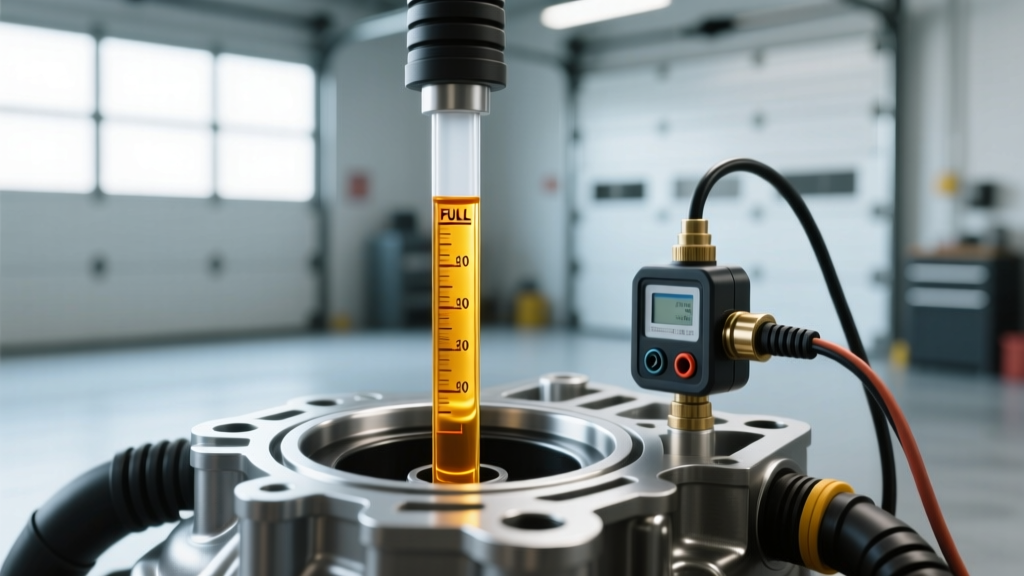
For traditional dipstick-equipped vehicles (like older Ford 4R70W or GM 4L60E transmissions), the engine must be idling in Park with the transmission at normal operating temperature (typically 180°F–200°F). The transmission pump must be active to circulate fluid into the torque converter and clutch drums; checking it with the engine off will yield a falsely high reading on the dipstick, leading to severe under-filling and subsequent clutch pack slippage.
Conversely, some specific manufacturers, notably Honda and Acura, require the engine to be off and the vehicle on a level surface to check the transmission fluid. Always consult your specific owner's manual. Furthermore, modern sealed transmissions (such as the ZF 8HP or GM 8L90) lack a traditional dipstick entirely. These require the vehicle to be running, elevated on a hoist, and the fluid must be within a strict temperature window (usually 86°F to 122°F) verified via an OBD2 scan tool before removing the under-pan level check plug.
The 2026 ATF Color Spectrum: Decoding Your Dipstick
Once you have safely verified the level and extracted a sample onto a clean white paper towel, the color of the Automatic Transmission Fluid (ATF) acts as a direct window into the mechanical wear of your gearbox. Modern synthetic fluids like ACDelco Dexron VI (Part #10-9395) utilize advanced dye packages that shift predictably as the fluid's friction modifiers and antioxidants break down under shear stress.
Bright Translucent Red / Pink
Diagnosis: New or Excellent Condition.
Fresh ATF is dyed a vibrant, translucent red. This indicates that the fluid's shear stability is intact, the friction modifiers are fully active, and the thermal breakdown inhibitors are performing optimally. If your fluid looks like this, no service is required, regardless of the mileage.
Dark Red / Brick Brown
Diagnosis: Aging but Serviceable.
As the fluid is subjected to thousands of thermal cycles and clutch pack engagements, the red dye oxidizes and darkens. A brick-brown or dark ruby hue is normal for fluid with 30,000 to 60,000 miles. While the fluid is still functional, it is approaching the end of its optimal service life. Plan for a drain-and-fill service within the next 10,000 miles.
Opaque Dark Brown / Black
Diagnosis: Critical Degradation or Internal Failure.
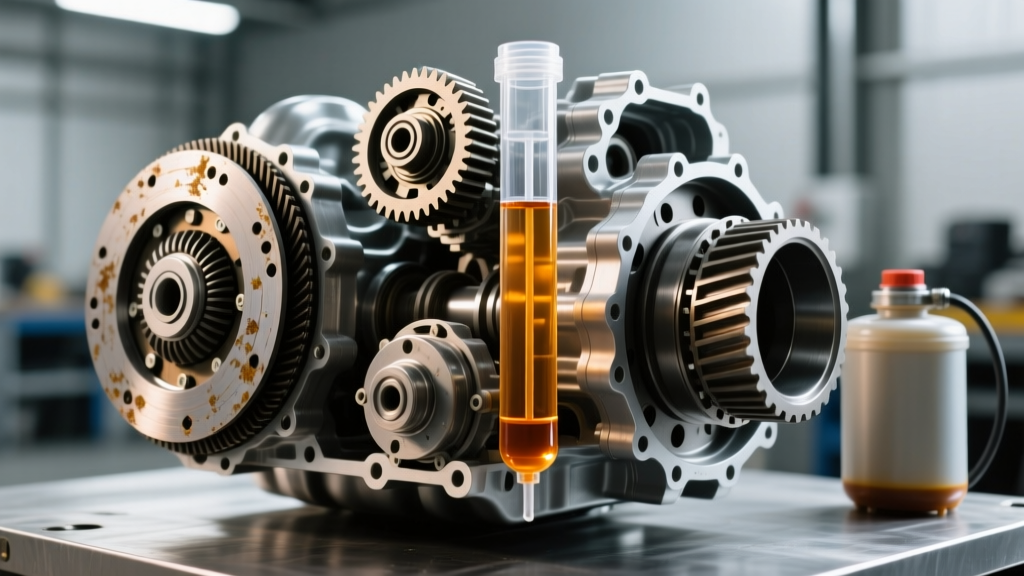
Black fluid indicates severe oxidation, thermal breakdown, and a high concentration of suspended friction material. If the fluid is black, the clutches inside your transmission are actively wearing away. In severe cases, this sludge clogs the valve body solenoids and the transmission cooler lines, leading to erratic shifting and torque converter shudder. Immediate fluid analysis and likely a transmission teardown are required.
Milky Pink / "Strawberry Shake"
Diagnosis: Coolant Cross-Contamination.
If your fluid looks like a strawberry milkshake, you have a catastrophic failure of the transmission cooler integrated into your engine's radiator. Engine coolant (glycol) has breached the internal barrier and mixed with the ATF. Glycol destroys the adhesive bonding the friction material to the steel clutch plates, causing them to peel off within miles. Do not drive the vehicle. The radiator must be replaced, and the transmission requires aggressive hot-flushing or rebuilding.
Diagnostic Matrix: Fluid Color vs. Mechanical Action
| Fluid Color | Viscosity / Smell | Mechanical Implication | Required Action & Est. Cost |
|---|---|---|---|
| Bright Red | Smooth / Sweet or Neutral | Optimal lubrication and hydraulic pressure. | No action required. ($0) |
| Dark Ruby / Brown | Slightly thinner / Mild burnt toast | Normal friction material shedding; additive depletion. | Schedule Drain & Fill. ($150 - $250) |
| Opaque Black | Gritty / Acrid, severe burnt smell | Clutch pack failure; varnish buildup in valve body. | Drop pan for inspection; likely rebuild. ($3,500+) |
| Milky Pink | Emulsified / Sweet coolant odor | Radiator cooler breach; clutch delamination. | Stop driving. Radiator & Trans replacement. ($2,500+) |
Model-Specific Color & Level Verification Protocols
Applying a universal approach to ATF maintenance is a recipe for catastrophic failure. Here is how color and level diagnostics apply to three of the most common modern transmissions on the road today.
GM 6L80 / 6L90 (Found in Silverado, Camaro, Corvette)
The GM 6L80 utilizes Dexron VI, which is highly resistant to shear but will still turn dark brown as the 3-5-R clutch wave plate wears. Because this transmission features a thermal bypass valve, you must check the fluid with the car running and the transmission temperature above 100°F to ensure the bypass is closed and fluid is flowing through the cooler. When performing a pan drop to inspect for dark, clutch-laden fluid, remember to torque the aluminum pan bolts to exactly 8 Nm (71 lb-in) in a crisscross pattern to prevent warping the gasket surface.
ZF 8HP (Found in BMW, Audi, Ram, Jaguar)
The legendary ZF 8-speed relies on ZF LifeguardFluid 8 (Part #S671 090 312). ZF claims this fluid is a "lifetime" fill, but independent tribologists and master technicians strongly recommend a service at 60,000 miles. Fresh Lifeguard 8 is a distinct, pale amber/yellow-green, not the bright red of American ATFs. If your ZF 8HP fluid is pulling dark brown on the dipstick (if equipped) or from the fill plug, the mechatronic unit's internal solenoids are likely clogging with clutch debris. Servicing this unit requires replacing the entire plastic transmission pan (which houses the integrated filter) and torquing the mechatronic sleeve bolts to 10 Nm.
Toyota A750F / A760F (Found in Tacoma, 4Runner, Tundra)
These robust transmissions use Toyota WS (World Standard) fluid. They are notorious for the "Strawberry Milkshake of Death" (SMOD) if the factory Denso radiator cracks internally around the 100,000-mile mark. Because WS fluid is exceptionally thin to promote fuel economy, it is highly susceptible to cross-contamination. If you pull the dipstick on a 4Runner and see a milky pink emulsion, the transmission is effectively totaled without a complete teardown and ultrasonic cleaning of the valve body.
Beyond the Visual: Olfactory and Tactile Diagnostics
While color is your primary indicator, expert technicians rely on a multi-sensory approach. Smell is critical: healthy ATF has a slightly sweet, almost petroleum-neutral odor. Burnt ATF smells exactly like burnt toast or scorched brake pads. This acrid scent indicates the fluid has exceeded its thermal threshold (usually above 260°F), causing the base oils to crack and form carbon varnish.
Touch is equally revealing. Rub a drop of the fluid between your thumb and index finger. It should feel slick and oily. If you feel microscopic grit or metallic flakes, your planetary gear sets or thrust washers are physically disintegrating. In sealed units like the Ford 10R80, detecting metallic grit during a fluid exchange is an immediate indicator that the torque converter clutch (TCC) lining has failed, necessitating a converter replacement before the metallic debris destroys the new fluid.
Final Best Practices for 2026
Whether you are checking a traditional dipstick or verifying the level of a sealed unit via an OBD2 scanner, always ensure the vehicle is on a perfectly level surface. The answer to "do you check automatic transmission fluid with car running" is almost always yes, but doing so safely on a lift or level ground is paramount. Document your fluid color at every oil change; tracking the degradation rate from bright red to dark brown is the single most cost-effective way to predict transmission longevity and avoid catastrophic drivetrain failures.