The Thermodynamics of ATF: Why Temperature Dictates Volume
When building a high-performance vehicle, upgrading your torque converter, or installing a massive external cooler, checking your transmission fluid level is no longer a simple 'pull the dipstick in the driveway' affair. Automatic Transmission Fluid (ATF) is a complex hydraulic medium composed of base oils, friction modifiers, and anti-foaming agents. Like all liquids, ATF is subject to thermal expansion. Understanding the critical differences between checking transmission fluid hot vs cold is paramount for preventing pump cavitation, clutch slip, and catastrophic hydraulic failure in built transmissions.
The coefficient of thermal expansion for typical synthetic ATF is approximately 0.0007 per °C. While this sounds negligible, in a high-capacity system—such as a GM 10L90 equipped with an aftermarket PPE deep pan holding 14+ quarts—a temperature swing from a cold garage (65°F) to operating track temperatures (200°F) can result in a fluid volume expansion of nearly half a quart. If you fill a performance transmission to the 'Full Hot' mark while the fluid is cold, the subsequent thermal expansion will overfill the system. This leads to the fluid contacting the rotating torque converter and planetary gears, causing severe aeration (foaming). Aerated fluid is compressible, resulting in delayed shift events, burnt clutch packs, and erratic line pressure.
Cold Checks: Initial Fills and Garage Baselines
A 'cold check' is primarily utilized during initial dry fills, post-rebuild bench bleeding, or when verifying that a system has not suffered a massive leak while sitting. For performance applications, a cold check is strictly a baseline safety measure, never the final word on fluid capacity.
The Cold Check Protocol
- Temperature Target: Ambient garage temperature, typically 60°F to 75°F (15°C - 24°C).
- Vehicle State: Parked on a perfectly level surface, engine off for at least 8 hours to allow fluid to drain back from the cooler lines and torque converter into the pan.
- Dipstick Reading: Fluid should register at or slightly above the 'COLD' or 'MIN' mark on the dipstick. For transmissions without a dipstick (like the ZF 8HP), the fluid should just begin to weep from the overflow level plug when the pan temperature matches the ambient room temperature.
Pro-Tip for Builders: If you are firing up a freshly built 4L80E or a stage-2 6L80 for the first time, pre-fill the torque converter with 2-3 quarts of ATF to prevent immediate pump starvation. Use the cold check only to ensure the pan has enough fluid to prime the pickup tube before starting the engine.
Hot Checks: Operating Temp and Track Validation
For any performance, towing, or track-day application, the 'hot check' is the only accurate method to verify final fluid levels. However, 'hot' does not just mean 'after driving to the end of the driveway.' It means reaching full thermal equilibrium, where the transmission pan, the torque converter, and the external cooler lines have stabilized at operating temperature.
Defining 'Hot' in Performance Applications
Standard OEM service manuals often cite 180°F to 200°F (82°C - 93°C) as the target range for a hot check. However, in high-horsepower builds utilizing aftermarket Derale or Setrab coolers with thermostatic bypass valves, the fluid in the pan might read 160°F while the fluid in the cooler lines is stagnant because the thermostat hasn't fully opened. To achieve a true hot check, the transmission must be subjected to a load sufficient to open the cooler bypass and cycle the entire system volume.
The Hot Check Protocol
- Warm-Up Cycle: Drive the vehicle under moderate to heavy load for 20-30 minutes. Include stop-and-go traffic and highway speeds to cycle the torque converter clutch (TCC) and engage the cooler circuit.
- Verify TFT Sensor Data: Do not rely solely on the dashboard gauge. Connect an OBD2 scanner (such as HP Tuners VCM Scanner or Torque Pro) and read the Transmission Fluid Temperature (TFT) PID. Cross-reference this with an infrared thermometer aimed at the transmission pan to ensure the TCM's internal sensor is calibrated correctly.
- Level Surface & Idle: Park on a level surface. Leave the engine running and the transmission in Park (or Neutral, depending on the specific OEM procedure—always verify, as some older Chrysler units require Neutral).
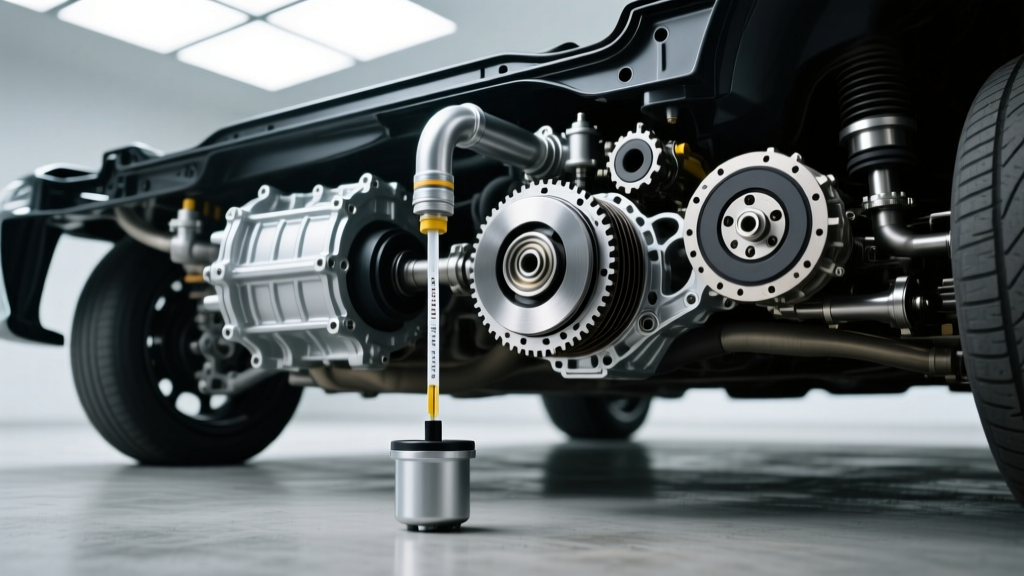
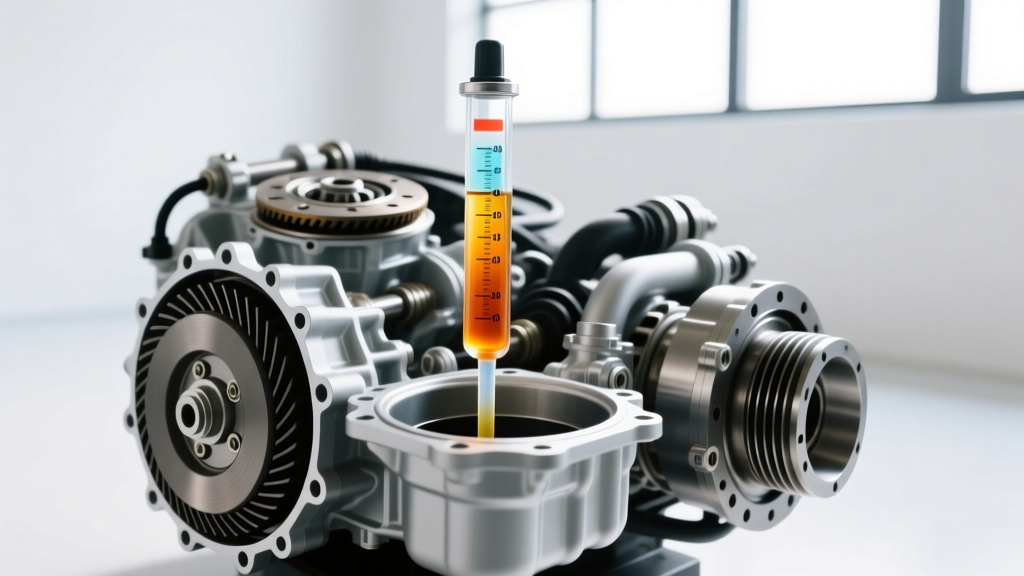
- Pull Dipstick / Open Level Plug: The fluid should be precisely at the 'HOT' crosshatch or weeping steadily from the overflow plug.
Transmission-Specific Quirks: ZF, GM, and Ford
Different manufacturers engineer their hydraulic circuits with unique tolerances, making the hot vs cold debate highly model-dependent.
ZF 8HP (Dodge Hellcat, BMW M3, Supra)
The ZF 8-speed is notorious for its 'lifetime' fluid myth and lack of a traditional dipstick. According to ZF Aftermarket, the official leveling procedure requires the fluid temperature to be exactly between 30°C and 50°C (86°F - 122°F). While this is technically a 'warm' check rather than a true 'hot' check, performance builders who swap the ZF 8HP into track cars and install aftermarket deep pans often verify the level at 80°C (176°F) to account for the expanded volume in the custom cooler lines. Note: The ZF plastic pan level plug torque spec is 15 Nm, and the pan-to-case bolts are strictly 10 Nm. Over-torquing will crack the plastic mounting ears.
GM 6L80 / 10L90 (Camaro ZL1, C8 Corvette, Silverado)
GM's 6-speed and 10-speed units utilize a traditional dipstick but are highly sensitive to fluid expansion. The 10L90, in particular, holds over 11 quarts in stock form. When upgrading to a high-stall Circle D or Vigilante torque converter, the converter's internal volume changes, drastically altering the required pan level. Always perform a hot check at 190°F (88°C) with the engine idling in Park. The GM aluminum pan bolts require a gentle 11 lb-ft (15 Nm) of torque to prevent stripping the case threads.
Ford 10R80 (Mustang GT, F-150 Raptor)
The 10R80 relies on an internal fluid level indicator tube. Ford specifies checking the fluid at an operating temperature of 201°F - 221°F (94°C - 105°C). Because the 10R80 runs notoriously hot from the factory, performance builds utilizing upgraded fluid and larger coolers must ensure the TFT sensor reads at least 195°F before pulling the level plug, otherwise, the system will be underfilled once it reaches true track temperatures.
Budgeting for Performance: Fluid Costs and Upgrades
When planning a track build or heavy-duty towing setup, enthusiasts frequently ask how much does automatic transmission fluid cost when stepping up from conventional OEM fluids to boutique, high-shear synthetics. The price variance is significant, but the protection offered to clutch frictions and planetary gears under extreme line pressure is invaluable.
Below is a breakdown of what you can expect to pay for performance-oriented ATF in 2026, factoring in typical service fill capacities (which are usually 50-60% of total dry capacity due to torque converter retention).
| Fluid Brand / Type | Target Application | Price Per Quart (Est.) | Cost for 8-Qt Service Fill | Key Performance Trait |
|---|---|---|---|---|
| ACDelco Dexron ULV | GM 10L90 (OEM Baseline) | $9.00 - $11.00 | $72.00 - $88.00 | Ultra-low viscosity for parasitic drag reduction |
| ZF LifeguardFluid 8 | ZF 8HP (OEM Spec) | $18.00 - $24.00 | $144.00 - $192.00 | Exact friction modifier match for ZF mechatronics |
| Red Line D4 ATF | GM 4L60E / 4L80E / Ford 4R | $17.00 - $19.00 | $136.00 - $152.00 | High-temp shear stability, track-day proven |
| Amsoil Signature Series | Universal Multi-Vehicle | $13.00 - $15.00 | $104.00 - $120.00 | Superior oxidation resistance for heavy towing |
| Motul ATF VI | Euro 6-Speed / ZF Swaps | $20.00 - $25.00 | $160.00 - $200.00 | Exceptional anti-foaming agents for high-RPM use |
As noted by the tribology experts at Bob Is The Oil Guy (BITOG), the kinematic viscosity of budget ATFs can drop by up to 15% after 30,000 miles of high-heat shearing, whereas premium synthetics like Red Line D4 maintain their shear stability far beyond standard OEM intervals. When calculating how much does automatic transmission fluid cost for your build, always factor in the price of a new OEM filter, a transmission pan gasket (or RTV sealant for specific applications), and the specialized tools required, such as a fluid transfer pump for sealed ZF or Ford units.
Sensor Upgrades and TCM Calibration
In modern performance tuning, verifying the fluid level is only half the battle. The Transmission Control Module (TCM) relies on the TFT sensor to dictate shift pressures and torque management. If your hot check reveals that the transmission is running consistently above 220°F (104°C), no fluid on the market will save your clutches.
Performance builders should utilize tuning software like HP Tuners to adjust the 'Shift Pressure vs. Temperature' tables. By commanding higher line pressure at elevated fluid temperatures, you can compensate for the slight thinning of the ATF, ensuring clutch packs engage crisply even during a grueling track session. Furthermore, ensuring your TFT sensor is reading accurately by comparing it to an external infrared thermometer during your hot check is a vital diagnostic step that separates amateur mechanics from professional powertrain calibrators.
Final Verdict: Respect the Thermodynamics
Checking transmission fluid hot vs cold is not a matter of preference; it is a matter of physics. Cold checks are for safety and initial priming. Hot checks are for precision, performance, and longevity. Whether you are running a budget-friendly ACDelco Dexron VI in a daily driver or filling a built ZF 8HP with $200 worth of Motul ATF VI for time attack duty, respecting the thermal expansion properties of your hydraulic fluid will ensure your drivetrain survives the punishment you put it through. Always check your levels at true operating temperature, verify your TFT sensor data, and never compromise on the quality of the fluid protecting your investment.