The Golden Rule: Should the Car Be Running When Adding Transmission Fluid?
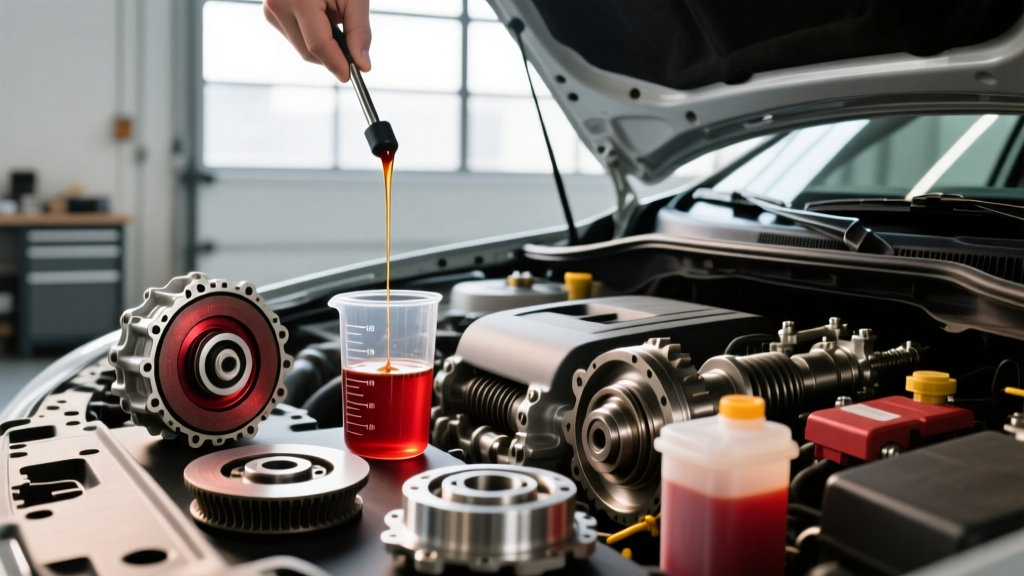
When undertaking a transmission fluid and filter change on modern vehicles, a critical procedural question arises among DIYers and novice technicians: should the car be running when adding transmission fluid? The short answer for 95% of modern automatic transmissions—especially 'sealed' units without a traditional dipstick—is an emphatic yes. However, doing this incorrectly or misunderstanding the thermal dynamics of the torque converter can lead to catastrophic financial consequences.
Modern transmissions, such as the GM 6L80, Ford 10R80, and the ubiquitous ZF 8HP series found in BMW, Audi, and Chrysler vehicles, utilize a leveling plug system rather than a dipstick. The transmission fluid pump is engine-driven. If you attempt to fill and level the fluid with the engine off, the torque converter and cooler lines remain partially empty. Once the engine is started, the pump draws fluid into the torque converter, dropping the pan level drastically. Conversely, if you overfill it to compensate while the engine is off, the subsequent aeration and foaming when the engine is started will cause severe clutch slip, erratic line pressures, and eventual mechanical failure.
From a cost-analysis perspective, misunderstanding this fill procedure is the leading cause of 'botched' DIY filter changes, transforming a $200 maintenance task into a $4,500 transmission rebuild. In this 2026 cost breakdown, we will analyze the true expenses of a transmission fluid and filter change, the hidden costs of improper fill procedures, and the exact specifications required to do it right.
2026 Cost Breakdown: Transmission Fluid and Filter Change
The era of the $89 dealership 'flush special' is dead. In 2026, supply chain realities and the mandate for highly specialized synthetic fluids (like Dexron ULV or ZF LifeguardFluid 8) have pushed maintenance costs higher. A proper pan-drop, filter replacement, and fluid fill is significantly more expensive than a simple drain-and-fill, but it is mandatory for removing clutch material and metallic debris trapped in the filter media.
DIY vs. Professional Service Pricing Matrix
| Service Type | Estimated Cost (2026) | What is Included | Risk Factor |
|---|---|---|---|
| DIY Pan-Drop & Filter | $160 - $280 | 6-8 qts of OEM fluid, aftermarket or OEM filter kit, pan gasket, cleaner. | High (if lacking OBD2 temp scanner) |
| Independent Shop | $350 - $550 | Pan drop, filter kit, OEM fluid, digital temp-check fill procedure. | Low (if OEM fluid is verified) |
| Dealership Service | $450 - $750+ | OEM Filter, OEM Fluid, factory GDS2/ISTA software temp verification. | Very Low (Highest cost) |
| Quick-Lube 'Flush' | $180 - $250 | Fluid exchange only. No filter change. | Extreme (Leaves clogged filter) |
Note: Prices vary based on fluid capacity. A Dodge Charger with a ZF 8HP70 requires nearly 9 quarts for a pan drop, pushing DIY fluid costs alone past $250 when using genuine ZF LifeguardFluid 8, which retails around $35-$45 per quart at dealerships.
The Financial Impact of Incorrect Fill Procedures
Why does the engine-running rule matter so much to your wallet? Let us break down the failure modes and their associated repair costs if the thermal leveling procedure is ignored.
- Overfilling (Engine Off Leveling): Causes the rotating planetary gearsets to whip the fluid into a foam. Aerated fluid is compressible; transmission fluid is not. This leads to delayed shifts, slipping clutches, and burnt friction plates. Repair Cost: $3,500 - $5,000 for a complete teardown and clutch pack replacement.
- Underfilling (Cold Leveling): Starves the transmission pump at high RPMs, leading to immediate line-pressure drops and harsh, banging shifts. Repair Cost: $1,200 - $2,000 for valve body and solenoid replacement due to scoring.
- Using Universal 'Multi-Vehicle' Fluids: While budget-friendly at $7/quart, universal fluids often lack the specific friction modifiers required for ZF or GM 10-speed lock-up clutches, causing shudder. Repair Cost: $800 for a torque converter replacement.
Component Spotlight: Real Part Numbers and Torque Specs
To execute a cost-effective yet reliable transmission fluid and filter change, you must invest in the correct components and adhere strictly to factory torque specifications. Stripped aluminum pan threads or warped plastic pans will result in persistent leaks that mimic internal seal failures.
GM 6L80 / 6L90 Applications (Silverado, Camaro, Corvette)
The 6L80 is notorious for its deep pan and internal filter design. The filter is pressed into the valve body and requires significant force to remove.
- OEM Filter Kit: ACDelco 24236933 (Includes filter and O-ring seal). Always source from a verified ACDelco distributor to avoid counterfeit filters that bypass dirty fluid.
- Fluid Type: ACDelco Dexron VI (Approx. 6.0 - 7.5 quarts for pan drop).
- Pan Bolt Torque: 9 Nm (80 lb-in). CRITICAL: These are M6 bolts threading into an aluminum case. Using a standard 1/2-inch drive torque wrench will snap them. Use a 1/4-inch drive inch-pound torque wrench.
- Fill Procedure: Engine RUNNING, transmission in Park, fluid temperature between 86°F and 122°F (ideally 180°F for optimal expansion). Remove the 11mm hex leveling plug on the side of the pan until it trickles.
ZF 8HP Applications (BMW F-Series, Dodge Charger/Challenger, Audi)
ZF transmissions utilize a plastic transmission pan with the filter integrated directly into the molding. You cannot replace the filter without replacing the entire pan assembly.
- OEM Pan/Filter Kit: ZF 0501 216 243 (Kit includes plastic pan, integrated filter, new sealing sleeve, and new M6x25 pan bolts).
- Fluid Type: ZF LifeguardFluid 8 (Approx. 8.5 - 9.5 quarts required).
- Pan Bolt Torque: 10 Nm (88 lb-in). The bolts must be replaced, not reused, as they feature a pre-applied threadlocker from the factory.
- Fill Procedure: Engine RUNNING, foot on the brake, cycle through all gears, then return to Park. Fluid temperature MUST be between 30°C and 50°C (86°F - 122°F). If the fluid exceeds 50°C, it will expand and you will underfill the system.
Pro-Tip for DIYers: You cannot guess the fluid temperature by touching the pan. You must use an OBD2 scanner capable of reading the Transmission Fluid Temperature (TFT) PID. Budget scanners often fail to read this specific module data. Invest in a reliable tool like an OBDLink MX+ or use dealer-level software to monitor the TFT in real-time while the engine idles and the fluid is pumped in.
Why 'Sealed' Transmissions Are a Myth (And a Cost Factor)
Dealerships often market modern automatics as 'sealed for life' to discourage owner maintenance and push for complete transmission replacements out of warranty. From a financial standpoint, this is a trap. The 'sealed' designation simply means there is no under-hood dipstick for the consumer to check; it does not mean the fluid does not degrade.
By 60,000 miles, the friction modifiers in the fluid shear down, and the clutch material begins to clog the filter media. A dealership will quote $6,500 for a replacement transmission when it begins to shudder. A proactive fluid and filter change at 50,000 miles costing $250 (DIY) or $450 (Independent Shop) preserves the clutch packs and extends the life of the unit well past 150,000 miles.
Summary: Protecting Your Drivetrain Investment
The economics of transmission maintenance in 2026 heavily favor the educated consumer. Understanding that the car must be running when adding and leveling transmission fluid on modern pan-drop systems is the dividing line between a successful service and a catastrophic failure. By sourcing genuine OEM filter kits, utilizing an OBD2 scanner to monitor exact fluid temperatures, and applying precise inch-pound torque specs to fragile aluminum cases, you can execute a dealership-quality fluid and filter change for a fraction of the cost. Never compromise on fluid chemistry, never skip the filter, and never level the fluid with the engine off.