The Hidden Cost of a Transmission Oil Cooler Line Connector Leak
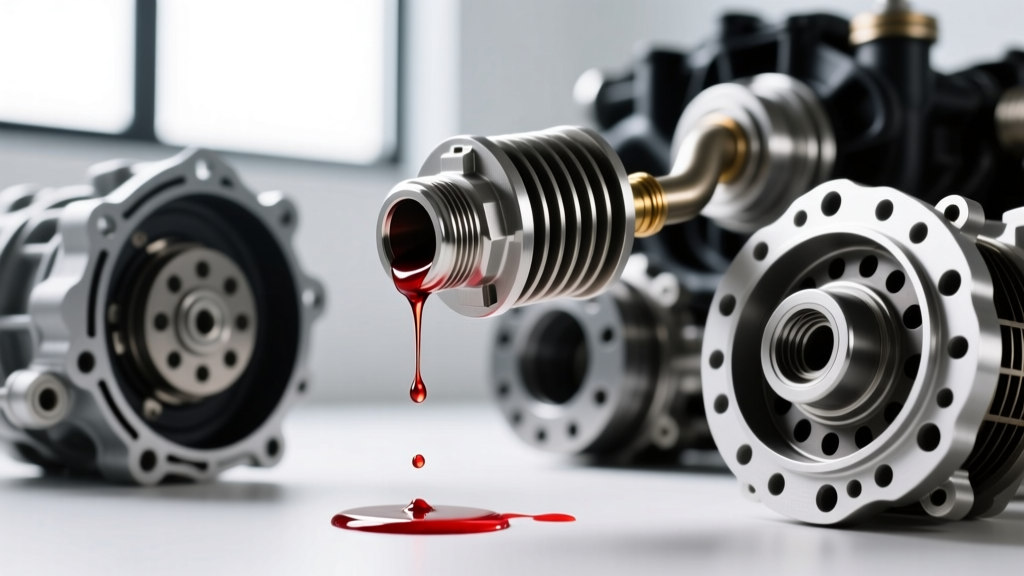
A puddle of red or brownish fluid near the front of your vehicle is never a welcome sight. While many drivers immediately fear a catastrophic transmission case failure, the culprit is frequently a degraded transmission oil cooler line connector. These connectors—whether they are quick-disconnect fittings, threaded adapters, or banjo-bolt assemblies—are critical junctions that route pressurized, high-temperature automatic transmission fluid (ATF) to the radiator or auxiliary cooler.
When a transmission oil cooler line connector fails, it doesn't just make a mess; it drops system pressure and fluid volume. Running a modern 8-speed or 10-speed transmission with low fluid can cause clutch pack glazing and solenoid starvation in a matter of miles, turning a $150 repair into a $4,500 rebuild. In this 2026 cost analysis and diagnostic guide, we break down exactly how to identify the leak source, the real-world costs of parts and labor, and the transmission-specific quirks you need to know before turning a wrench.
Step-by-Step Leak Diagnosis: Is It the Connector or the Line?
Before ordering parts, you must isolate the leak. ATF can travel along the line via capillary action and wind, making the lowest drip point an unreliable indicator of the actual failure point.
1. The Clean-and-Run Method
Use a dedicated automotive degreaser (like CRC Brakleen) to thoroughly clean the cooler lines, the transmission oil cooler line connector, and the transmission case mating surface. Start the engine, let the transmission reach operating temperature (typically 160°F to 190°F at the pan), and cycle through the gears while stationary. Inspect the connector with a bright LED inspection light. Look for weeping at the O-ring seal, cracks in the plastic quick-disconnect collar, or seepage at the threaded adapter base.
2. UV Dye and Cooler Pressure Testing
If the leak is intermittent or only occurs under highway load, visual inspection isn't enough. Professional shops use a transmission cooler line pressure tester (such as the Mastercool 91085 kit) to apply 100-150 PSI of regulated air or static fluid pressure directly to the cooler circuit with the engine off. Alternatively, adding UV ATF dye and running the vehicle for 50 miles will highlight microscopic fractures in the connector housing under a 395nm UV light.
2026 Cost Breakdown: Parts, Labor, and Fluid Replacement
The cost to repair a transmission oil cooler line connector varies wildly depending on whether the manufacturer allows you to replace just the fitting/O-ring, or if they mandate the replacement of the entire welded line assembly. Below is a comparative cost matrix based on 2026 national average labor rates ($135–$185/hour) and parts pricing.
| Repair Component / Service | DIY Cost (Parts Only) | Independent Shop (Parts + Labor) | Dealership (OEM + Labor) |
|---|---|---|---|
| O-Ring / Retaining Clip Kit | $5 - $18 | N/A (Shops rarely replace just O-rings) | N/A |
| Aftermarket Quick-Disconnect Fitting | $12 - $35 | $160 - $280 | N/A |
| OEM Complete Cooler Line Assembly | $85 - $240 | $320 - $550 | $480 - $850+ |
| Thermal Bypass Valve (If Integrated) | $110 - $180 | $400 - $600 | $550 - $900 |
| ATF Fluid Top-Off (3-6 Quarts) | $45 - $130 | Included in Labor/Parts | Included in Labor/Parts |
Note: Sourcing parts through reliable catalogs like RockAuto can save DIYers up to 40% compared to local auto parts store counters, especially for OEM-branded components.
Transmission-Specific Connector Failures & Part Numbers
Not all transmissions use the same cooling architecture. The design of the transmission oil cooler line connector dictates both the failure mode and the repair cost.
GM 6L80 / 6L90 (Trucks & SUVs)
The GM 6-speed family is notorious for leaks at the upper cooler line where it threads into the transmission case. However, the real issue is often the plastic quick-disconnect collar located a few inches down the line, which becomes brittle from engine bay heat cycling. Furthermore, many 6L80 applications route the cooler line through a Thermal Bypass Valve to speed up cold-weather warmups. If the connector on this integrated valve fails, you cannot replace just the fitting; the entire bypass/line assembly must be swapped.
- OEM Quick-Disconnect Fitting: ACDelco 24239224 (Approx. $28)
- Aftermarket Bypass Line Assembly: Dorman 724-004 (Approx. $145)
- Torque Spec: The threaded adapter fitting that screws into the aluminum transmission case must be torqued to exactly 18 lb-ft. Over-torquing will crack the case; under-torquing guarantees a leak.
Ford 10R80 (F-150 / Mustang)
Ford’s 10-speed utilizes specialized push-to-connect fittings secured by hairpin clips or stainless-steel retaining rings. A common failure mode is the degradation of the internal EPDM O-rings, exacerbated by the high operating pressures of the 10R80 (which can exceed 220 PSI in certain clutch apply circuits). Ford generally does not sell the connector separately from the line.
- OEM Line Assembly: Ford ML3Z-7A030-A (Approx. $165)
- Fluid Requirement: Motorcraft Mercon ULV (XT-12-QULV). This ultra-low viscosity fluid is highly sensitive to contamination; a flush is recommended if the leak allowed moisture ingress.
ZF 8HP (Stellantis, BMW, Dodge)
The ZF 8-speed rarely uses traditional quick-disconnects. Instead, it relies on a block-style connector or banjo bolts sealed with specialized aluminum crush washers or profile O-rings. Leaks here usually stem from thermal expansion/contraction loosening the block bolts, or galvanic corrosion between the steel bolts and the aluminum ZF Mechatronic housing.
- Repair Strategy: Replace the aluminum crush washers and clean the mating surfaces. Sourcing genuine ZF or ACDelco (for GM applications) hardware is critical.
- Torque Spec: ZF 8HP cooler line block bolts are strictly torqued to 10 Nm (88 lb-in). Using a standard foot-pound wrench will strip the threads out of the transmission case.
DIY vs. Professional Repair: Where You Save Money
Replacing a transmission oil cooler line connector is a moderate-difficulty DIY job. The primary challenge is not the mechanical work, but the fluid management and the subsequent refill procedure.
Required Tools & Safety Gear
- Flare Nut Wrenches: 16mm and 18mm (to prevent rounding soft steel line nuts).
- Quick-Disconnect Release Tools: Lisle 39460 or equivalent clam-shell tools to safely compress the internal retaining tangs without snapping the brittle plastic collar.
- Inch-Pound Torque Wrench: Essential for ZF and GM case-adapter fittings.
- Spill Containment: A minimum 5-gallon low-profile drain pan.
The Fluid Level Verification Hurdle
The true "cost" of a DIY repair is the time required to properly set the fluid level. Modern transmissions lack traditional dipsticks. For example, on the GM 6L80, the transmission must be leveled on jack stands, and the fluid temperature must be monitored via an OBD2 bi-directional scanner. The fluid level check plug is only accurate when the ATF is between 185°F and 205°F. If you remove the plug when the fluid is cold, it will drain out, leaving the transmission severely underfilled once it reaches operating temperature. Professional shops have lift systems and infrared temp guns to perform this in 15 minutes; DIYers must safely rig the vehicle on stands and use high-end scan tools to monitor the Transmission Fluid Temperature (TFT) PID.
Preventative Maintenance to Avoid Repeat Failures
Why do transmission oil cooler line connectors fail prematurely? The leading cause is excessive heat and harmonic vibration. To extend the life of your repair:
- Install a Line Isolation Clamp: Where the hard line transitions to a rubber hose or passes through a bracket, ensure the rubber isolation grommet is intact. Metal-on-metal vibration will fatigue the connector housing over time.
- Upgrade to Braided Lines (Where Applicable): For heavy-duty towing applications (e.g., Duramax/Allison or Cummins/Aisin platforms), aftermarket braided stainless cooler lines with anodized aluminum AN-fittings eliminate the brittle plastic quick-disconnects entirely. Brands like Dorman Products and specialized performance shops offer these kits ranging from $180 to $350.
- Monitor Cooler Flow: During every oil change, verify your cooler flow rate. Disconnecting the return line at the transmission and idling the engine should yield a steady, aerated-free stream of ATF. A restricted cooler increases backpressure, which will eventually blow out the weakest O-ring or connector seal in the system.
By understanding the specific architecture of your transmission's cooling system and investing in the correct OEM or high-grade aftermarket connectors, you can permanently resolve leaks and protect your drivetrain from catastrophic thermal failure.