The Drivetrain Chain Reaction: A Beginner's Overview
When you press the accelerator in a four-wheel-drive (4WD) or all-wheel-drive (AWD) vehicle, a complex mechanical symphony occurs beneath your feet. For beginners, the terminology can be overwhelming. Two of the most critical, yet frequently confused, components in this system are the transfer case and the rear gear differential. While the transmission multiplies engine torque, the transfer case splits it, and the rear gear differential distributes it to the wheels. Understanding the relationship between these two heavy-duty components is essential for proper maintenance, accurate diagnostics, and avoiding catastrophic drivetrain failures.
As of 2026, modern drivetrains are more efficient than ever, utilizing active torque-vectoring and advanced metallurgy. However, the fundamental physics of transferring rotational force from the vehicle's centerline to the rear axle remains unchanged. This guide breaks down the mechanical bridge between the transfer case and the rear differential, exploring power flow, physical linkages, and the critical fluid dynamics that keep them alive.
Inside the Transfer Case: The Power Splitter
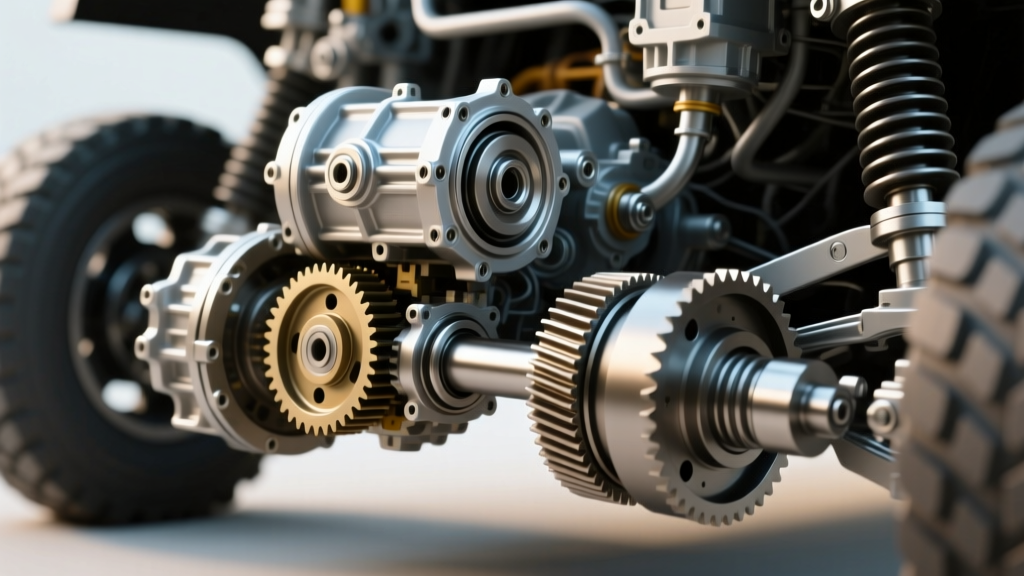
Mounted directly behind the transmission, the transfer case is the heart of any 4WD system. Its primary job is to take the rotational output from the transmission and split it between the front and rear driveshafts.
- Gear-Driven Cases: Found in heavy-duty applications (like the legendary NP205), these use robust steel gears to transfer power. They are incredibly strong but heavy and noisy.
- Chain-Driven Cases: The industry standard for modern trucks and SUVs (such as the BorgWarner 4406 found in Ford F-150s or the NP241 in Jeeps). These use a heavy-duty roller chain to link the input and output shafts, offering a lighter weight and quieter operation.
When you shift into 4WD, a mechanical collar or an electronic actuator locks the front output shaft to the rear output shaft. According to BorgWarner's engineering documentation, modern active transfer cases can now variably distribute torque front-to-rear in milliseconds using clutch packs, but the physical output to the rear driveshaft remains a constant, direct mechanical link.
Decoding the Rear Gear Differential
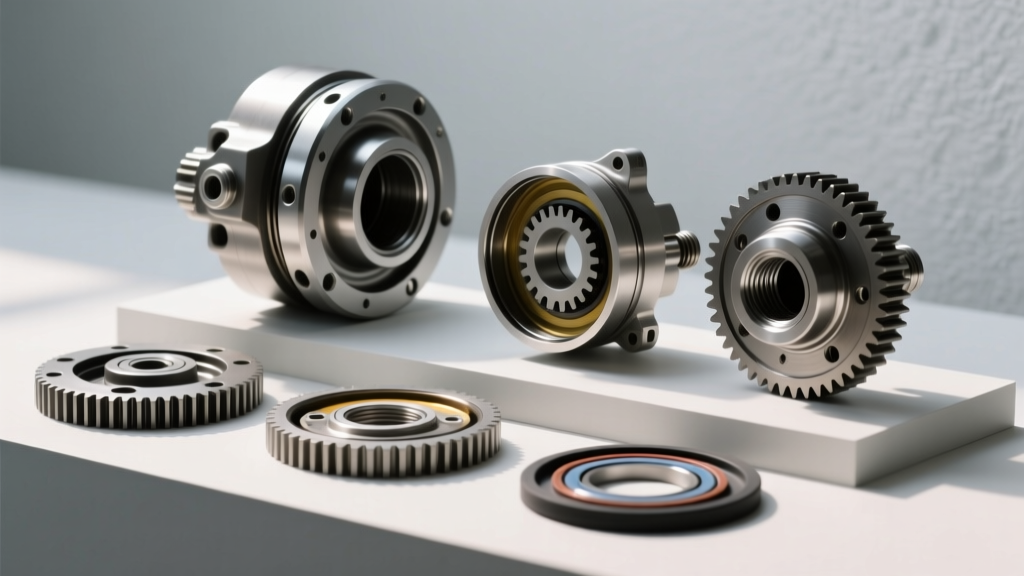
Once power leaves the transfer case, it travels down the rear driveshaft and crashes into the pinion gear of the rear axle. This is where the rear gear differential takes over. The term 'rear gear differential' specifically highlights the ring and pinion gear set—the massive hypoid gears that turn the driveshaft's longitudinal rotation 90 degrees to spin the rear axles laterally.
The 'differential' aspect refers to the spider and side gears housed inside the carrier. These allow the outside rear wheel to spin faster than the inside wheel during a corner. Without this gear differential, your rear tires would chirp, bind, and scrub across the pavement every time you turned the steering wheel. The hypoid design of the ring and pinion means the gears do not just roll against each other; they slide. This sliding friction generates immense heat and requires specialized lubrication, which we will cover shortly.
The Physical Bridge: Driveshafts, Yokes, and Angles
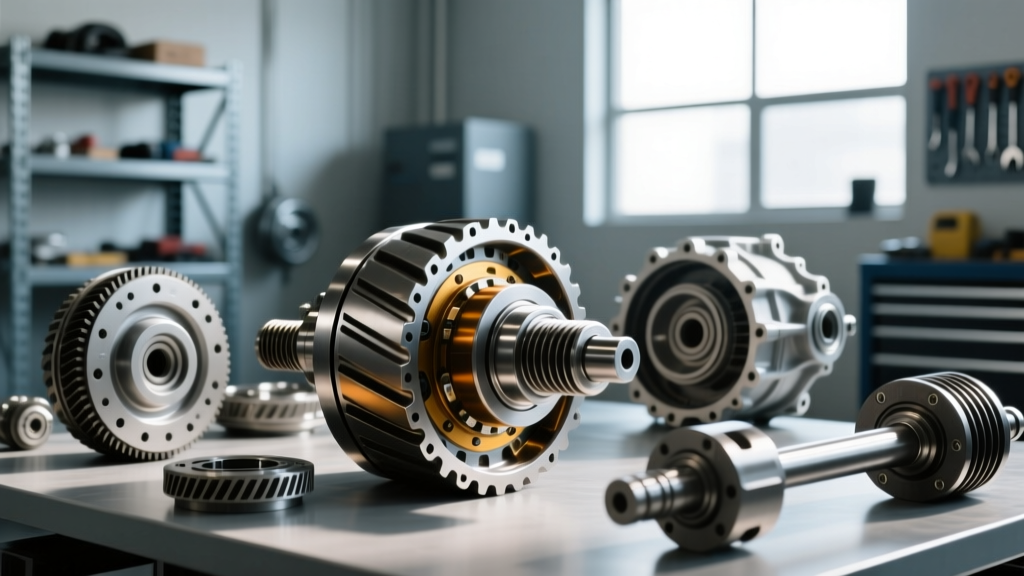
The relationship between the transfer case and the rear gear differential is physically mediated by the rear driveshaft. This is not just a solid metal tube; it is a precision-balanced assembly designed to handle extreme torque while accommodating the up-and-down travel of the rear suspension.
Expert Insight: The pinion angle is critical. The angle of the transfer case output shaft and the rear differential pinion yoke must be parallel (within 1 to 3 degrees) to prevent U-joint binding and high-speed driveline vibrations.
At both ends of the driveshaft are Universal Joints (U-joints) or Constant Velocity (CV) joints. A standard half-ton truck might use a Spicer 1310 series U-joint, while heavy-duty 3/4-ton trucks step up to the 1350 series. If the U-joint at the transfer case output yoke fails, the driveshaft can drop, severing the connection to the rear gear differential and potentially destroying the transfer case output seal and bearing.
Lubrication Science: Why You Cannot Mix Fluids
Because the transfer case and the rear gear differential are physically connected, many beginners mistakenly assume they share the same lubrication requirements or can use the same fluid. This is a fatal error. The internal environments of these two components are vastly different.
Transfer Case Fluid Dynamics
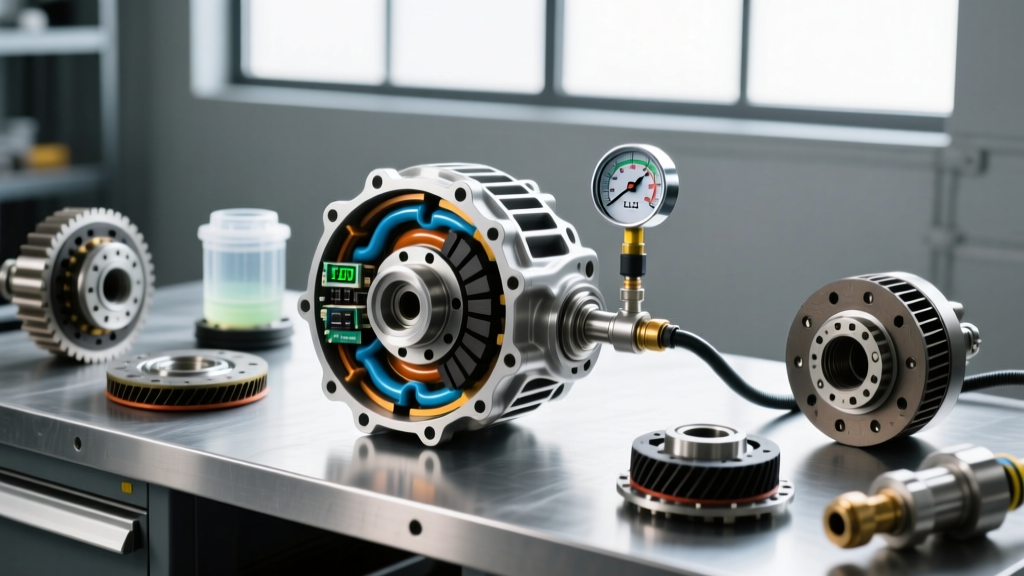
Chain-driven transfer cases rely on fluid to lubricate the roller chain, the output shaft bearings, and the shift forks. Many older or standard transfer cases use standard Automatic Transmission Fluid (ATF) like Dexron VI because it provides excellent cooling and flows easily through tight clearances. However, active transfer cases with electronic clutch packs (like GM's Auto-Trak system) require highly specialized fluids like Auto-Trak II. Using standard gear oil in a transfer case will cause the thick viscosity to starve the upper bearings and destroy the clutch pack friction materials.
Rear Gear Differential Fluid Dynamics
The rear gear differential operates under extreme sliding pressure. The ring and pinion gears require a thick, high-pressure lubricant, specifically API GL-5 rated gear oil (typically 75W-90 or 80W-90). According to Red Line Synthetic Oil's technical bulletins, GL-5 fluids contain high levels of sulfur-phosphorus additives. These additives create a sacrificial chemical film on the gear teeth that prevents metal-on-metal welding under extreme shock loads.
Warning: Never put GL-5 gear oil into your transfer case. The sulfur-phosphorus additives are highly corrosive to the 'yellow metals' (brass, bronze, and copper) used in transfer case synchronizers and bushings. Conversely, putting thin ATF into a rear gear differential will result in immediate catastrophic gear shaving and bearing failure under load.
Capacity & Specification Matrix
Below is a reference table detailing the fluid requirements for common 4WD platforms to illustrate the distinct needs of the transfer case versus the rear gear differential.
| Vehicle Platform | Transfer Case Model | T-Case Fluid & Capacity | Rear Diff Model | Rear Diff Fluid & Capacity |
|---|---|---|---|---|
| Chevy Silverado 1500 (4WD) | BorgWarner 4406 | DEXRON VI ATF (2.0 Quarts) | GM 9.5" Semi-Floating | 75W-90 GL-5 (2.75 Quarts) |
| Jeep Wrangler JL Rubicon | Rock-Trac NV241OR | ATF+4 (2.0 Quarts) | Dana 44 AdvanTEK | 75W-85 GL-5 (1.9 Quarts) |
| Toyota Tacoma TRD Off-Road | VF4B (Active) | Toyota TC Fluid (1.3 Quarts) | Toyota 8" Clamshell | 75W-90 GL-5 (3.2 Quarts) |
Diagnosing Driveline Bind and Noise
Because the transfer case and rear gear differential are locked in a rigid mechanical relationship when in 4WD, a failure in one often mimics a failure in the other. Here is how to isolate the issue based on auditory and physical feedback.
1. The 'Clunk' on Acceleration
If you hear a metallic clunk when shifting from reverse to drive, the issue is rarely inside the rear gear differential itself. It is usually caused by wear in the physical bridge. Check the slip yoke at the transfer case output. If the splines are worn or lacking proper grease (such as Spicer's recommended moly-lithium grease), the driveshaft will physically slam into the transfer case output shaft. Re-greasing the slip yoke costs less than $10 in materials, whereas ignoring it can ruin the transfer case output bearing ($400+ repair).
2. High-Pitched Whining at Speed
A steady whine that changes pitch exactly with vehicle speed (not engine RPM) points directly to the rear gear differential. Specifically, it indicates a failing pinion bearing or improper ring-and-pinion backlash. If the pinion nut torque has backed off (spec is typically 250–300 lb-ft for a GM 9.5" or Dana 44), the pinion gear will wobble, destroying the gear pattern. If the whine only occurs on deceleration, the coast side of the hypoid gear teeth is worn.
3. Cornering Bind in 4WD
If the vehicle feels like the brakes are dragging when making a tight turn on dry pavement while in 4-High, you are experiencing 'driveline wind-up'. Because standard part-time transfer cases lock the front and rear outputs together at a 50/50 split, and the front and rear gear differentials are traveling different distances in a turn, the tires must slip to relieve the tension. Never drive a part-time 4WD vehicle on dry pavement. If this bind occurs in AWD or 4-Auto mode, your transfer case clutch pack is likely fused together from degraded fluid or overheating, requiring a transfer case rebuild ($1,200–$1,800).
Maintenance Intervals: Protecting the Connection
To maintain the harmonious relationship between your transfer case and rear gear differential, strict adherence to fluid service intervals is mandatory. While many manufacturers claim rear differential fluid is 'lifetime,' independent drivetrain specialists universally recommend draining and refilling the rear gear differential with fresh 75W-90 GL-5 synthetic every 30,000 to 50,000 miles, especially if the vehicle is used for towing or off-roading. The transfer case fluid should be swapped every 60,000 miles. Always remember to add the correct friction modifier (Limited Slip Additive) to the rear differential if your axle is equipped with a clutch-type limited-slip differential, or you will experience severe chatter and premature clutch disc wear during low-speed turns.