The Drivetrain Handshake: Transfer Cases vs. Differentials
When you shift your 4x4 into low range or carve a tight corner in a modern AWD crossover, a complex mechanical ballet is happening beneath your feet. For beginners, the drivetrain can seem like a black box of gears, chains, and oil. However, understanding the relationship between your transfer case and the axle differentials is crucial for proper maintenance, diagnosis, and longevity.
In simple terms, the transfer case manages the longitudinal power split (front-to-rear), while the differential manages the lateral power split (left-to-right). But as automotive engineering has evolved toward advanced torque-vectoring and sophisticated 4WD systems, the lines have blurred. Today, we are going to demystify how power flows from the transmission to the wheels, with a special focus on how the planetary gear differential and the transfer case work in tandem to keep you moving.
What Exactly is a Planetary Gear Differential?
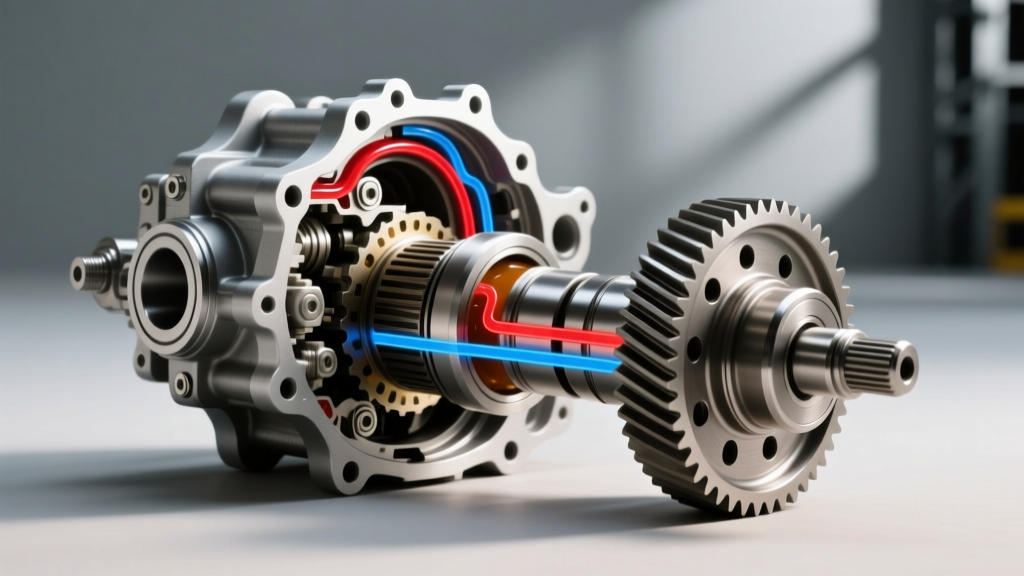
Most traditional open differentials (like the classic Dana 30 or Ford 8.8) rely on a ring-and-pinion gearset paired with spider and side gears to allow wheels to rotate at different speeds during a turn. However, a planetary gear differential takes a completely different approach, utilizing a sun gear, planet carrier, and ring gear setup to actively manipulate torque and wheel speed.
The most famous application of a true planetary gear differential in modern passenger vehicles is Honda’s Super Handling All-Wheel Drive (SH-AWD) system. Instead of just passively allowing wheelspin, the rear axle of an SH-AWD vehicle contains a complex planetary gearset paired with an electromagnetic clutch pack.
- The Physics: When cornering, the system engages the clutch, which alters the speed of the planetary ring gear.
- The Result: This forces the planet carrier to overdrive the outer rear wheel by up to 5%, actively pushing the vehicle through the corner and eliminating understeer.
- The Transfer Case Link: The front-mounted Power Transfer Unit (PTU) acts as the transfer case, sending up to 70% of the engine's torque rearward to feed this highly active planetary differential.
The Transfer Case Connection: Planetary Reduction
While the rear axle might use planetary gears for lateral torque vectoring, the transfer case itself relies heavily on planetary gearsets for longitudinal torque multiplication. Take the legendary New Venture NV241 transfer case found in millions of Jeep Wranglers and Cherokees.
When you shift the NV241 into 4-Low (4LO), you aren't just engaging a chain; you are actuating a planetary gearset. The input sun gear is driven by the transmission output. The ring gear is locked to the transfer case housing, forcing the 6-pinion planet carrier to act as the output. This yields a massive 2.72:1 gear reduction, multiplying your crawling torque before it ever reaches the front and rear axle differentials.
According to the drivetrain experts at Novak Conversions, maintaining the planetary gearset inside the transfer case is just as critical as servicing the ring-and-pinion in your axles. If the transfer case planetary gears fail due to fluid starvation, the torque multiplication ceases, and the vehicle loses its off-road capability entirely.
Symbiosis: How They Work Together in 2026
As of 2026, modern drivetrains are more integrated than ever. The relationship between the transfer case and the differential is a delicate ecosystem governed by fluid dynamics, friction modifiers, and rotational speeds. When one component falls out of spec, the other suffers.
A prime example is drivetrain bind. If you mix mismatched tire sizes on a 4WD vehicle—even a difference as small as 2% in circumference (e.g., one worn 33-inch tire and one brand-new 33-inch tire)—the front and rear axles will rotate at slightly different speeds. This forces the transfer case's internal clutches and planetary gears to constantly slip and fight the differentials. Over time, this generates immense heat, degrading the transfer case fluid and eventually shattering the planetary gear teeth or burning out the clutch packs.
Drivetrain Maintenance Matrix: Fluids, Capacities, and Torque
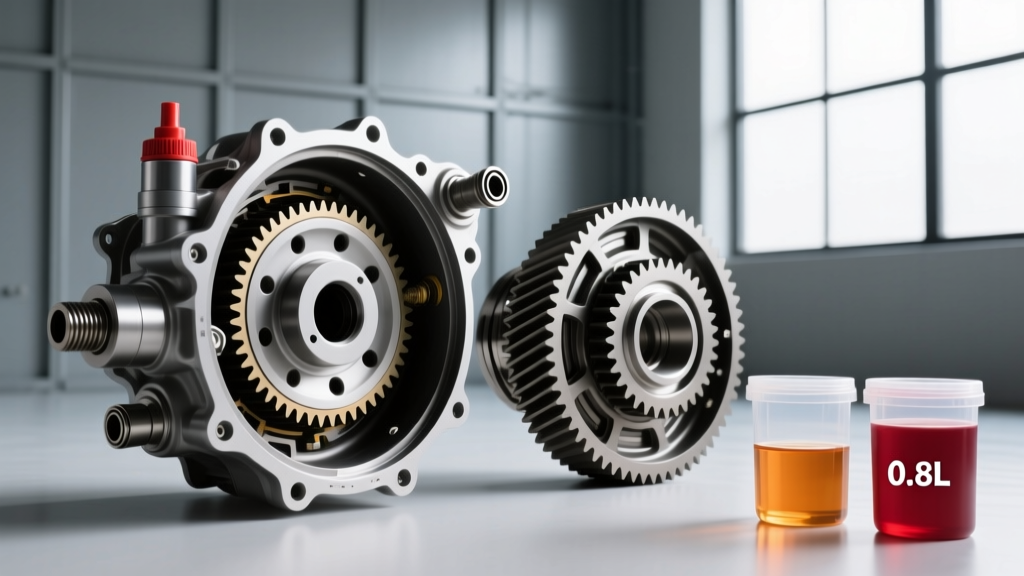
Because the transfer case and the planetary gear differential operate under vastly different thermal and mechanical loads, they require entirely different fluids. Below is a comparative maintenance matrix for common setups.
| Component | Model Example | Fluid Specification | Capacity | Drain/Fill Torque |
|---|---|---|---|---|
| Transfer Case (Planetary Reduction) | NV241 (Jeep) | ATF+4 Synthetic | 2.0 Quarts | 15-20 lb-ft |
| Transfer Case (Clutch/Planetary) | BW4406 (Ford) | Mercon V ATF | 2.0 Quarts | 18-22 lb-ft |
| Planetary Gear Differential | SH-AWD Rear (Honda) | Honda AWD-1 Fluid | 2.7 Qts (w/ cooler) | 33 lb-ft |
| Traditional Differential | Dana 44 (Jeep/Truck) | 75W-140 Synthetic | 2.5 Quarts | 25-30 lb-ft |
Real-World Service Costs and Failure Points
Understanding the financial impact of neglecting these components is a harsh but necessary lesson for any vehicle owner. The planetary gear differential and the transfer case are both high-ticket items when they fail.
The Cost of Neglect
- SH-AWD Planetary Differential Failure: If the specialized AWD-1 fluid is neglected, the electromagnetic clutches and planetary gears will overheat and seize. Replacing the entire rear differential assembly at a dealership in 2026 typically ranges from $2,800 to $3,600. A routine fluid service costs less than $60 in parts.
- NV241 Planetary Gear Wear: Running low on ATF+4 will cause the 6-pinion planet carrier to gall and destroy the sun gear. A complete NV241 rebuild kit (including new planetary gears, bearings, and a heavy-duty chain) costs between $350 and $450 for parts, though professional labor will push the total to around $1,200.
Pro-Tip for Fluid Selection: Never substitute standard 75W-90 gear oil in a transfer case designed for ATF, and never put ATF in a traditional differential. Transfer cases rely on the specific friction modifiers and lower viscosity of ATF to lubricate high-speed chains and cool electromagnetic clutches. Conversely, differentials require the extreme-pressure (EP) additives found in heavy gear oils to protect the sliding friction of hypoid ring-and-pinion gears. For exact OEM specifications, always consult the Dana Spicer resource library or your owner's manual.
Diagnosing Drivetrain Bind and Planetary Wear
How do you know if the relationship between your transfer case and differential is breaking down? Listen to your vehicle.
- Low-Speed Binding: If your 4WD vehicle hops, chirps tires, or feels like the brakes are dragging when making tight turns on dry pavement, you are experiencing drivetrain bind. This means the transfer case is locked in 4-High or 4-Low, forcing the planetary gears and differentials to fight each other. Shift back to 2WD immediately.
- Highway Whine: A high-pitched whine that changes with vehicle speed (not engine RPM) usually points to the differential's ring-and-pinion or the transfer case's planetary gearset. If the whine stops when you shift the transfer case into Neutral, the issue is isolated to the transfer case planetary gears.
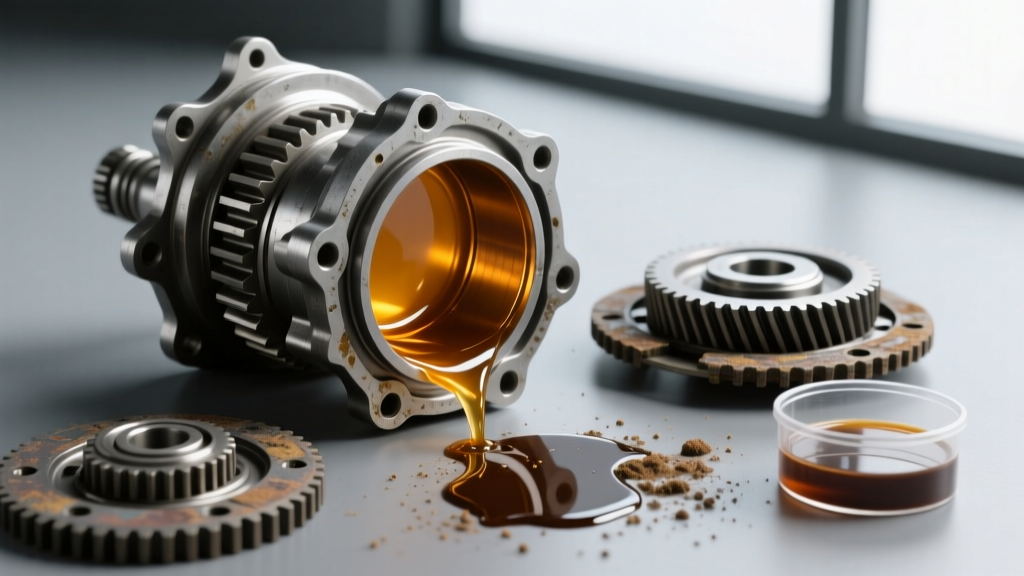
- Fluid Discoloration: When checking your dipsticks or drain plugs, look for a metallic glitter in the fluid. While a fine grey paste is normal for differentials, actual metallic flakes or chunks indicate that the planetary gear teeth in either the transfer case or the torque-vectoring differential are actively shredding.
Conclusion
The relationship between the transfer case and the differential is the cornerstone of any capable 4WD or AWD system. Whether you are relying on the planetary reduction of an NV241 transfer case to crawl over boulders, or utilizing a planetary gear differential like Honda's SH-AWD to carve through mountain passes, understanding how these components share torque is vital. By adhering to strict fluid intervals, respecting torque specifications, and ensuring your tires are perfectly matched, you will protect the intricate planetary gears that keep your vehicle moving forward.