The Drivetrain Chain: Understanding the Basics
If you own a 4WD truck or an SUV built for off-road duty, you have likely heard the terms 'transfer case' and 'open differentials' thrown around by mechanics and off-road enthusiasts. But how do these two critical components actually interact? For beginners, the drivetrain can seem like a confusing web of gears and shafts. However, understanding the relationship between your transfer case and your axles is the key to diagnosing drivetrain binding, preventing catastrophic gear failure, and mastering your vehicle's maintenance schedule.
In this comprehensive guide, we will break down the mechanical relationship between transfer cases and open differentials, explain the infamous 'drivetrain wind-up' phenomenon, and dive deep into the specific fluid maintenance required to keep these components surviving the harsh realities of modern 2026 off-road trails and daily driving.
What Exactly is an Open Differential?
Before we connect the axles to the transfer case, we must define the open differential. Located in the center of your front and rear axles, the differential's primary job is to allow the left and right wheels to rotate at different speeds when cornering. When you turn a corner, the outside wheel travels a longer distance than the inside wheel. If both wheels were locked together on a solid axle shaft, the tires would chirp, hop, and scrub across the pavement.
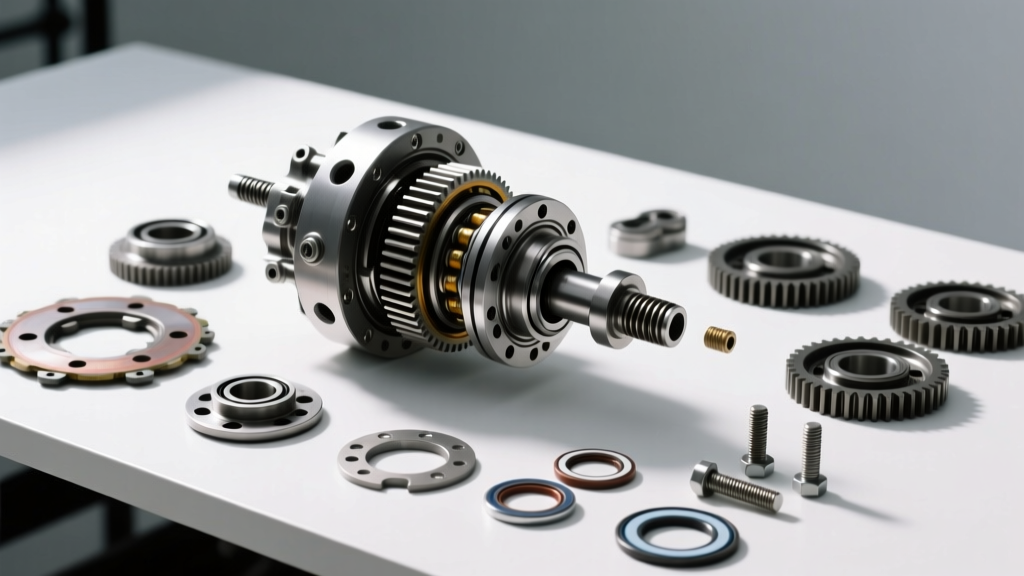
An open differential uses a set of internal spider gears and side gears to accommodate this speed difference. It operates on a fundamental mechanical rule: torque always follows the path of least resistance.
The Golden Rule of Open Differentials: If one wheel loses traction (e.g., resting on ice or lifted in the air), the open differential will send 100% of the available rotation to that spinning wheel, leaving the wheel with grip completely stationary. This is why open differentials are excellent for daily driving on dry pavement, but notoriously poor for dedicated off-roading without electronic traction control.
The Transfer Case: The Heart of 4WD
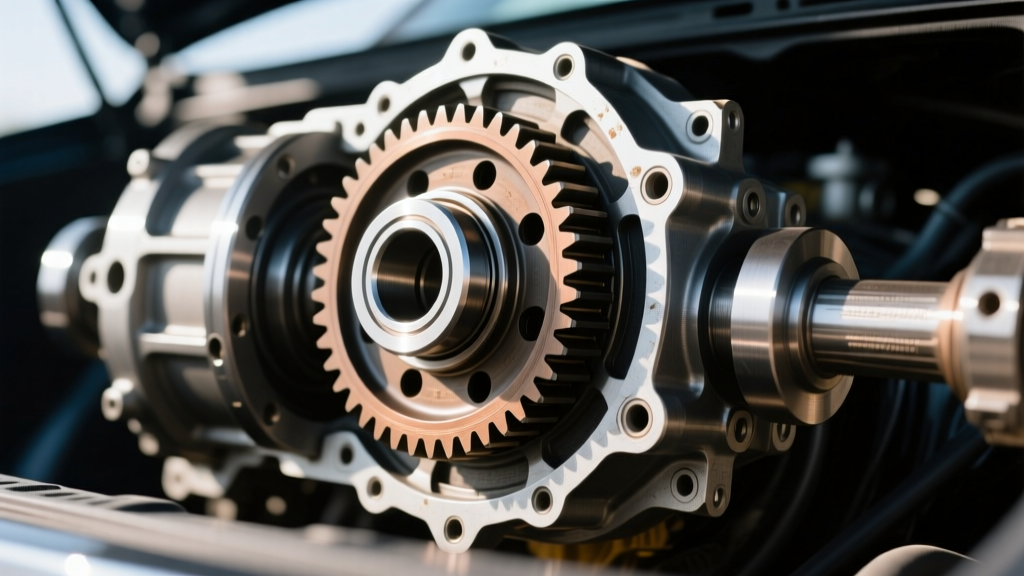
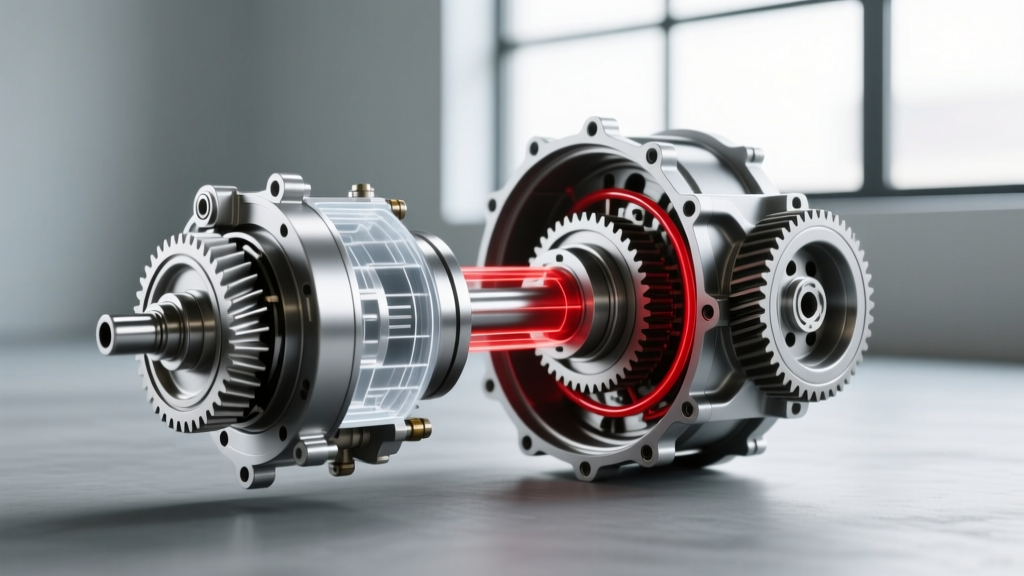
While the differential splits torque left-to-right across a single axle, the transfer case splits torque front-to-back between the front and rear axles. Bolted directly to the rear of your transmission (such as the widely used ZF 8HP or GM 10-speed), the transfer case receives engine torque and routes it through either a chain-driven or gear-driven system to the front and rear driveshafts.
Part-Time vs. Full-Time Systems
The relationship between the transfer case and your open differentials depends heavily on the type of transfer case your vehicle uses:
- Part-Time 4WD (e.g., NV241, NV271): In 2WD mode, power only goes to the rear axle. When you shift into 4-High or 4-Low, a mechanical locking collar physically locks the front and rear output shafts together. They are forced to spin at the exact same RPM.
- Full-Time 4WD / AWD (e.g., BorgWarner BW4406, NV246): These feature an internal center differential (or a viscous coupling/clutch pack) that allows the front and rear driveshafts to spin at slightly different speeds, accommodating variations in tire wear and turning radii.
The Binding Effect: When Locked Meets Open
This is where the mechanical relationship becomes critical, and where many beginners make costly mistakes. Let's look at a classic part-time 4WD setup, like a Jeep Wrangler JL or a Chevy Silverado 1500 Trail Boss. These vehicles utilize a part-time transfer case (locked in 4WD) combined with front and rear open differentials.
When you shift into 4-High on a dry, paved road and attempt to make a tight turn, you will feel the vehicle shudder, hop, and resist the steering input. This is called drivetrain binding or 'wind-up'.
Why Does Binding Happen?
During a turn, the front axle travels a slightly wider arc than the rear axle. Therefore, the front driveshaft must spin slightly faster than the rear driveshaft. However, because the part-time transfer case is mechanically locked, it forces both driveshafts to spin at the exact same speed.
Your front and rear open differentials can compensate for left-to-right wheel speed differences, but they cannot compensate for front-to-rear speed differences. The resulting rotational stress builds up in the driveshafts, ring and pinion gears, and transfer case chain. The tires must physically break traction (hop) to release this stored kinetic energy. Doing this repeatedly on dry pavement will stretch your transfer case chain, chip your differential ring gear teeth, and rapidly degrade your drivetrain fluids due to extreme heat generation.
Fluid Dynamics: Protecting the Gears Under Stress
Because binding and wheel-slip events generate immense friction, the fluid chemistry inside your transfer case and open differentials is your only line of defense against catastrophic metal-on-metal wear. A common beginner mistake is assuming all drivetrain fluids are interchangeable. They are not.
Differential Fluid: Extreme Pressure (EP) Additives
Open differentials rely on hypoid gear sets (the ring and pinion). The sliding, shearing action of hypoid gears requires a thick, high-film-strength gear oil, typically 75W-90 or 80W-90 GL-5. GL-5 gear oils contain high levels of sulfur-phosphorus Extreme Pressure (EP) additives. When the gear teeth mesh under heavy load—such as when crawling over rocks or when an open differential suddenly catches traction after a wheel spin—these additives react with the metal surface to create a sacrificial protective layer that prevents micro-welding and gear spalling.
Transfer Case Fluid: Friction and Flow
Conversely, most modern chain-driven transfer cases (like the NV241) require specific low-viscosity fluids, such as ATF+4, Dexron VI, or specialized synthetic transfer case fluids (e.g., GM Auto-Trak II). Using thick 75W-90 gear oil in a transfer case will cause the chain to whip the fluid into a foam, leading to starvation of the internal planetary gears and rapid bearing failure. Furthermore, the sulfur in GL-5 differential fluid can corrode the yellow metals (bronze bushings and synchronizers) found inside many transfer cases.
Service Specifications and Maintenance Guide
To maintain the harmonious relationship between your transfer case and open differentials, strict adherence to fluid service intervals is mandatory. Below is a reference chart for common 4WD architectures.
| Component | Typical Application | Fluid Specification | Capacity | Fill/Drain Plug Torque |
|---|---|---|---|---|
| Front Open Diff (Dana 30/44) | Jeep Wrangler JL / Gladiator | 75W-90 GL-5 Synthetic | 1.3 - 1.5 Quarts | Cover Bolts: 30-40 lb-ft |
| Rear Open Diff (GM 8.6") | Chevy Silverado 1500 | 75W-90 GL-5 (w/ Friction Modifier if LSD) | 2.1 - 2.4 Quarts | Drain Plug: 25 lb-ft |
| Transfer Case (NV241) | Jeep / Dodge Ram Part-Time | ATF+4 Synthetic | 2.5 - 2.75 Quarts | Fill Plug: 15-20 lb-ft |
| Transfer Case (BW4406) | Ford F-150 / Expedition | Mercon V or Specific T-Case Fluid | 2.0 Quarts | Fill Plug: 15-25 lb-ft |
Note: Always consult your specific 2026 owner's manual, as factory fill specifications can vary based on regional climate packages and towing capacities.
Step-by-Step Beginner Service Tips
- Warm Up the Fluids: Cold 75W-90 gear oil flows like molasses. Drive the vehicle for 15 minutes to warm the differentials and transfer case. This ensures suspended metallic particulates drain out completely.
- Open the Fill Plug FIRST: Never remove the drain plug before confirming you can remove the fill plug. If the fill plug is seized and you strip it, your vehicle is stranded on the lift with empty axles.
- Inspect the Magnetic Plugs: Most differential drain plugs feature a magnet. A fine, glitter-like metallic paste is normal wear from the open differential's spider gears. However, if you find large metal chunks or needle bearing shards, a rebuild is imminent.
- Use a Fluid Transfer Pump: Because differentials lack top-mounted fill tubes, a $25 manual fluid transfer pump is essential for pumping thick GL-5 gear oil into the fill hole until it begins to weep out.
Upgrading: What Happens When You Ditch the Open Differential?
Many off-roaders eventually replace their factory open differentials with Limited Slip Differentials (LSDs) or selectable locking differentials (like the ARB Air Locker or Eaton E-Locker). How does this affect the transfer case?
When you lock both the front and rear axles, you eliminate the open differential's ability to compensate for left-to-right wheel speed differences. While this provides maximum traction, it drastically increases the stress on the transfer case chain and output shafts during turning maneuvers. If you are running locked axles, you must ensure your transfer case fluid is in pristine condition, as the chain stretch and heat generation will be exponentially higher than in an open-differential setup. For extreme builds, upgrading to an aftermarket heavy-duty transfer case chain (such as those offered by Advance Adapters) is highly recommended to handle the multiplied torque loads.
Summary
The relationship between your transfer case and your open differentials is a delicate balance of torque distribution and speed compensation. The transfer case dictates the front-to-rear power split, while the open differentials manage the left-to-right wheel speeds. Understanding how these components interact—and recognizing the dangers of drivetrain binding on dry pavement—will save you thousands of dollars in broken ring gears and stretched chains. By adhering to strict fluid maintenance schedules, utilizing the correct GL-5 and ATF chemistries, and respecting the mechanical limits of your part-time 4WD system, you ensure your drivetrain remains reliable for every trail and highway mile ahead.
For further reading on drivetrain diagnostics and gear wear patterns, we highly recommend consulting the Spicer Parts Differential Diagnostic Guide and the fundamental engineering breakdowns available at How a Car Works.