Introduction to the F-150 Axle Ecosystem
Upgrading the gears in your truck is one of the most transformative modifications you can make, especially if you have added larger, heavier off-road tires. However, the phrase 'ring and pinion setup' often intimidates novice mechanics. If you are diving into a Ford F-150 rear differential rebuild or regear, understanding the fundamental geometry and fluid dynamics is critical. In this 2026 beginner-friendly explainer, we will demystify the setup process, outline exact torque specifications, and detail the crucial differential fluid break-in procedures that dictate the lifespan of your new gears.
Identifying Your Axle: 8.8 vs. 9.75 vs. 10.5
Before turning a single wrench, you must identify which axle housing sits under your F-150. Ford has utilized three primary rear axles over the last two decades:
- Ford 8.8-Inch: Found in older F-150s (pre-2015) and light-duty packages. Identifiable by 10 bolts on the differential cover and a roughly 10.5-inch wide cover.
- Ford 9.75-Inch: The standard for most 2015+ F-150s equipped with the 5.0L Coyote V8 or 3.5L EcoBoost. It features a 12-bolt cover and a significantly larger ring gear for handling modern turbocharged torque.
- Ford 10.5-Inch Sterling: Reserved for the Heavy Duty Payload Package (HDPP) and max-tow configurations. A massive 12-bolt axle designed for extreme gross combined weight ratings.
The Holy Trinity of Gear Setup: Depth, Backlash, and Preload
A successful gear setup relies on balancing three interdependent measurements. If one is off, the others will fail, leading to catastrophic gear whine or tooth shearing.
1. Pinion Depth
Pinion depth dictates how far the pinion gear protrudes into the carrier, meshing with the ring gear. This is adjusted via shims placed behind the inner pinion bearing. A depth that is too shallow will cause the gear pattern to run off the toe of the tooth; too deep, and it runs off the heel. Always reference the etching on the face of your specific pinion gear, as manufacturing tolerances require custom shim stacking (usually measured in thousandths of an inch).
2. Backlash
Backlash is the rotational 'slop' or play between the ring and pinion gears. It is measured using a dial indicator mounted to the axle housing while holding the pinion yoke stationary. For the Ford 8.8 and 9.75 axles, the target backlash is generally between 0.006' and 0.010'. Adjusting backlash requires moving the carrier side-to-side using threaded adjusters or swapping carrier shims.
3. Bearing Preload (The Crush Sleeve Dilemma)
Pinion bearing preload eliminates play in the pinion shaft. On F-150 axles, this is achieved using a collapsible crush sleeve. As you torque the massive pinion nut, the sleeve compresses, squeezing the pinion bearings together. Warning: If you over-torque and crush the sleeve too much, you must throw it away, replace it with a new one, and start over. Never reuse a crush sleeve.
Real-World Torque Specifications and Measurements
The following table provides baseline specifications for the most common F-150 rear differentials. Always cross-reference with the manufacturer's insert included in your specific gear set.
| Specification | Ford 8.8-Inch | Ford 9.75-Inch | Ford 10.5-Inch Sterling |
|---|---|---|---|
| Ring Gear Bolt Torque | 70 ft-lbs | 85 ft-lbs | 120 ft-lbs |
| Pinion Nut Torque (to crush sleeve) | 200-250 ft-lbs | 250-300 ft-lbs | 350-450 ft-lbs |
| Target Backlash | 0.006' - 0.010' | 0.006' - 0.010' | 0.008' - 0.012' |
| Pinion Bearing Preload (New Bearings) | 18-28 in-lbs | 22-32 in-lbs | 25-35 in-lbs |
| Carrier Bearing Cap Torque | 70 ft-lbs | 85 ft-lbs | 110 ft-lbs |
Note: Pinion bearing preload must be measured using a specialized inch-pound beam-style torque wrench with the pinion seal removed and no carrier installed to ensure absolute accuracy.
Decoding the Gear Pattern: A Visual Beginner's Guide
Once depth and backlash are set mathematically, you must verify them physically using yellow gear marking compound. Paint three to four teeth on both the drive (convex) and coast (concave) sides of the ring gear. Apply rotational resistance using a shop rag clamped in the carrier, then rotate the pinion back and forth.
- Ideal Pattern: The marking compound will show a distinct, centered footprint that is slightly biased toward the heel (the inner edge of the gear) but does not run off the edge. Under load, the pattern will shift perfectly to the center.
- Too Shallow: Pattern is concentrated on the toe (outer edge). Add pinion depth shims.
- Too Deep: Pattern is concentrated on the heel (inner edge). Remove pinion depth shims.
For visual references and advanced troubleshooting, the technical archives at Yukon Gear & Axle provide excellent photographic guides on interpreting complex gear patterns.
The 'Diff-Fluid' Connection: Break-In and Lubrication
As a knowledge hub for differential fluids, we must emphasize that the mechanical setup is only half the battle. The initial 500 miles of a new ring and pinion setup generate immense friction and heat. The metallurgy of the gears requires a specific break-in procedure to ensure the surface hardening process completes without galling.
Phase 1: The Break-In Fill (Miles 0-500)
Do not use full-synthetic gear oil for the initial break-in. Synthetics are too efficient at reducing friction, which prevents the micro-wear necessary for the ring and pinion to mate perfectly. Instead, fill the axle with a high-quality conventional 80W-90 GL-5 gear oil. Drive the truck for 15-20 miles under normal loads, then stop and let the differential cool completely to ambient temperature. Repeat this heat-cycle process three times. This prevents the gear oil from exceeding 250°F, which would compromise the temper of the steel.
Phase 2: The Flush and Final Fill
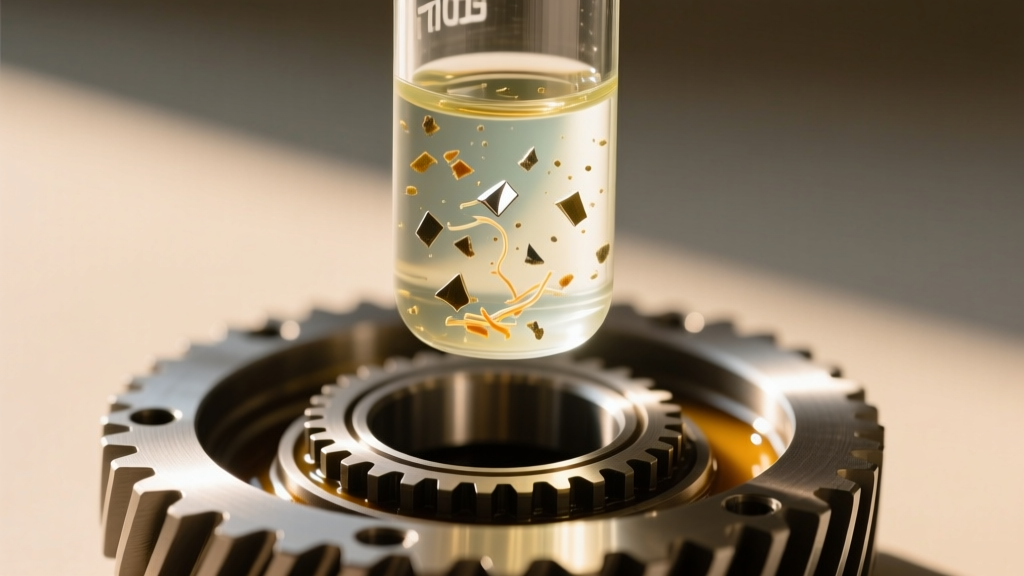
At 500 miles, drain the conventional fluid. It will likely have a glittery, metallic sheen—this is normal and represents the initial mating wear. Replace the drain plug and fill with your final synthetic fluid. For standard daily driving, Motorcraft 75W-85 Premium Synthetic Hypoid Gear Oil (Part #XO-75W85-QFS) is the OEM standard for modern 9.75 axles. If you tow frequently or use your F-150 for heavy off-roading, step up to a 75W-140 synthetic, such as those formulated by Amsoil, to maintain film strength under extreme axle-housing temperatures.
The Trac-Lok Friction Modifier Debate
If your F-150 is equipped with a factory Trac-Lok (clutch-type limited-slip differential), you must add a friction modifier to prevent clutch chatter during low-speed cornering. Motorcraft's XL-3 Friction Modifier is the gold standard. Add exactly 4 oz. to the differential before topping off with your gear oil. If your truck has an aftermarket helical LSD (like a Torsen) or an electronic locking differential (e-Locker), no friction modifier is required.
DIY vs. Professional Installation: Cost Breakdown
Setting up a Ford F-150 rear differential requires specialized tools, including a dial indicator, bearing press, and inch-pound torque wrench. Here is what you can expect to spend in 2026:
- Ring & Pinion Gear Set (OEM or Yukon/Motive): $220 - $380
- Master Install Kit (Timken bearings, shims, crush sleeve, seal): $110 - $160
- Break-in Fluid, Synthetic Final Fill, and Additives: $80 - $130
- Specialty Tools (if not owned): $60 - $150
- Total DIY Cost: $470 - $820
By contrast, a professional driveline shop will typically charge between $650 and $950 for labor alone, bringing the total out-the-door price to roughly $1,200 - $1,600. For beginners, consulting community archives like the Ford-Trucks Forums can provide model-specific quirks, such as the proprietary carrier bearing pullers required for the 9.75-inch axle.
Summary
Mastering the Ford F-150 rear differential ring and pinion setup is a rite of passage for truck enthusiasts. By respecting the mathematical tolerances of pinion depth and backlash, adhering strictly to torque specifications, and executing a disciplined differential fluid break-in procedure, you will ensure your axle operates quietly and reliably for the next 150,000 miles. Take your time, measure twice, and never skip the heat cycles.