The Drivetrain Chain: Transfer Case to Differential Power Flow
For beginners diving into the world of four-wheel-drive trucks and SUVs, the drivetrain can seem like a complex maze of heavy metal components. However, understanding the relationship between the transfer case and the rear differential is foundational to mastering off-road mechanics and heavy-duty towing. At its core, the drivetrain is a relay race of torque. The engine generates rotational force, the transmission multiplies it through gear ratios, and the transfer case acts as the central dispatcher, splitting that power between the front and rear axles while offering a secondary low-range gear reduction for extreme crawling.
Once the torque leaves the transfer case via the rear driveshaft, it arrives at the rear differential. Here, the differential performs two critical jobs: it turns the rotational force 90 degrees to spin the axles, and it allows the left and right wheels to rotate at different speeds during cornering. When you are driving a modern heavy-duty truck—such as a 2026 Chevrolet Silverado 3500HD equipped with an Allison 10L1000 transmission and a BorgWarner 4485 transfer case—the sheer volume of torque reaching the rear axle is astronomical. In low-range, the transfer case multiplies engine torque by 2.72:1. This means over 8,000 lb-ft of theoretical twisting force can be channeled directly into the rear differential's ring and pinion gears. This extreme mechanical stress is precisely why the legendary GM 14-bolt axle remains the gold standard for durability, and why precise maintenance is non-negotiable.
Why the GM 14-Bolt is the Heavy-Duty Benchmark
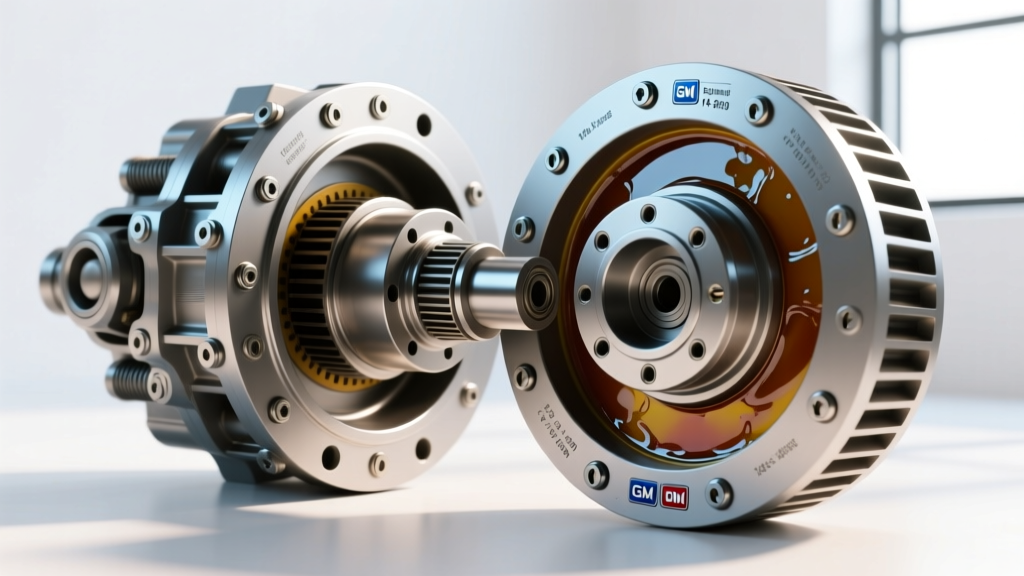
The GM 14-bolt differential is an iconic piece of American automotive engineering, instantly recognizable by its massive, 14-bolt retaining cover. Introduced in the late 1970s, it has evolved into two primary variants that dominate the heavy-duty truck segment:
- The 10.5-Inch Corporate (Semi-Float): Commonly found in 3/4-ton trucks (2500HD), this axle features a 10.5-inch ring gear and supports the vehicle's weight on the axle shafts themselves. It is robust, but subject to shaft failure under extreme shock loads.
- The 11.5-Inch AAM (Full-Float): Standard on 1-ton trucks (3500HD) and modern dually configurations, the American Axle Manufacturing (AAM) 11.5-inch unit features a massive 11.5-inch ring gear. In a full-float design, the axle shafts only transmit torque; the vehicle's weight is supported by a spindle and hub assembly. This makes it virtually indestructible in standard towing and off-road applications.
Because the transfer case relies on the rear differential to act as the final anchor point for drivetrain shock loads, any failure in the differential's sealing or internal lubrication will quickly cascade into catastrophic gear failure. Properly servicing this axle begins with knowing the exact specifications for reassembly.
Exact GM 14 Bolt Differential Cover Torque Specs
When searching for gm 14 bolt differential cover torque specs, it is vital to know which version of the 14-bolt you are servicing. Over-torquing the cover bolts can warp stamped steel covers, crack cast aluminum variants, or strip the threads in the differential housing. Under-torquing leads to gear oil weeping, which eventually starves the ring and pinion of lubrication. Below is the definitive data table for servicing these axles in the field or garage.
| Axle Variant | Cover Bolt Thread Size | Torque Specification (lb-ft) | Torque Specification (Nm) | Fluid Capacity |
|---|---|---|---|---|
| 10.5' Corporate (Semi-Float) | 3/8'-16 or M10 (Year Dependent) | 20 - 25 lb-ft | 27 - 34 Nm | 3.5 - 3.8 Pints |
| 11.5' AAM (Full-Float) | M8 x 1.25 | 25 - 30 lb-ft | 34 - 41 Nm | 3.8 - 4.2 Pints |
For the modern 11.5-inch AAM axle, the M8 bolts are relatively small compared to the massive housing they seal. This is why a calibrated 1/4-inch or 3/8-inch drive torque wrench is mandatory. Guessing the torque with a standard ratchet is a common beginner mistake that leads to stripped housings and expensive helicoil repairs.
Step-by-Step: Sealing and Torquing the Cover
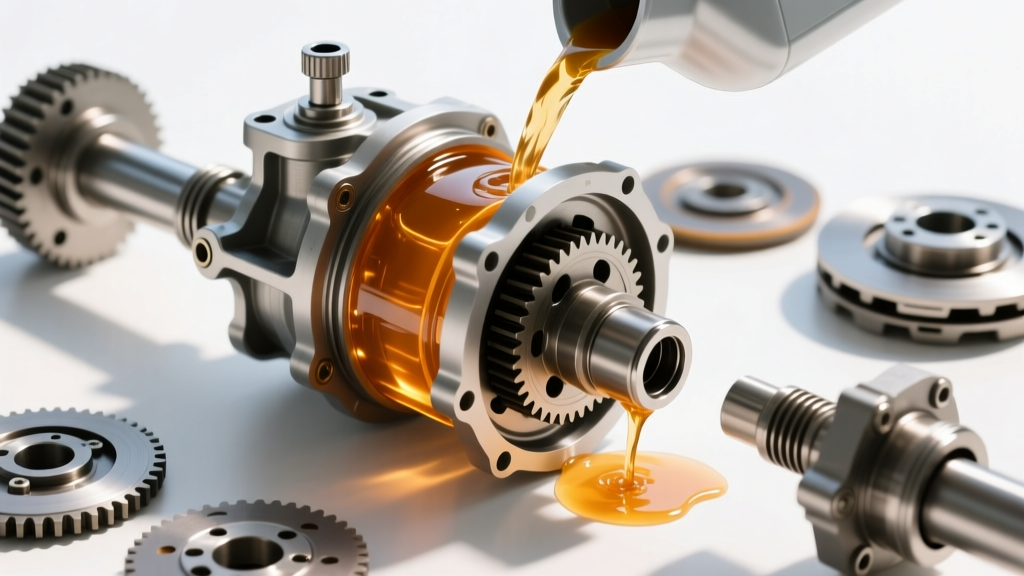
The relationship between the transfer case and differential is only as strong as the fluid protecting them. When you drop the differential cover to inspect the gears or change the fluid, follow this professional-grade procedure to ensure a leak-free seal:
- Clean the Mating Surfaces: Use a brass wire brush and brake cleaner to remove all old gasket material and RTV silicone from both the differential housing and the cover. Any debris left behind will create a path for 75W-90 gear oil to escape.
- Select Your Sealant: While traditional cork gaskets work, modern professionals prefer reusable elastomer gaskets like the LubeLocker LL-14B or high-quality RTV silicone such as Permatex Ultra Black. If using RTV, apply a continuous 1/8-inch bead around the bolt holes, ensuring no silicone squeezes inward where it could clog the differential's internal oil channels.
- Hand-Start All Bolts: Thread all 14 bolts in by hand to prevent cross-threading. This is especially critical on the 11.5-inch AAM housings.
- The Star Pattern Sequence: Using your torque wrench, tighten the bolts in a crisscross or 'star' pattern. Start in the center and work your way outward in opposing pairs. This ensures the cover is drawn down evenly, preventing the 'potato chip' warping effect that causes leaks.
- Final Torque Pass: Set your wrench to exactly 25 lb-ft (for the 11.5' AAM) and do a final verification pass in the star pattern.
Transfer Case and Differential Maintenance Synergy
Beginners often treat the transfer case and the differential as isolated systems, but they share a symbiotic maintenance relationship. The transfer case relies on specialized fluids—such as GM AutoTrak II for active electronic systems or standard synthetic ATF for gear-driven models like the NP205 and NP241. If the transfer case fluid degrades, the internal chain and clutches will slip or bind, sending violent shockloads down the driveshaft directly into the differential's pinion gear.
Conversely, if the differential is neglected, the increased rotational drag and heat will transfer backward through the driveline, accelerating wear on the transfer case output shaft bearings. To maintain this synergy, it is highly recommended to service both units simultaneously. Fill the 14-bolt differential with a premium 75W-90 GL-5 synthetic gear oil. According to industry experts at AMSOIL, synthetic gear oils provide a vastly superior protective film strength over conventional petroleum-based oils, which is critical when the transfer case is locked in low-range and generating immense friction at low speeds.
Furthermore, understanding your exact axle ratio is crucial when pairing your differential with your transfer case and transmission. As outlined in the heavy-duty identification guides at Drivetrain America, matching a 4.10:1 rear differential ratio with a modern 10-speed transmission and a 2.72:1 low-range transfer case creates a crawling ratio that can practically walk the truck over boulders at idle. However, this mechanical advantage places maximum stress on the 14-bolt cover seals and ring gear bolts.
Final Thoughts for the Drivetrain Enthusiast
Mastering the transfer case and differential relationship transforms you from a passive driver into an informed mechanic. By respecting the engineering limits of your drivetrain, adhering strictly to gm 14 bolt differential cover torque specs, and utilizing high-quality synthetic lubricants, you ensure that your heavy-duty truck will reliably transmit power to the ground for hundreds of thousands of miles. Whether you are towing a 20,000-pound fifth wheel across the country or crawling rocky trails in low-range, the 14-bolt axle and its transfer case partner will hold the line—provided you maintain them with precision.