Understanding How a Differential Gear Works Under Load
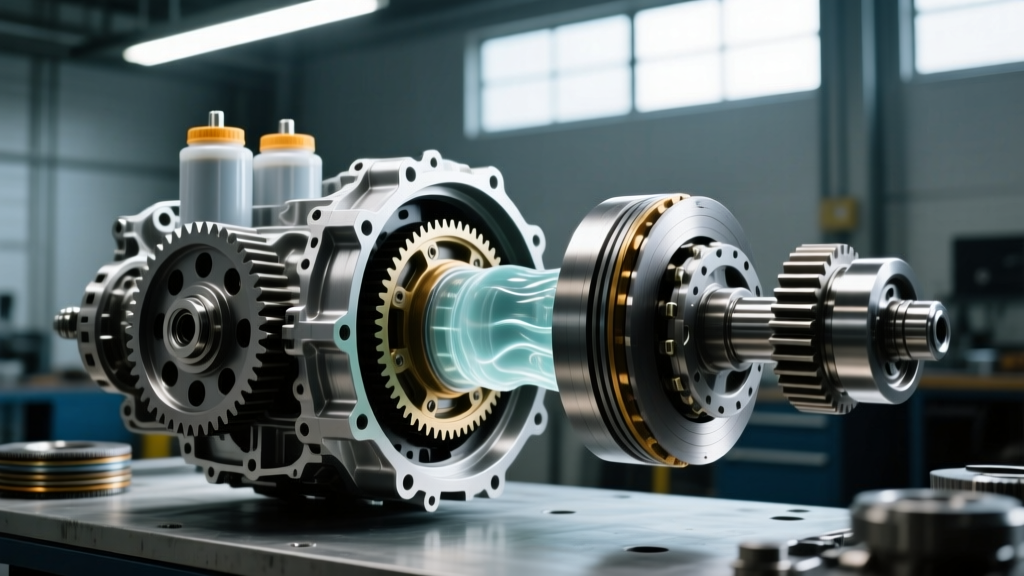
Before draining a single drop of gear oil, it is critical to understand how a differential gear works and why the fluid inside the axle housing is subjected to such extreme mechanical stress. Unlike the helical gears inside a manual or automatic transmission that primarily roll against one another, the ring and pinion gears in a differential utilize a hypoid gear design. This design offsets the pinion gear below the centerline of the ring gear, allowing for a lower driveshaft tunnel and increased ground clearance.
However, this offset creates a massive amount of sliding friction across the gear teeth under load. This sliding action literally wipes standard lubricants away from the contact patch. To survive, hypoid gears require API GL-5 rated gear oils packed with sulfur-phosphorus Extreme Pressure (EP) additives. These additives chemically react with the high heat of the sliding metal to form a sacrificial solid-film boundary layer, preventing the ring and pinion from welding together. When you understand how a differential gear works at a tribological level, you realize why skipping fluid changes leads to catastrophic bearing and gear failure.
Differential Fluid Change Intervals by Application
While many modern OEMs claim their differential fluid is "lifetime," professional drivetrain specialists universally reject this notion. Heat cycles, moisture ingress through axle seals, and the depletion of EP additives necessitate regular service. Below are the recommended severe-duty and normal-duty intervals for 2026 fleet and consumer standards.
| Application Type | Normal Duty Interval | Severe Duty / Towing Interval | Recommended Viscosity |
|---|---|---|---|
| Light Duty Commuter (Sedans/Crossovers) | 60,000 Miles | 30,000 Miles | 75W-85 or 75W-90 API GL-5 |
| Half-Ton Trucks (F-150, Silverado 1500) | 50,000 Miles | 25,000 Miles (or 1st oil change) | 75W-90 or 75W-140 Synthetic |
| Heavy Duty / 3/4-Ton (Dana 60, AAM 11.5) | 30,000 Miles | 15,000 Miles | 75W-140 Synthetic API GL-5 |
| Dedicated Off-Road / Rock Crawling | Every 10,000 Miles | After every deep water submersion | 75W-140 with High Zinc/EP |
Note: Always consult your specific OEM service manual, as some late-model EVs and hybrid AWD systems utilize specialized low-viscosity fluids (e.g., 70W-75) to reduce parasitic drag.
Step-by-Step Differential Fluid Change Procedure
This guide covers the two most common axle designs: the drain-plug style (common on Dana and AAM axles) and the removable-cover style (common on GM 10-bolt and Ford 8.8 axles).
Phase 1: Preparation and Safety Protocols
- Vehicle Elevation: Safely lift the vehicle using a hydraulic floor jack and support it with rated jack stands placed on the designated frame pads. Ensure the axle housing is level; an uneven vehicle will result in an inaccurate fluid fill level.
- Warm-Up: Drive the vehicle for 10-15 minutes prior to the service. Warm gear oil (around 140°F) flows faster and suspends metallic particulates, ensuring a more complete drain.
- Tool Gathering: You will need a 3/8" or 1/2" square drive (for drain plugs), a 10mm-13mm socket set (for covers), a magnetic drain pan, a high-quality fluid transfer pump, brake cleaner, and Permatex Ultra Black RTV (Part #85084) if removing a cover.
Phase 2: Draining and Inspection (Reading the Tea Leaves)
- Remove the Fill Plug FIRST: Never drain an axle before confirming the fill plug can be removed. If the fill plug is seized and you drain the housing, you will strand the vehicle. Use a 3/8" square drive or appropriate hex socket.
- Drain the Fluid: Remove the drain plug (or unbolt the cover, leaving the top two bolts loosely threaded to act as a hinge). Allow the fluid to drain completely into your pan.
- Inspect the Magnet: Most drain plugs and axle covers feature an internal magnet.
- Normal: A fine, metallic gray paste or "fuzz" is normal gear wear.
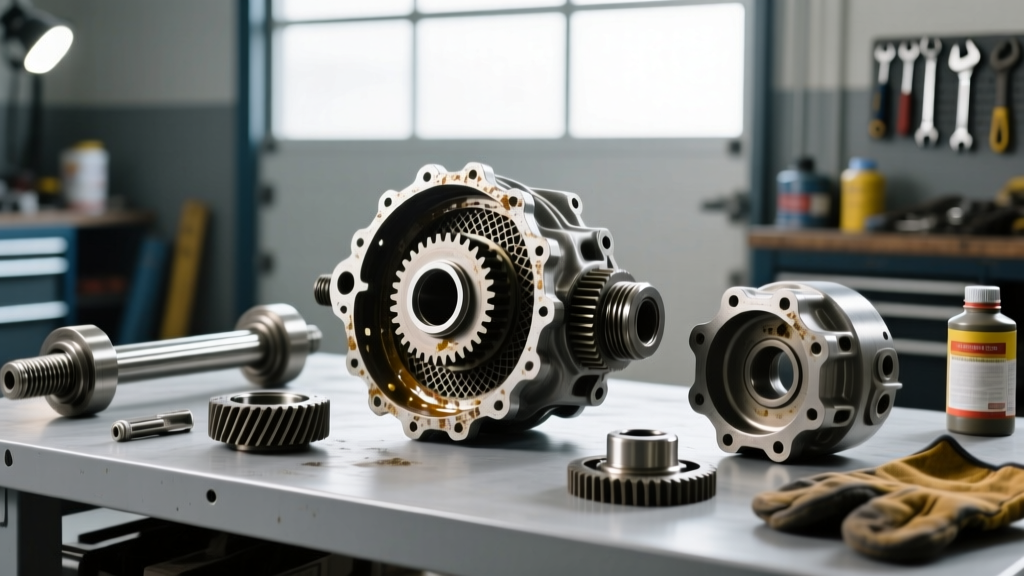
- Abnormal: Sharp metallic shards, needle bearing fragments, or brass-colored flakes (indicating side gear thrust washer failure) require immediate teardown and inspection. Consult Yukon Gear & Axle technical resources for failure analysis guides.
- Clean the Housing: Spray the inside of the housing and the mating surfaces with brake cleaner. Wipe dry with lint-free shop towels. Do not leave debris inside the axle tube.
Phase 3: Sealing and Refilling to Exact OEM Specifications
- Reseal the Cover (If Applicable): Scrape off all old RTV using a plastic gasket scraper (avoid metal scrapers that gouge the casting). Apply a continuous 3mm bead of Permatex Ultra Black RTV. Reinstall the cover and torque the bolts in a star pattern to 25-30 lb-ft. Allow 2 hours for the RTV to skin over before filling.
- Reinstall Drain Plug: Clean the magnet, apply fresh Teflon tape or thread sealant if specified, and torque the drain plug to spec (usually 25-35 lb-ft).
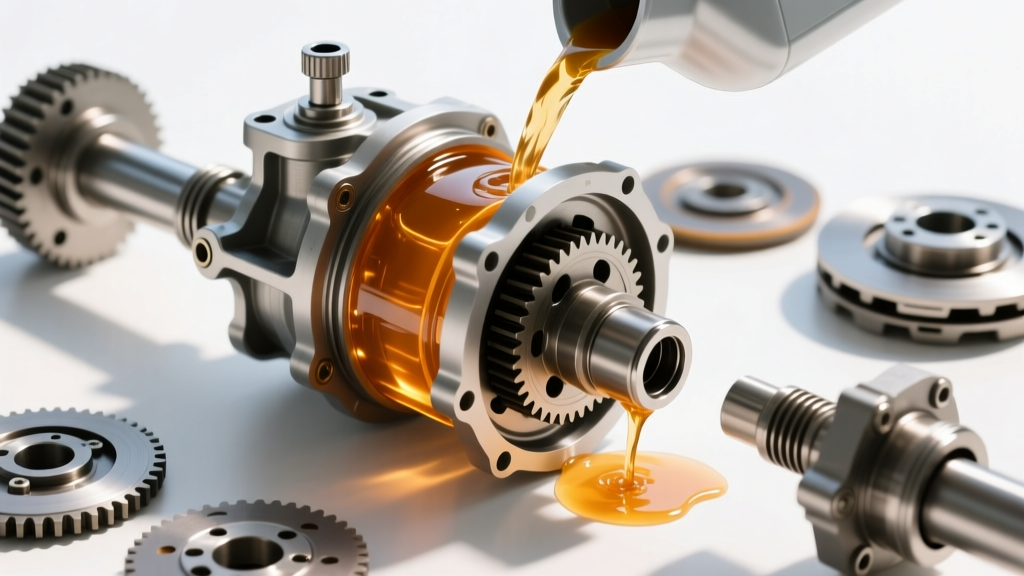
- Pump in the Gear Oil: Using a manual or pneumatic transfer pump, fill the housing with your chosen API GL-5 gear oil. According to Red Line Oil technical guides, synthetic 75W-90 or 75W-140 provides superior shear stability over conventional oils.
- The Weep Rule: The differential is full when the fluid reaches the exact bottom edge of the fill hole and begins to weep out. Reinstall the fill plug and torque to 25-35 lb-ft.
Torque Specs and Fluid Capacity Reference Chart
Over-torquing axle cover bolts will warp the stamped steel cover, leading to chronic leaks. Under-torquing fill plugs will result in fluid loss and subsequent gear seizure. Use the chart below for common North American axle assemblies.
| Axle Type | Fill/Drain Plug Torque | Cover Bolt Torque | Approx. Capacity (Quarts) |
|---|---|---|---|
| GM 8.5" / 8.6" 10-Bolt | N/A (Cover Only) | 25 lb-ft | 2.0 - 2.2 Qt |
| Ford 8.8" (Super 8.8) | 33 lb-ft | 28 lb-ft (Cover) | 1.8 - 2.5 Qt |
| Dana 44 (Jeep JK/JL) | 25 lb-ft | N/A (Plug Only) | 2.0 Qt |
| Chrysler 8.25" (C-Clip Eliminator) | N/A (Cover Only) | 30 lb-ft | 2.1 Qt |
| AAM 11.5" (HD Trucks) | 35 lb-ft | N/A (Plug Only) | 3.5 - 4.0 Qt |
Limited Slip Differentials: The Friction Modifier Nuance
If your vehicle is equipped with a clutch-type Limited Slip Differential (LSD), such as the Ford Traction-Lok, Auburn LSD, or Mopar Sure-Grip, standard gear oil is not enough. These differentials rely on clutch packs that can bind and cause severe "chatter" or shuddering during low-speed turns if the fluid lacks the correct friction modifiers.
While many modern synthetic gear oils claim to have "LS additive included," professional builders often recommend adding a dedicated friction modifier to guarantee chatter-free operation.
- Ford / Chrysler Applications: Use Motorcraft XL-3 Friction Modifier (Part #XL-3). Add 4 oz during the fill process.
- GM Applications: Use ACDelco Limited Slip Axle Lubricant Additive (Part #10-9003). Add 4 oz.
Common Mistakes and Edge Cases to Avoid
Even seasoned mechanics make errors when servicing differentials. Avoid these critical pitfalls:
- Using RTV on Gasketed Axles: If your axle cover uses a pre-cut cork or rubber gasket (common on older Dana axles), do not use RTV. The RTV can squeeze inward and block the oil pickup or sling onto the ring gear, causing aeration. Use a thin layer of high-tack gasket sealant instead.
- Ignoring the Axle Vent: If your differential fluid is constantly pushing past the axle seals, the axle breather vent on the top of the housing is likely clogged with mud or debris. As the fluid heats up and expands, the trapped pressure blows out the seals. Always clear the vent tube during a fluid service.
- Mixing Viscosities: Topping off a 75W-140 heavy-duty setup with 75W-90 in an emergency alters the shear stability and high-temperature protection threshold. Always drain and refill with a matching, uniform viscosity.
By understanding the extreme mechanical forces at play and adhering to precise torque and fluid specifications, you ensure the longevity of your ring, pinion, and bearings for hundreds of thousands of miles.