The Mechanical Marriage: How T-Cases and Differentials Talk
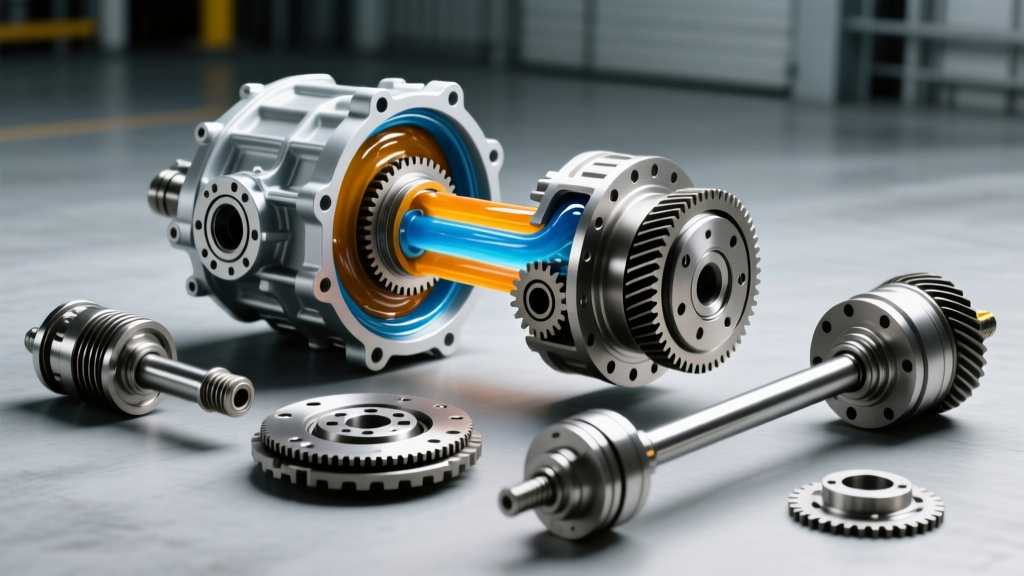
For beginners entering the world of four-wheel drive, the drivetrain can seem like a chaotic collection of heavy metal boxes bolted beneath the chassis. However, the relationship between your transfer case (T-case) and your front and rear differentials is a highly synchronized mechanical marriage. The transfer case acts as the brain and the brawn of a 4x4 system, taking the rotational energy from the transmission—whether it is a classic manual or a modern ZF 8HP automatic—and splitting it to the front and rear axles. The differentials, in turn, act as the final translators, allowing the left and right wheels to rotate at different speeds during a turn while multiplying the torque delivered by the driveshafts.
Understanding this relationship is critical for anyone looking to perform low-cost maintenance, diagnose driveline vibrations, or upgrade their rig for off-road use without breaking the bank. When one component in this chain fails, it sends a catastrophic shockwave through the rest. By understanding how these components interact, you can implement strategic, low-cost upgrades that protect your entire drivetrain.
In software engineering, developers seek low-cost low-power failure-tunable memory for differential privacy. In the garage, we apply a mechanical synonym: building a resilient, low-maintenance drivetrain that absorbs shock (failure-tunable) while keeping your daily driver reliable, stealthy, and off the mechanic's radar (differential privacy).
Power Flow and RPM Multiplication
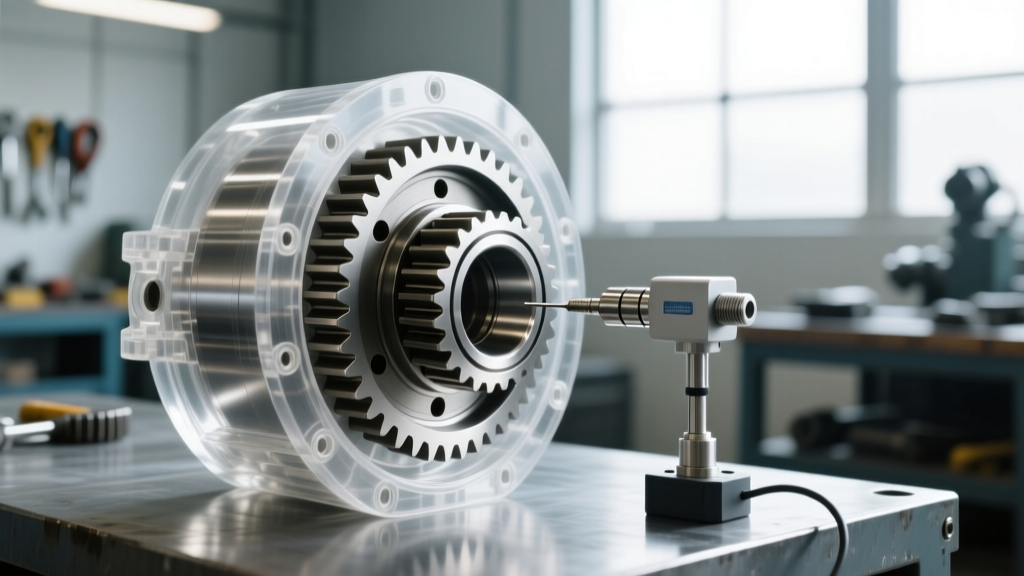
To truly grasp the transfer case and differential relationship, you must follow the power flow. When you shift a New Venture NV241 transfer case (commonly found in Jeep Wranglers) into 4-Low, you are engaging a planetary gearset that multiplies the torque output by a ratio of 2.72:1 before it even reaches the driveshafts. This multiplied force is then sent to the front Dana 30 and rear Dana 44 axles.
The differential's ring and pinion gear set provides the final drive ratio. If your Jeep has 4.10 gears, the torque is multiplied yet again. This compounding effect means that the U-joints, axle shafts, and differential bearings are subjected to immense stress. If you install massive 37-inch off-road tires without re-gearing your differentials, the transfer case output shaft and the differential pinion bearings will absorb the brunt of the rotational mass, leading to premature failure. According to Dana Automotive Drivetrain engineering guidelines, maintaining the correct final drive ratio relative to tire size is the single most effective way to preserve the T-case and differential relationship.
"Failure-Tunable" Drivetrains: The Art of the Sacrificial Component
In high-performance and off-road applications, you cannot build every component to be indestructible; the cost and weight would be prohibitive. Instead, expert builders use a concept we call "failure-tuning." This involves deliberately selecting specific components to act as mechanical fuses. If the drivetrain experiences a sudden, massive shock load—such as dropping a tire off a rock ledge at high RPM—you want a relatively cheap, easy-to-replace part to break, rather than your $1,200 transfer case or your ring and pinion gears.
U-Joints as Shear Pins
The universal joint is the ultimate sacrificial component. Many beginners make the mistake of upgrading their U-joints to the largest, strongest size available, such as swapping a Spicer 1310 (Part # 5-153X, approx. $25) for a massive Spicer 1350 (Part # 5-760X, approx. $45) on a standard Dana 30 front axle. While the U-joint will now survive, the shock load will bypass it and shatter the inner axle shafts or strip the differential's ring gear teeth.
By keeping the factory-rated 1310 U-joint, you ensure that under extreme bind, the U-joint caps will shear or the cross will snap. A blown U-joint is a $25 part and 30 minutes of trail-side labor. A shattered ring gear requires a full axle tear-down, a new gear set, and hundreds of dollars in machine shop setup fees. For more on matching driveline components, consult the Spicer Technical Resources database to verify the yield strengths of your specific yokes and joints.
Slip Yokes vs. Fixed Yokes
The slip yoke on the rear output shaft of a transfer case (like the NV242 or NV231) allows the driveshaft to compress and extend as the rear suspension cycles. However, the slip yoke is a notorious failure point and a source of driveline vibration. A highly popular, low-cost "failure-tunable" upgrade is the Slip Yoke Eliminator (SYE) kit paired with a constant velocity (CV) driveshaft. This removes the weak slip yoke, replacing it with a fixed flange, and shifts the slip mechanism to the driveshaft itself, vastly improving reliability and reducing the chance of a catastrophic tail-shaft housing fracture.
Fluid Symbiosis: The Shared Bloodline
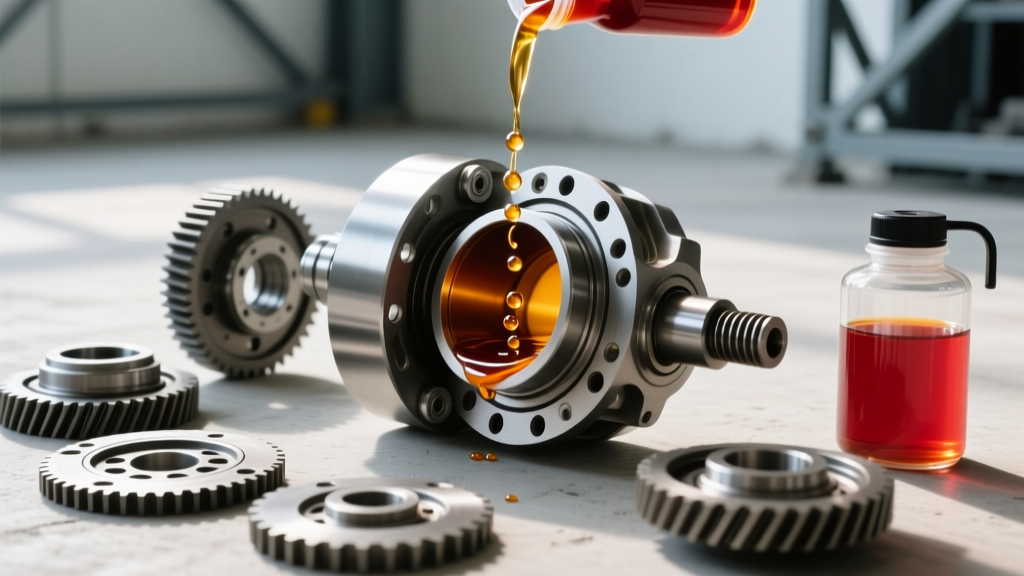
One of the most common beginner mistakes is assuming that because the transfer case and the differentials are both gear-driven boxes, they use the same fluid. This is a fast track to destroying your drivetrain. The transfer case and differential relationship relies on vastly different internal lubrication requirements.
| Component | Common Model | Required Fluid Type | Capacity | Cost Estimate (2026) |
|---|---|---|---|---|
| Transfer Case | NV241 / NV231 | ATF+4 (Automatic Trans Fluid) | 2.5 Quarts | $25 - $35 |
| Transfer Case | BW4406 (Ford F-150) | Mercon V / XL-12 | 2.0 Quarts | $20 - $30 |
| Front Differential | Dana 30 / Dana 44 | 75W-90 Synthetic Gear Oil | 1.25 - 2.0 Qts | $18 - $25 |
| Rear Differential | Ford 8.8 / Spicer 60 | 75W-140 Synthetic Gear Oil | 2.1 - 3.0 Qts | $25 - $40 |
Critical Warning: Never put heavy 75W-90 or 80W-90 gear oil in a chain-driven transfer case like the NV241. The oil pump inside the T-case is designed for the low viscosity of ATF. Heavy gear oil will starve the pump, leading to immediate chain stretch, planetary gear overheating, and total case failure. Conversely, putting ATF in a differential will result in inadequate boundary lubrication, causing the ring and pinion to gall and weld together under load.
The Golden Rule of Drain and Fill
When servicing the differentials and the transfer case, always remove the FILL plug first. If you drain the fluid and then discover that the fill plug is seized or stripped, you are left with an empty, immobile vehicle. Once the fill plug is confirmed loose, remove the drain plug (or drop the differential cover, using a new gasket or RTV silicone sealant like Permatex Ultra Black). Torque the differential cover bolts to spec (e.g., 32 lb-ft for a Ford 8.8) in a crisscross pattern to prevent warping the stamped steel cover.
Torsional Memory and Driveline Bind
Part-time transfer cases (like the NP241 or BW1356) do not have a center differential. When engaged in 4-High or 4-Low, they lock the front and rear driveshafts together, forcing them to spin at the exact same RPM. However, when you turn a corner, the front wheels travel a wider arc than the rear wheels, requiring the front driveshaft to spin faster than the rear.
Because the T-case prevents this speed difference, the drivetrain experiences "wind-up" or torsional bind. The driveshafts literally twist like giant metal springs, storing kinetic energy—this is the drivetrain's "memory." On loose surfaces like dirt or snow, the tires slip slightly, releasing this energy. On dry pavement, the tires grip, and the stored energy has nowhere to go. It pushes back against the transfer case chain and the differential pinion bearings. Driving a part-time 4WD system on dry pavement will eventually cause the transfer case output shaft to snap or the differential teeth to shear. Always reserve 4-Low and 4-High for low-traction surfaces unless your vehicle is equipped with an all-wheel-drive (AWD) transfer case featuring a planetary center differential or a viscous coupling.
The Beginner's Low-Cost Maintenance Checklist
To maintain the harmony between your transfer case and differentials, follow this actionable, low-cost maintenance framework:
- Inspect the Breather Tubes: Both the T-case and the differentials have rubber breather hoses. If these are clogged with mud, the boxes will build pressure when hot and suck in water when they cool down crossing a creek. Extend your breather tubes up into the engine bay or under the taillights using $5 worth of 1/4-inch vinyl tubing and hose clamps.
- Check the Pinion Seal: Look at the yoke where the driveshaft meets the differential. If you see a ring of dark, wet gear oil slung around the pinion flange, your pinion seal is failing. Replacing it requires draining the fluid, removing the yoke (use a puller, never hammer it off), and tapping in a new seal (e.g., Timken 710474). Torque the new pinion nut to the exact crush-sleeve specification (typically 200-250 lb-ft for a Dana 44) using a beam-type torque wrench to measure rotational drag.
- Magnet Inspection: When you drop the differential cover or drain the T-case pan, run your finger over the internal magnet. A fine, glitter-like metallic paste is normal wear. Finding jagged chunks of metal or broken needle bearings means a catastrophic internal failure is imminent.
- Lubricate the Slip Yoke: Every time you change your oil, use a grease gun with a high-quality synthetic lithium grease (like Mobil 1 Synthetic) to lubricate the slip yoke splines on the driveshaft. This prevents the dreaded "clunk" when shifting from reverse to drive and saves the transfer case output shaft from shock damage.
Final Thoughts on Drivetrain Harmony
The transfer case and differential relationship is a masterclass in mechanical leverage and stress distribution. By understanding how torque is multiplied, how fluids protect microscopic gear tolerances, and how to intentionally tune your drivetrain for graceful failure, you can keep your 4x4 running reliably for hundreds of thousands of miles. You do not need a massive budget to build a bulletproof drivetrain; you simply need the knowledge to maintain the symbiosis between the gears, the chains, and the oil that keeps them all turning.