The Hidden Bottleneck in Heavy-Duty Drivetrain Maintenance
When enthusiasts and fleet owners upgrade their trucks and SUVs with larger tires, superchargers, or heavy towing packages, the focus usually lands on the transmission or the ring and pinion gears themselves. However, one of the most critical yet overlooked components in the drivetrain ecosystem is the differential filler plug. For popular platforms like the Ford F-150, Chevrolet Silverado 2500HD, and Jeep Wrangler Rubicon, the factory differential filler plug represents a surprising weak point in an otherwise robust axle assembly.
From a performance and longevity standpoint, upgrading this small piece of hardware—and pairing it with the correct synthetic gear oil—can mean the difference between a differential that survives 200,000 miles of heavy towing and one that grenades on a steep grade. In this guide, we explore the metallurgy, magnetic flux dynamics, and precise service procedures required to optimize your axle's maintenance routine.
Why the OEM Differential Filler Plug is a Weak Point
Original equipment manufacturers prioritize cost-efficiency and assembly line speed. Consequently, the factory differential filler plug on many modern trucks and SUVs is often a stamped steel or low-grade cast iron component. While it may feature a small magnet, the magnetic pull is rarely sufficient to capture micro-swarf under high-velocity fluid agitation.
- Thread Stripping: OEM plugs are notorious for soft threads. Using a 1/2-inch drive impact wrench or exceeding torque specifications frequently strips the threads out of the aluminum or cast-iron differential housing, leading to costly repairs or the need for helicoil inserts.
- Weak Magnetic Flux: Standard ceramic or low-grade rare-earth magnets lose their effectiveness when submerged in 250°F gear oil, allowing ferrous particulates to circulate and act as a lapping compound on your bearings and gear teeth.
- Corrosion and Seizing: Dissimilar metal corrosion between a steel plug and an aluminum differential cover (common on GM and Ford axles) can cause the plug to seize solid, making routine fluid changes a nightmare.
Choosing the Right Performance Differential Filler Plug
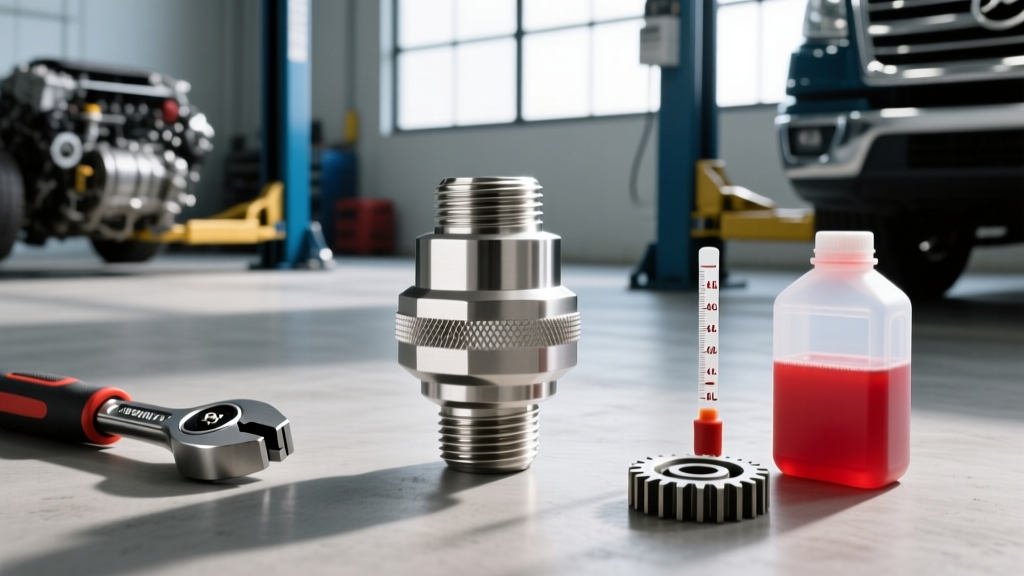
Upgrading to a billet aluminum or CNC-machined stainless steel differential filler plug equipped with a high-grade N52 neodymium magnet is a foundational step in performance axle maintenance. Neodymium magnets maintain their magnetic flux density even at elevated operating temperatures, ensuring that microscopic metal shavings are pulled out of suspension before they reach the pinion bearings.
Thread Sizes and Upgrade Options by Axle Type
Before ordering parts, you must verify your axle's specific thread pitch. Using an incorrect thread pitch will cross-thread and ruin the differential housing. Below is a reference chart for popular truck and SUV axles:
| Axle Type | Common Vehicles | Fill Plug Thread Size | Performance Upgrade Option | Est. Cost |
|---|---|---|---|---|
| Ford 9.75" | F-150, Expedition | 1/2"-20 UNF | ARP Billet Magnetic Plug | $25 - $35 |
| Dana 60 / Super 60 | F-250/F-350, Ram 2500 | 3/4"-16 UNF | ARB / Spicer Heavy-Duty Magnetic | $30 - $45 |
| GM 9.5" / AAM 11.5" | Silverado 2500/3500HD | M18x1.5 | Dorman Premium Magnetic Plug | $15 - $28 |
| Dana 44 Adv / M220 | Jeep Wrangler (JL), Gladiator | 1/2"-20 UNF | Rugged Ridge CNC Aluminum | $20 - $30 |
The Golden Rule of Axle Service: Fill Plug First
Before diving into the fluid swap, every drivetrain technician adheres to one unbreakable rule: Always remove the differential filler plug before removing the drain plug or dropping the differential cover. If you drain the axle and subsequently discover that the filler plug is seized, stripped, or welded shut by corrosion, your vehicle is immobilized. You will be forced to refill the axle through the drain hole or cover gap using a makeshift funnel, introducing contamination risks and severe frustration.
Step-by-Step Performance Fluid and Plug Swap
To maximize the benefits of your new magnetic differential filler plug, pair it with a high-quality synthetic gear oil. For modified trucks or heavy towing applications, a 75W-140 full synthetic (like AMSOIL Severe Gear) provides superior shear stability and film strength compared to standard 75W-90.
- Warm the Differential: Drive the vehicle for 15-20 minutes. Warm gear oil (around 140°F) flows faster and keeps abrasive particulates in suspension, ensuring they are drained out rather than settling at the bottom of the housing.
- Clean the Area: Use brake cleaner and a wire brush to remove caked mud and road grime from the plug area to prevent contamination upon opening.
- Remove the OEM Fill Plug: Use a properly fitting 6-point socket (e.g., 13/16" or 15/16") to avoid rounding the soft OEM hex head.
- Drain the Fluid: Remove the drain plug or unbolt the differential cover. Allow the fluid to drain completely into a catch pan.
- Reinstall Drain Plug/Cover: If using a drain plug, torque to factory specifications (typically 25-35 lb-ft). If reinstalling a cover, use a new RTV bead or gasket and follow the star-pattern torque sequence.
- Fill with Synthetic Gear Oil: Pump fluid until it reaches the bottom of the differential filler plug threads. For limited-slip differentials (LSD), ensure you have added the required friction modifier (e.g., Ford XL-3 or GM 1051616) prior to filling.
- Install the Upgraded Plug: Apply a small amount of anti-seize to the threads of your new billet differential filler plug. Thread it in by hand to prevent cross-threading, then torque to the manufacturer's specification.
Analyzing the Debris: What Your Old Plug Tells You
When you remove the old differential filler plug, the debris clinging to its magnet is a direct window into the health of your ring and pinion. According to drivetrain specialists at Ring-Pinion.com, interpreting this swarf can save you from catastrophic failure:
- Fine Metallic Paste (Glitter): This is normal. It indicates standard break-in wear or high-mileage clutch pack wear in a limited-slip differential. Wipe it off and proceed with the service.
- Chunky Ferrous Shards (Size of a grain of rice): This is a critical warning sign. It indicates that gear teeth are chipping, or a pinion bearing cage is disintegrating. The axle requires immediate teardown and inspection.
- Brass or Bronze Flakes: This points to the destruction of the spider gear thrust washers or the limited-slip clutch plates. While not immediately catastrophic to the ring and pinion, the differential's internal clearances are compromising.
Complete Truck & SUV Differential Service Cheat Sheet
Proper maintenance requires adhering to exact torque specifications and fluid capacities. Over-torquing a differential filler plug can crack an aluminum differential cover, while under-torquing it can lead to fluid weeping and eventual gear starvation. Below is a reference guide for popular late-model platforms, incorporating data aligned with Dana Aftermarket and OEM service manuals.
| Vehicle Platform | Axle Assembly | Fluid Capacity | Fill Plug Torque Spec | Recommended Fluid Viscosity |
|---|---|---|---|---|
| 2024-2026 Ford F-150 (Towing Pkg) | 9.75" Semi-Floating | 2.3 - 2.7 Quarts | 25 lb-ft | 75W-140 Synthetic |
| 2023-2026 Ram 2500 HD | AAM 11.5" Full-Floating | 3.5 - 4.0 Quarts | 35 lb-ft | 75W-90 Synthetic |
| 2024-2026 Chevy Silverado 2500HD | AAM 11.5" / GM 9.5" | 3.2 - 3.8 Quarts | 25 lb-ft | 75W-90 Synthetic |
| 2024-2026 Jeep Wrangler Rubicon | Dana 44 Adv (Front/Rear) | 1.8 - 2.0 Quarts | 30 lb-ft | 75W-85 w/ Friction Modifier |
Conclusion: Small Hardware, Massive Drivetrain Protection
In the realm of truck and SUV performance, protecting your drivetrain investment goes far beyond adding horsepower. The differential operates in a brutal environment of extreme pressure, high heat, and shear force. By upgrading to a high-flux magnetic differential filler plug, you are actively filtering out destructive micro-swarf, extending the life of your ring and pinion, and safeguarding your axle bearings. Combined with strict adherence to torque specifications and premium synthetic gear oils, this simple $30 upgrade is one of the highest ROI maintenance modifications you can perform on your vehicle's drivetrain.