For beginners diving into the world of four-wheel-drive (4WD) and all-wheel-drive (AWD) vehicles, the drivetrain can seem like a confusing maze of gears, chains, and fluids. Two of the most critical components in this system are the transfer case and the axles. Specifically, understanding the transfer case and differential relationship is vital when upgrading to a high-performance unit like the Detroit Truetrac limited slip differential. While the transfer case dictates how power is split between the front and rear of the vehicle, the differential manages how that power is distributed left and right across the axle. In this beginner-friendly explainer, we will demystify how these components work together, why their fluid requirements are drastically different, and how to properly maintain them for maximum traction and longevity.
The Drivetrain Chain: Where the Transfer Case Meets the Axle
To understand how a Detroit Truetrac limited slip differential interacts with your transfer case, you first need to visualize the flow of torque. In a traditional longitudinally mounted 4WD system (like a Jeep Wrangler or Chevy Silverado), power flows from the engine into the transmission. From the transmission, it enters the transfer case. The transfer case is essentially a secondary gearbox that splits the engine's torque, sending it down two separate driveshafts—one to the front axle and one to the rear axle.
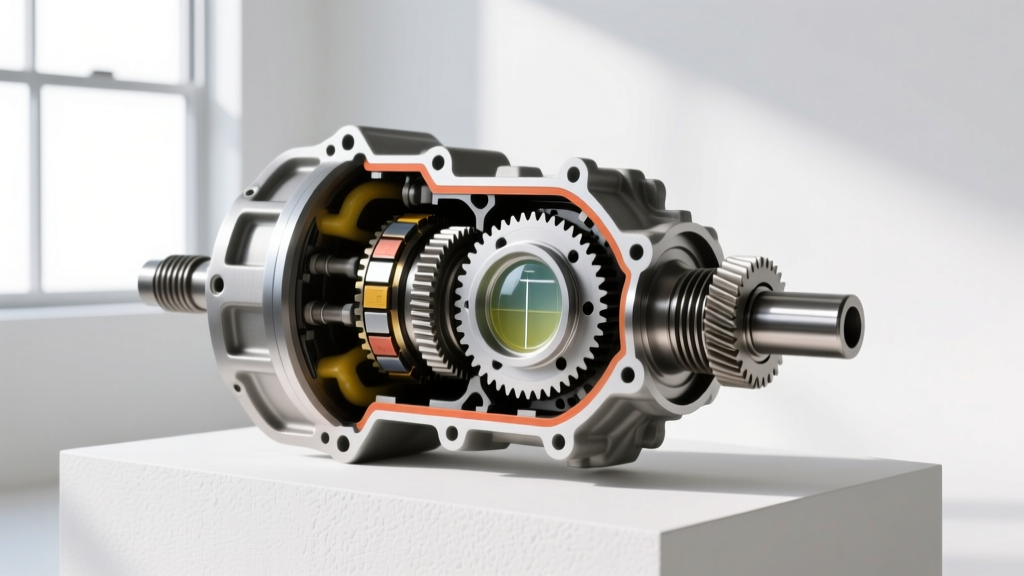
Once that rotational force reaches the axles, it hits the differential. The differential's job is to take the longitudinal rotation of the driveshaft and turn it 90 degrees to spin the wheels, while also allowing the left and right wheels to rotate at different speeds when cornering. If you have an open differential, torque will follow the path of least resistance, sending all your power to a spinning wheel in the mud. This is where the Detroit Truetrac limited slip differential steps in to save the day, but its mechanical operation directly influences how the transfer case behaves under load.
Why the Detroit Truetrac Limited Slip Differential Changes the Game
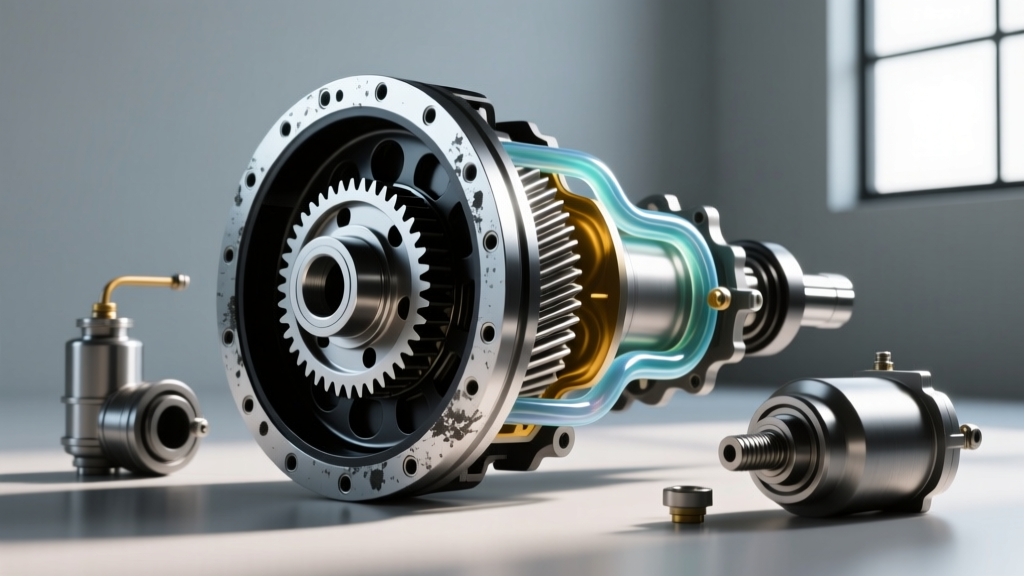
Unlike traditional clutch-pack limited-slip differentials (LSDs) that require regular rebuilding and special friction-modifier additives, the Detroit Truetrac operates on a completely different mechanical principle. It is a helical gear-type limited-slip differential. Inside the Truetrac housing, a series of helical side gears and pinion gears mesh together. When one wheel loses traction, the helical gears create internal friction and torque bias, automatically multiplying torque to the wheel that still has grip.
Because it relies on gear mesh rather than clutch packs, the Detroit Truetrac limited slip differential provides smooth, progressive engagement. For the transfer case, this means fewer sudden shock loads. When a clutch-pack LSD abruptly locks up, it can send a violent jolt of torque back up the driveshaft and into the transfer case chain and planetary gears. The Truetrac's progressive biasing (typically a 3.5:1 torque bias ratio) is much gentler on your transfer case internals, making it a favorite for heavy-duty off-road builds and daily drivers alike.
The Fluid Divide: Transfer Case vs. Differential Oils
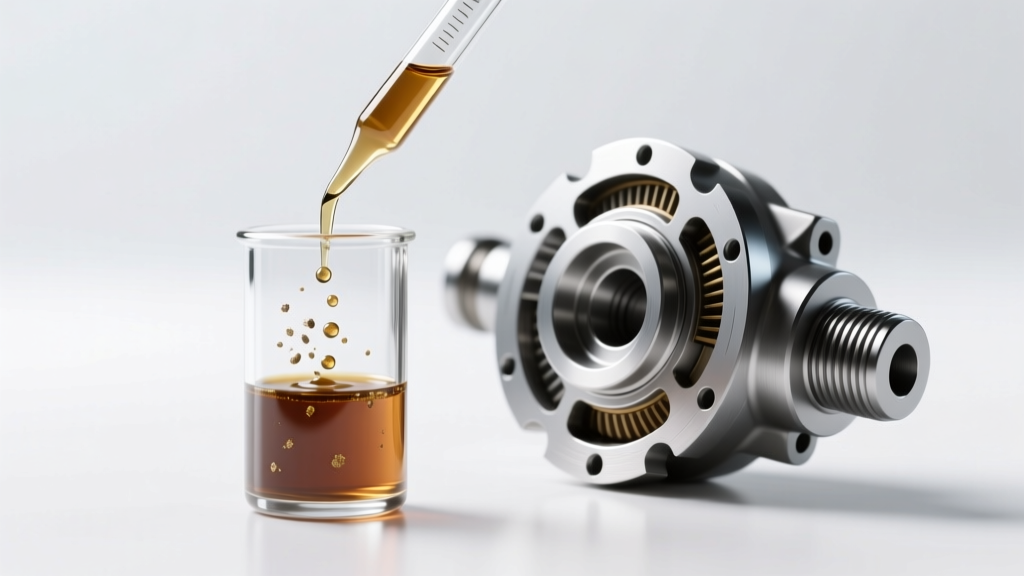
One of the most common and costly mistakes beginners make is confusing the fluids required for the transfer case and the differential. Because they are both bolted together under the vehicle and share the same general "drivetrain" category, novices often assume they use the same oil. They do not. Putting the wrong fluid in either component will lead to catastrophic failure.
Transfer Case Fluid: ATF and Chain Lubrication
Most part-time and full-time transfer cases (such as the ubiquitous NP231, NP241, or NV246) rely on an internal metal chain and planetary gearsets to split torque. These components require a fluid that can handle high-shear environments, cool clutch packs (in active AWD systems), and flow easily at cold temperatures. Therefore, transfer cases almost universally require Automatic Transmission Fluid (ATF), such as ATF+4, Dexron VI, or specialized fluids like GM Auto-Trak II. ATF contains specific friction modifiers and detergents designed for clutch material and high-RPM chain lubrication.
Differential Fluid: Hypoid Gears and the Truetrac
The differential, on the other hand, houses a ring and pinion gear set. These are hypoid gears, meaning they slide against each other under extreme pressure. This requires a thick, high-pressure gear oil, typically 75W-90 or 80W-90 GL-5. GL-5 gear oils contain extreme pressure (EP) additives, usually sulfur-phosphorus compounds, that create a sacrificial film over the gear teeth to prevent metal-on-metal welding.
Critical Beginner Warning: Many clutch-pack LSDs require a "friction modifier" additive to prevent the clutches from chattering. The Detroit Truetrac limited slip differential does not use clutches. According to Eaton's official specifications, you should never add friction modifiers to a Truetrac. Doing so will reduce the internal gear friction that the helical design relies on to bias torque, effectively ruining its limited-slip capabilities.
| Component | Typical Fluid Type | Viscosity / Spec | Friction Modifier Required? | Primary Function |
|---|---|---|---|---|
| Transfer Case (e.g., NP231) | Automatic Transmission Fluid | ATF+4 / Dexron VI | Already integrated in ATF | Chain lubrication, clutch cooling |
| Open Differential | Conventional Gear Oil | 75W-90 GL-5 | No | Hypoid gear protection |
| Clutch-Pack LSD | Conventional Gear Oil | 75W-90 GL-5 | Yes (Required) | Prevent clutch chatter |
| Detroit Truetrac LSD | Synthetic Gear Oil | 75W-90 GL-5 | No (Hinders operation) | Gear protection, helical biasing |
For the Detroit Truetrac limited slip differential, premium synthetic gear oils like AMSOIL Severe Gear 75W-90 are highly recommended. Synthetic oils maintain their film strength better under the high-heat conditions generated by the Truetrac's internal gear friction during slip events.
Driveline Binding: How the Truetrac and Transfer Case Interact on Pavement
A major point of confusion for beginners is "driveline wind-up" or binding. When you shift a part-time 4WD transfer case into "4-High" or "4-Low", a mechanical collar locks the front and rear output shafts together. They are now forced to spin at the exact same speed. However, when you turn a corner, the front wheels travel a wider arc than the rear wheels, meaning the front driveshaft must spin faster than the rear driveshaft.
If you are driving on dry pavement in locked 4WD, the tires cannot slip enough to compensate for this difference. The torque binds up in the driveshafts, transfer case chain, and axle gears, making the vehicle hop and jerk, which can snap an axle shaft or stretch the transfer case chain.
Does the Detroit Truetrac Prevent Transfer Case Binding?
The short answer is no. The Detroit Truetrac limited slip differential only manages left-to-right wheel speed differentiation across a single axle. It cannot compensate for the front-to-rear speed difference dictated by the transfer case. If your transfer case is locked in 4WD on dry pavement, you will still experience driveline wind-up, regardless of whether you have open differentials, Truetracs, or locking differentials. You must always reserve locked part-time 4WD for loose, slippery surfaces like mud, snow, or sand, where the tires can slip to relieve the binding tension.
Maintenance Checklist: Torque Specs and Fluid Capacities
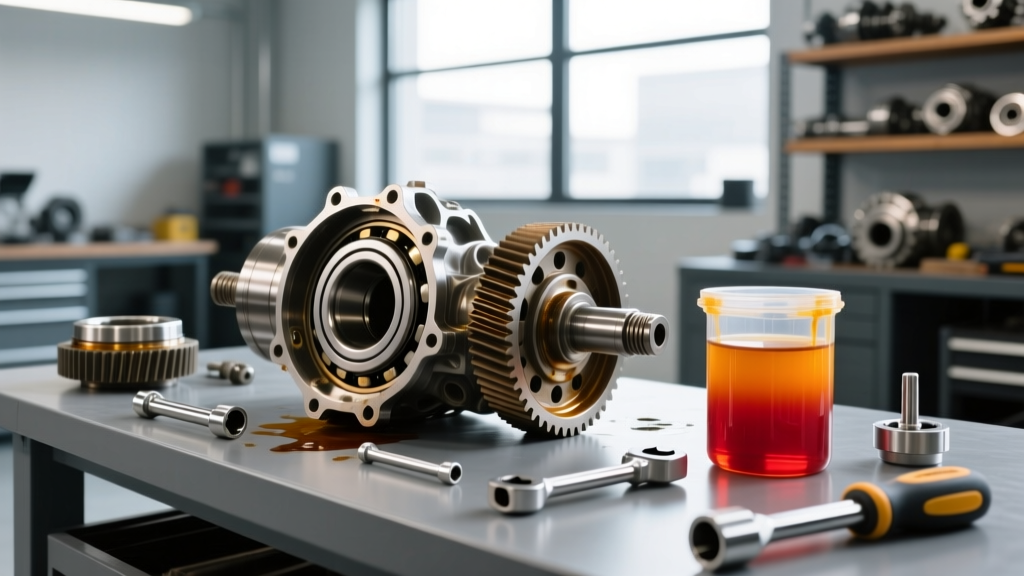
Proper maintenance of the transfer case and differential relationship requires adherence to specific torque specifications and fluid capacities. Over-tightening drain plugs can crack cast-iron or aluminum housings, while under-filling will starve the ring gear or TC chain of lubrication. Below is a reference guide for a common off-road platform (e.g., Jeep Wrangler JK with Dana 44 axles and an NP241 transfer case).
- Detroit Truetrac (Dana 44 Rear):
- Part Number Reference: 911A4850 (35-spline, 3.73 ratio)
- Fluid Capacity: ~2.0 to 2.5 Quarts (75W-90 GL-5 Synthetic)
- Fill/Drain Plug Torque: 25 - 30 lb-ft
- Cover Bolt Torque: 30 - 35 lb-ft
- Transfer Case (NP241 / NP231):
- Fluid Capacity: ~2.5 Quarts (ATF+4)
- Fill/Drain Plug Torque: 15 - 20 lb-ft (Do not over-torque aluminum plugs)
When performing a fluid service, always remove the fill plug first before removing the drain plug. If your fill plug is seized or stripped, you do not want to be left with an empty differential or transfer case and no way to refill it. For detailed housing specifications and installation guidelines, always refer to the Spicer/Dana axle service manuals or your vehicle's factory service documentation.
Final Thoughts on Drivetrain Synergy
Upgrading your rig with a Detroit Truetrac limited slip differential is one of the most reliable traction modifications you can make. By understanding how it relates to your transfer case, you ensure that your drivetrain operates harmoniously. Remember the golden rules of drivetrain fluids: keep the ATF in the transfer case, keep the GL-5 gear oil in the differential, and never introduce friction modifiers to your helical gear Truetrac. By respecting the mechanical boundaries and fluid requirements of these components, you will build a 4WD system that is capable, durable, and ready for any terrain.