Demystifying the Ring and Pinion Gear Setup on the AAM 11.5 Axle
Setting up a ring and pinion gear set is often viewed as a dark art reserved for seasoned drivetrain mechanics. However, with the right measuring tools, a methodical approach, and a solid understanding of the underlying geometry, even a dedicated beginner can achieve a factory-perfect gear setup. For heavy-duty truck owners, the American Axle Manufacturing (AAM) 11.5-inch 14-bolt rear axle—found in decades of Ram 2500 and 3500 trucks—is the perfect platform to learn on. Its massive ring gear and robust carrier design are forgiving, yet they demand precision.
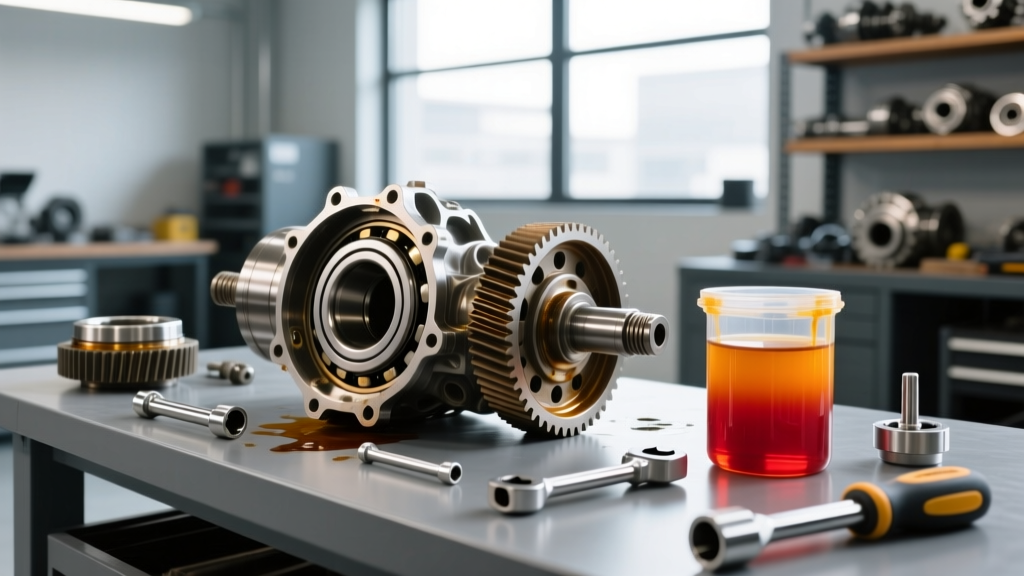
Whether you are regearing to 4.56:1 to compensate for 37-inch tires or replacing a worn-out factory set that has developed a parasitic whine, the teardown and rebuild process requires strict adherence to torque specs and clearances. And naturally, any axle teardown concludes with a meticulous cleaning and a fresh fill of the correct Ram 2500 rear differential fluid to ensure your new gears survive the break-in period.
The Big Three: Pinion Depth, Backlash, and Preload
Before turning a single wrench, you must understand the three geometric pillars of a differential setup. If any of these are off by even a few thousandths of an inch, your new gears will whine, overheat, and eventually catastrophically fail.
1. Pinion Depth
Pinion depth refers to the exact distance from the pinion gear's centerline to the ring gear's centerline. Because manufacturing tolerances vary slightly between every gear set and axle housing, pinion depth is adjusted using precision shims placed between the pinion bearing and the pinion head. On the AAM 11.5, a change as small as 0.002 inches in pinion depth will drastically alter the tooth contact pattern. Always defer to the etching on the head of your new pinion gear, which dictates the required shim deviation from the factory baseline.
2. Backlash
Backlash is the microscopic amount of "wobble" or rotational play between the ring gear and the pinion gear teeth. If backlash is too tight, the gears will bind and generate massive heat. If it is too loose, the gears will slap together under load, causing a knocking noise and chipped teeth. On the AAM 11.5 axle, backlash is adjusted by threading the side carrier bearing adjusters inward or outward. The target specification for most heavy-duty aftermarket gear sets is between 0.006" and 0.010".
3. Bearing Preload
Preload is the rotational resistance applied to the bearings to keep them seated and prevent deflection under heavy torque. There are two types to manage:
- Pinion Preload: Achieved by crushing a sacrificial steel sleeve (or torquing a solid spacer conversion kit) to apply pressure between the inner and outer pinion bearings. Target rotating torque is typically 15-25 in-lb for new bearings.
- Carrier Preload: Achieved by spreading the axle housing slightly and tapping the carrier assembly into place, or by tightening the side adjusters until a slight drag is felt on the ring gear.
Essential Tools for the 2026 DIY Drivetrain Builder
You cannot eyeball a gear setup. To do this correctly in your home garage, you will need to invest in a few specific tools. Expect to spend around $350 to $500 on tools if you do not already own them, which still pays for itself compared to a $1,200+ professional labor bill.
- Dial Indicator with Magnetic Base: ($45 - $70) Absolutely mandatory for measuring backlash to the thousandth of an inch.
- Inch-Pound Torque Wrench: ($110 - $150) Do not confuse this with a foot-pound wrench. You need an inch-pound beam or click-style wrench to measure pinion bearing rotating preload.
- Gear Marking Compound: ($15) A specialized yellow or white paste used to "read" the tooth contact pattern.
- Bearing Puller and Press: Renting a hydraulic press and bearing puller set from a local auto parts store is usually free or costs a small refundable deposit.
- Master Bearing Kit: ($150 - $220) Brands like Randy's Worldwide Automotive offer complete kits (e.g., part number RK AAM-11.5-HD) that include Timken bearings, pinion shims, crush sleeves, and ring gear bolts.
Reading the Gear Pattern: The Art of the Setup
The most critical skill in a ring and pinion setup is reading the gear pattern. By painting three or four teeth on the ring gear with marking compound and rotating the assembly under slight resistance (using a rag wrapped around the pinion yoke), you reveal exactly where the gears are mating.
Expert Insight: A perfect pattern on the AAM 11.5 will sit dead-center on the tooth face, slightly biased toward the heel (the inner edge of the ring gear) under load. If the pattern is high on the tooth (top land), your pinion depth is too shallow. If it is low on the tooth (root), your pinion depth is too deep. Never adjust backlash to fix a pinion depth issue; backlash and pinion depth are independent adjustments.
For visual references and deep-dive pattern charts, drivetrain specialists like Randy's Worldwide Automotive offer excellent visual guides that map out every possible flawed pattern and its corresponding shim adjustment.
AAM 11.5" Torque Specs & Clearances Data Table
Keep this cheat sheet handy while you are under the truck. These specifications apply to the ubiquitous AAM 11.5" 14-bolt rear axle found in Ram 2500 trucks.
| Specification | AAM 11.5" (14-Bolt) Target |
|---|---|
| Ring Gear Bolt Torque | 125 lb-ft (Must use Red 271 Loctite) |
| Pinion Nut Torque (Crush Sleeve) | 250 - 320 lb-ft (Stop crushing when preload is met) |
| Pinion Bearing Preload (New) | 15 - 25 in-lb (Rotating torque) |
| Pinion Bearing Preload (Used) | 10 - 15 in-lb (Rotating torque) |
| Backlash | 0.006" - 0.010" |
| Carrier Bearing Cap Torque | 110 lb-ft |
Sealing the Deal: Ram 2500 Rear Differential Fluid & Final Assembly
Once your pattern is perfect, your backlash is dialed in, and your adjuster lock rings are secured, it is time to button up the axle. This is where proper fluid selection becomes paramount. The Ram 2500 rear differential fluid capacity for the AAM 11.5 axle is approximately 74 ounces (2.2 quarts), though this can vary slightly depending on whether you are using the factory stamped steel cover or an aftermarket deep-sump aluminum cover like the Mag-Hytec.
Choosing the Right Gear Oil
For 2026, the industry standard for heavy-duty towing and off-road applications is a Full Synthetic 75W-90 gear oil. Mopar's OEM recommendation (Part #68218655AC) is excellent, but many enthusiasts opt for premium aftermarket options like AMSOIL Severe Gear or Valvoline Full Synthetic 75W-90. These synthetics resist thermal breakdown far better than conventional 80W-90 mineral oils, which is critical when towing heavy fifth-wheel trailers in summer heat.
The Limited-Slip Additive Trap
This is where many beginners make a catastrophic mistake. You must identify which differential carrier your Ram 2500 is equipped with before adding fluid:
- Open Differential or TracRite GT (Helical/Torsen-style): These operate on gear torque biasing and do NOT require a friction modifier additive. Adding one can actually degrade the performance of the helical gears.
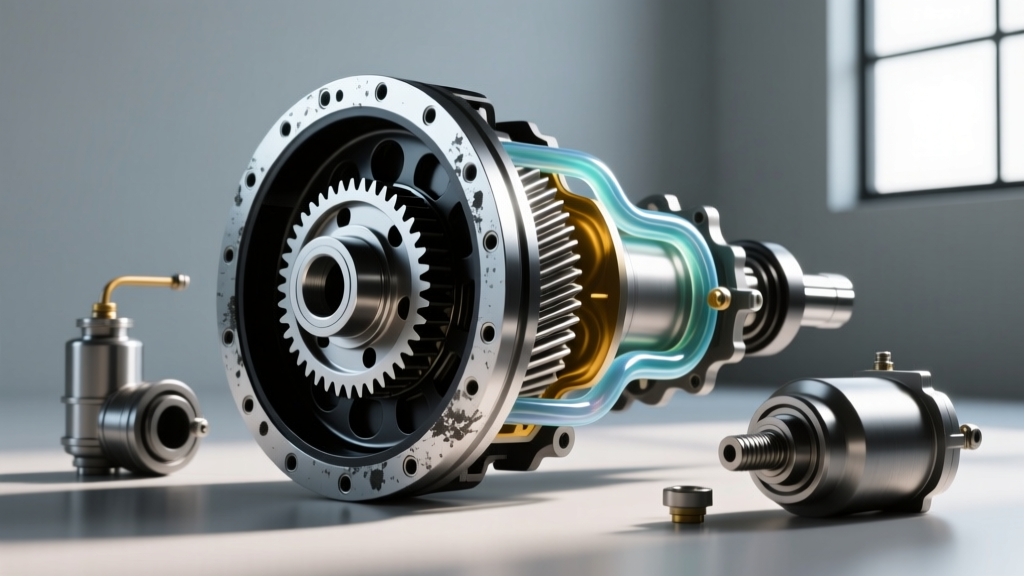
- TracRite LS (Clutch-type LSD): If your truck has a traditional clutch-pack limited-slip differential, you MUST add a friction modifier (usually a 4 oz bottle included with the gear oil or sold separately by Mopar). Without it, the clutches will chatter violently during low-speed turns, destroying the carrier in a matter of miles.
Gasket vs. RTV Silicone
The AAM 11.5 differential cover does not use a pre-formed cork or rubber gasket from the factory. Instead, American Axle Manufacturing designs the mating surfaces to be sealed with a continuous bead of RTV silicone. Use a high-temperature, oil-resistant black or grey RTV (like Permatex Ultra Black). Apply a 1/4-inch bead around the cover, let it skin over for 10 minutes before mating it to the axle housing, and torque the cover bolts in a crisscross pattern to 35 lb-ft. Wait at least two hours before filling with your Ram 2500 rear differential fluid to allow the silicone to cure and prevent leaks.
Break-In Procedure: The First 500 Miles
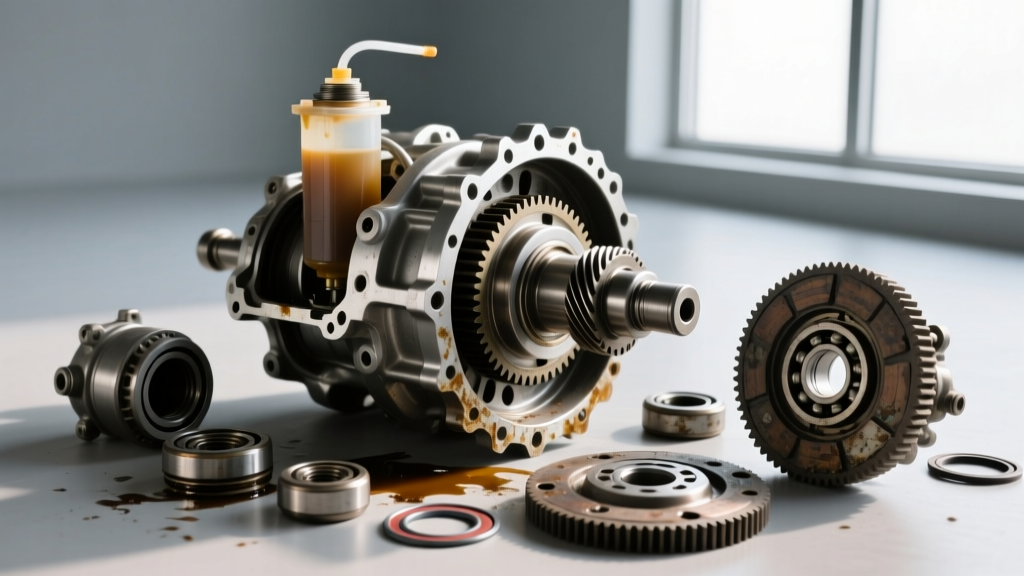
Your new ring and pinion are not ready for a cross-country towing trip the moment you drop the truck off the jack. The break-in period is critical. For the first 500 miles, avoid towing, keep speeds under 65 MPH, and allow the axle to cool down every 50-100 miles. The mating of the ring and pinion teeth generates significant friction and heat initially. After 500 miles, it is highly recommended to drain the Ram 2500 rear differential fluid one more time. This initial drain will be filled with microscopic metallic paste from the gears lapping together. Flushing it out and refilling with fresh 75W-90 synthetic will guarantee your AAM 11.5 axle runs quiet, cool, and bulletproof for the next 200,000 miles.