The Diagnostic Philosophy: A Basic Hemogram, No Differential Teardown
In the medical field, a hemogram provides a comprehensive snapshot of blood health without requiring invasive surgery. In automotive drivetrain diagnostics, we apply a similar philosophy. When a driver complains of axle whine, clunking, or chatter, the instinct of an inexperienced technician might be to immediately quote a full rebuild. However, as senior drivetrain specialists, we advocate for a basic hemogram, no differential teardown approach. By combining advanced fluid tribology (oil analysis) with precise acoustic load profiling and external mechanical checks, you can accurately diagnose ring and pinion wear, bearing failure, and limited-slip degradation without ever unbolting the differential cover or pulling the axle shafts.
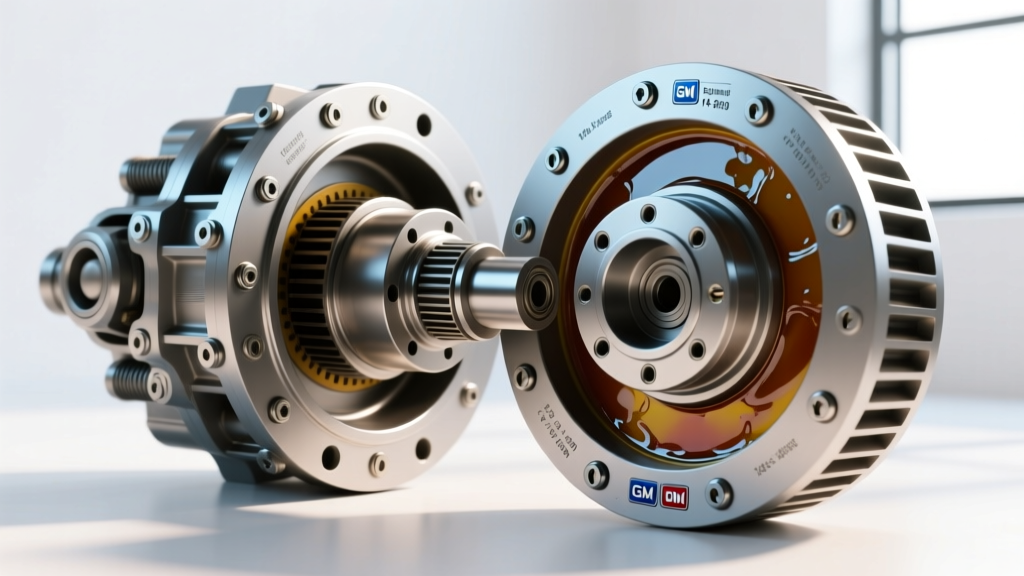
This methodology saves hours of shop time and prevents unnecessary exposure of the ring and pinion gears to contaminants. Whether you are working on a classic Dana 44, a high-mileage Ford 8.8, or a GM 9.5-inch 14-bolt semi-floating axle, mastering non-invasive diagnosis is a hallmark of true drivetrain expertise.
Phase 1: Fluid Analysis (The Drivetrain Blood Test)
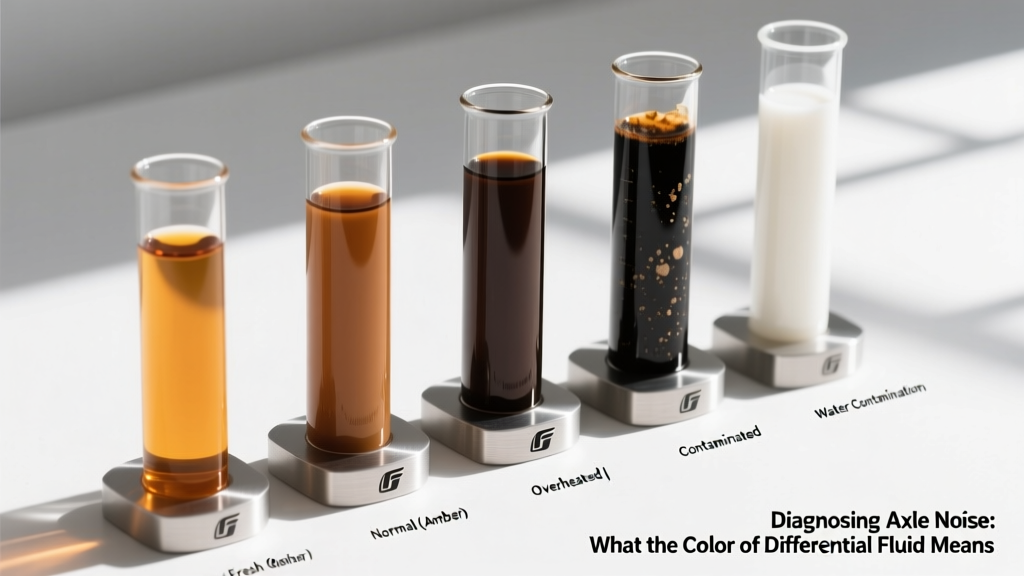
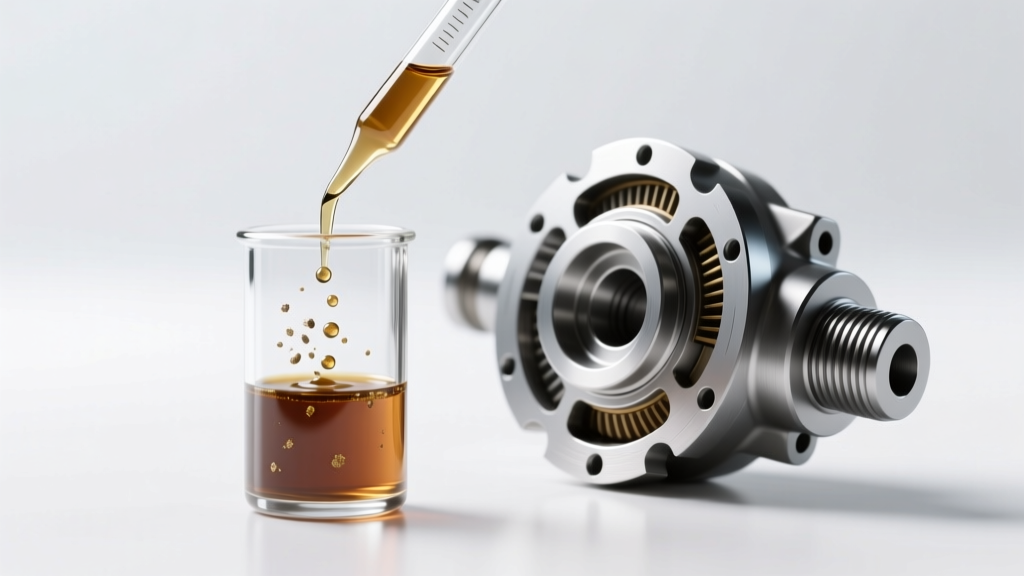
The first step in our non-invasive protocol is extracting a 100ml sample of gear oil from the fill plug. Gear oil is the lifeblood of the differential, and its condition reveals the exact internal failure mode long before catastrophic seizure occurs.
| Fluid Appearance | Particulate Type | Probable Failure Mode | Required Intervention |
|---|---|---|---|
| Dark, opaque black | None / Fine sludge | Normal thermal degradation | Standard drain and fill |
| Glitter / Metallic sheen | Micro-fine steel dust | Pinion or side bearing cage wear | Monitor; plan bearing replacement |
| Chunky / Metallic flakes | 1mm-3mm steel shards | Ring and pinion spalling or pitting | Full teardown and gear replacement |
| Milky / Chocolate milk | Emulsified water | Compromised axle seal or vent tube | Seal replacement, flush, and refill |
| Burnt smell / Bronze tint | Brass / Bronze dust | Spider gear thrust washer disintegration | Open cover; replace thrust washers |
Expert Tip: Use a rare-earth neodymium magnet wrapped in a lint-free shop towel and dip it into the fluid sample. Normal axles will attract a light, fuzzy coating of micro-dust. If you pull out wire-like strings or distinct metallic shards, the needle bearings on the pinion shaft or the side bearings have failed, necessitating a master rebuild kit installation.
Phase 2: Acoustic Load Profiling
Differential noise is highly dependent on load, deceleration, and rotational speed. By isolating the acoustic frequency, you can determine which specific gear face or bearing is failing. Utilize a wireless chassis ear or a high-quality mechanic’s stethoscope placed on the axle tube near the pinion yoke and differential cover.
Drive vs. Coast Noise Isolation
- Drive Noise (Acceleration): Whining or howling under load typically indicates wear on the convex (drive) side of the ring gear teeth or improper gear backlash. If the noise peaks between 45-55 mph, the pinion depth is likely incorrect, or the crush sleeve has collapsed slightly, altering pinion bearing preload.
- Coast Noise (Deceleration): Howling when lifting off the throttle points to wear on the concave (coast) side of the ring gear. This is common in vehicles that spend 90% of their life under acceleration and are suddenly subjected to heavy engine braking or towing.
- Constant Whine (Load Independent): If the pitch changes strictly with vehicle speed regardless of throttle position, you are listening to a failing pinion bearing. The rear pinion bearing (the one closest to the ring gear) is the most common culprit due to the immense radial loads it absorbs.
Turning and Chatter Diagnostics
If the noise manifests only during low-speed turns, the issue is isolated to the limited-slip clutch packs or spider gears. For clutch-type limited-slip differentials (LSD), a lack of friction modifier causes the clutches to bind and release rapidly, creating a rhythmic "chatter" or "hopping" sensation. Before condemning the differential, perform a chemical intervention (detailed in Phase 4).
Phase 3: External Mechanical Verification
You can verify bearing preload and yoke integrity without opening the housing. This requires a torque wrench and a dial indicator.
Pinion Yoke Play and Preload Checks
Grasp the pinion yoke at the 12 o’clock and 6 o’clock positions. Attempt to move it vertically and horizontally. Zero vertical play is acceptable. Any detectable up-and-down movement indicates severe wear in the pinion head bearing or a collapsed crush sleeve.
To check rotational preload, you must disconnect the driveshaft. Using an inch-pound torque wrench on the pinion nut, measure the torque required to rotate the pinion gear. Refer to the manufacturer specifications below:
- Dana 44 (Jeep/Off-Road): 15-25 in-lbs (used bearings) / 20-30 in-lbs (new bearings). Pinion nut torque: 200-250 lb-ft.
- Ford 8.8 (Explorer/Mustang): 8-14 in-lbs (used) / 16-29 in-lbs (new). Pinion nut torque: 200-225 lb-ft.
- GM 9.5-inch 14-Bolt: 20-30 in-lbs (used). Pinion nut torque: 250-300 lb-ft.
Source: Always verify exact rotational torque specs via the Spicer Parts Technical Support database or OEM service manuals, as variations exist based on whether the axle utilizes a crush sleeve or solid pinion spacer.
Phase 4: Chemical Interventions and Fluid Upgrades
Before resorting to a mechanical teardown for minor whines or clutch chatter, utilize advanced fluid chemistry. As of 2026, synthetic gear oils with high film-strength additives can mask minor gear pitting and extend the life of a worn differential by 30,000 to 50,000 miles.
Addressing LSD Chatter
If your basic hemogram reveals clean fluid but the axle chatters on turns, the clutch packs are starved of friction modifiers. Do not immediately rebuild. Instead, drain 4 ounces of gear oil and add a dedicated friction modifier:
- GM EOS (Part #88900338): Excellent for Eaton and Auburn LSDs. (~$14)
- Ford XL-3 (Part #UZ-19546-XL3): Formulated for Traction-Lok units. (~$11)
Drive the vehicle in tight figure-eights for 15 minutes to work the additive into the porous friction material. In 80% of chatter cases, this completely resolves the issue.
Upgrading to 75W-140 for Noise Dampening
For older axles with minor gear spalling that exhibit drive-side whine, stepping up the viscosity from 75W-90 to 75W-140 creates a thicker hydrodynamic wedge between the gear teeth. AMSOIL Severe Gear 75W-140 contains extreme pressure (EP) additives that cushion micro-pitted gear surfaces, significantly reducing acoustic resonance without altering the physical backlash.
2026 Cost Analysis: Diagnostics vs. Full Rebuild
Understanding the financial impact of the "basic hemogram, no differential"strong> approach helps justify the diagnostic time to the customer. Below is a comparison of non-invasive troubleshooting versus a full axle overhaul.
| Service Level | Parts Required | Labor Time | Estimated 2026 Cost |
|---|---|---|---|
| Fluid Analysis & Acoustic Test | Sample vial, shop supplies | 0.5 Hours | $95 - $135 |
| Chemical Intervention (Flush + Additive) | 3qts 75W-140, Friction Modifier | 1.0 Hour | $220 - $280 |
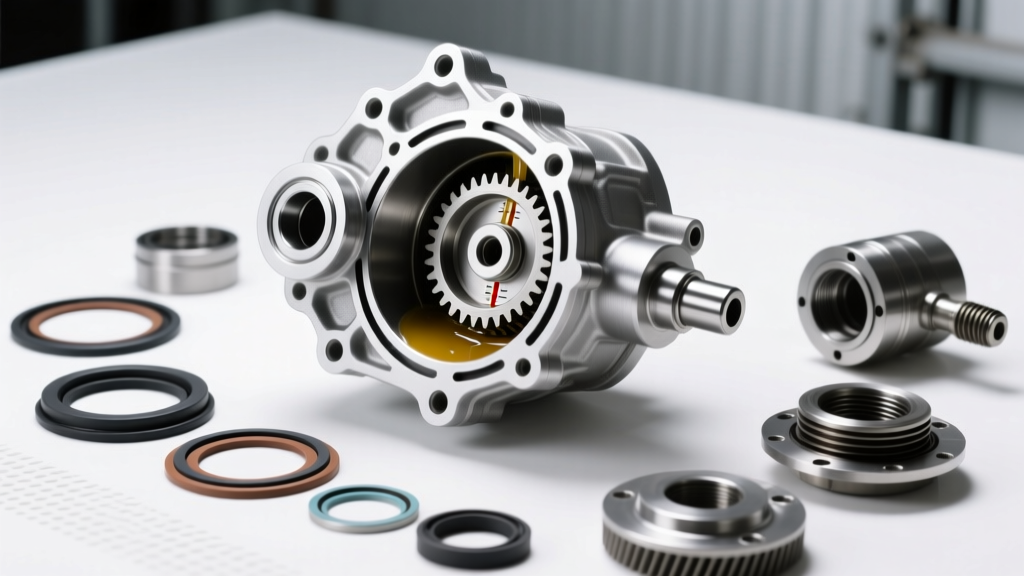
| Pinion Seal & Bearing (Partial) | Seal, Pinion Bearing, Crush Sleeve | 2.5 Hours | $550 - $750 |
| Full Master Rebuild | Master Kit (Timken), Gears, Labor | 6.0 - 8.0 Hours | $1,400 - $2,200+ |
Conclusion
Diagnosing differential noise does not always require a drain pan and a pry bar. By adopting a basic hemogram, no differential teardown methodology, technicians can leverage fluid tribology, acoustic load profiling, and external mechanical checks to pinpoint failure modes with surgical precision. Whether you are tracking down a failing pinion bearing on a Dana 60 or curing clutch chatter in a Ford 8.8, this systematic approach ensures accurate repairs, preserves customer trust, and keeps unnecessary labor hours off the shop floor.