The Drivetrain Handoff: Understanding the Core Relationship
For beginners diving into automotive mechanics, the drivetrain can seem like a maze of heavy metal components. However, the relationship between the transfer case and the rear differential is one of the most critical partnerships in any four-wheel-drive (4WD) or all-wheel-drive (AWD) vehicle. Think of the transfer case as the central dispatch center, deciding how much power goes to the front versus the rear axle. The differential, on the other hand, is the local delivery hub, taking that power and splitting it between the left and right wheels while allowing them to rotate at different speeds during cornering.
When these two systems communicate flawlessly, you get seamless traction. When they fall out of sync—often due to neglected fluid maintenance or mismatched tires—you experience drivetrain bind, clutch pack burnout, and catastrophic mechanical failure. To truly understand this relationship, we are going to use a highly specific, modern case study: the 2019 Jeep Cherokee rear differential and its unique power transfer architecture.
The 2019 Cherokee Architecture: Redefining the 'Transfer Case'
If you are coming from the world of older, solid-axle Jeep Wranglers, you might expect to find a traditional, heavy cast-iron transfer case (like the New Venture NV241) bolted to the back of a longitudinal transmission. The 2019 Jeep Cherokee (the KL platform) throws that textbook out the window. Built on a unibody crossover platform with a transverse engine layout, the 2019 Cherokee utilizes a highly sophisticated, computer-controlled system known as Jeep Active Drive.
In this modern setup, the traditional 'transfer case' and 'rear differential' roles are handled by two distinct but deeply interconnected modules:
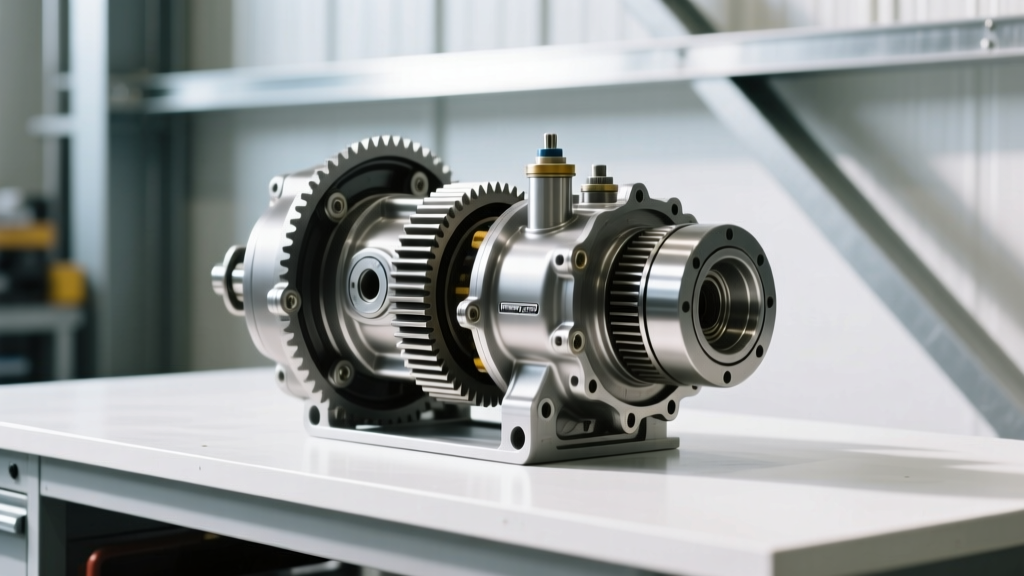
- The Power Transfer Unit (PTU): Bolted directly to the ZF 9HP 9-speed automatic transmission, the PTU acts as the transfer case. It intercepts torque from the transverse engine and redirects it rearward via a two-piece driveshaft.
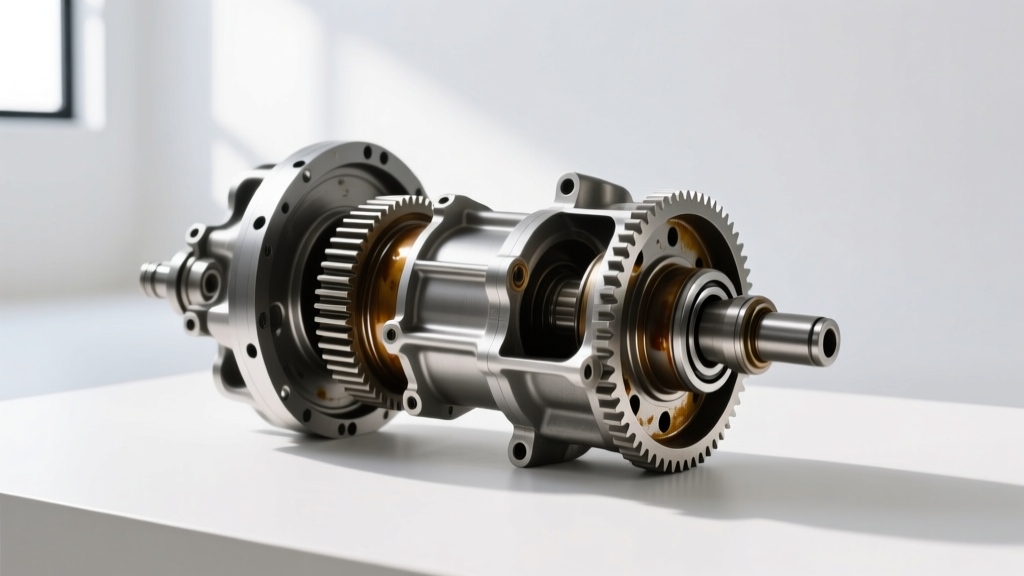
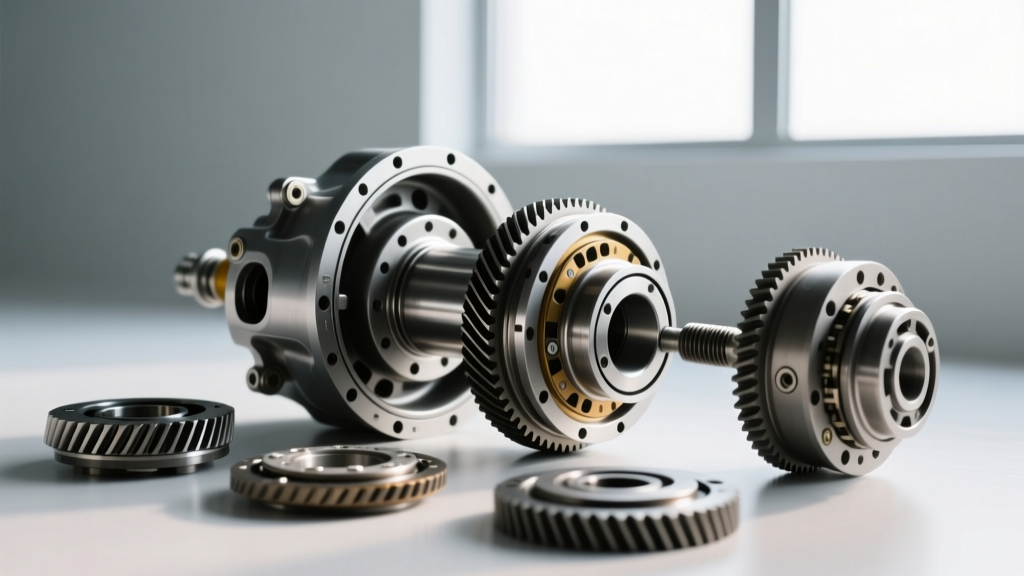
- The Rear Drive Module (RDM): This is the 2019 Jeep Cherokee rear differential. However, it is not just a simple ring-and-pinion gearset. It houses an electronically controlled wet-clutch pack that can completely disconnect the rear axle for fuel economy, or variably engage it to send up to 100% of rear-biased torque to the wheels.
Active Drive I vs. Active Drive II (Trailhawk)
The relationship between the PTU and the RDM changes slightly depending on your trim. Standard 4x4 models use Active Drive I, which relies entirely on the wet clutch packs for torque vectoring. The Trailhawk edition uses Active Drive II, which incorporates a physical low-range gear reduction inside the RDM and a mechanical locking differential capability, making the handoff between the PTU and rear axle even more vital during off-road crawling.
The Mechanical Link: Why the PTU and RDM Rely on Each Other
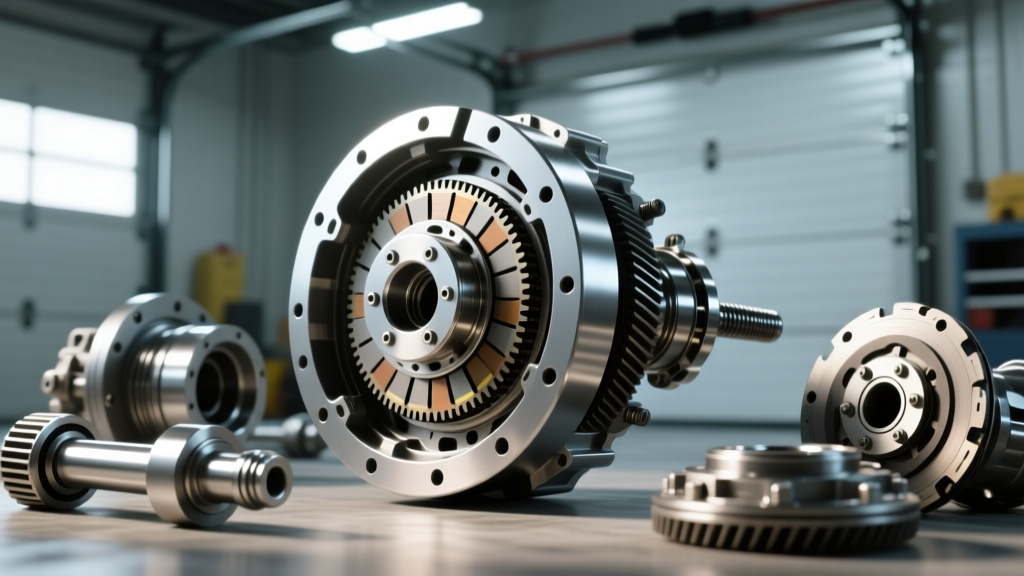
The most crucial concept for a beginner to grasp regarding the 2019 Jeep Cherokee rear differential is the wet clutch pack housed inside the RDM. Unlike an open differential that always sends power to the wheels, the Cherokee's RDM uses these clutch packs to engage and disengage the rear axle.
When the vehicle's computer detects front wheel slip, it commands the PTU to send torque down the driveshaft. Simultaneously, it commands the RDM clutch packs to compress, catching that torque and applying it to the rear ring and pinion gears. This requires immense hydraulic pressure and precise fluid lubrication.
Expert Insight: The relationship between the PTU and the RDM is entirely dependent on rotational speed parity. If the front driveshaft and rear driveshaft are spinning at different speeds on dry pavement, the clutch packs inside the RDM will micro-slip to prevent the vehicle from hopping. This micro-slipping generates extreme heat, rapidly degrading the differential fluid and glazing the clutch friction material.
The Golden Rule: Tire Circumference Tolerance
Because of this delicate mechanical relationship, tire maintenance is actually differential maintenance. Jeep and ZF engineering specifications dictate that the front and rear tire circumferences must be within 1/4 inch (approx. 6mm) of each other. If you replace only two tires, or if your front tires wear down significantly faster than your rears due to alignment issues, the rotational mismatch will force the PTU and RDM to fight each other. This is the number one cause of premature RDM failure on the KL Cherokee platform.
Fluid Dynamics: Maintaining the Relationship
To keep the transfer case (PTU) and the 2019 Jeep Cherokee rear differential (RDM) operating in harmony, strict adherence to fluid specifications is mandatory. The fluids in these units do not just lubricate gears; they act as hydraulic fluid for the clutch packs and as a coolant for the electronic actuators.
| Component | Function in Drivetrain | Required Fluid Specification | Capacity | Drain/Fill Plug Torque |
|---|---|---|---|---|
| Power Transfer Unit (PTU) | Front/Rear Torque Split (Transfer Case) | Mopar 75W-85 API GL-5 Synthetic | ~0.75 Liters | 20 Nm (15 lb-ft) |
| Rear Drive Module (RDM) | Rear Axle Power Delivery & Clutch Pack | Mopar 75W-85 API GL-5 Synthetic (Part # 68218655AA) | ~0.80 Liters | 20 Nm (15 lb-ft) |
| Front Drive Module (FDM) | Front Axle Power Delivery | Mopar 75W-85 API GL-5 Synthetic | ~0.55 Liters | 20 Nm (15 lb-ft) |
Note: Always verify your specific VIN on Mopar's official parts catalog, as Trailhawk models with the locking rear differential may require a specialized friction modifier additive to prevent clutch chatter during engagement.
Diagnosing Drivetrain Bind and RDM Wear
How do you know if the relationship between your transfer case and rear differential is breaking down? As a beginner, you should listen and feel for these specific warning signs:
- Cornering Shudder: If you feel a rhythmic hopping or shuddering from the rear of the vehicle during tight, low-speed turns (like pulling into a parking space), the RDM clutch packs are failing to disengage fully. The rear wheels are fighting the front wheels.
- Highway Whine: A distinct howling or whining noise from the rear center that changes pitch with vehicle speed indicates ring and pinion gear wear inside the RDM, often caused by running low on 75W-85 fluid.
- Dash Warnings: The 'Service 4WD System' or 'AWD System Fault' messages on the EVIC (dashboard) often trigger when the PTU and RDM speed sensors detect rotational anomalies caused by degraded fluid or worn clutch packs.
2026 Maintenance Cost Breakdown
As the 2019 Cherokee ages into its later lifecycle in 2026, proactive drivetrain maintenance is more cost-effective than ever. Replacing a complete RDM assembly can cost upwards of $2,500 to $3,500 at a dealership, whereas a fluid service is a fraction of that cost.
- Dealership RDM & PTU Fluid Service: Expect to pay between $250 and $400. Dealerships use proprietary Mopar fluids and have the software to run the 'Clutch Pack Bleed/Calibration' routine post-service, which is highly recommended.
- Independent 4x4 Shop: Typically ranges from $180 to $280. Ensure they are familiar with the ZF 9HP and Active Drive systems, as improper fill procedures can leave air pockets in the RDM clutch hydraulics.
- DIY Home Mechanic: Roughly $60 to $90 for high-quality synthetic 75W-85 GL-5 gear oil (available via retailers like RockAuto). You will need a 14mm or 3/8' Allen socket for the fill/drain plugs, a fluid transfer pump, and a digital torque wrench to properly set the aluminum plugs to 15 lb-ft to prevent stripping the RDM housing.
Final Thoughts on Drivetrain Synergy
The connection between the transfer case and the rear differential is a masterclass in modern automotive engineering. In the 2019 Jeep Cherokee, the PTU and RDM act as a single, cohesive brain, constantly calculating traction, steering angle, and throttle position to keep you moving forward. By understanding this relationship, respecting the strict tire circumference tolerances, and adhering to rigorous 75W-85 fluid change intervals, you can ensure your Cherokee's drivetrain remains bulletproof for hundreds of thousands of miles. For more deep dives into modern drivetrain architectures, explore our extensive guides on Jeep's official engineering resources and aftermarket differential upgrades.