The Drivetrain Dilemma: Open vs. Limited Slip in Modern Trucks
Whether you are prepping a 2026 Ford F-150 Tremor for the trails, maintaining a heavy-duty Chevy Silverado 2500HD, or upgrading a Jeep Wrangler Rubicon, understanding your axle configuration is the bedrock of drivetrain reliability. For truck and SUV owners, the differential is the unsung hero of off-road traction and high-speed stability. Yet, a surprisingly high number of enthusiasts remain entirely blind to what is actually housed inside their pumpkin. Knowing how to tell if you have a limited slip differential (LSD) is not just trivia; it fundamentally dictates your fluid maintenance schedule, your upgrade path, and your wheeling strategy.
An open differential routes torque to the path of least resistance, which is disastrous when one tire loses traction. A limited slip differential utilizes clutch packs, helical gears, or viscous fluids to bias torque to the wheel with grip. However, maintaining an LSD requires precise chemical and mechanical care. Let us break down the exact diagnostic methods, maintenance matrices, and performance upgrades required for modern truck and SUV axles.
How to Tell If You Have a Limited Slip Differential
Before you drain a single drop of gear oil or order a master rebuild kit, you must definitively identify your carrier type. Relying on the previous owner's word or a vague window sticker is a recipe for catastrophic drivetrain failure. Use these three proven diagnostic methods.
Method 1: The 'Two-Wheel' Spin Test
This is the most reliable mechanical test for clutch-type and helical LSDs. Safely elevate the rear axle using jack stands (never rely solely on a hydraulic floor jack). Ensure the transfer case is in 2WD (if equipped) and the transmission is in Neutral.
- Open Differential: When you rotate the driver-side wheel forward, the passenger-side wheel will spin in the opposite direction (backward).
- Limited Slip Differential: When you rotate the driver-side wheel forward, the passenger-side wheel will spin in the same direction (forward). Note: Worn clutch packs in high-mileage trucks may cause an open-diff reaction, so use this test in conjunction with Method 2.
Method 2: Decoding Axle Tags and RPO Codes
Automakers encode differential data directly into the vehicle's identification markers.
- GM Trucks/SUVs: Check the glovebox RPO (Regular Production Option) sticker. Code G80 indicates the legendary Gov-Lock (an automatic locking differential, often mistaken for an LSD). Codes like GU6 (3.42 ratio) or GT4 (3.73 ratio) denote open differentials unless paired with a specific Z71 or Trail Boss package code.
- Ford Trucks: Check the driver's door jamb certification label. Axle code 19 indicates a 3.55 Limited Slip. Code H9 denotes a 3.55 Electronic Locking Differential (ELD). Code 9 is a standard 3.55 Open.
- Dana/Spicer Axles: Look for a metal Bill of Materials (BOM) tag bolted to the differential cover. You can cross-reference this BOM number on the Dana Incorporated tech library to pull the exact factory build sheet, including carrier type and gear ratio.
Method 3: Visual Inspection of the Carrier
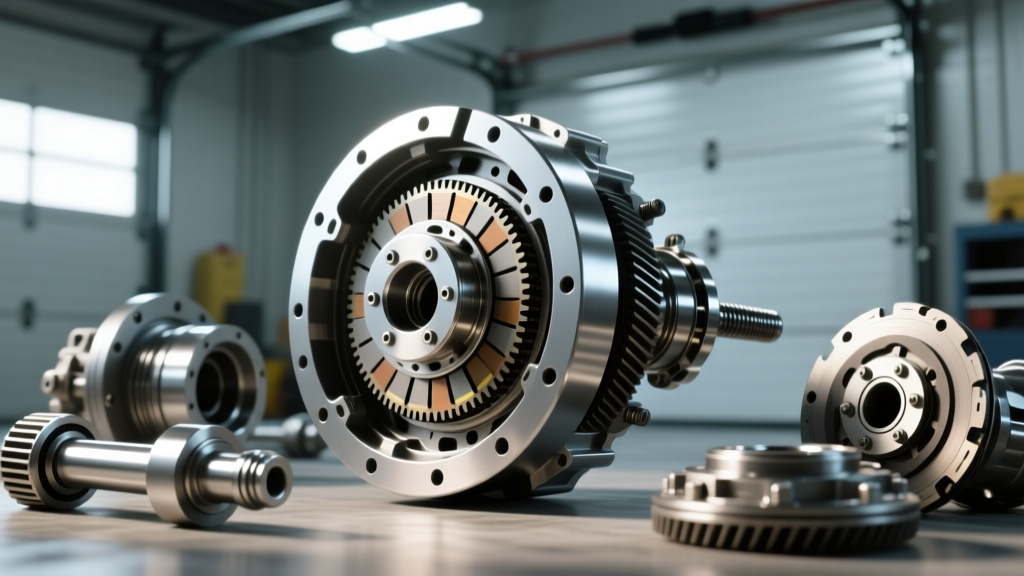
If the differential cover is already off, visual identification is immediate. An open differential features a simple spider gear cross-pin setup. A clutch-type LSD (like the Ford 8.8-inch Track-Lok) will feature alternating steel and friction clutch plates flanking the side gears, held together by a distinct preload spring (S-spring or C-springs). A helical LSD, such as the Eaton Detroit Truetrac, features a complex planetary gearset with no visible clutch packs.
Why LSD Identification Changes Your Maintenance Protocol
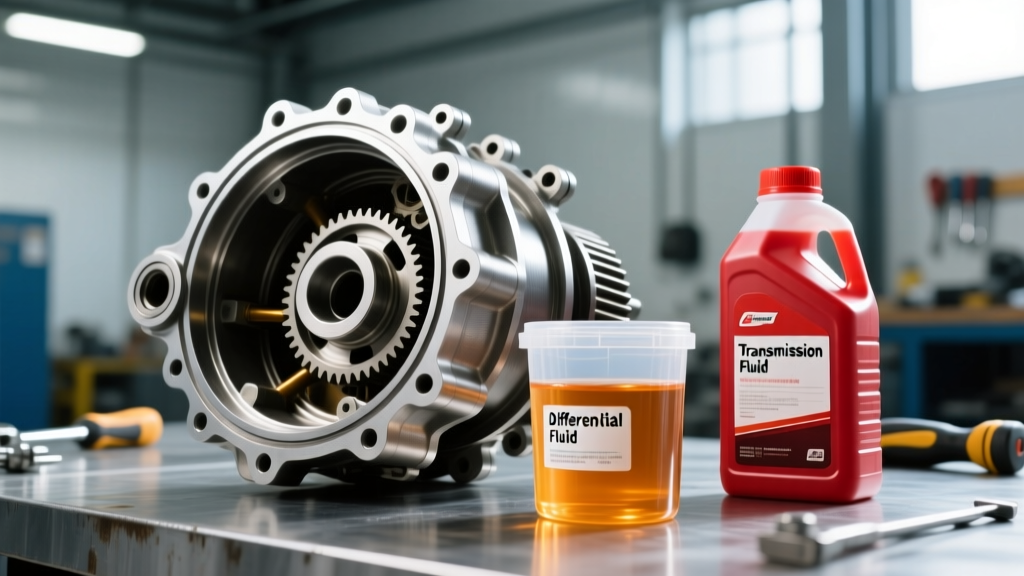
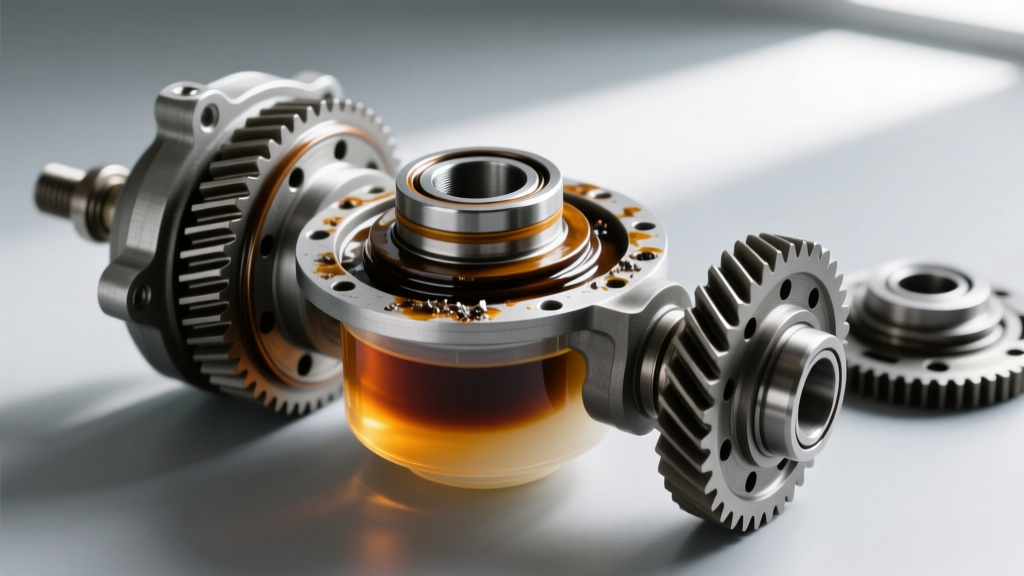
This is where the 'Performance & Upgrade' perspective becomes critical for daily maintenance. If you incorrectly service a clutch-type LSD with standard GL-5 gear oil, the clutch packs will bind, resulting in violent axle hop, chatter during low-speed turns, and premature destruction of the friction material.
Expert Insight: Clutch-type LSDs require a specific friction modifier additive (e.g., Motorcraft XL-3 or GM EOS). Helical gear LSDs (like the Truetrac) and automatic lockers (like the Detroit Locker) do not require friction modifiers. Adding modifier to a helical LSD can actually reduce its torque-biasing efficiency.
Truck & SUV Differential Maintenance Matrix
Below is a reference guide for the most common truck and SUV axles encountered in the 2026 off-road and towing landscape. Always verify exact capacities, as aftermarket deep-sump covers will alter fluid volume requirements.
| Axle Model | Common Applications | Fluid Capacity | Cover Bolt Torque | Recommended Fluid & Additive |
|---|---|---|---|---|
| Ford 8.8-inch | F-150, Explorer, Ranger | 2.0 - 2.5 Qt | 28-38 lb-ft | 75W-90 Synthetic + 4oz Friction Modifier |
| Dana 44 (JK/JL) | Jeep Wrangler, Gladiator | 2.0 Qt | 30-35 lb-ft | 75W-90 GL-5 + Modifier (if Trac-Lok) |
| GM 9.5-inch (14-bolt SF) | Silverado 2500, Suburban | 2.75 Qt | 25 lb-ft | 75W-90 Synthetic + Modifier (if G86 LSD) |
| Ford Sterling 10.5-inch | F-250/F-350 Super Duty | 3.5 - 4.0 Qt | 33 lb-ft | 75W-140 Synthetic (Heavy Towing) |
Performance Upgrades: When to Ditch the Factory Diff
Factory clutch-type LSDs are notorious for wearing out by 80,000 miles, especially in trucks used for towing or aggressive trail riding. When the clutches burn out, you are left with an expensive open differential. Upgrading the carrier is one of the highest-ROI modifications you can make for a truck or SUV.
1. The Helical Upgrade: Eaton Detroit Truetrac
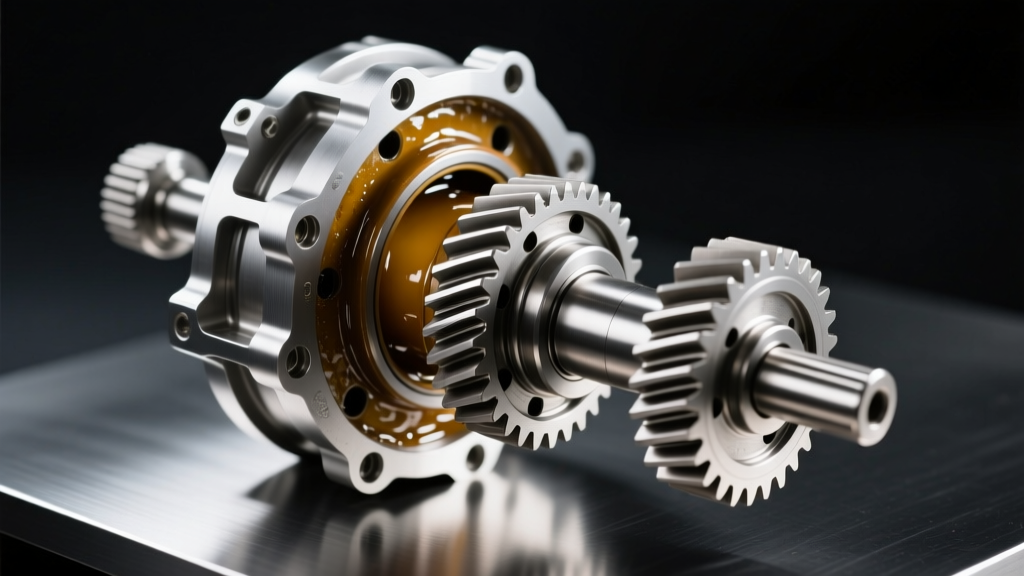
The Truetrac (Part #910A485 for Dana 44) is the gold standard for mixed-use trucks. It uses helical gears to multiply torque to the slipping wheel up to 3.5x. Because it has no clutch packs, it requires zero friction modifiers, operates completely silently, and has a virtually unlimited lifespan. Expect to pay around $750 for the carrier, plus $150 for a master rebuild kit (bearings, shims, ring gear bolts).
2. The Hardcore Locker: ARB Air Locker
For dedicated rock crawlers and deep-mud SUVs, a selectable locker like the ARB Air Locker (RD116 for Dana 44) provides 100% lockup on demand. This requires routing an air line from an onboard compressor through the axle housing, making installation significantly more complex. Carrier cost hovers around $1,100, with professional installation and compressor setup pushing the total project cost past $2,200.
For comprehensive carrier specifications and torque-biasing ratios, consult the engineering data available via Eaton Performance Differentials.
Precision Service: Executing the Perfect Fluid Change
If your truck utilizes a factory LSD, executing a flawless fluid service is paramount to eliminating drivetrain shudder.
- Prep and Drain: Warm up the axle by driving for 15 minutes. Warm fluid suspends metallic particulates, allowing them to drain out. Use a fluid transfer pump to extract oil if your axle lacks a drain plug (common on Ford 8.8 and Dana 44 setups).
- Surface Prep: Scrape the mating surfaces with a plastic gasket scraper. Do not use metal razor blades on aluminum differential covers, as gouges will cause permanent leaks. Wipe down with brake cleaner.
- Sealant Selection: If your axle uses RTV instead of a cork/rubber gasket, use a high-temp, oil-resistant silicone like Permatex Ultra Black. Apply a continuous 1/8-inch bead, ensuring you circle all bolt holes to prevent vacuum leaks.
- Fill and Additive Protocol: Install the cover and torque the bolts in a crisscross pattern to spec (e.g., 33 lb-ft for a Ford 10.5). Before filling with gear oil, pour the required friction modifier directly into the fill hole. This ensures the modifier mixes thoroughly with the 75W-90 or 75W-140 gear oil as it fills the housing.
- The Figure-8 Break-In: After filling, drive the truck to an empty parking lot. Perform 10 tight, slow-speed figure-8 maneuvers. This forces the clutch packs to slip slightly, distributing the friction modifier evenly across all friction surfaces and preventing low-speed chatter.
Final Thoughts on Drivetrain Longevity
Knowing how to tell if you have a limited slip differential is the first step toward mastering your truck's performance envelope. Whether you are preserving a factory Ford Track-Lok with meticulous fluid intervals, or ripping it out in favor of a maintenance-free Eaton Truetrac, precision and proper chemical selection are your best defenses against catastrophic axle failure. Treat your differential maintenance with the same rigor as your engine oil changes, and your rig will deliver traction when the pavement ends.