The Great Drain Plug Debate: 2003 Trailblazer & Silverado Front IFS
When servicing the front drivetrain on General Motors' legendary GMT platforms, DIY mechanics and seasoned technicians alike frequently hit a wall of confusion. The search for the 2003 Trailblazer front differential drain plug size often leads to contradictory forum posts, while Silverado owners wonder if their Independent Front Suspension (IFS) units share the same architecture. As of 2026, these trucks and SUVs are aging gracefully, but their front differentials require precise, model-specific maintenance to prevent catastrophic IFS failure.
This model-specific repair guide cuts through the noise. We will decode the exact service procedures for the GMT360 (Trailblazer/Envoy) and GMT800 (Silverado/Sierra 1500) front differentials, outline the correct fluid specifications, and dive deep into how your factory gear ratio dictates the performance and survival of your 4L60E transmission.
Trailblazer 8.25-Inch IFS: Extractor vs. Pan Drop
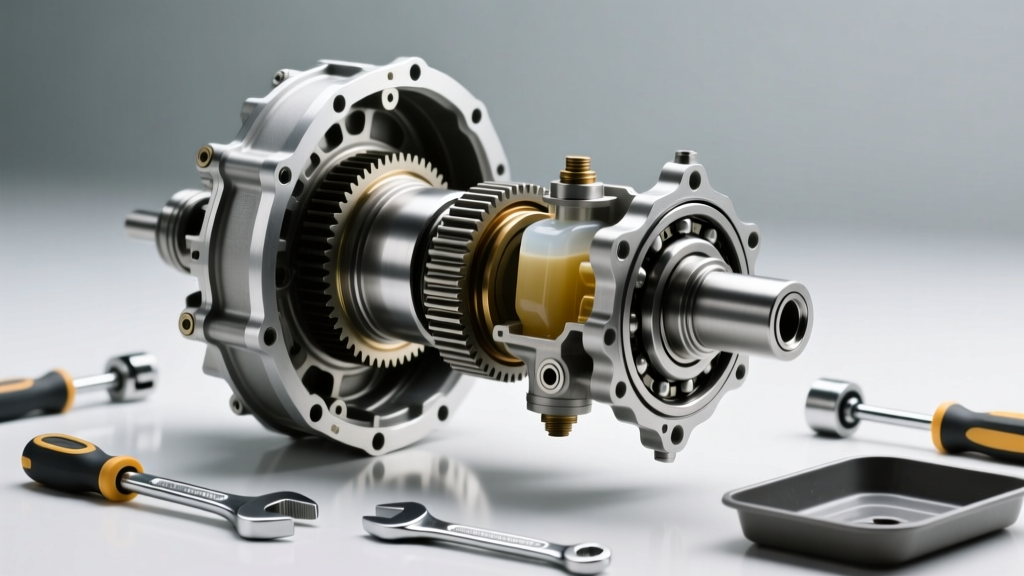
Here is the hard truth that catches many first-time GMT360 owners off guard: the 2003 Chevrolet Trailblazer front differential (8.25-inch IFS) typically does not have a dedicated drain plug.
While the fill plug is easily accessible on the rear-facing side of the differential housing and requires a 3/8-inch square drive ratchet or breaker bar, the absence of a lower drain plug means you have two options for fluid evacuation:
- The Fluid Extractor Method (Recommended): Remove the 3/8-inch square fill plug. Insert a pneumatic or manual fluid extractor tube (like a Mityvac 7272) down into the lowest point of the differential sump. Pump out the old gear oil. This takes about 15 minutes and prevents RTV seal damage.
- The Pan Drop Method: If the fluid is severely degraded or you suspect metal shavings, you must unbolt the front differential pan. The pan is secured by 12 M8 bolts. Critical Torque Spec: When reinstalling, torque these pan bolts to exactly 15 to 18 lb-ft. Over-torquing will snap the bolts inside the aluminum housing or warp the thin steel pan, guaranteeing a persistent front-end leak.
Expert Tip: If you drop the pan, do not use a cheap cork gasket. Clean both mating surfaces with brake cleaner and apply a 2mm bead of high-temperature RTV silicone (Permatex Ultra Black). Let it cure for 12 hours before refilling.
Silverado GMT800 Front Diff Service Specs
The 2003 Silverado 1500 (GMT800 platform) utilizes a slightly different front IFS setup, often featuring both a fill and a drain plug, though some early 8.25-inch IFS units mirror the Trailblazer's drain-less design. If your Silverado is equipped with a drain plug, it will also be a 3/8-inch square drive.
Fluid Capacity & Specifications:
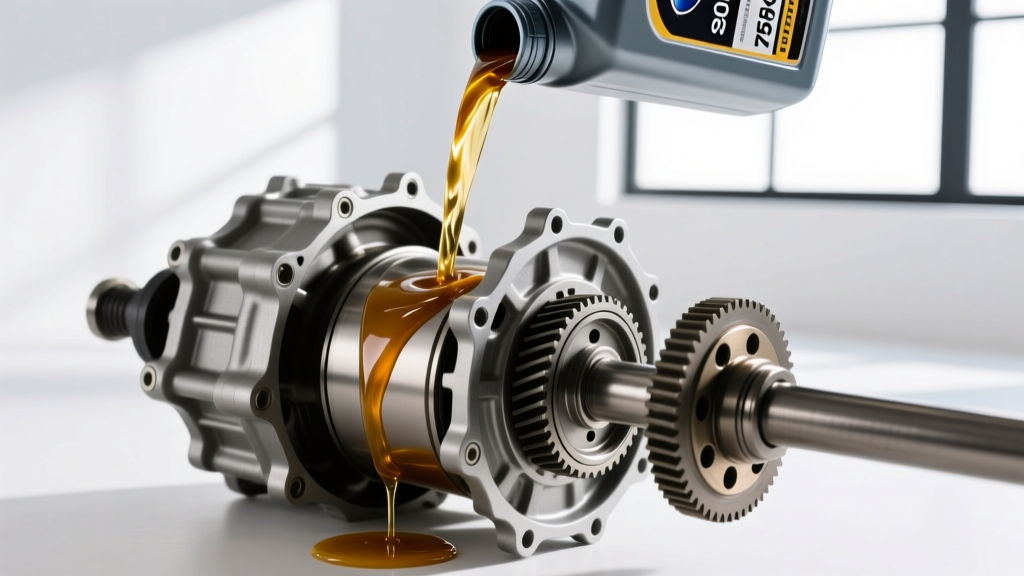
Both the Trailblazer and Silverado 1500 front differentials hold approximately 1.5 to 1.8 quarts of gear oil. GM strictly recommends 75W-90 Synthetic Gear Oil (ACDelco Part # 88862624 or Mobil 1 Synthetic 75W-90). Do not use 75W-140 in the front IFS unless you are running a dedicated, heavy-duty off-road racing setup; the thicker fluid will cause sluggish lubrication during cold starts, leading to premature ring and pinion wear.
The G80 Locker Myth: Do You Need Friction Modifier?
Many 2003 Trailblazers and Silverados are equipped with the legendary G80 RPO code, which denotes the Eaton mechanical locking rear differential. A common, costly mistake made during differential service is adding a limited-slip friction modifier to the gear oil.
Do not add friction modifier to a GM G80 locker. The G80 is a mechanical, flyweight-actuated locker, not a clutch-based limited-slip differential (LSD). Adding friction modifiers designed for Ford or Chrysler LSDs will cause the G80 locking mechanism to slip, fail to engage, and eventually destroy the internal governor. Straight 75W-90 synthetic is all the G80 requires.
Decoding GMT Platform Gear Ratios (RPO Codes)
Understanding your drivetrain performance starts with identifying your factory gear ratio. Open your glovebox and look for the silver RPO (Regular Production Option) sticker. The gear ratio is defined by a three-character alphanumeric code. Here is how the most common GMT ratios translate to real-world performance:
| RPO Code | Gear Ratio | Best Use Case | 4L60E Stress Level |
|---|---|---|---|
| GU6 | 3.42 | Highway cruising, light loads, maximum MPG | Low |
| GT4 | 3.73 | Balanced daily driving, moderate towing (up to 6,500 lbs) | Moderate |
| GT5 | 4.10 | Heavy towing, off-road crawling, oversized tires | High |
How Gear Ratios Dictate Drivetrain Performance
The gear ratio in your Trailblazer or Silverado differential acts as a torque multiplier between the transmission's output shaft and the wheels. Changing this ratio—or understanding the limits of your factory ratio—is critical for the longevity of the entire drivetrain, particularly the 4L60E automatic transmission.
The 3.42 (GU6) Highway Cruiser
The 3.42 ratio was the most common factory setup for the 2003 Trailblazer and half-ton Silverados. It keeps engine RPMs low at highway speeds (around 1,600 RPM at 70 MPH in overdrive), maximizing fuel economy. However, if you attempt to tow a 7,000 lb camper with 3.42 gears, the 4L60E transmission will constantly hunt for gears, generating massive amounts of heat in the torque converter and rapidly degrading the 3-4 clutch pack.
The 3.73 (GT4) Towing Sweet Spot
The 3.73 ratio is widely considered the golden middle ground for the GMT platforms. It provides enough low-end torque multiplication to get heavy loads moving without forcing the 4L60E to slip the clutches, while still maintaining acceptable highway manners. If your truck came with 3.42s and you plan on towing, upgrading to 3.73s is the single best modification you can make.
The 4.10 (GT5) Off-Road & Heavy Hauler
Often found in Silverado Z71 packages or trucks equipped with the 6.0L Vortec V8, the 4.10 ratio delivers aggressive off-the-line acceleration and excellent crawling control. The trade-off is severe: highway RPMs increase drastically, killing fuel economy. Furthermore, the increased torque multiplication places immense shear stress on the 4L60E's sunshell and reaction carrier. If you run 4.10 gears and tow heavy, installing an auxiliary transmission cooler and a heavy-duty 'Beast' sunshell is mandatory to prevent the transmission from tearing itself apart.
Upgrading Ratios: Ring and Pinion Swap Realities
If your 2003 Silverado or Trailblazer is lacking the torque you need, re-gearing the front and rear differentials is a viable, albeit expensive, solution. According to drivetrain specialists at Randy's Ring & Pinion, matching the front and rear ratios exactly is non-negotiable on 4WD/AWD models to prevent catastrophic transfer case binding.
Cost Breakdown & Machining Requirements
Re-gearing an IFS front differential is significantly more complex than a solid rear axle. The front IFS requires specialized pullers, bearing press work, and precise backlash shimming.
- Ring and Pinion Set (Yukon or Motive Gear): $250 - $400 per axle
- Master Install Kit (Timken Bearings & Seals): $150 - $220 per axle
- Machine Shop / Professional Labor: $800 - $1,400 per axle
- Total Estimated Cost: $1,200 to $2,000+ per axle
When sourcing parts, retailers like Summit Racing offer complete master overhaul kits that include the crush sleeve, pinion nut, and marking compound necessary for a proper gear pattern. Never reuse the old crush sleeve or pinion bearings during a ratio swap; the preload specifications must be set from scratch using new components.
Final Torque Specs and Maintenance Intervals
To ensure your front differential survives the next 100,000 miles, adhere to these critical torque specifications and service intervals:
- Fill Plug Torque: 24 lb-ft (Do not over-torque, as the aluminum housing threads strip easily).
- Differential Pan Bolts (if equipped): 15 to 18 lb-ft.
- Front Axle Shaft Nut: 140 to 160 lb-ft (Always replace with a new prevailing torque nut if removed).
- Service Interval: Under normal driving conditions, GM states the front diff fluid is 'lifetime.' As an expert recommendation for 2026, drain and refill the front IFS every 50,000 miles, or immediately after submerging the front axle in water. Water intrusion through the axle shaft seals or the vent tube will emulsify the 75W-90 fluid into a milky sludge, destroying the ring and pinion gear teeth within a few thousand miles.
Whether you are extracting fluid through a 3/8-inch square fill hole on a Trailblazer or planning a 4.10 gear swap on your Silverado, respecting the engineering nuances of the GMT front IFS is the key to unmatched drivetrain reliability. For further technical discussions on GMT platform drivetrains, the GM Truck Club forums remain an invaluable resource for owner-reported failure modes and aftermarket upgrade paths.