The Economics of AWD Maintenance: 2026 Cost Breakdown
Owning a Subaru Crosstrek means relying on the legendary Symmetrical All-Wheel Drive system to navigate everything from icy commutes to rugged backcountry trails. However, the longevity of this system hinges entirely on proper lubrication. When it comes time for a Subaru Crosstrek differential fluid change, owners are often met with conflicting advice, inflated dealership quotes, and confusion regarding gear oil specifications. As we move through 2026, inflation and supply chain shifts have altered the pricing landscape for automotive maintenance. Below, we break down the exact costs you can expect to pay, whether you hand your keys to a dealer or turn the wrenches yourself in your driveway.
Dealership vs. Independent Shop vs. DIY Pricing
The Crosstrek's rear differential is a standalone unit requiring its own dedicated gear oil service. The front differential's service requirements depend heavily on your transmission type (which we will cover in detail below). The table below outlines the estimated 2026 market rates for a rear differential fluid service across different service channels.
| Service Channel | Estimated Cost (Rear Diff Only) | What is Included? | Pros & Cons |
|---|---|---|---|
| Subaru Dealership | $130 - $180 | OEM 75W-90 Extra-S fluid, new crush washers, multi-point inspection. | Factory-trained techs, but highest labor rate ($160+/hr). |
| Independent AWD Specialist | $85 - $120 | High-quality aftermarket 75W-90 GL-5, new washers, visual axle inspection. | Better pricing, often more meticulous with torque specs than quick-lube chains. |
| DIY (Do It Yourself) | $35 - $55 | Cost of 1L premium gear oil and two OEM aluminum crush washers. | Maximum cost savings, guaranteed fluid quality, requires basic tools and ramps. |
Note: If you are driving a 6-speed manual Crosstrek, the front differential shares fluid with the manual transmission. A complete front/rear drivetrain fluid service at a dealership can push the total invoice past $350 due to the 3.7-liter capacity of the manual transaxle. DIY costs for the manual combo will hover around $90-$110 for premium fluids.
Decoding Subaru Differential Gear Oil Specifications
To understand why you are paying for this service, you must understand the chemical and mechanical demands placed on the Crosstrek's hypoid ring and pinion gears. The rear differential operates under extreme shearing forces and sliding friction. Subaru's engineering mandate requires a very specific lubricant profile to prevent catastrophic gear wear and whining noises.
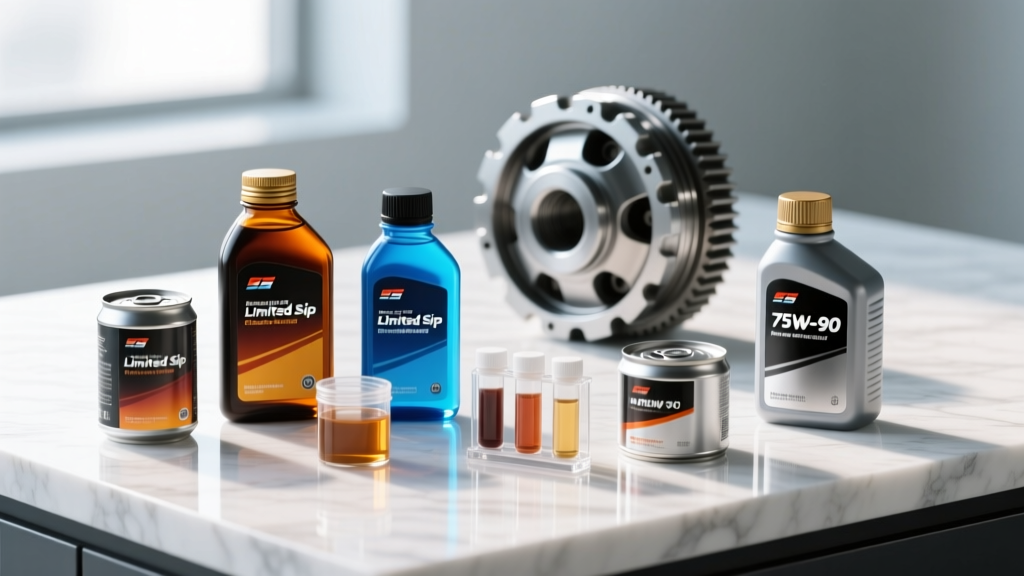
Viscosity and API Ratings: The 75W-90 GL-5 Standard
The factory specification for the Crosstrek rear differential is SAE 75W-90 API GL-5. Let us break down exactly what this means for your drivetrain:
- SAE 75W-90 Viscosity: The '75W' ensures the fluid remains pumpable and flows rapidly to the upper bearings and gear teeth during sub-zero winter cold starts. The '90' indicates the fluid's kinematic viscosity at operating temperatures (100°C), providing a thick enough hydrodynamic film to separate the hypoid gears under heavy load, such as crawling over rocks or towing.
- API GL-5 Classification: This is non-negotiable. GL-5 gear oils contain high levels of sulfur-phosphorus extreme pressure (EP) additives. When the metal gears generate intense localized heat and pressure, these additives react chemically with the metal surface to create a sacrificial solid film, preventing metal-on-metal welding and pitting. Using a GL-4 fluid in a Crosstrek rear diff will lead to accelerated gear wear and premature failure.
The 'Limited Slip Modifier' Myth
A common point of confusion on forums like Bob Is The Oil Guy is whether the Crosstrek requires a friction modifier additive. The answer is no. The Crosstrek does not use a traditional clutch-pack Limited Slip Differential (LSD) in the rear. Instead, it utilizes an open rear differential paired with Subaru's X-Mode and Active Torque Vectoring, which uses the ABS brake calipers to clamp down on a slipping wheel, redirecting torque to the wheel with grip. Because there are no internal clutch packs to chatter, adding an LSD friction modifier is unnecessary and can actually alter the fluid's frictional characteristics in ways not intended by Subaru engineers.
Front vs. Rear: The CVT vs. Manual Drivetrain Divide
This is where many generic automotive guides fail, leading to severe maintenance errors. The front differential on a Subaru Crosstrek is integrated directly into the transmission housing (the transaxle). How it is lubricated depends entirely on your pedal configuration.
Lineartronic CVT Models (Automatic)
If your Crosstrek is equipped with the Lineartronic Continuously Variable Transmission (CVT), the front differential is lubricated internally by the Subaru CVT Fluid (CVTF). There is no separate drain and fill plug for the front differential gear oil on CVT models. When you perform a CVT fluid drop-and-fill or flush using Subaru High-Torque CVTF (Part # SOA868V9270), you are simultaneously servicing the front differential. Attempting to find a front diff drain plug on a CVT Crosstrek will result in stripped bolts and frustration.
6-Speed Manual Models
If you row your own gears, your front differential shares its lubricant with the manual transmission. The entire transaxle requires approximately 3.5 to 3.7 liters of SAE 75W-90 API GL-5 gear oil. Because the fluid must also protect the synchronizers in the gearbox, many manual owners opt for specialized GL-5 fluids that are yellow-metal safe, ensuring the brass synchronizers are not corroded by the harsh sulfur additives found in cheaper, older GL-5 formulations.
OEM vs. Aftermarket: Which 75W-90 Should You Buy?
When executing a DIY Subaru Crosstrek differential fluid change, selecting the right brand is critical. Based on 2026 market availability and tribological testing, here are the top contenders that meet or exceed Subaru's exacting specifications:
- Subaru OEM Extra-S 75W-90 (Part # SOA635040): The safest bet for warranty compliance. It is a high-quality semi-synthetic fluid. Cost: ~$18 per quart.
- Red Line 75W90 GL-5 Gear Oil: A favorite among the Subaru enthusiast community. It uses a full synthetic ester base that clings exceptionally well to gear teeth, offering superior protection during high-heat off-road crawling. It is also safe for yellow metals in manual transmissions. Cost: ~$24 per quart.
- Motul Gear 300 75W-90: Another 100% synthetic ester-based option that provides incredible shear stability and low-temperature flow. Highly recommended for Crosstreks operating in extreme northern climates. Cost: ~$22 per quart.
- Liqui Moly Fully Synthetic Hypoid Gear Oil (GL-5) 75W-90: A German-engineered alternative that offers excellent wear protection and smooth operation, often priced slightly lower than Red Line. Cost: ~$19 per quart.
For deeper insights into synthetic gear oil performance metrics, refer to the testing data published by Red Line Oil's Technical Department.
Hardware, Torque Specs, and the Crush Washer Rule
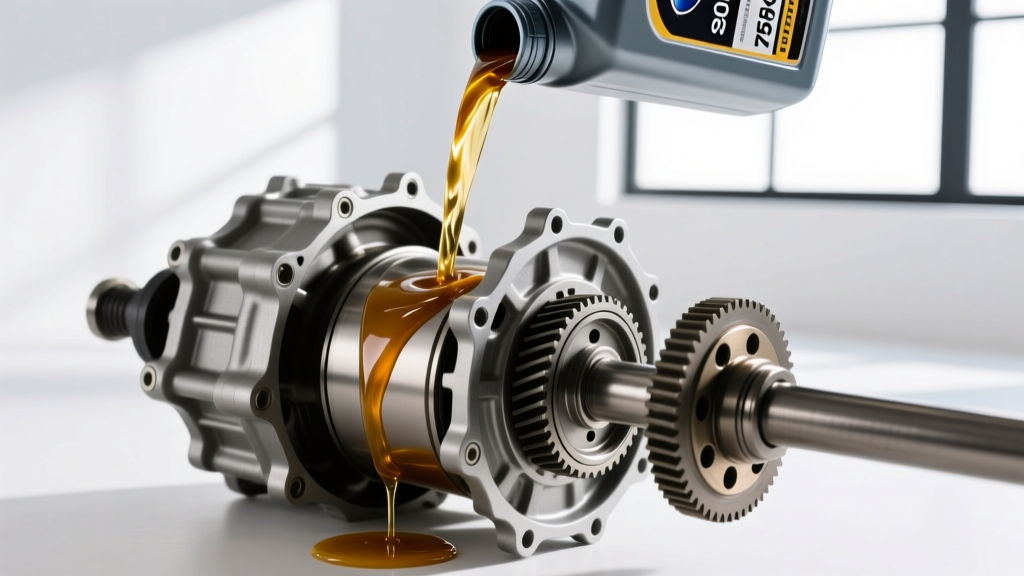
The mechanical execution of the fluid change is straightforward, but cutting corners on hardware will lead to leaks and stripped threads. The rear differential features a drain plug at the bottom and a fill plug on the front-facing side of the diff housing.
The Golden Rule: Always Open the Fill Plug First
Before you put a wrench to the drain plug, always break loose the fill plug. If the fill plug is seized, corroded, or stripped, and you drain the fluid first, your Crosstrek is effectively bricked until the plug can be extracted or the housing drilled and tapped.
Crush Washers and Part Numbers
Subaru uses aluminum crush washers to seal the drain and fill plugs against the steel differential housing. These washers deform upon tightening to create a liquid-tight seal. They are single-use items. Reusing an old, compressed washer is the leading cause of differential weeping. The standard OEM part number for the 20mm rear differential crush washer is 803926090. They cost roughly $1.50 each at the dealer. Buy four (two for drain, two for fill, just in case you drop one into the abyss of your garage floor).
Exact Torque Specifications
Over-torquing the differential plugs can crack the cast-iron or aluminum housing, leading to a $2,000+ replacement bill. Under-torquing leads to fluid loss and gear seizure. According to the Subaru of America Maintenance Documentation and factory service manuals, the precise torque specification for both the rear differential drain and fill plugs is:
44 Nm (32.5 ft-lbs)
Use a calibrated 1/2-inch drive torque wrench. Most Subaru rear diff plugs utilize a 1/2-inch square drive recess, meaning you can often use the square drive of your torque wrench or breaker bar directly without a socket, though some aftermarket replacement plugs may require a 22mm or 24mm hex bit.
Severe vs. Normal: When to Actually Change the Fluid
If you consult the official Subaru Warranty and Maintenance booklet, you will notice that under 'Normal' driving conditions, the rear differential fluid is only scheduled for 'Inspection.' Subaru only mandates a replacement under 'Severe' driving conditions (defined as frequent towing, off-road driving, driving on muddy or dusty roads, or repeated short trips in freezing temperatures) every 30,000 miles.
However, as an automotive drivetrain specialist, I strongly advise ignoring the 'Normal' schedule. The reality of modern driving—stop-and-go traffic, aggressive acceleration onto highways, and the added rotational mass of aftermarket all-terrain tires—pushes almost all Crosstreks into the 'Severe' category. Furthermore, gear oil shears down and loses its extreme-pressure additive effectiveness over time due to thermal cycling. To ensure your hypoid gears survive past 150,000 miles without developing the dreaded 'Subaru diff whine,' adopt a strict 30,000 to 50,000-mile replacement interval for your rear differential, regardless of what the dealership service advisor tells you.
Final Verdict: Is the DIY Route Worth It?
When analyzing the cost-to-benefit ratio of a Subaru Crosstrek differential fluid change in 2026, the DIY route is the undisputed winner for mechanically inclined owners. By investing $45 in premium synthetic 75W-90 GL-5 fluid and OEM crush washers, you save upwards of $100 per service compared to dealership labor rates. More importantly, you gain the peace of mind that comes from knowing exactly what chemical formulation is protecting your Symmetrical AWD system, ensuring your Crosstrek remains capable, quiet, and reliable for every adventure ahead.