The Limitations of OEM Cooling and Standard Transmission Cooler Repair
When you transition a street car into a dedicated track weapon, time-attack build, or high-horsepower drift missile, the thermal management of your drivetrain becomes a critical focal point. While routine maintenance and standard transmission cooler repair might suffice for daily drivers and light towing, performance vehicles demand a completely different engineering approach. Modern automatic transmissions generate immense heat, particularly when subjected to the sustained high-RPM torque converter slip and rapid gear cycling inherent to road course racing.
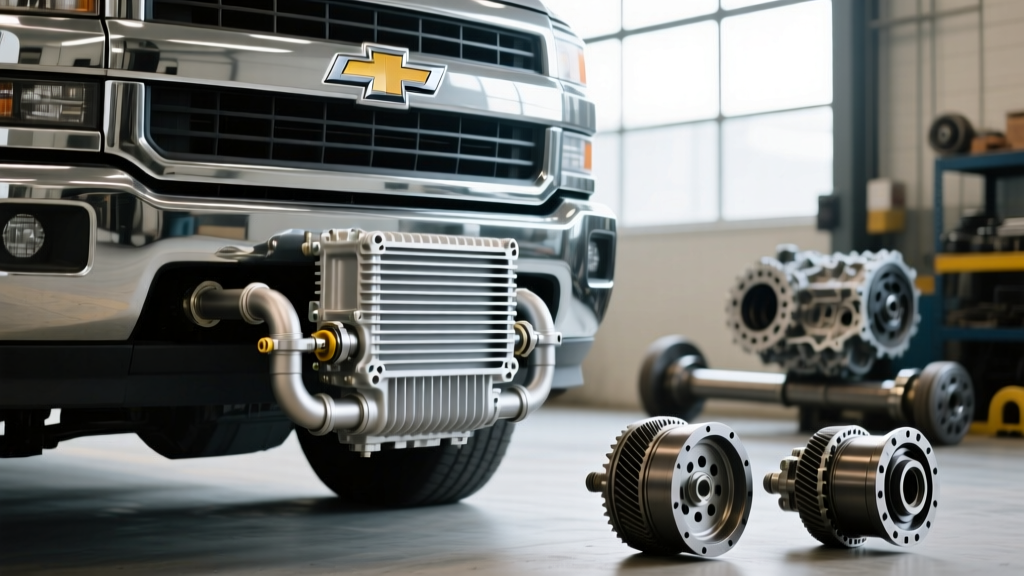
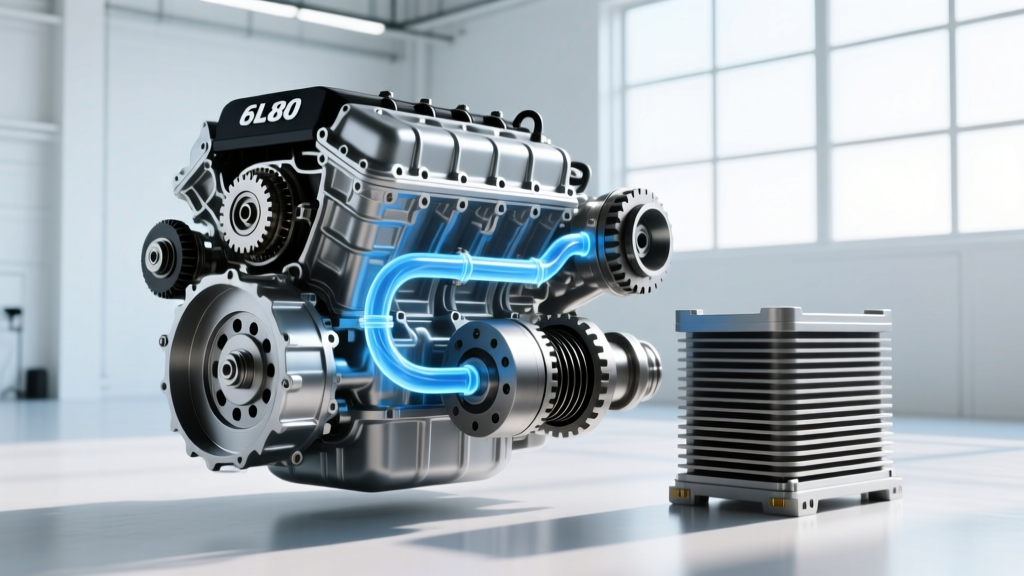
Most factory automatic transmissions, such as the GM 6L80, Ford 10R80, or the ubiquitous ZF 8HP series, rely on tube-and-fin or basic plate-and-fin heat exchangers. These OEM units are typically integrated into the vehicle's main radiator or mounted low in the front bumper. They are designed for cost-efficiency, packaging constraints, and moderate highway cruising—not the brutal 1.5G cornering loads and 250°F+ fluid temperatures seen on a closed circuit.
Catastrophic Failure Modes on Track
Under extreme track conditions, OEM coolers suffer from two primary failure modes that no basic transmission cooler repair can permanently fix:
- Thermal Saturation: Factory tube-and-fin designs lack the surface area and internal turbulence required to shed heat rapidly. Once the fluid exceeds 230°F (110°C), synthetic fluids like Dexron VI or Mobil 1 Synthetic LV ATF HP begin to oxidize, losing their shear stability and friction modifiers. This leads to immediate clutch pack glazing and catastrophic slip.
- Mechanical Fatigue and Vibration Cracking: The crimped collars and thin-walled aluminum tubes on factory coolers are notorious for developing micro-fractures under high-frequency chassis vibration. Hitting rumble strips at 130 mph sends harmonic shockwaves through the chassis that easily snap rigid OEM cooler lines and crimp fittings, resulting in instant fluid loss and a destroyed transmission.
Sizing and Selecting a Performance Stacked-Plate Cooler
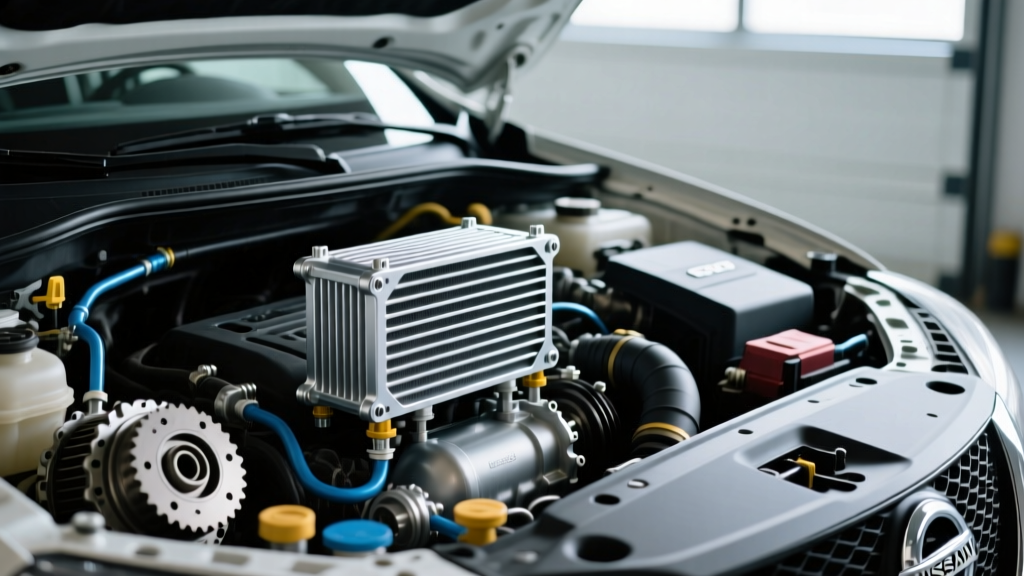
To move beyond the reactive cycle of transmission cooler repair, performance builders must upgrade to vacuum-brazed aluminum stacked-plate coolers. Brands like Setrab and Earl's Performance utilize a stacked-plate architecture that forces fluid through a series of turbulated internal fins. This design increases the fluid-to-metal contact area by up to 300% compared to tube-and-fin designs while maintaining exceptional structural rigidity.
When selecting a cooler, you must balance thermal capacity with pressure drop. A cooler that is too restrictive will starve the transmission's internal lubrication circuits, leading to bearing failure even if the fluid temperature remains low.
Performance Cooler Sizing Matrix
The following table outlines recommended stacked-plate cooler specifications based on transmission type and track usage. These recommendations assume the use of a dedicated auxiliary cooling circuit with a bypass valve.
| Transmission Model | Cooler Series / Core Size | Row Count | Est. Pressure Drop @ 2 GPM | Target Application |
|---|---|---|---|---|
| GM 6L80 / 6L90 | Setrab 50-Series (11' x 19') | 34 Rows | < 4.5 PSI | Road Course, Time Attack (500-700 WHP) |
| ZF 8HP70 / 8HP90 | Earl's Temp-Cure (10' x 18') | 30 Rows | < 3.8 PSI | Drift, Drag, High-Speed Ring |
| Ford 10R80 | Setrab 60-Series (13' x 22') | 44 Rows | < 5.2 PSI | Heavy Track Use, AWD Rally (800+ WHP) |
| Tremec TKX (Manual) | Setrab 30-Series (8' x 11') | 19 Rows | < 2.0 PSI | Endurance Racing, Fluid Cooling Only |
Plumbing the System: AN Fittings, PTFE Hoses, and Flow Dynamics
The most common mistake enthusiasts make after investing in a high-end stacked-plate cooler is choking the system with restrictive plumbing. OEM cooler lines typically utilize 3/8-inch inner diameter (ID) tubing, which correlates to an AN-6 fitting size. While adequate for a stock 4L60E cruising on the highway, an AN-6 line creates a severe pressure bottleneck when feeding a dense 34-row stacked-plate core at high engine RPMs.
Upgrading to AN-8 and PTFE
For any dedicated performance vehicle, AN-8 (1/2-inch ID) is the absolute minimum standard for transmission cooler lines. Upgrading to AN-8 reduces fluid velocity, which in turn drastically lowers the dynamic pressure drop across the plumbing. This ensures that the transmission's internal pump can maintain adequate line pressure to the clutch packs and torque converter, even when the fluid is hot and thin.
Furthermore, traditional rubber hose and stainless steel banded clamps have no place in a track car. The engine bay of a performance vehicle can easily exceed 250°F near the exhaust headers, which will bake standard rubber hoses until they blister and burst. Instead, utilize PTFE (Teflon) lined, stainless steel braided hoses, such as the Earl's Endura-Tech or Fragola ProLite series. PTFE hoses are rated for continuous operation up to 450°F, are completely impervious to aggressive synthetic ATF additives, and feature a smooth inner bore that minimizes flow restriction.
Expert Fabrication Tip: When routing PTFE braided lines, always maintain a minimum bend radius of 3 inches for AN-8 hose. Kinking a stainless braided line will internally fracture the PTFE liner, creating a hidden flap-valve that restricts flow and causes localized pressure spikes that can blow out the transmission's front pump seal.
Bypass Valves and Thermostat Integration
A critical, often overlooked aspect of performance cooling is managing cold-start fluid dynamics. Synthetic ATFs and specialized track fluids like ZF LifeguardFluid 8 or Amsoil Signature Series are engineered to operate within a specific thermal window, typically between 175°F and 200°F (80°C - 93°C). If you route cold, highly viscous 70°F fluid directly through a massive 44-row stacked-plate cooler, the pressure drop will spike dramatically. In extreme cases, the transmission's internal bypass valve will open, sending uncooled, unfiltered fluid directly to the clutch packs, resulting in immediate slip and wear.
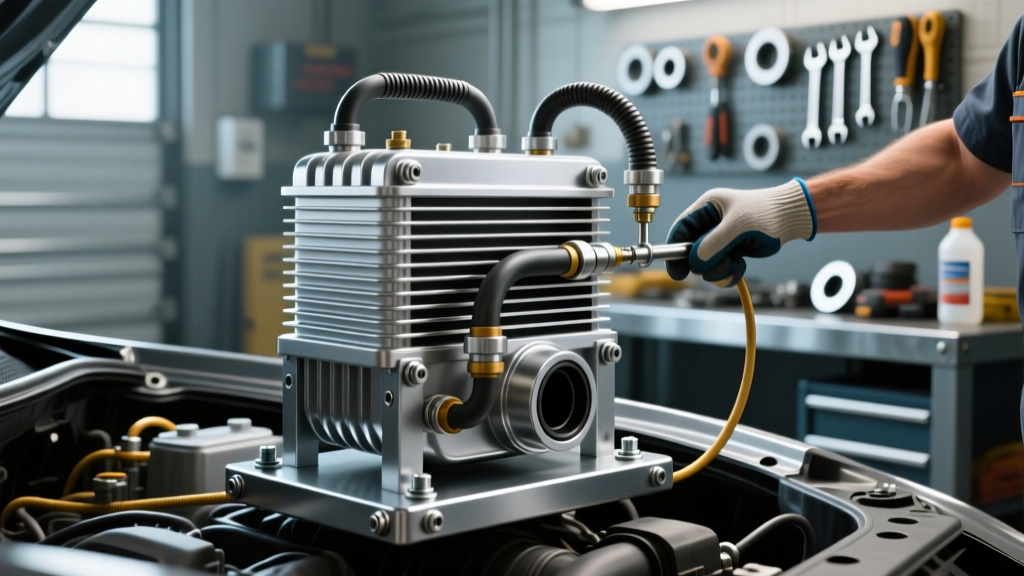
To solve this, performance builds must incorporate an inline thermostatic bypass valve or a sandwich plate adapter. Earl's Performance and Mocal offer inline thermostatic housings that route fluid back to the transmission until it reaches 180°F, at which point a wax-pellet actuator opens the port to the auxiliary cooler. This ensures rapid warm-up, protects the front pump from cavitation, and maintains optimal shift firmness during the crucial first few laps of a track session.
Installation Torque Specs and Pressure Testing
Proper installation is the final barrier between a successful track day and a trailer ride home. Vibrations from aggressive camber settings, stiff polyurethane bushings, and slick tires will quickly back out improperly torqued fittings. Always use a calibrated torque wrench when assembling your cooling circuit.
- AN-6 Aluminum Fitting to Adapter: 12-15 ft-lbs (Use assembly lube, never Teflon tape on AN flare seats).
- AN-8 Aluminum Fitting to Adapter: 18-22 ft-lbs.
- AN-8 Steel Fitting to Cast Iron Trans Case: 25-30 ft-lbs.
- Cooler Mounting Tab Bolts (M6/M8): 8-12 ft-lbs with medium-strength threadlocker (Loctite 243).
Mandatory Pre-Flight Pressure Testing
Never rely on visual inspection alone. Before filling the transmission with $20-per-quart synthetic fluid, you must pressure test the entire auxiliary cooler circuit. Disconnect the return line at the transmission and attach a hand-operated hydraulic test pump. Pressurize the cooler and lines to 120 PSI and hold for 15 minutes. This simulates the peak dynamic pressure spikes generated by the transmission pump during a violent 3-4 WOT shift. If the pressure holds steady, your plumbing is track-ready.
Finally, mount the cooler using anti-vibration bobbins (rubber isolators) rather than rigid metal tabs. This decouples the cooler from the chassis, preventing the transfer of high-frequency harmonic vibrations that cause metal fatigue in the aluminum header plates. By treating your transmission cooling system as a precision-engineered circuit rather than an afterthought, you eliminate the need for constant transmission cooler repair and ensure your drivetrain survives the punishment of the paddock.