The Anatomy of Toyota's AWD Architectures
When evaluating the long-term reliability of a crossover or SUV, understanding the intersection of mechanical engineering and manufacturer coverage is critical. The Toyota drivetrain warranty—typically covering 5 years or 60,000 miles for powertrain and drivetrain components—provides a safety net for major mechanical failures. However, how Toyota's All-Wheel Drive (AWD) systems operate directly dictates what is covered, what is classified as a wear item, and what modifications will instantly void your warranty. To navigate warranty claims successfully, owners and technicians must understand the precise mechanical operation of Toyota's AWD layouts, ranging from the traditional U760F transaxle setups to the advanced Dynamic Torque Vectoring (DTV) and E-Four hybrid systems.
The U760F Transaxle and Power Transfer Unit (PTU)
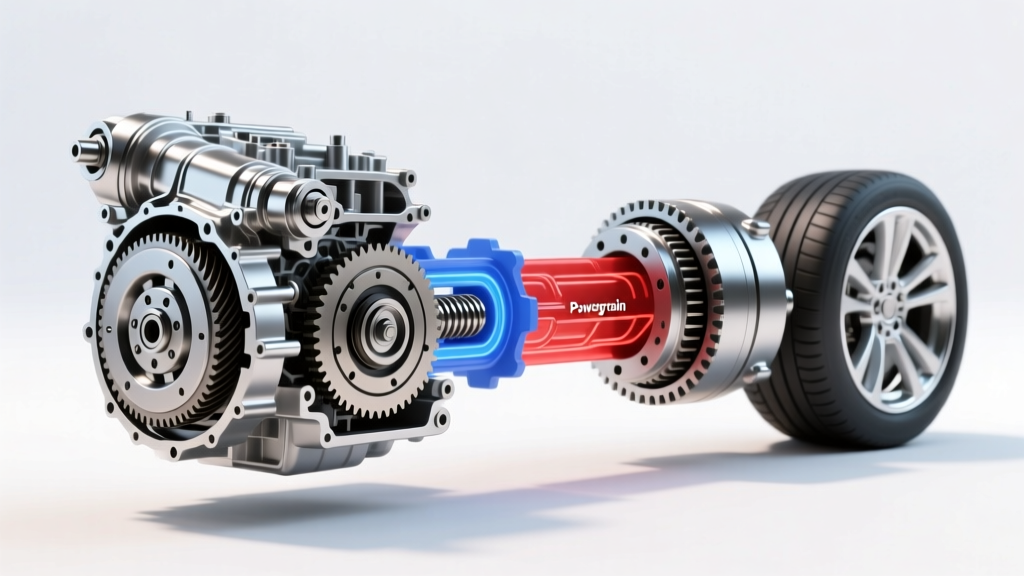
In traditional internal combustion models like the Toyota Highlander or older RAV4 generations, AWD operation is managed by the U760F 6-speed automatic transaxle. Unlike body-on-frame trucks with a standalone transfer case, this transverse-engine layout utilizes a Power Transfer Unit (PTU) bolted directly to the side of the transmission. The PTU is driven by a helical gear set branching off the front differential's ring gear. Power is sent rearward via a two-piece propeller shaft featuring a center support bearing and universal joints, terminating at a rear electromagnetic coupling and hypoid gear differential. Because the PTU shares the vehicle's chassis and is bolted to the transaxle, internal bearing failures or gear shear within the PTU are universally covered under the Toyota drivetrain warranty, provided the failure is not a result of fluid starvation or external modification.
Dynamic Torque Vectoring (DTV) AWD: A Technical Deep-Dive
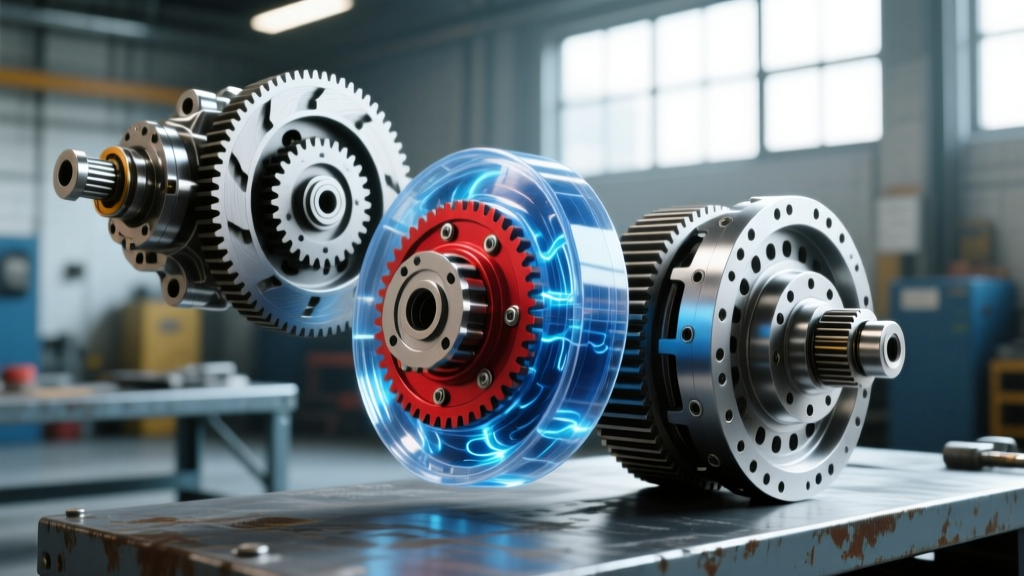
Introduced on platforms like the RAV4 Adventure and Trail editions, Toyota's DTV AWD system represents a massive leap in torque distribution mechanics. Unlike standard electromagnetic couplings that simply engage or disengage the rear axle, the DTV system utilizes a twin-cam electromagnetic clutch pack located inside the rear differential. This allows the system to independently vector torque not just front-to-rear, but side-to-side across the rear axle.
By applying pulse-width modulation (PWM) to the independent clutches, the DTV system can send up to 50% of the total drivetrain torque to the rear, and then distribute 100% of that rear torque to either the left or right wheel. Furthermore, the DTV system features a mechanical disconnect mechanism on the propeller shaft. When AWD is not required, a dog clutch disengages the rear differential and the propeller shaft simultaneously, eliminating parasitic drivetrain loss and improving fuel economy. Because this disconnect mechanism relies on precise hydraulic and electronic actuation, any failure of the internal actuator motor or dog-clutch sleeve is covered under the 5-year/60,000-mile Toyota drivetrain warranty. However, the specialized fluid inside the electromagnetic coupling is considered a maintenance item.
Contrasting the E-Four Hybrid System
It is vital to distinguish mechanical AWD from Toyota's E-Four system found in the RAV4 Hybrid and Highlander Hybrid. E-Four completely eliminates the mechanical propeller shaft, PTU, and rear electromagnetic coupling. Instead, a dedicated 40kW (or higher, depending on the generation) electric motor is mounted directly to the rear differential. Because there is no mechanical linkage to the front transaxle, the traditional 'drivetrain' warranty applies differently here. The rear electric motor (MG-R) and its associated inverter are covered under Toyota's Hybrid System Warranty (typically 8 years/100,000 miles or 10 years/150,000 miles depending on the model year), rather than the standard mechanical drivetrain warranty.
Warranty Coverage: Drivetrain Components vs. Wear Items
A frequent point of contention at the dealership service desk is the distinction between a defective drivetrain component and a degraded wear item. Under the Federal Trade Commission's Magnuson-Moss Warranty Act, manufacturers cannot void a warranty simply because an owner performed their own maintenance or used aftermarket parts, provided those parts meet OEM specifications. However, if an incorrect fluid causes a failure, the claim will be denied.
- Covered Components: Transaxle internal gears, PTU helical gears, propeller shaft CV joints, rear differential ring and pinion, DTV electromagnetic clutch housings, and factory wiring harnesses controlling the AWD system.
- Excluded Wear Items: Transfer case fluid, rear differential gear oil, propeller shaft center support bearings (if degraded due to environmental exposure rather than defect), and axle seals (unless leaking due to a machining defect on the housing).
Fluid Specifications, Capacities, and Torque Data
Maintaining the correct fluid chemistry is paramount for AWD operation and preserving warranty status. Using a generic 75W-90 GL-5 gear oil in a DTV rear differential can cause the specialized electromagnetic clutches to chatter or overheat, leading to a denied warranty claim. Below are the exact specifications for Toyota's mechanical AWD layouts.
| Component | Required Fluid Specification | Capacity (Approx.) | Drain/Fill Torque Spec |
|---|---|---|---|
| U760F Transaxle | Toyota Genuine ATF WS (00289-ATPWS) | 6.5 L (Dry Fill) | Level Plug: 39 Nm (29 ft-lbs) |
| PTU (Transfer Case) | Toyota 75W-85 GL-5 (08885-81016) | 0.45 L | 49 Nm (36 ft-lbs) |
| Rear Differential (Standard) | Toyota 75W-85 GL-5 (08885-81016) | 0.50 L | 49 Nm (36 ft-lbs) |
| Rear Differential (DTV AWD) | Toyota 75W-85 GL-5 (Specialty Friction Mod) | 0.55 L | 49 Nm (36 ft-lbs) |
| Propeller Shaft Flange | N/A (Hardware) | N/A | 74 Nm (55 ft-lbs) |
Common AWD Failure Modes and Warranty Claim Denials
The Lift Kit Caveat: CV Axle and PTU Seal Destruction
One of the most common ways owners inadvertently void their Toyota drivetrain warranty is by installing aftermarket suspension lift kits (typically 1.5 to 2.5 inches). Lifting a unibody crossover with a transverse engine and independent rear suspension drastically alters the operating angles of the front CV axles and the rear propeller shaft. The increased operating angle causes the CV joints to run hot and accelerates wear on the PTU output shaft seal. When the PTU seal fails, gear oil leaks onto the exhaust or subframe, eventually leading to PTU bearing starvation and catastrophic gear failure. Dealerships will routinely flag the modified suspension geometry as the root cause of the failure, resulting in a denied drivetrain warranty claim and a $2,500+ out-of-pocket replacement bill for the PTU assembly.
Towing Beyond Capacity and Coupling Burnout
The electromagnetic coupling in standard Toyota AWD systems is designed for slip-and-grip scenarios, such as launching on wet pavement or navigating light snow. It is not designed for continuous high-load slip conditions. Owners who frequently tow near the vehicle's maximum capacity (e.g., 3,500 lbs on a properly equipped RAV4) in hot climates can cause the electromagnetic clutch fluid to overheat and degrade. If the coupling burns out and the dealer finds evidence of severe thermal degradation without a corresponding mechanical defect, the claim may be classified as 'abuse' or 'lack of maintenance under severe conditions,' bypassing warranty coverage.
Actionable Maintenance to Protect Your Warranty Status
To ensure your Toyota drivetrain warranty remains intact and your AWD system operates flawlessly, adhere to these technical maintenance protocols:
- Adhere to 'Severe' Fluid Intervals: If you tow, drive in mountainous terrain, or frequently engage the AWD system in deep snow, ignore the 'lifetime' fluid designation. Drain and refill the PTU and rear differential gear oil every 30,000 miles using the exact OEM part numbers listed above.
- Inspect the Propeller Shaft Center Bearing: During every oil change, have the technician check the rubber isolator on the propeller shaft center support bearing. Cracking in this rubber allows the shaft to sag, altering the U-joint operating angle and leading to premature joint failure (which is not covered if caused by environmental dry-rot).
- Document Fluid Purchases: If you perform your own driveline fluid changes, keep itemized receipts for the Toyota Genuine fluids. Under the Magnuson-Moss Act, the burden of proof is on the manufacturer to prove your aftermarket fluid caused a failure, but having receipts for OEM fluid completely neutralizes their ability to deny a PTU or differential claim.
Understanding the precise mechanical operation of your Toyota's AWD system transforms the drivetrain warranty from a confusing legal document into a clear, actionable maintenance roadmap. By respecting the engineering tolerances of the PTU, DTV couplings, and fluid specifications, you ensure maximum traction and unassailable warranty coverage.