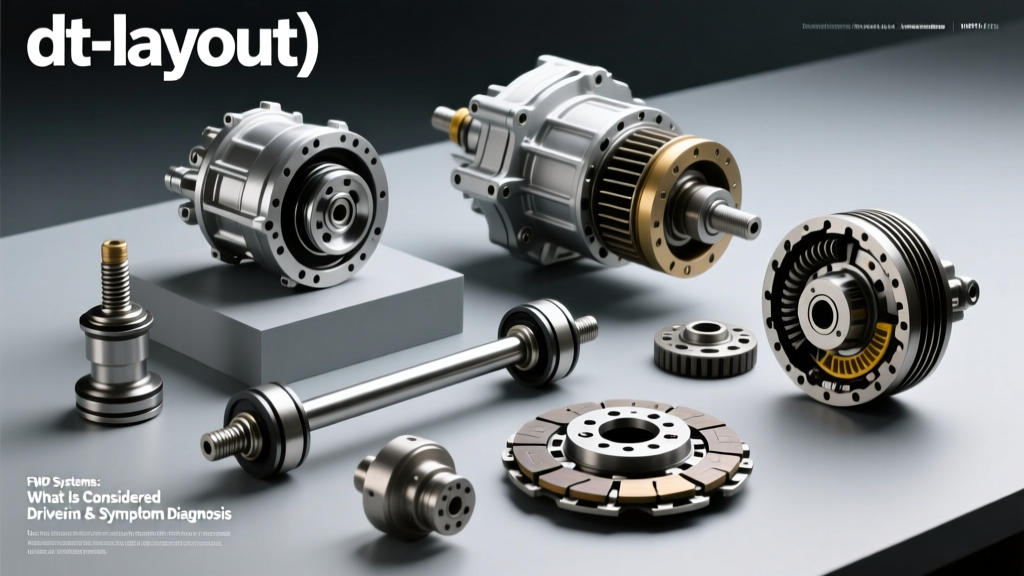
In a transverse front-wheel drive (FWD) architecture, the engine and torque converter belong to the powertrain. However, the moment torque passes through the transaxle's final drive and out to the half-shafts, you have crossed the boundary into the drivetrain.
When a dashboard warning illuminates, or a metallic clunk echoes from the front wheel wells during a tight turn, technicians and enthusiasts alike must ask: what is considered drivetrain in a front-wheel drive layout? Unlike longitudinal rear-wheel-drive configurations where the transmission, driveshaft, and rear differential are distinctly separated, FWD systems package the transmission and differential into a single, oil-bathed unit known as a transaxle. Understanding this integration is critical for accurate symptom diagnosis, noise-vibration-harshness (NVH) isolation, and cost-effective repairs in 2026.
The FWD Powerflow: Delineating Powertrain vs. Drivetrain
To diagnose a fault, you must first define the boundaries of the system. The powertrain encompasses all components that generate and transmit power up to the point of final gear reduction. The drivetrain includes everything that transfers that reduced, high-torque output to the road surface.
- Powertrain Components: Internal combustion engine (or EV traction motor), torque converter, flywheel, and the transaxle's internal planetary gearsets and clutch packs.
- Drivetrain Components: The transaxle's final drive ring and pinion, the differential carrier and spider gears, the intermediate shaft (if equipped), the left and right half-shafts (drive axles), the inner and outer Constant Velocity (CV) joints, and the wheel hub/bearing assemblies.
If a vehicle experiences a harsh 1-2 shift, the fault typically lies within the powertrain (valve body, clutch pack, or solenoid). If the vehicle shudders violently only when accelerating through a 45-degree turn, the fault is isolated squarely within the drivetrain (outer CV joint).
Core FWD Drivetrain Components & Common Failure Modes
1. The Transaxle Final Drive and Differential
In popular FWD transaxles like the GM 6T40 (Gen 2/3) or the Aisin TF-80SC, the final drive operates in the same fluid sump as the transmission gearsets. A common failure mode, heavily documented by Transmission Digest, involves the fracture of internal transmission wave plates (such as the 3-5-R wave plate in the 6T40). The resulting metal debris circulates through the fluid and destroys the differential carrier bearings and ring-and-pinion gear surfaces, leading to a high-pitched whine that mimics a failing wheel bearing.
2. The Intermediate Shaft and Support Bearing
To combat torque steer in high-output FWD vehicles, engineers utilize an intermediate shaft. This setup equalizes the length of the left and right half-shafts, ensuring identical CV joint operating angles. The intermediate shaft is supported by a bracket and bearing bolted to the rear of the engine block. When this support bearing fails, it introduces a high-speed, lateral vibration that is often misdiagnosed as a tire balance issue or a warped brake rotor.
3. Half-Shafts and CV Joints
FWD half-shafts utilize two distinct CV joint designs to manage suspension travel and steering angles:
- Outer Joints (Rzeppa Design): Operate at extreme angles during steering. Failure of the protective neoprene boot allows moisture ingress and grease starvation, resulting in the classic 'clicking' or 'popping' noise during tight, low-speed turns.
- Inner Joints (Tripod/Plunging Design): Allow for in-and-out plunging as the suspension compresses and rebounds. Wear in the tripod roller bearings or the housing tulip causes a pronounced lateral shudder or 'binding' sensation under heavy acceleration.
2026 FWD Drivetrain Symptom Diagnosis Matrix
Use the following matrix to isolate drivetrain faults based on operating conditions and NVH signatures. Repair costs reflect 2026 national averages for independent European and Domestic specialists.
| Symptom Signature | Operating Condition | Primary Drivetrain Suspect | Verification Test | Est. 2026 Cost |
|---|---|---|---|---|
| Rhythmic clicking/popping | Low-speed, full-lock steering turns | Outer CV Joint (Rzeppa) | Inspect boot for grease sling; load-test on hoist while turning wheels by hand. | $250 - $450 (Per side) |
| Lateral shudder / binding | Hard acceleration from a stop or highway merging | Inner CV Joint (Tripod housing wear) | Check for excessive plunge play; inspect for pitting inside the tulip housing. | $250 - $450 (Per side) |
| High-frequency whine | Load-dependent (changes pitch on accel vs. coast) | Transaxle Final Drive / Differential Bearings | Stethoscope test on transaxle case; fluid analysis for ferrous glitter. | $3,500 - $5,500 (Rebuild/Replace) |
| Clunk on gear engagement | Shifting from Park to Drive or Reverse | Excessive differential pinion backlash or worn engine mount | Check engine mounts first; measure half-shaft rotational free-play. | $150 (Mount) / $4,000+ (Transaxle) |
| High-speed steering wheel shimmy | 65-80 MPH, independent of braking | Intermediate shaft support bearing or bent half-shaft | Run-out dial indicator test on half-shaft; check intermediate bearing for axial play. | $180 - $350 (Bearing/Bracket) |
Advanced Troubleshooting: Isolating Transaxle vs. Hub Noise
One of the most frequent diagnostic errors in FWD vehicles is confusing a failing wheel hub bearing with a worn transaxle differential. Because both components are located within inches of each other inside the front wheel well, acoustic transfer makes isolation difficult. AA1Car Automotive Diagnostics recommends the following Load-Shift and Coast-Down methodology to separate the two:
The Lateral vs. Longitudinal Load Test
- Wheel Bearing (Lateral Load): A failing wheel bearing will change its acoustic pitch when lateral weight is transferred. If the hum gets louder when swerving to the right (loading the left bearing), the left wheel hub is the culprit.
- Differential Whine (Longitudinal Load): A worn ring-and-pinion or differential bearing will change pitch based on torque application. If the whine is prominent under acceleration (drive face of the gear teeth loaded) but disappears when you lift off the throttle and coast (coast face loaded), the fault is internal to the transaxle final drive.
Expert Tip: In modern EVs and Hybrids utilizing FWD layouts (e.g., Hyundai Ioniq 5 FWD variants or Toyota Prius transaxles), the absence of engine masking noise makes differential whine highly apparent. Utilize wireless chassis ears attached to the transaxle differential cover and the steering knuckles to definitively pinpoint the frequency source.
Critical Torque Specifications and Fluid Standards
Proper reassembly of FWD drivetrain components requires strict adherence to torque-to-yield (TTY) protocols and precise fluid tribology standards. According to SAE International, the shift toward Ultra Low Viscosity (ULV) fluids in modern transaxles means that cross-contamination or incorrect fluid top-offs will rapidly destroy both the transmission clutches and the differential bearings.
Essential FWD Drivetrain Fastener Specs
- Front Axle (Hub) Nuts: Almost universally TTY. They must never be reused.
- GM (e.g., 6T40/6T45 platforms): 155 lb-ft (210 Nm) + 45 degrees of additional rotation.
- Honda/Acura (e.g., MM7A/6-speed auto): 180 lb-ft (245 Nm) in a single, continuous pull.
- Toyota/Lexus (e.g., Aisin U-series): 159 lb-ft (216 Nm).
- Intermediate Shaft Support Bracket Bolts: Typically 37-50 lb-ft (50-68 Nm). Always apply a medium-strength threadlocker (e.g., Loctite 243) as these are subject to high-frequency harmonic vibration.
- Transaxle-to-Engine Block Bolts: Varies by bellhousing pattern, but upper structural bolts often require 55-75 lb-ft. Ensure alignment dowels are seated to prevent differential misalignment and subsequent gear whine.
2026 Fluid Standards for Integrated Transaxles
Because the FWD drivetrain shares fluid with the transmission hydraulics, you must use the exact OEM specification. Using a generic 'multi-vehicle' ATF in a 2024-2026 FWD transaxle will lead to torque converter shudder and differential starvation.
- GM Dexron ULV (Ultra Low Viscosity): Required for GM 9-speed and 10-speed FWD transaxles. Distinctly incompatible with older Dexron VI.
- Toyota/Lexus WS (World Standard): Standard for most Aisin-built FWD transaxles. Low friction coefficient designed for specific lock-up clutch materials.
- Honda ATF Type 2.0 / HCF-2: Strictly required for Honda CVTs and traditional FWD automatics to maintain proper differential gear lubrication and clutch engagement.
Final Diagnostic Takeaway
When evaluating what is considered drivetrain in a front-wheel drive vehicle, remember that the transaxle acts as the bridge between the powertrain and the road. Accurate diagnosis relies on isolating variables: separate lateral loads from longitudinal loads, distinguish between powertrain shifting faults and drivetrain rotational faults, and never compromise on TTY fastener replacement or OEM fluid specifications. By treating the FWD half-shafts, CV joints, and final drive as an integrated rotational ecosystem, you can eliminate guesswork and deliver definitive, long-lasting repairs.