The Architecture of Toyota AWD: Where is the "Center" Differential?
When diagnosing driveline binding, shudder, or torque-transfer failures in modern Toyota SUVs—ranging from the RAV4 and Highlander to the Sienna and Venza—technicians and owners often search for the "center differential." However, unlike traditional longitudinal 4WD trucks that utilize a physical center differential or transfer case in the middle of the chassis, Toyota’s transverse-engine AWD platforms handle center-differential duties through a radically different architecture.
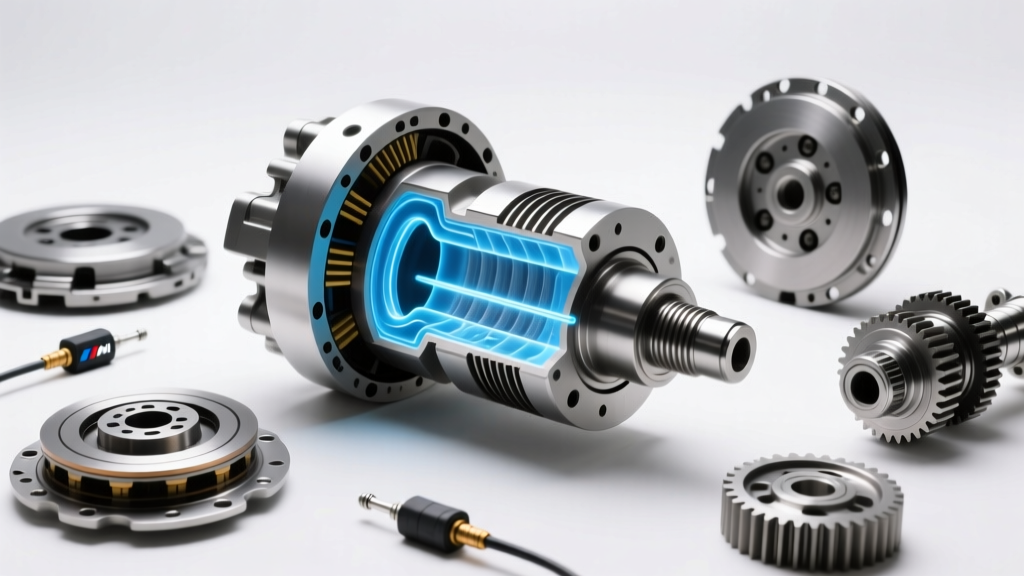
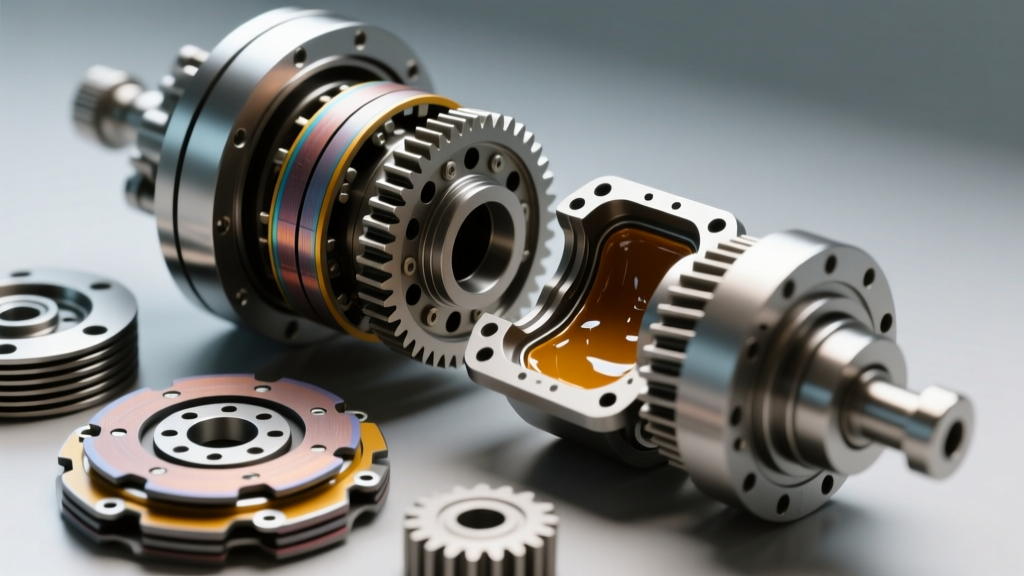
In these FWD-based AWD systems, the front axle is driven directly by the transmission. Torque is sent rearward via a Power Take-Off Unit (PTU) attached to the transaxle, spinning a driveshaft that terminates at the rear axle assembly. The true "center differential" function is actually executed by an electromagnetic clutch pack housed inside the rear differential assembly (or via dual-clutch vectoring modules on Dynamic Torque Vectoring systems). This rear-mounted coupling constantly modulates torque split from 100:0 to 50:50 based on traction needs. Because this clutch pack operates in a shared sump with the rear ring and pinion gears, the fluid chemistry is absolutely critical to both gear survival and clutch modulation.
Why Toyota Differential Gear Oil LT 75W-85 GL-5 is Non-Negotiable
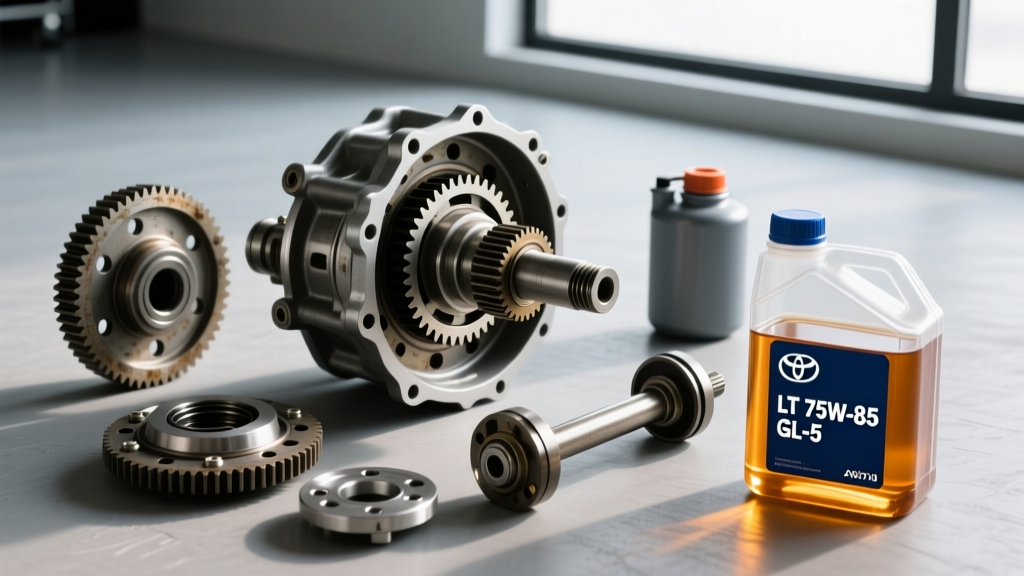
The Toyota Differential Gear Oil LT 75W-85 GL-5 (Part Number 08885-02606) is not merely a rebranded off-the-shelf gear oil. The "LT" designation signifies a highly specialized low-temperature viscosity profile and, more importantly, a proprietary friction modifier package engineered specifically for Toyota’s electromagnetic AWD clutches.
Standard API GL-5 75W-85 or 75W-90 fluids from local auto parts stores contain high levels of sulfur-phosphorus extreme pressure (EP) additives designed to protect hypoid gears under heavy shock loads. However, they lack the precise friction modifiers required for wet clutch packs. If you substitute the OEM fluid with a generic GL-5, the electromagnetic clutch plates will experience erratic hysteresis. The friction coefficient will fluctuate, leading to micro-slip, rapid heat generation, and the dreaded low-speed AWD shudder. According to tribology discussions on Bob Is The Oil Guy, utilizing non-OEM GL-5 fluids in Toyota AWD couplings frequently results in premature glazing of the clutch friction material, necessitating a $2,500+ rear axle assembly replacement.
Symptom Diagnosis: Is Your AWD System Failing or Just Thirsty?
As the Toyota Differential Gear Oil LT 75W-85 GL-5 shears down over 30,000 to 60,000 miles of use, its friction modifiers deplete and the base oil oxidizes. This degradation manifests in three primary symptoms that are frequently misdiagnosed as transmission or suspension failures.
1. Low-Speed Binding and Tire Chirp
If your RAV4 or Highlander exhibits a "hopping" sensation or tire chirp when executing tight, low-speed turns (such as pulling into a parking space), the rear electromagnetic clutch is failing to disengage. Degraded fluid causes the clutch plates to stick together due to varnish buildup and altered friction coefficients. The rear wheels are forced to turn at the same speed as the front wheels, creating severe driveline wind-up on high-traction surfaces.
2. High-Frequency Shudder Under Load
A vibration or shudder felt through the floorboards and center console during moderate acceleration (typically between 25–45 mph) indicates clutch chatter. As the AWD ECU commands the rear coupling to engage, the degraded fluid fails to provide a smooth friction transition. The clutch pack rapidly engages and slips in a high-frequency cycle, transmitting harmonic vibrations through the driveshaft and PTU.
3. AWD System Overheating and Warning Lights
Modern Toyota AWD systems feature internal temperature sensors within the rear coupling assembly. When the fluid loses its thermal stability and shear resistance, the clutch pack generates excess heat during normal torque transfers. The ECU will detect this thermal spike, trigger an "AWD System Overheating" warning on the dash, and default the vehicle to FWD-only mode to protect the hardware. This is a classic hallmark of severely oxidized LT 75W-85 fluid.
Troubleshooting Matrix: Fluid Degradation vs. Mechanical Failure
Before condemning the electromagnetic coupling or the PTU, use this diagnostic matrix to isolate the root cause of your AWD symptoms. Factory service data via Toyota TechInfo emphasizes verifying fluid condition before authorizing hard-part replacements.
| Symptom | Probable Cause | Verification Method |
|---|---|---|
| Tight-turn binding / hopping | Depleted friction modifiers causing clutch drag | Perform Figure-8 test on wet pavement; drain fluid to check for varnish/clutch material. |
| Whining from rear axle at 50+ mph | Ring & Pinion wear due to EP additive depletion | Inspect drain plug magnet for fine metallic paste; check gear backlash. |
| High-speed floorboard shudder | Driveshaft carrier bearing or PTU bearing failure | Disconnect rear driveshaft; test drive in FWD mode to isolate vibration source. |
| AWD Overheat Warning (Dash) | Fluid oxidation and thermal breakdown | Pull OBD-II codes for coupling temp sensor data; perform immediate drain-and-fill. |
The "Figure-8" Calibration and Diagnostic Test
To definitively diagnose clutch pack drag versus mechanical binding, professional technicians utilize the Figure-8 test. Find a clean, wet, or low-traction surface (like an empty, damp parking lot). Put the vehicle in Drive and steer the wheel lock-to-lock, driving in a continuous figure-8 pattern at 5 to 10 mph.
If the vehicle hops aggressively and the steering wheel tugs, the rear coupling is locked or dragging. If you suspect fluid degradation, perform a drain-and-fill service using the exact OEM fluid. Following the refill, the AWD ECU must "re-learn" the clutch pack engagement parameters. This is done by driving the vehicle in a straight line at 25 mph, then performing three full lock-to-lock steering sweeps while moving at 5 mph. This allows the ECU to map the new friction coefficient of the fresh Toyota Differential Gear Oil LT 75W-85 GL-5 against the clutch pack's electromagnetic hysteresis.
Service Specifications and Replacement Protocol
Servicing the rear AWD coupling assembly is straightforward but requires strict adherence to torque specifications and part numbers. The capacity for most Toyota transverse AWD rear differentials (including the RA40F Dynamic Torque Vectoring system) is remarkably small—typically between 0.45L and 0.55L (approx. 0.5 quarts). Because the sump is so small, fluid degradation happens faster than in traditional truck axles.
Required Parts and Materials
- Fluid: Toyota Genuine Differential Gear Oil LT 75W-85 GL-5 (Part # 08885-02606). Expect to pay $14–$18 per quart at the dealer.
- Crush Washers: Two 12mm aluminum crush washers (Part # 90430-18008) for the drain and fill plugs. Never reuse the old washers; doing so risks stripping the aluminum housing threads due to over-torquing.
- Tools: 10mm hex (Allen) socket, torque wrench, and a fluid transfer pump.
Step-by-Step Procedure
- Level the Vehicle: The vehicle must be perfectly level on jack stands or a lift. An uneven stance will result in under-filling, leading to immediate clutch starvation and overheating.
- Remove Fill Plug First: Always remove the upper fill plug before the lower drain plug. If the drain plug strips or the fill plug is seized, you do not want to be left with an empty differential and no way to refill it.
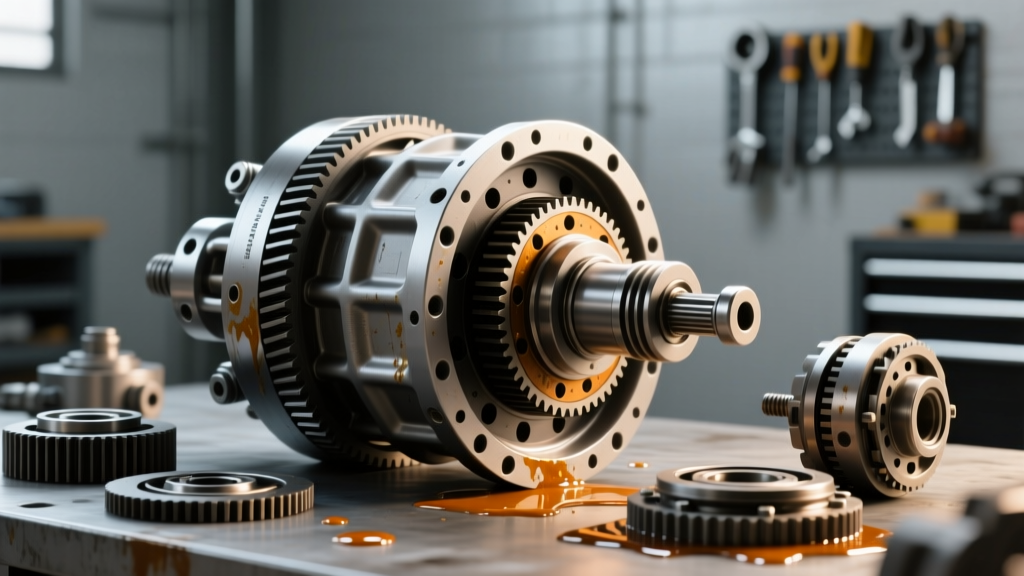
- Drain and Inspect: Remove the drain plug. Inspect the magnetic tip. A fine, silvery paste is normal wear. Chunky metal shards or brass-colored flakes indicate catastrophic ring-and-pinion or clutch basket failure.
- Refill to Weep Point: Install the drain plug with a new crush washer. Torque to 29 lb-ft (39 Nm). Pump the LT 75W-85 GL-5 into the fill hole until it begins to weep out of the threads. This ensures the exact factory volume is achieved.
- Seal and Torque: Install the fill plug with a new crush washer and torque to 29 lb-ft (39 Nm).
When to Suspect the Electromagnetic Coupling (Beyond the Fluid)
If a fresh drain-and-fill of Toyota Differential Gear Oil LT 75W-85 GL-5 does not resolve the shudder or binding within 50 miles of driving and ECU recalibration, the damage to the hardware is likely permanent. Prolonged operation with degraded fluid causes the friction material on the clutch discs to glaze or sheer off entirely. Furthermore, the electromagnetic coil itself can suffer from internal shorts due to prolonged thermal exposure. In these edge cases, the rear differential assembly must be replaced as a sealed unit, as Toyota does not sell internal clutch packs or shim kits for these specific transverse AWD couplings. A new OEM rear differential assembly typically ranges from $1,800 to $3,200 depending on the model year and whether it includes the Dynamic Torque Vectoring dual-clutch module.
Final Thoughts on AWD Maintenance
The "center differential" in your Toyota AWD system is a marvel of electromagnetic engineering, but it is entirely dependent on the chemical integrity of its lubricant. Ignoring the rear coupling fluid is a gamble that ends in driveline wind-up, destroyed clutch packs, and stranded vehicles. By strictly utilizing the OEM Toyota Differential Gear Oil LT 75W-85 GL-5 and adhering to a 30,000-mile severe-duty inspection interval, you ensure that your AWD system remains transparent, responsive, and mechanically sound for the life of the vehicle.