Decoding the 2016 Ram 1500 Front Differential Fluid Type
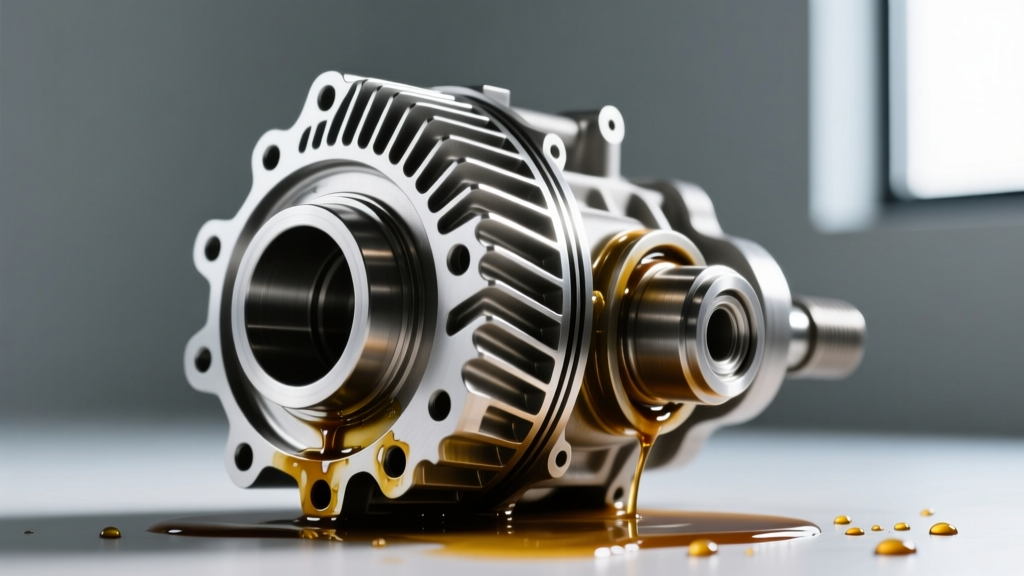
When truck owners and fleet technicians begin their drivetrain service interval research, pinpointing the exact 2016 ram 1500 front differential fluid type is the critical first step. The 2016 Ram 1500 utilizes the robust American Axle & Manufacturing (AAM) 9.25-inch Independent Front Suspension (IFS) axle. Unlike the rear axle, which frequently houses a mechanical limited slip differential (LSD), the factory front differential is an open unit that relies on the truck's brake-locking traction control system. Because of this fundamental mechanical difference, the fluid requirements, additive needs, and maintenance protocols diverge significantly between the front and rear axles.
AAM 9.25 IFS Fluid Capacity and Torque Specifications
The front AAM 9.25 IFS differential requires a high-quality API GL-5 gear oil. The factory fill and recommended service fluid is SAE 80W-90 (Mopar Part Number 68218655AA or equivalent). For owners operating in extreme cold climates or those seeking extended drain intervals, a synthetic SAE 75W-90 API GL-5 is an excellent upgrade that improves cold-weather flow and reduces parasitic drivetrain drag.
- Fluid Capacity: Approximately 2.7 pints (1.27 liters)
- Fill/Drain Plug Torque: 25-35 lb-ft (Ensure the rubber O-ring on the plug is inspected and replaced if flattened or cracked)
- Friction Modifier Required: NO. Because the front axle is an open differential, adding a limited slip friction modifier will not harm the gears, but it is entirely unnecessary and a waste of money.
The hypoid ring and pinion gears in the AAM 9.25 generate immense sliding friction. The sulfur-phosphorus Extreme Pressure (EP) additives found in GL-5 fluids are chemically required to prevent micro-welding and gear spalling under heavy torque loads. You can verify exact viscosity mappings for your specific VIN using the AMSOIL Product Lookup tool or by consulting OEM service manuals.
The Front vs. Rear Axle Reality: Open vs. Limited Slip
A common point of confusion in the Ram 1500 community is the assumption that both axles require limited slip additives. The factory front axle on the 2016 Ram 1500 does not contain clutch packs or helical locking gears. Instead, when wheel slip is detected, the truck's ABS module applies brake pressure to the spinning wheel, transferring torque to the wheel with traction. Therefore, the front differential only needs standard GL-5 gear oil.
However, the rear axle (often the AAM 10.5 or ZF 8.25/9.25 depending on the engine and tow package) frequently features an Anti-Spin (Limited Slip) differential. Understanding how this rear LSD operates is crucial for anyone maintaining the complete drivetrain of a 4WD Ram 1500, as improper maintenance of the rear LSD will lead to catastrophic clutch pack failure and aggressive axle chatter.
Deep Dive: Limited Slip Differential (LSD) Operation
To properly maintain an LSD, one must understand its internal mechanics. The most common LSD found in Ram heavy-duty and light-duty rear axles is the clutch-pack type (such as the Eaton Positraction). According to engineering documentation from Eaton Automotive Differentials, these units utilize a series of alternating steel and friction-coated clutch plates positioned between the side gears and the differential case.
Clutch-Pack Mechanics and Preload
When the truck drives in a straight line, the axle shafts turn at the same speed, and the clutch packs remain relatively stationary. However, during a turn, the outside wheel must rotate faster than the inside wheel. In an open differential, this happens freely. In an LSD, the clutch packs must slip against one another to allow this speed differentiation while maintaining a baseline locking torque (preload) to prevent one-wheel spin on low-traction surfaces.
This continuous slipping generates intense localized heat and shear forces. Standard GL-5 gear oil is too "slippery" due to its EP additives, which would cause the clutch packs to slip excessively, generating a violent shuddering known as "axle chatter." To counteract this, a specialized Friction Modifier (Mopar Part Number 04318060AD or Lubegard Limited Slip Additive) is required. This modifier alters the coefficient of friction, allowing the clutches to engage smoothly and release without stick-slip vibration.
Drivetrain Fluid & Additive Comparison Matrix
| Differential Type | Common Ram Application | Base Fluid Spec | Modifier Required? | Maintenance Interval |
|---|---|---|---|---|
| Open Differential | Front AAM 9.25 IFS | 80W-90 / 75W-90 GL-5 | No | Every 60,000 miles (Normal) |
| Clutch-Pack LSD | Rear AAM 10.5 / ZF | 75W-140 Synthetic GL-5 | Yes (4-8 oz) | Every 30,000 miles (Towing) |
| Helical Gear (Truetrac) | Aftermarket Front/Rear | 75W-90 / 75W-140 GL-5 | No | Every 50,000 miles |
| Electronic Locker (E-Locker) | Ram Power Wagon / Off-Road | 75W-140 Synthetic GL-5 | No (Locker is binary) | Every 30,000 miles |
Step-by-Step LSD Maintenance and Break-In Procedure
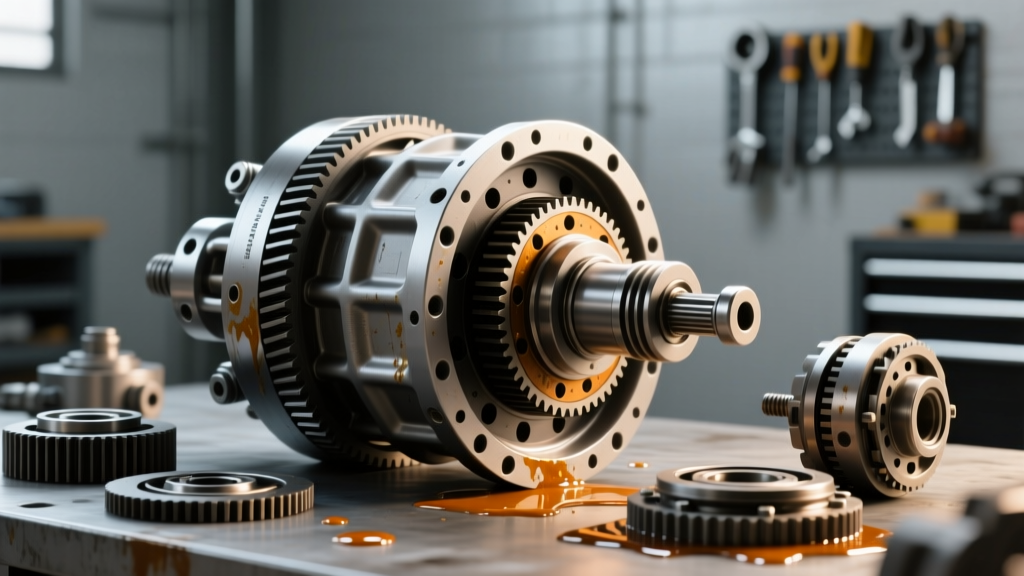
If you are servicing a rear LSD or have just installed an aftermarket limited slip unit in the front or rear axle, the fluid change process requires a specific bedding-in procedure to ensure the longevity of the friction materials.
- Drain and Inspect: Remove the differential cover (or drain plug). Inspect the fluid for metallic glitter. Fine powder is normal wear; large chunks indicate gear or bearing failure. Clean the RTV sealing surface thoroughly with brake cleaner.
- Add Friction Modifier First: Pour the recommended dose of friction modifier (usually 4 oz for standard duty, up to 8 oz for heavy towing applications) directly into the empty differential housing before adding the gear oil. This ensures the modifier pools at the bottom and is immediately drawn into the clutch packs upon startup.
- Fill with Gear Oil: Pump in SAE 75W-140 Synthetic GL-5 gear oil until it reaches the bottom of the fill hole. For Ram 1500s equipped with the factory tow package, 75W-140 is mandatory to handle the thermal loads of towing. Reinstall the cover using a new gasket or high-temp RTV silicone, torquing the bolts to 45 lb-ft in a star pattern.
- The Figure-8 Bedding Procedure: This is the most skipped, yet most critical step. Drive the truck to an empty, paved parking lot. Perform 15 to 20 tight, slow-speed "figure-8" maneuvers. This forces the clutch packs to slip and engage repeatedly, evenly distributing the friction modifier into the porous surfaces of the clutch discs.
Expert Technician Note: Never use standard GL-5 fluid in an LSD without the modifier, even if the bottle claims it is "Limited Slip Compatible." The concentration of friction modifiers in off-the-shelf "LS" fluids is often too low for heavy-duty truck applications like the Ram 1500, leading to premature clutch glazing. Always use a dedicated additive alongside a premium synthetic base oil. Source: Mopar Official Parts Guidelines.
Diagnostic Troubleshooting: Chatter vs. Gear Whine
Post-maintenance diagnostics are vital for verifying differential health. Understanding the auditory clues your axle provides can save you from a complete rebuild.
Axle Chatter (Low-Speed Turns)
If you hear a rhythmic "thumping" or feel a shuddering vibration through the chassis during low-speed parking lot turns, your LSD clutch packs are experiencing stick-slip. The Fix: The friction modifier has either degraded, leaked, or was omitted. Drain 8 ounces of gear oil and add 4 ounces of dedicated friction modifier. Repeat the figure-8 bedding procedure. If the chatter persists after two additive treatments, the clutch packs are likely glazed or warped, requiring a differential teardown and clutch pack replacement.
Gear Whine (Deceleration vs. Acceleration)
A high-pitched whine that changes pitch with vehicle speed is unrelated to your fluid type or friction modifiers; it is a gear mesh or bearing issue.
- Whine on Acceleration: Indicates wear on the drive side of the ring and pinion teeth, or a collapsing pinion bearing altering the gear mesh depth.
- Whine on Deceleration: Points to wear on the coast side of the gear teeth or worn carrier bearings allowing the ring gear to deflect under load.
In either whine scenario, changing the fluid will not resolve the issue. The differential requires a professional setup with a dial indicator and inch-pound torque wrench to reset the pinion depth and backlash specifications.
Final Thoughts on Drivetrain Longevity
Maintaining the drivetrain of a 2016 Ram 1500 requires respecting the distinct engineering of its front and rear axles. By utilizing the correct 80W-90 or 75W-90 GL-5 fluid in the open front AAM 9.25 IFS, and meticulously managing the friction modifier levels in the rear LSD, you ensure optimal torque distribution, eliminate annoying axle chatter, and extend the operational life of your ring and pinion gears well past the 150,000-mile mark.