The Anatomy of a Clutch-Type Limited Slip Differential
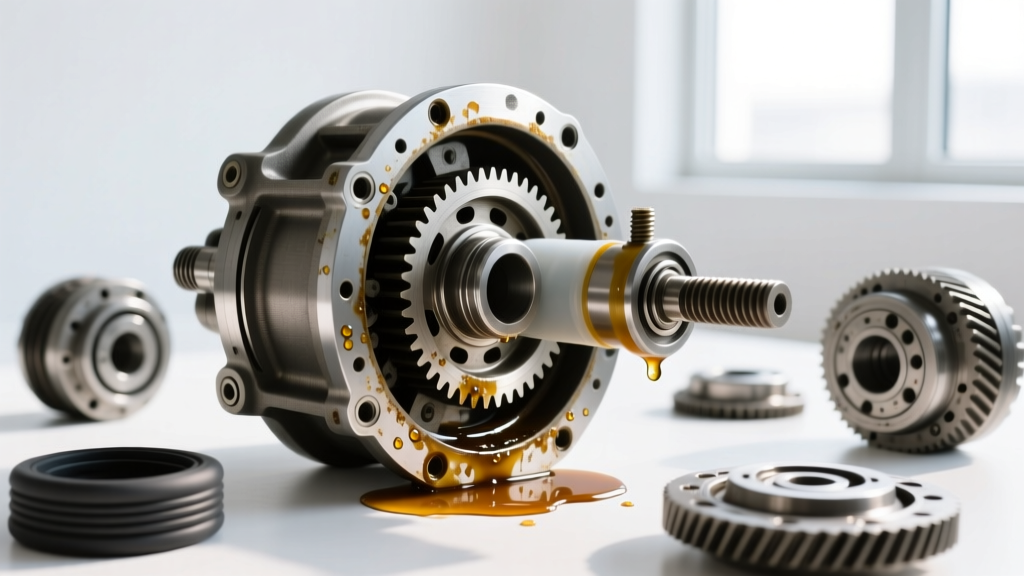
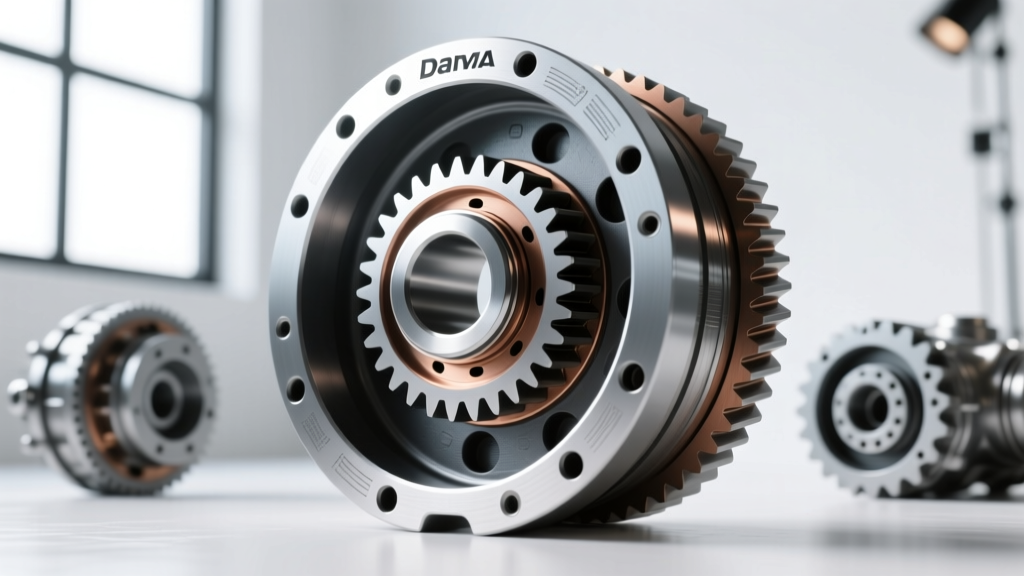
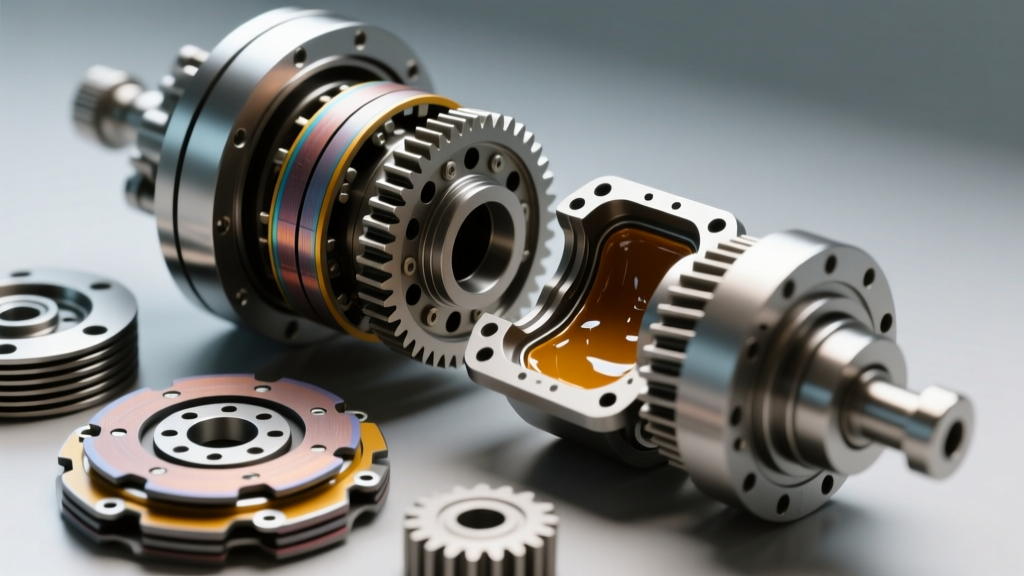
When diagnosing drivetrain noise or traction loss, understanding the internal architecture of your axle is critical. Unlike an open differential that routes power to the wheel with the least resistance, a clutch-type Limited Slip Differential (LSD) utilizes a series of alternating friction and steel plates to couple the side gears to the differential case. This mechanical coupling forces both wheels to rotate at similar speeds under load, maximizing forward momentum. However, this constant internal friction makes the LSD highly susceptible to wear, eventually necessitating a targeted rear differential repair if maintenance intervals are ignored.
In popular applications like the Ford 8.8-inch (found in Mustangs and F-150s) or the GM 8.5/8.6-inch 10-bolt, the clutch pack is preloaded by an S-spring or heavy coil springs. When torque is applied, the side gears attempt to push outward against the thrust washers. This axial force compresses the clutch packs against the differential case, locking the axles together. Over time, the friction material degrades, the S-spring fatigues, and the side gear clearance increases, leading to the infamous "one-wheel peel" or low-speed cornering chatter.
Gear-Type vs. Clutch-Type: Why It Matters for Maintenance
Before initiating any rear differential repair, you must identify the LSD type. Gear-type LSDs, such as the Eaton Detroit Truetrac or Torsen units, rely on helical gear binding forces rather than friction clutches. They do not require specialized friction modifiers and generally operate maintenance-free aside from standard gear oil changes. Conversely, clutch-type LSDs (like the Eaton Posi-Traction or Auburn Gear Pro Series) are highly dependent on specific fluid chemistry and precise mechanical clearances to function correctly.
Diagnostic Matrix: Identifying LSD Failure Modes
Drivetrain diagnostics require isolating variables. Use the following matrix to determine if your symptoms warrant a simple fluid service or a complete differential teardown.
| Symptom | Probable Root Cause | Diagnostic Test | Repair Action |
|---|---|---|---|
| Chatter or shudder during low-speed, tight turns | Depleted friction modifier; clutch stick-slip phenomenon | Perform continuous figure-8s in a wet parking lot | Drain fluid, refill with synthetic 75W-90 and OEM friction modifier |
| One wheel spins freely under heavy throttle | Worn friction discs, glazed steel plates, or broken S-spring | Jack up rear axle, rotate one wheel forward; opposite wheel should resist | Complete teardown, measure side gear clearance, install new clutch kit |
| Whining noise strictly on deceleration | Pinion bearing wear or improper gear tooth contact pattern | Coast down from 60 mph with windows down; isolate noise to center housing | Pinion depth reset, bearing replacement, and crush sleeve installation |
| Clunking when shifting from Reverse to Drive | Excessive side gear to pinion gear backlash; worn thrust washers | Check rotational backlash at the yoke with a dial indicator | Replace thrust washers and side gears; verify S-spring tension |
The Chemistry of LSD Maintenance: Fluids and Friction Modifiers
The most common cause of premature clutch pack failure is the use of standard API GL-5 gear oil without the necessary friction modifiers. Hypoid ring and pinion gears require the extreme pressure (EP) additives found in GL-5 oils (typically zinc dialkyldithiophosphate and sulfur-phosphorus compounds) to prevent metal-on-metal welding under high sliding loads. However, standard EP additives do nothing to prevent the "stick-slip" phenomenon in clutch packs.
Stick-slip occurs when the static friction coefficient of the clutch material exceeds its kinetic friction coefficient. As the clutch packs engage and disengage during cornering, they grab, slip, grab, and slip, transmitting a low-frequency vibration through the axle tubes and into the chassis. To combat this, manufacturers use long-chain organic friction modifiers (such as molybdenum dithiocarbamate or specialized esters) that create a microscopic boundary lubrication layer, equalizing the static and kinetic friction coefficients.
Fluid Selection and Part Numbers
- OEM Friction Modifiers: If using a standard GL-5 like Mobil 1 75W-90, you must add an LSD modifier. Use Ford XL-3 or GM ACDelco 12377916. Add 2 to 4 ounces initially; adding too much will cause the clutches to slip under heavy load, defeating the purpose of the LSD.
- Pre-Blended Synthetics: Oils like Red Line 75W90 or Amsoil Severe Gear already contain the correct proportion of friction modifiers for most Eaton and Auburn clutch packs. These are highly recommended for high-temperature applications like towing or track use.
Expert Note: Never use GL-4 fluid in a hypoid rear differential. GL-4 lacks the sulfur-phosphorus EP additives required to protect the ring and pinion gears from spalling and pitting, which will result in catastrophic gear failure within 10,000 miles.
Precision Rebuild: Torque Specs and Clutch Pack Clearances
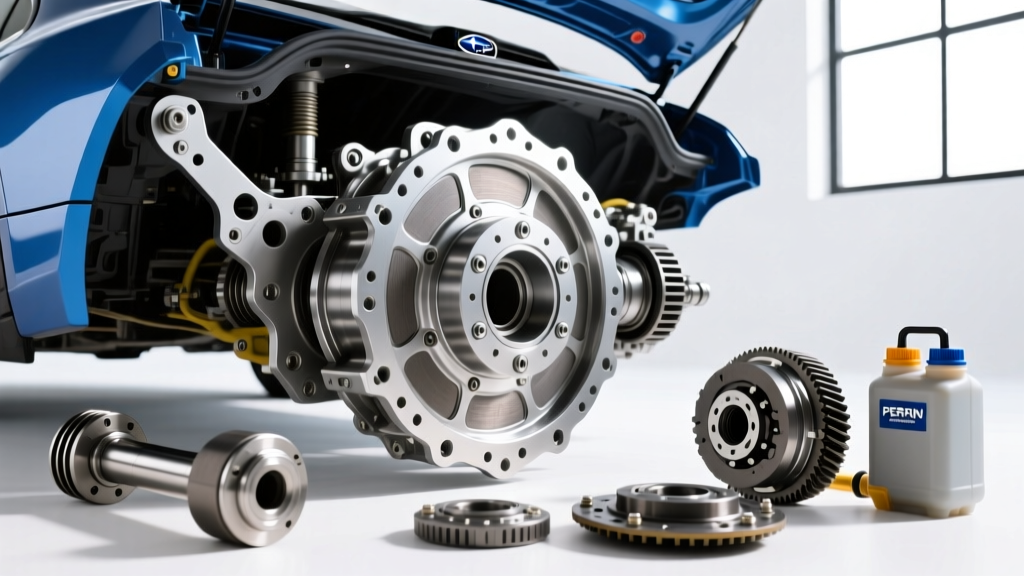
When a fluid service fails to resolve chatter, or when one wheel spins freely, a physical rear differential repair is mandatory. Rebuilding a clutch-type LSD requires precision measuring tools and strict adherence to torque specifications. According to technical documentation from Ring & Pinion, improper assembly will result in immediate failure or excessive gear whine.
Step-by-Step Clutch Pack Assembly
When installing a new clutch kit (e.g., Eaton part #19586-01 for the Ford 8.8), the friction discs must be soaked in the designated gear oil and friction modifier for at least 15 minutes prior to assembly. This prevents the dry friction material from burning and glazing during the initial break-in period.
The alternating stack (steel plate, friction disc, steel plate) must be seated firmly against the side gear. The critical measurement here is the side gear clearance. Using a dial indicator, measure the backlash between the spider gears and the side gears. Target clearance is typically 0.005" to 0.010". If the clearance exceeds 0.015", the S-spring will not provide adequate clamping force, and you must install thicker selective thrust washers behind the side gears.
Ring Gear and Pinion Preload Specs
If your repair involves removing the ring gear to access the differential case, you must follow exact fastener protocols:
- Ring Gear Bolts (Ford 8.8 / GM 10-Bolt): Torque to 70-85 lb-ft. Always apply a medium-strength threadlocker (Loctite 242) to the threads. Never reuse stretched ring gear bolts.
- Pinion Bearing Preload: This is not a static torque spec; it is a rotational measurement. Using an inch-pound torque wrench, measure the rotational force required to spin the pinion yoke. For used bearings, target 15-22 in-lbs. For new bearings, target 20-35 in-lbs. On Ford axles, this is achieved by tightening the pinion flange nut (up to 250 lb-ft) to crush the internal spacer sleeve until the correct rotational preload is reached.
- Ring Gear Runout: Mount a dial indicator on the magnetic base and measure the back of the ring gear as it rotates. Total indicated runout (TIR) must not exceed 0.002". If it does, remove the ring gear, clean the mating surface on the differential case, and re-index the gear 180 degrees.
2026 Cost Breakdown: LSD Service and Rear Differential Repair
Labor rates and parts availability have shifted as of 2026, particularly for legacy V8 platforms and modern solid-axle SUVs. Below is a realistic cost framework to help you decide between dealership service, independent drivetrain specialists, and DIY approaches.
- Routine LSD Fluid Service: $150 – $280 at an independent shop. This includes 2.5 to 3 quarts of synthetic 75W-90, friction modifier, and a new axle cover gasket or RTV silicone. DIY cost is roughly $65 – $90.
- Clutch Pack Rebuild (Parts & Labor): $650 – $1,100. This requires removing the axle shafts, dropping the differential case, and pressing bearings. The clutch kit itself costs $80 – $150, but the labor intensity drives the price.
- Complete Ring, Pinion, and Bearing Overhaul: $1,800 – $3,200. If the ring and pinion are pitted or the pinion bearings have failed, a master rebuild kit (Timken bearings, new crush sleeve, pinion seal, shims) and a new gearset (e.g., Motive Gear or Yukon) are required. This job demands specialized setup tools and should only be trusted to dedicated drivetrain shops.
Conclusion: Proactive Axle Maintenance
A limited slip differential is a wear item. Unlike an open differential that can often run for 150,000 miles on its original factory fill, a clutch-type LSD requires fluid and friction modifier changes every 30,000 to 50,000 miles to maintain optimal clamping force and prevent chatter. By understanding the mechanical and chemical requirements of your specific axle, you can delay the need for a major rear differential repair and ensure maximum traction when the pavement conditions deteriorate.