The Intersection of Gear Ratios and Hydraulic Actuation
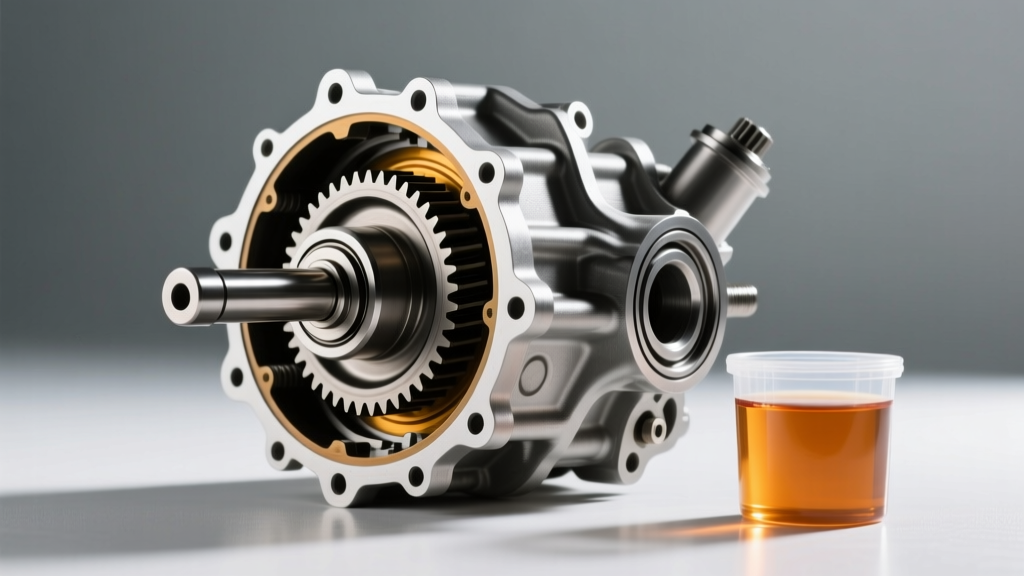
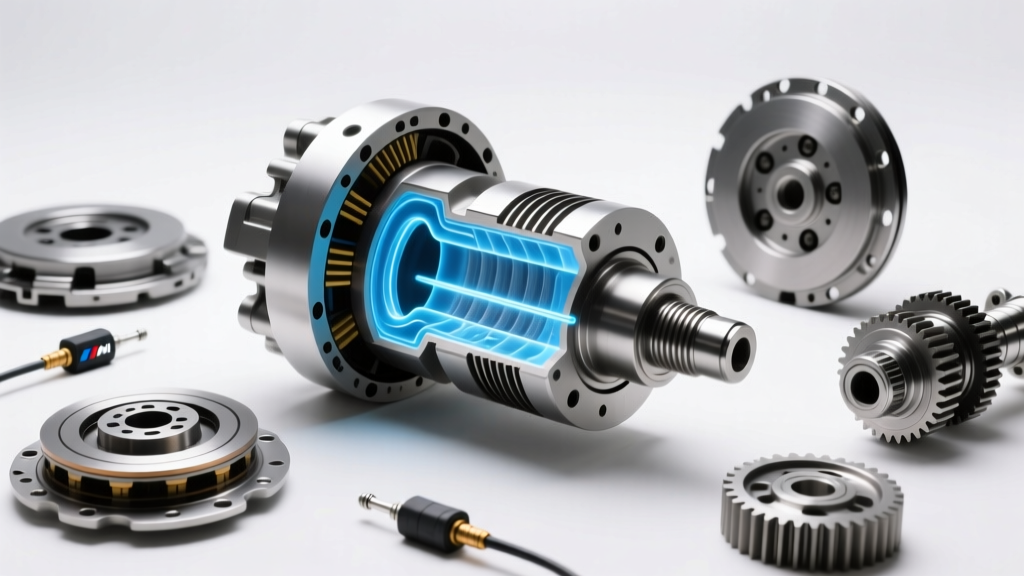
When modifying the final drive of a high-performance vehicle like the BMW G80 M3 or G82 M4, enthusiasts often focus solely on the mechanical swap. However, the ZF Active M Differential relies on a sophisticated electro-hydraulic circuit to modulate torque vectoring. Understanding the relationship between your differential gear ratio and performance requires looking beyond the ring and pinion into the hydraulic control unit. Specifically, performing a differential pressure flow measurement is the only definitive way to verify that the internal gerotor pump can generate adequate clamping force under increased torque loads.
Why Gear Ratio Upgrades Demand Hydraulic Verification
The stock G80 M3 utilizes a 3.15 final drive ratio. Many track-focused builds upgrade to a 3.46 or 3.91 ratio to improve acceleration out of slow corners. While this multiplies torque at the wheels, it also exponentially increases the shear force applied to the Active M Differential's internal multi-plate clutch pack. The vehicle's DSCM (Dynamic Stability Control Module) calculates the required clutch clamping pressure based on engine torque, steering angle, and the programmed differential gear ratio.
If the hydraulic pump is suffering from wear, or if the internal suction filter is restricted by clutch debris, the system cannot achieve the target hydraulic pressure. This results in clutch slip, overheating, and eventual failure of the $3,500+ differential assembly. To prevent this, technicians must employ precise diagnostic techniques.
The Physics: Torque Multiplication vs. Clamping Force
According to ZF's engineering documentation on axle drives, the clamping force required to prevent slip is directly proportional to the input torque and the friction coefficient of the clutch plates. When you install a 3.91 gear set, you increase the torque multiplication factor by roughly 24% compared to the stock 3.15 setup. The hydraulic pump must respond with a corresponding 24% increase in fluid pressure (up to 45 bar in extreme track conditions) to maintain lockup.
Step-by-Step: Differential Pressure Flow Measurement
A standard OBD2 scan tool will only show you the target clutch pressure and the actual pressure reported by the internal sensor. It will not reveal flow restrictions or pump cavitation. A physical differential pressure flow measurement bridges this diagnostic gap.
Required Tooling and Setup
- 0-60 Bar Hydraulic Test Gauge with M10x1.0 adapter fitting
- BMW ISTA (Integrated Service Technical Application) for actuator activation
- Infrared thermocouple for fluid temperature monitoring
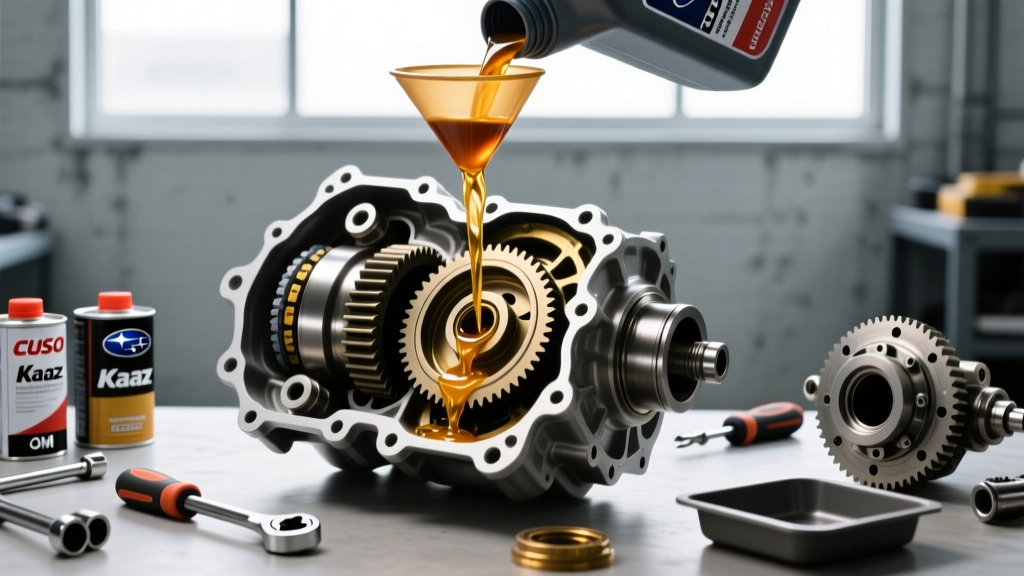
- BMW DTF 1 Fluid (Part# 83225195968) for top-off
Execution Procedure
- Thermal Normalization: Drive the vehicle until the differential fluid reaches 40°C (104°F). The viscosity of DTF 1 fluid is highly temperature-dependent, and cold fluid will yield falsely high pressure readings.
- Port Access: Remove the hydraulic valve body cover on the rear differential. Locate the primary pressure test port on the pump discharge line.
- ISTA Activation: Connect ISTA and navigate to the Service Functions for the Active M Differential. Select 'Activate Hydraulic Pump'. Command the pump to run at 20%, 50%, and 100% duty cycles.
- Reading the Delta-P: Attach your gauge. At 100% duty cycle, a healthy ZF gerotor pump should instantly spike to 42-45 bar and hold steady. If the pressure oscillates or peaks at 32 bar, you have a flow restriction or internal pump bypass.
- Measuring Differential Pressure: To measure the pressure drop across the internal filter, connect a secondary gauge to the suction side test port. A differential pressure flow measurement revealing a delta-P greater than 1.2 bar indicates the sintered bronze filter is choked with friction material, starving the pump and causing cavitation.
G80 M3 Active M Differential Service Specifications
Maintaining the correct fluid level and adhering to precise torque specifications is non-negotiable when reassembling the hydraulic control unit. The following table outlines the critical parameters for the 2021-2026 G80/G82 platforms.
| Parameter | Specification / Value | Notes |
|---|---|---|
| Fluid Type | BMW DTF 1 (P/N 83225195968) | Do NOT substitute with 75W-90 GL-5 |
| Fluid Capacity | 1.3 Liters (1.37 Quarts) | Fill until weeping from level plug |
| Drain/Fill Plug Torque | 60 Nm (44 lb-ft) | M18x1.5, replace crush washer |
| Valve Body to Housing | 10 Nm (7.4 lb-ft) | M6x1.0 aluminum bolts (replace) |
| Target Max Pump Pressure | 42 - 45 Bar | Measured at 40°C fluid temp |
| Max Allowable Delta-P (Filter) | 1.2 Bar | Exceeding requires diff teardown |
Diagnosing Flow Restrictions and Pump Cavitation
When the differential pressure flow measurement indicates a severe restriction, the root cause is almost always premature wear of the multi-plate clutch pack. In vehicles that have been tuned to 600+ wheel horsepower without upgrading the differential cooling loop, the DTF 1 fluid degrades rapidly. As outlined in the SAE J2360 drivetrain fluid standards, extreme shear and thermal loading break down the friction modifiers in the fluid, leading to aggressive clutch chatter and the shedding of metallic particulate.
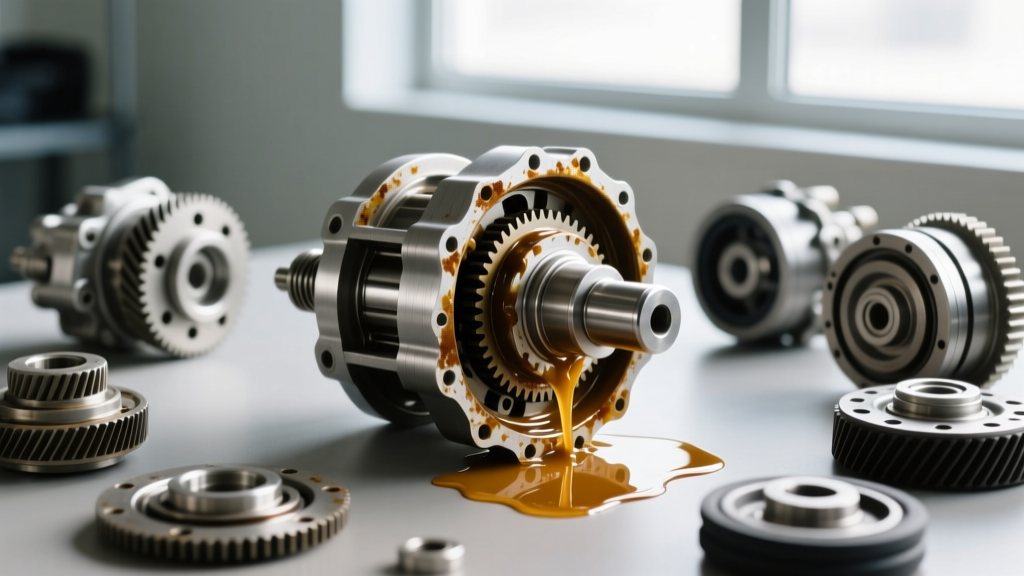
This particulate becomes embedded in the internal suction filter. Because the filter is not externally serviceable on the ZF Active M Differential, a high delta-P reading mandates a complete differential teardown. Expect to spend between $1,400 and $1,800 for a genuine ZF replacement hydraulic pump and valve body assembly, plus an additional $800 for a new clutch pack and friction discs.
The ECU Flash Requirement
If you are upgrading your differential gear ratio from 3.15 to 3.46, you must flash the DSCM to reflect the new ratio. If the ECU believes it is still operating a 3.15 ratio, it will miscalculate the slip threshold. It will command insufficient hydraulic pressure during hard cornering, resulting in immediate clutch slip. The physical differential pressure flow measurement will show the pump is healthy, but the system's logic is fundamentally flawed.
Thermal Management and Cooler Flow Diagnostics
High-performance differential gear ratios generate immense heat, particularly when paired with aggressive track driving. The G80 M3 Competition features an external differential fluid cooler integrated into the rear axle subframe. When diagnosing performance issues, evaluating the cooler's flow rate is just as critical as testing the internal pump.
A restricted cooler line will cause rapid fluid temperature spikes, dropping the DTF 1 fluid's viscosity below the threshold required for hydraulic actuation. To test this, technicians disconnect the cooler return line and perform a volumetric flow test. A healthy electric auxiliary coolant pump (which indirectly manages diff thermal loads via the heat exchanger) should cycle an adequate volume of coolant. However, if the internal differential-to-cooler passages are blocked by sludge, the fluid cannot shed heat. Replacing the external cooler lines (Part# 33176885432) and flushing the heat exchanger typically costs between $450 and $650 at an independent specialist, a fraction of the cost of a burned-out clutch pack.
Conclusion: Data-Driven Drivetrain Building
Upgrading your ring and pinion for better track performance is only half the battle. The electro-hydraulic systems governing modern limited-slip differentials are highly sensitive to torque variations and fluid dynamics. By incorporating a rigorous differential pressure flow measurement into your post-installation verification process, you ensure that the hydraulic clamping force perfectly matches your new gear ratio's torque output. This prevents catastrophic clutch failure and ensures your BMW M car puts power to the pavement exactly as the engineers intended.