Diagnosing Tow Overheating: The Missing Link in Heavy Hauling
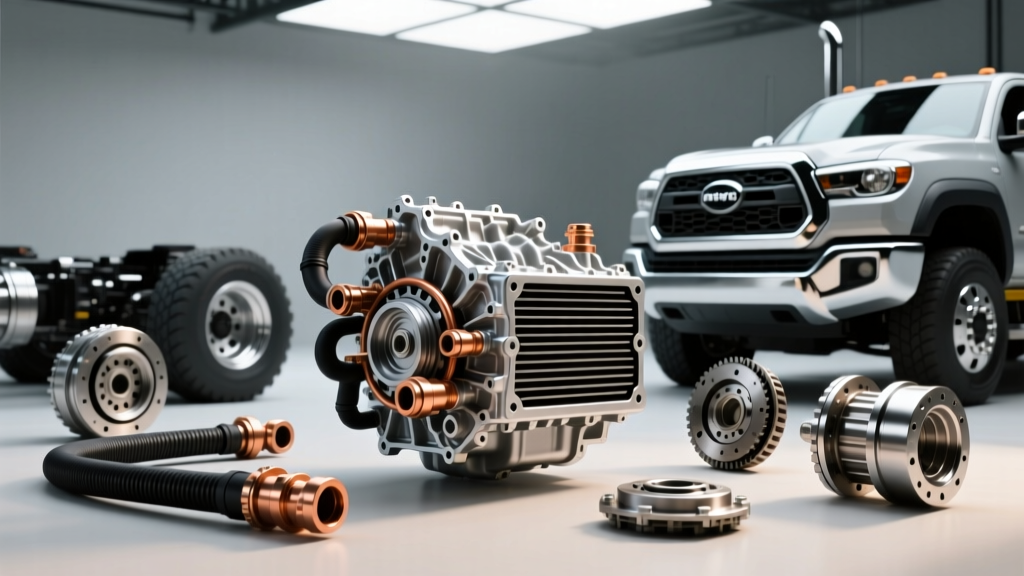
Pulling a 10,000-pound fifth wheel or a loaded car hauler pushes modern automatic transmissions to their absolute thermal limits. When drivers experience overheating, the immediate reaction is to search for the best transmission cooler for towing. However, upgrading the heat exchanger is only half the battle. Without an adequate transmission cooling fan, stop-and-go traffic, steep mountain grades, and low-speed maneuvering will still cook your automatic transmission fluid (ATF), leading to varnished clutch packs and catastrophic failure.
In this 2026 diagnostic guide, we approach transmission cooling from a symptom-based troubleshooting perspective. We will diagnose why your current setup is failing under load, evaluate the fluid dynamics of stacked-plate versus plate-and-fin coolers, and recommend specific cooler and transmission cooling fan combinations for popular tow rigs like the GM 10L80 and Ram 68RFE.
Symptom Diagnosis: Is Your Cooler or Fan Failing?
Before spending hundreds of dollars on aftermarket parts, you must isolate the failure point using OBD2 scan tool data. Connect your scanner and monitor the Transmission Fluid Temperature (TFT) PID while towing your standard load.
The Highway vs. The Grade: Interpreting TFT Data
- Scenario A (Highway Cruising Overheat): If your TFT exceeds 210°F while maintaining 65+ MPH on flat terrain, your primary issue is inadequate core volume or poor ram-air airflow. The factory cooler is clogged, or the cooler itself is too small. A transmission cooling fan will not fix this; you need a larger stacked-plate core.
- Scenario B (Low-Speed/Climb Overheat): If your TFT stays at a manageable 180°F on the highway but spikes to 230°F+ when crawling through a campground, idling in traffic, or pulling a slow 8% grade, your cooler lacks active airflow. This is the exact symptom of a missing or failing transmission cooling fan.
- Scenario C (Thermal Shock / Delayed Cooling): If the transmission runs hot for the first 15 minutes of a tow, then suddenly drops to normal temperatures, you are likely dealing with a stuck or restrictive thermal bypass valve in the cooler lines, a common issue on modern GM and Ford units.
Best Transmission Cooler & Fan Combos for Towing (2026 Data)
When selecting the best transmission cooler for towing, you must match the cooler's BTU rejection rate with a transmission cooling fan that provides sufficient CFM (Cubic Feet per Minute) to pull air through the dense fin structure. Below is a comparison of the top heavy-duty setups currently dominating the towing market.
| Setup Configuration | Part Numbers | BTU/hr Rejection | Fan CFM | Est. Price (2026) | Best Application |
|---|---|---|---|---|---|
| Derale Hyper-Cool Stack & Fan | 15960 (Cooler) + 16925 (Fan) | 45,000 BTU | 2,400 CFM | $385 - $420 | Class IV/V Hauling, Duallys |
| Hayden Rapid-Cool & Auto Fan | 678 (Cooler) + 3680 (Fan) | 32,000 BTU | 1,800 CFM | $245 - $270 | Half-Ton Trucks, Mid-Size SUVs |
| Mishimoto Ford Stack & OEM Fan | MMTC-F2D (Cooler) + OEM Fan | 38,000 BTU | N/A (Ram Air) | $310 - $340 | Ford 6R80 / 10R80 Super Dutys |
Application-Specific Troubleshooting & Upgrades
Different transmission architectures handle heat and fluid flow differently. Applying a generic fix can sometimes cause pressure drops that starve the lube circuit. Here is how to diagnose and upgrade specific heavy-duty transmissions.
GM 6L80, 8L90, and 10L80: The Thermal Bypass Nightmare
General Motors' 6L80 and 10L80 transmissions are notorious for overheating during the initial stages of a tow. This is caused by a factory thermal bypass valve located in the cooler line adapter or the transmission case itself. This valve restricts fluid flow to the cooler until the ATF reaches approximately 185°F to 190°F, ostensibly to help the transmission warm up faster for emissions purposes. When towing heavy loads, the torque converter generates massive heat before the valve opens, causing localized boiling and varnish buildup.
The Fix: According to Sonnax technical documentation, the most effective troubleshooting step is to install a thermal bypass delete kit (such as the Sonnax 158000-03K or a simple machined aluminum bypass block). Once flow is unrestricted, pair the 10L80 with the Derale 15960 stacked-plate cooler. Stacked-plate designs offer significantly lower pressure drop than tube-and-fin coolers, which is critical because the 10L80 relies on high-volume lube flow to cool the clutch packs. Mount a 16-inch reversible transmission cooling fan (like the Derale 16925) directly to the cooler using the included toggle-mount brackets, ensuring you pull air in the same direction as the vehicle's natural ram-air flow.
Ram 68RFE: Viscous Fan Clutch Slippage
The Aisin and 68RFE transmissions found in Ram 2500/3500 trucks rely heavily on the engine's mechanical fan clutch to pull air through the factory stacked-plate cooler mounted in front of the radiator. A common symptom of 68RFE overheating is a slipping viscous fan clutch. As the clutch ages, the silicone fluid inside degrades, and the clutch fails to lock up under heavy load, resulting in zero airflow at low RPMs.
The Fix: Before adding an auxiliary transmission cooling fan, test the mechanical fan clutch. With the engine off and cold, the fan should spin with slight resistance. After a hot tow, shut the engine off and try to spin the fan; it should have heavy resistance. If it spins freely, replace it with a severe-duty fan clutch (e.g., Hayden 2722). If the clutch is functioning properly but you still see 225°F+ in tow-haul mode, install an auxiliary plate-and-fin cooler (Hayden 678) in front of the A/C condenser, paired with a slimline 12-inch electric transmission cooling fan wired to a dedicated 40-amp relay.
Electrical Wiring & Thermal Switch Calibration
A high-CFM transmission cooling fan is useless if it is wired incorrectly. Drawing 15 to 25 amps through a standard toggle switch or a factory fuse box will melt wiring harnesses and cause voltage drops that starve your fuel pump.
The Proper Relay Circuit
- Power Source: Run 10-gauge primary wire directly from the battery positive terminal, protected by a 40-amp inline circuit breaker.
- Relay: Use a heavy-duty Bosch-style 40A SPDT relay. Connect Pin 30 to battery power, Pin 87 to the fan positive, and Pin 86 to a 12V ignition-switched source.
- Ground & Trigger: Ground Pin 85 to the chassis. Wire Pin 86's trigger circuit through an adjustable thermal switch (e.g., Derale 16719) threaded into the transmission pan or the cooler's return line.
Thermal Switch Calibration: Set the thermal switch to turn the transmission cooling fan ON at 185°F and OFF at 175°F. This hysteresis prevents the fan relay from rapidly cycling on and off, which will prematurely kill the relay contacts and the fan motor.
Installation Specs: Fittings, Lines, and Torque
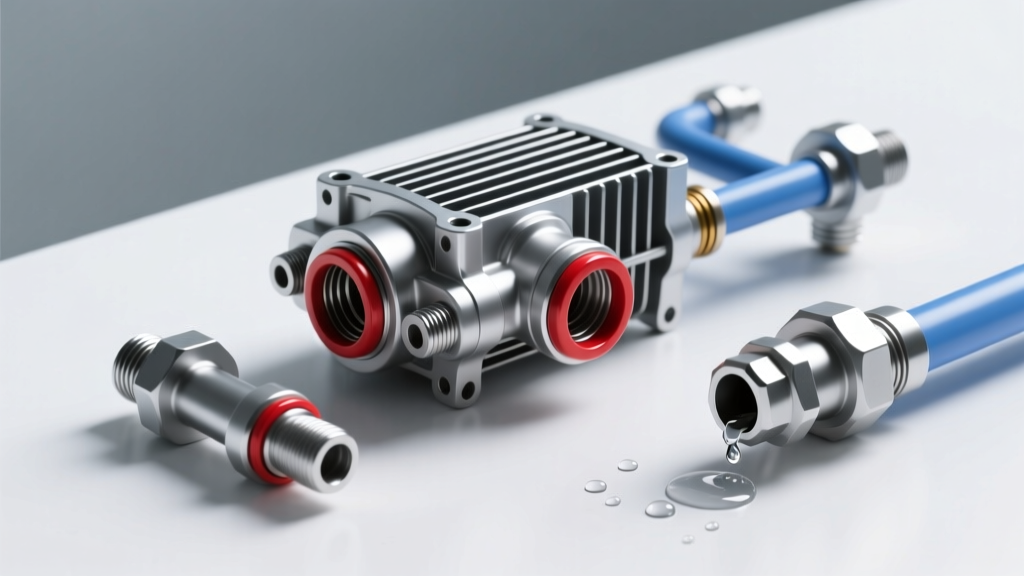
When plumbing the best transmission cooler for towing, the physical connections are just as critical as the cooler core. Leaks at the cooler lines will dump ATF onto your exhaust, creating a severe fire hazard.
- Fittings: Most modern heavy-duty trucks use 1/2-inch or 5/8-inch quick-connect fittings. Avoid cheap brass adapters; use CNC-machined aluminum or steel quick-connect to AN-8 adapters. If using hose clamps, use constant-tension T-bolt clamps, not standard worm-gear clamps, which can cut into the reinforced rubber transmission hose.
- Torque Specifications: When tightening AN-6 or AN-8 aluminum fittings into an aftermarket aluminum cooler, do not exceed 15 to 18 lb-ft. Over-torquing will strip the threads or crack the cooler header plate. For OEM steel line nuts (e.g., GM 5/8-18 UNF), torque to 22 lb-ft using a flare-nut wrench to prevent rounding the soft steel.
- Fluid Capacity & Bleeding: Adding a large remote cooler and 10 feet of AN-8 hose can add 1.5 to 2.5 quarts to your system's total capacity. For example, a dry 10L80 holds roughly 11.2 quarts, but a standard pan-drop and cooler upgrade will require an initial fill of 8.5 quarts, followed by a hot-running level check. Always check the fluid level with the transmission in Park, the engine idling, and the TFT between 180°F and 200°F.
Final Diagnostic Verdict
Finding the best transmission cooler for towing is not just about buying the largest core you can fit behind the grille. True thermal management requires diagnosing the specific airflow and flow-rate deficiencies of your vehicle. By eliminating restrictive thermal bypass valves, upgrading to low-pressure-drop stacked-plate cores, and integrating a high-CFM transmission cooling fan with a properly calibrated thermal relay circuit, you can keep your TFT safely under 200°F, ensuring your transmission survives the longest, steepest hauls of the 2026 towing season.