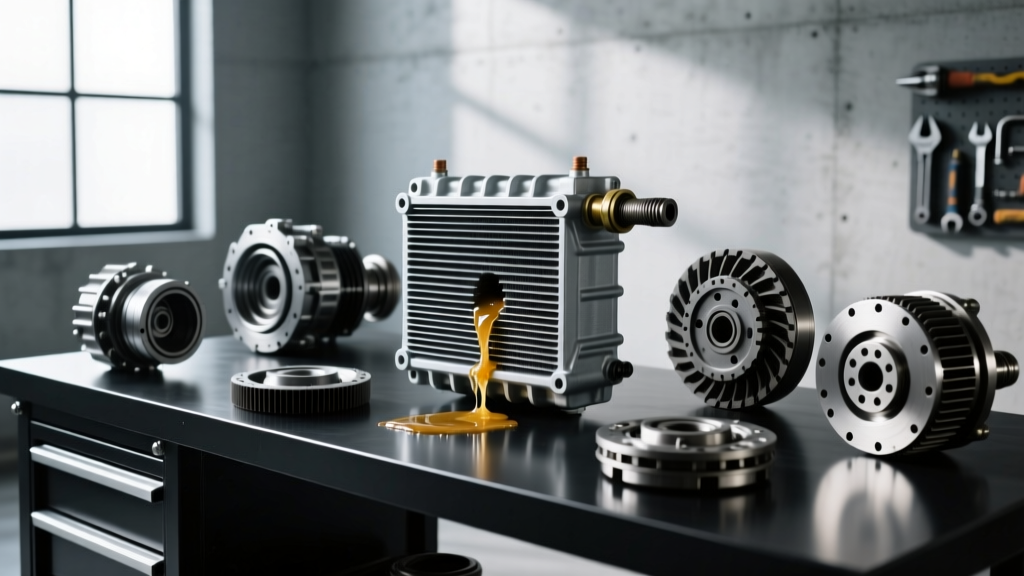
General Motors’ full-size trucks and SUVs—particularly those equipped with the 6L80, 8L90, and 10L80 transmissions—are renowned for their towing capability and durability. However, the external transmission cooling circuits on these vehicles are a well-documented weak point. If you have noticed red fluid spotting your driveway or a burning smell after highway driving, you are likely dealing with a cooler circuit leak.
From a cost analysis perspective, ignoring a minor weep can rapidly escalate into a $4,000+ transmission rebuild due to fluid starvation and torque converter clutch failure. This guide provides a comprehensive, expert-level breakdown of transmission cooler leak diagnosis, with a specific focus on the notorious GM transmission cooler line fittings, complete with 2026 pricing, OEM part numbers, and labor time estimates.
Anatomy of GM Cooler Circuit Failures
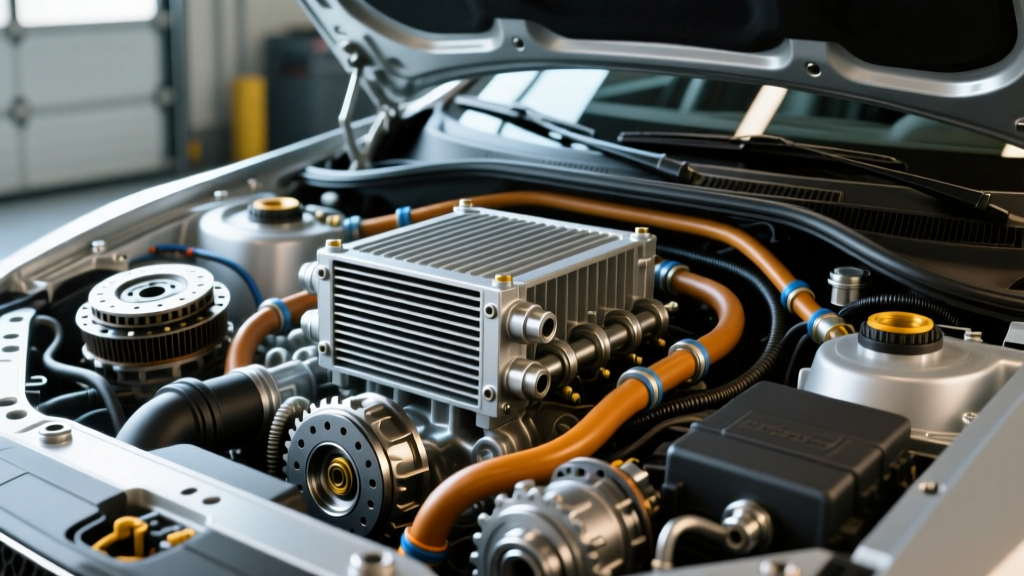
Before tearing into the front end of your Silverado or Tahoe, it is crucial to understand where these systems typically fail. The GM external cooler circuit operates at relatively low pressures (typically 20 to 35 PSI) but experiences extreme thermal cycling. This expansion and contraction wreak havoc on specific components:
- Radiator Adapter Plates: The plastic or cast-aluminum plates that route fluid from the transmission to the internal radiator tank. The O-rings here flatten and shear over time.
- Quick-Connect Fittings: The primary culprit. These utilize plastic retaining clips and internal rubber O-rings that become brittle from engine bay heat.
- Crimp Joints: The factory rubber hose sections crimped to the metal hard lines frequently separate or develop micro-tears near the collar.
Step-by-Step Leak Diagnosis Protocol
Do not simply guess and throw parts at a transmission leak. A proper diagnosis requires a methodical approach to avoid misdiagnosing an engine oil leak (from the oil filter adapter) or a power steering leak as transmission fluid.
1. Visual Inspection and Degreasing
Start by pressure washing the lower engine bay and transmission bell housing. Use a dedicated degreaser, but avoid harsh solvents near the radiator end tanks, as they can degrade the nylon composite materials. Once dry, run the vehicle and use a UV flashlight to trace the highest point of the fluid trail upward. Fluid always travels down and back due to aerodynamics.
2. Cooler Circuit Pressure Testing
If the leak is not immediately visible, you must pressure test the circuit. Warning: Never exceed 45 PSI when testing a GM transmission cooler circuit. The internal radiator tank is made of crimped aluminum and plastic; applying standard cooling system pressure (15-20 PSI is safe, but some shops mistakenly hook up 100+ PSI air lines) will instantly blow out the radiator's internal tank, turning a $150 line repair into a $900 radiator replacement.
Use a regulated pneumatic pressure tester set to 35 PSI. Listen for hissing at the GM transmission cooler line fittings and the radiator adapter plate. According to Transmission Digest, over 65% of external cooler leaks on the 6L80 platform originate at the quick-connect joints rather than the lines themselves.
2026 Cost Breakdown: Parts, Labor, and Diagnostics
Repair costs vary significantly depending on whether you opt for OEM ACDelco components, aftermarket alternatives like Dorman, or upgraded performance lines. Below is a detailed cost matrix based on average 2026 independent shop labor rates ($160–$210 per hour).
| Component / Service | Part Number (Ref) | Part Cost (2026) | Labor Time | Est. Total Cost |
|---|---|---|---|---|
| Diagnostic Fee (Pressure Test & UV Dye) | N/A | $0.00 | 0.5 - 1.0 hr | $80 - $210 |
| Radiator Adapter Plate (OEM ACDelco) | 15718184 / 24257824 | $45 - $75 | 1.2 hrs | $237 - $327 |
| Quick-Connect Fitting Repair Kit | Dorman 800-876 | $12 - $18 | 0.3 hrs | $60 - $81 |
| Complete Upper/Lower Line Assembly (OEM) | 84398822 / 84398821 | $140 - $220 | 1.5 - 2.5 hrs | $380 - $745 |
| Aftermarket Braided Line Upgrade | ICT Billet / PPE | $180 - $280 | 1.5 hrs | $420 - $595 |
| ATF Fluid Top-Off / Flush (Dexron VI/ULV) | ACDelco 10-9395 | $11 - $16 / qt | 0.5 hrs | $135 - $240 |
Deep Dive: GM Transmission Cooler Line Fittings
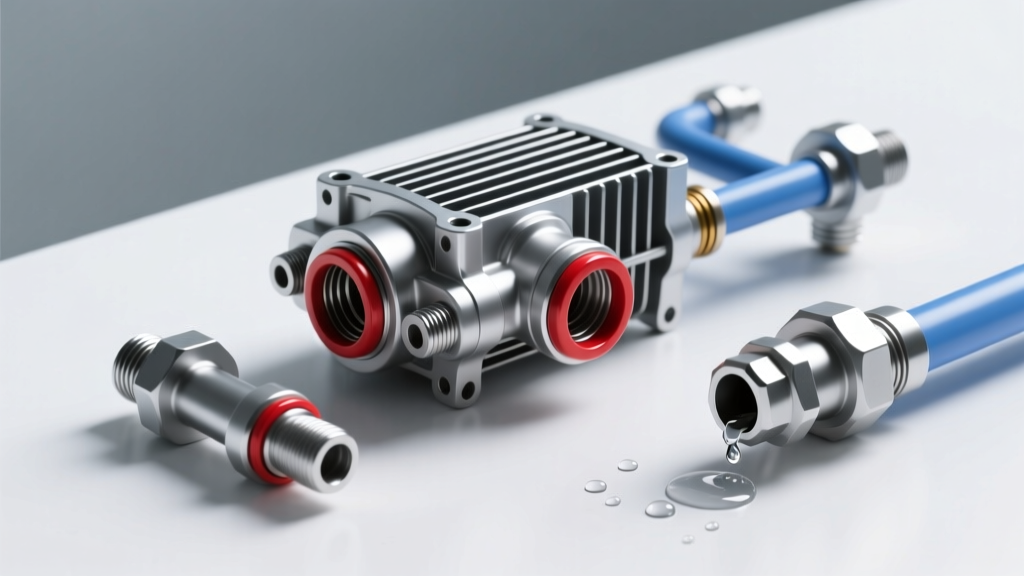
Let us focus specifically on the GM transmission cooler line fittings. On the 6L80 and 8L90 applications, GM utilized a push-to-connect quick-connect design to speed up assembly line production. These fittings rely on a microscopic internal O-ring and a plastic C-clip to retain the line under pressure.
The failure mode is almost always thermal degradation. The fittings sit inches away from the exhaust manifolds and catalytic converters. Over 80,000 to 120,000 miles, the plastic retaining collar becomes brittle, and the O-ring loses its elasticity. When the transmission shifts into torque converter lockup and cooler flow maximizes, the slight pressure spike is enough to push the line partially out of the fitting, resulting in a massive, sudden fluid dump.
The OEM vs. Aftermarket Dilemma
Replacing the entire OEM line assembly (Part #84398822) is the factory-recommended procedure, but it requires dropping the skid plates, removing the front air dam, and sometimes unbolting the transmission crossmember to route the hard lines. This drives labor costs up significantly.
Many top-tier transmission shops now recommend cutting out the failing factory quick-connect fittings and splicing in high-quality AN-fitting adapters or using Dorman's 800-series repair kits. However, for a permanent, heavy-duty fix—especially if you tow—upgrading to CNC-machined aluminum fitting adapters and stainless steel braided hoses eliminates the plastic failure point entirely.
Hidden Costs: Fluid Loss and Transmission Damage
When calculating your repair budget, you must factor in the cost of transmission fluid. GM's newer 8L90 and 10L80 transmissions require Dexron ULV (Ultra Low Viscosity) fluid, which is considerably more expensive than the older Dexron VI used in the 4L60E and 6L80.
- Dexron VI: ~$9.00 - $12.00 per quart.
- Dexron ULV: ~$14.00 - $18.00 per quart.
Furthermore, a severe leak often drains the torque converter. A standard pan-drop only yields 4 to 6 quarts. If the torque converter has drained back into the pan and leaked out, a full system dry-fill on a 10L80 requires upwards of 13 to 15 quarts of fluid. Failing to account for this fluid volume will leave you short on your initial fill, leading to immediate pump cavitation and burnt clutch packs upon startup.
Expert Warning: Never mix Dexron VI and Dexron ULV. The friction modifiers are entirely different. Using the wrong fluid in an 8L90 or 10L80 will cause severe shudder and torque converter clutch failure within 5,000 miles.
Pro Installation Tips to Avoid Repeat Failures
If you are tackling this repair yourself or auditing your mechanic's work, ensure the following protocols are strictly adhered to:
- Use the Correct Disconnect Tools: Never use pliers to pry apart GM quick-connects. You will snap the brittle plastic collars. Use a dedicated tool set like the Lisle 39960 or 39400 master disconnect kit. These tools compress the internal tangs evenly, allowing the line to slide out without damaging the mating surface.
- Lubricate O-Rings Properly: When installing new fittings or adapter plates, lubricate the O-rings exclusively with clean transmission fluid. Never use petroleum jelly, silicone grease, or Vaseline, as these will react with the synthetic ATF and cause the O-rings to swell and extrude out of their grooves.
- Torque Specs Matter: The radiator adapter plate bolts are small and easily stripped. The factory specification for the M6 bolts securing the adapter plate to the radiator tank is typically 106 lb-in (12 Nm). Overtightening will crack the composite radiator tank.
- Verify Flow Direction: On the 6L80 and 8L90, flow direction is critical for proper cooler operation and transmission lubrication. The upper line at the transmission is typically the pressure (out) line, and the lower is the return. Always verify against the specific GM service manual for your model year before finalizing the routing.
Final Thoughts on Budgeting for Cooler Repairs
Diagnosing and repairing a transmission cooler leak on a GM vehicle does not have to result in a catastrophic financial burden, provided the issue is caught early. By understanding the inherent weaknesses of the GM transmission cooler line fittings and accurately budgeting for the true cost of OEM parts, specialized tools, and synthetic ULV fluids, you can restore your vehicle's cooling efficiency and protect your drivetrain for the next 100,000 miles. Always consult the latest ACDelco Parts Catalog to ensure you are ordering the most up-to-date revision of your specific line assemblies and adapter plates.