Diagnosing Tow-Induced Transmission Overheating
Pulling a 7,500-pound travel trailer through mountain passes places extreme thermal loads on your drivetrain. As of 2026, modern high-geared transmissions like the GM 6L80 and Ford 10R80 prioritize fuel economy via early lockup and low-RPM cruising, but this design inherently limits internal fluid circulation at low speeds. When towing, this translates to rapid heat soak.
The first step in symptom diagnosis is establishing your baseline temperatures using an OBD2 scanner capable of reading the Transmission Fluid Temperature (TFT) PID. Normal operating temperatures for synthetic fluids like Dexron VI or Mercon ULV sit between 160°F and 185°F. However, under heavy towing loads, temperatures frequently spike into the 210°F–230°F range.
Critical Thermal Threshold: Automatic transmission fluid (ATF) begins to rapidly oxidize and lose its shear-stability at 220°F. For every 20-degree increase above 200°F, the lifespan of the fluid and the transmission's internal clutch packs is effectively halved. Varnish buildup on valve bodies and solenoid screens is the most common secondary failure resulting from unmitigated tow-heat.
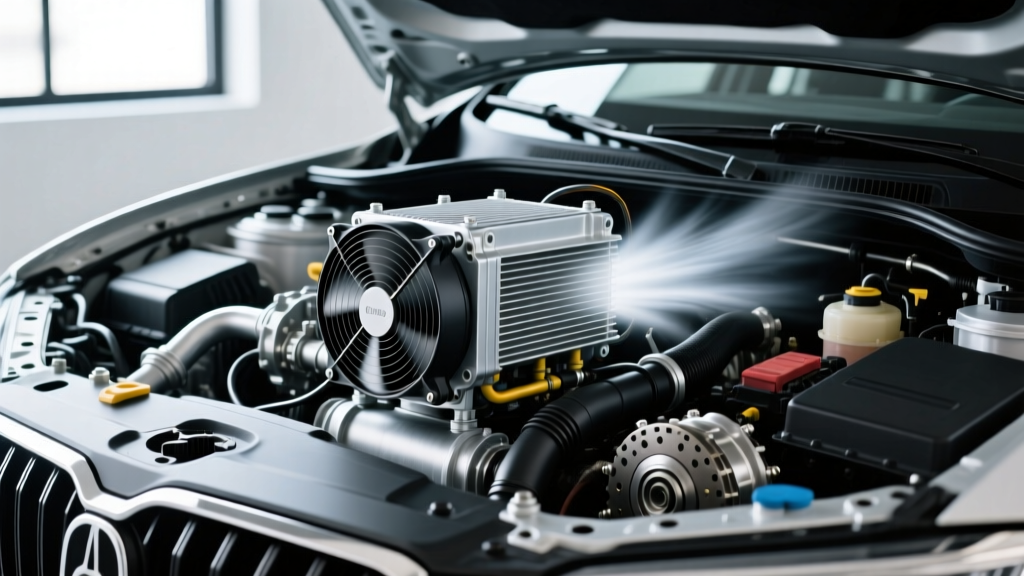
If your TFT consistently exceeds 215°F while towing, your factory radiator-integrated cooler is insufficient, or your thermal bypass valve is stuck closed. Upgrading to an auxiliary cooler is mandatory, but doing so often exposes brittle OEM hardlines, necessitating a reliable transmission cooling line repair kit to complete the job without introducing leaks.
Selecting the Best Transmission Cooler for Towing
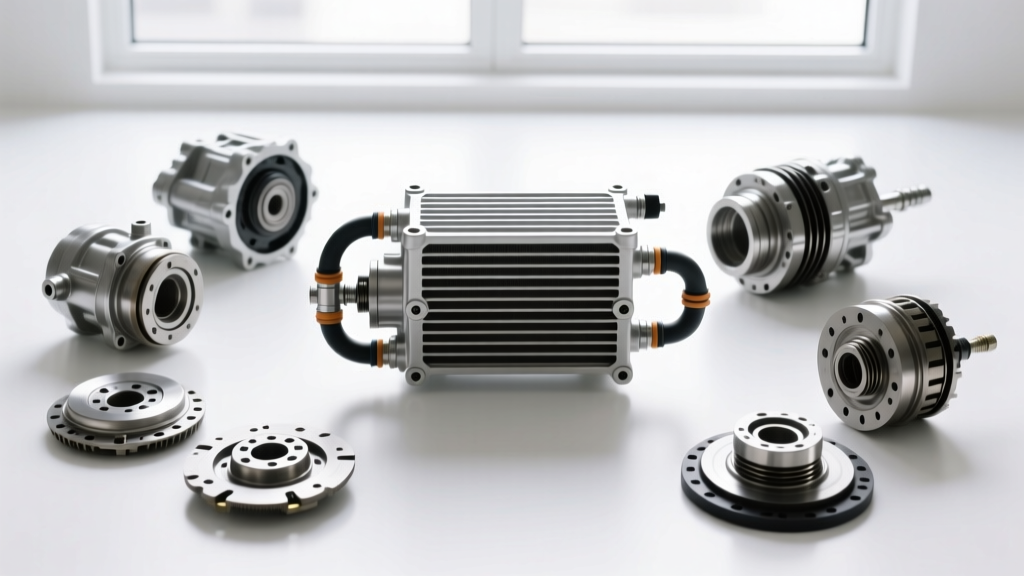
Not all coolers are engineered for the high-stall, high-pressure environments of heavy towing. While tube-and-fin coolers are inexpensive, they lack the surface area and turbulence required to shed heat from thick, hot ATF. For towing applications exceeding 5,000 lbs, a stacked-plate design is the undisputed industry standard.
| Cooler Type | Design Architecture | Heat Rejection (BTU/hr) | Best Application | Recommended Part |
|---|---|---|---|---|
| Tube-and-Fin | Single serpentine tube with stamped fins | ~8,000 - 12,000 | Light commuter, no towing | Hayden 651 |
| Plate-and-Fin | Horizontal plates with zig-zag fins | ~15,000 - 22,000 | Class II towing (up to 3,500 lbs) | Derale 13711 |
| Stacked-Plate | Brazed aluminum plates with internal turbulators | ~30,000 - 45,000+ | Heavy towing, off-road, high GVWR | Derale 13960 (60-Series) |
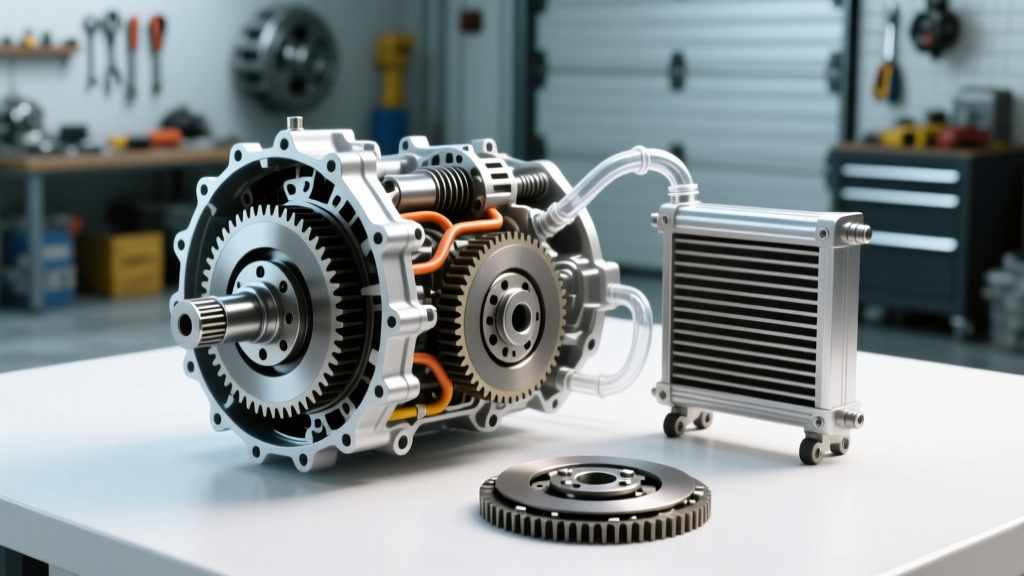
The Derale Performance 13960 (rated for 45,000 lbs GVW) remains the benchmark for the best transmission cooler for towing. Its stacked-plate core creates internal turbulence, forcing the ATF against the aluminum walls to maximize thermal transfer. For GM truck owners, the Hayden Automotive 678 is another exceptional stacked-plate option that fits perfectly behind the grille of Silverado and Sierra 2500HD models without blocking critical airflow to the intercooler or radiator.
Troubleshooting Line Failures: Why You Need a Transmission Cooling Line Repair Kit
When installing an auxiliary stacked-plate cooler, you must splice into the transmission's 'return' line (the line carrying fluid from the radiator back to the transmission). On vehicles like the 4L60E, 6L80, and 68RFE, these factory lines are constructed from steel hardlines connected via plastic quick-disconnect fittings.
After years of heat cycling, road salt exposure, and UV degradation, these OEM plastic clips become incredibly brittle. Attempting to unclip them to route new rubber hoses often results in the fitting snapping off flush with the hardline. This is where a high-quality transmission cooling line repair kit becomes the difference between a weekend project and a tow-truck call.
Top Repair Kits for Cooler Line Splicing
- Dorman 800-602 (Quick Connect to 3/8" Barb): Ideal for adapting broken OEM quick-connects on the 6L80 radiator output to standard 3/8" ID fuel-injection hose. Cost: ~$18.
- ACDelco 24257341 (Compression Fitting Kit): Used heavily on GM 8L90 and 10L90 applications where hardlines must be cut and re-joined using a compression olive and swivel nut. Cost: ~$24.
- Evil Energy AN6 Braided Line Kit: For custom fabrication, replacing the entire OEM hardline with -6 AN braided nylon/stainless hose and AN-to-NPS adapter fittings. Cost: ~$65.
According to technical service bulletins documented by Sonnax, improper splicing of cooler lines can introduce flow restrictions. Never use standard worm-gear hose clamps on transmission cooler lines; the high-line pressure (often exceeding 180 PSI in tow/haul mode) will blow past the thin rubber hose. Always use Fuel Injection (FI) style clamps or AN O-ring boss fittings.
Step-by-Step Installation & Torque Specifications
Proper installation of your auxiliary cooler and line repair adapters requires strict adherence to torque specifications to prevent cracking the aluminum transmission case or stripping the radiator threads.
- Locate the Return Line: Start the truck cold. Feel both lines near the transmission. The line that gets warm first is the 'pressure' (out) line. The cooler line is the 'return' (in) line. You want to mount the auxiliary cooler on the return line so the coolest possible fluid enters the transmission pan.
- Cut and Repair: If the OEM quick-disconnect breaks, use a tubing cutter (never a hacksaw, which leaves metal shavings in the line) to cut the hardline cleanly. Slide the compression nut and olive from your transmission cooling line repair kit onto the line.
- Torque the Adapters: When threading AN or NPS adapter fittings into the transmission case or radiator, use a crowfoot wrench on a torque wrench. Torque specification: 15 to 18 lb-ft (20-24 Nm). Over-torquing will crack the aluminum housing, leading to catastrophic fluid loss.
- Secure the Hoses: Route the 3/8" or 1/2" ID synthetic rubber hose away from exhaust manifolds and steering shafts. Secure with FI clamps torqued to 35 in-lbs.
Bleeding the System and Thermal Bypass Reset
A common post-installation symptom is a sudden spike in transmission temperatures, leading owners to believe their new cooler is defective. In reality, this is usually an airlock or a closed thermal bypass valve.
Stacked-plate coolers have dense internal matrices that trap air. After filling the transmission pan with the correct fluid (e.g., 11.2 quarts of Dexron ULV for a 10L90), you must bleed the system. Disconnect the return line at the transmission, point it into a catch pan, and idle the engine for 15 seconds until a steady, bubble-free stream of ATF emerges. Reconnect the line immediately.
Furthermore, many modern transmissions feature a thermal bypass valve that blocks fluid from reaching the cooler until the ATF reaches 185°F. If you drained the system, the thermostat inside this valve may default to the closed position. To force it open, monitor your TFT via OBD2. Once it hits 190°F, the valve will snap open, and you will see your auxiliary stacked-plate cooler immediately begin shedding heat, dropping your towing temperatures back to a safe 175°F–185°F range.
For more detailed schematics on line routing and OEM fitting sizes, consult the manufacturer guides at Derale Performance or Dorman Products before beginning your installation.